A SEP IRA offers small businesses and sole proprietors a flexible, tax advantaged way to fund 2025 retirement savings. With high contribution limits, simplified administration and deadlines extending through tax filing, it can provide a practical solution for boosting long term financial security.
At the height of the meme stock craze, investors made and lost fortunes as their speculative trades made headlines. This trend was so dramatic and so widespread that reporting on it moved beyond financial publications into the mainstream press and even into a few movie scripts.
The SEC is reportedly finalizing a proposal to allow U.S. companies to transition from quarterly to semi-annual reporting (SAR), potentially ending a 90-year-old mandate.
At the risk of leaving aside the flow-through of the crude oil price into expenses such as electricity, trucking, and so on, let’s just look at the pocketbook hit from filling up the family car specifically.
The Amplify Video Game Leaders ETF (GAMR) hit the reset button this March. With 22 constituent adjustments, the rebalance goes beyond just routine maintenance. It’s a tactical recalibration designed to capture a shifting global landscape and lean back into core gaming fundamentals.
An aging population is leading to a profound demographic shift known as the “Silver Tsunami.” With more Baby Boomers reaching retirement age, the demand for senior living facilities and medicinal innovation is increasing.
The convergence of ETFs, mutual funds, and tokenization is gaining momentum as asset managers seek to modernize product structures, expand distribution, and future-proof their businesses without abandoning established regulatory frameworks.
ETF fees are falling, along with mutual fund fees, according to a new report looking back over multiple decades.
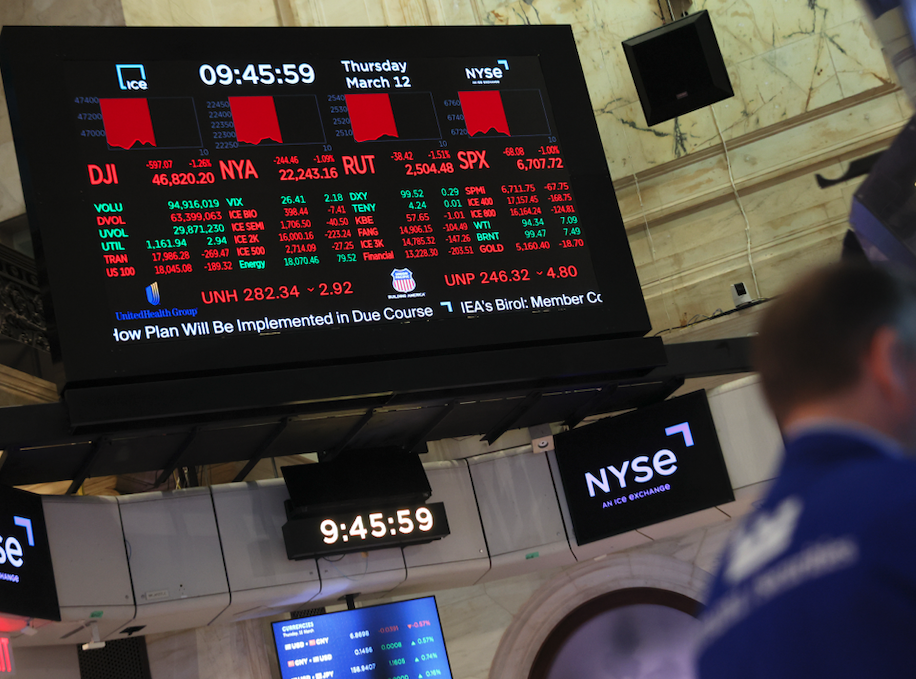
US stocks opened lower on Thursday, as hopes for a quick ceasefire deal between the US and Iran faded, and the escalating conflict pushed oil prices higher.
Canadian energy producer and Bitcoin miner New West Data is exploring a US initial public offering to help meet the growing need for powerful computing systems.
Crypto is moving deeper into the US financial system — this time through the mortgage market.
Gold's reputation as the ultimate store of value has been tarnished by its 15% decline since the Iran conflict began. It's failed to act as a haven or a geopolitical hedge.
Private credit funds lent a lot of money to software companies at the beginning of the decade when they were being snapped up in a rush of expensive buyout deals. Now many of these tech businesses are braced for disruption by artificial intelligence, and some might end up defaulting on that debt.
When we think about AI, the question isn’t simply what’s technically possible. It’s what is safe, auditable and appropriate in a regulated environment where clients trust the entire business. Those are very different questions, and they lead to very different decisions about how technology should be designed and deployed.
Bearish sentiment has taken over the markets. As one analyst put it, “Wall Street has thrown in the towel on gold.”
In a world of intensified uncertainty and dispersion, investing becomes less about forecasting and more about favoring more liquid, high quality assets that can be resilient across a variety of scenarios.
The Iran conflict has changed the paths for inflation and central bank actions.
With each passing day, investor focus is widening from the near-term impact of spiking oil prices to how—and where—higher energy costs will filter through the broader market.
The multi-asset playing field presents income investors with broad opportunities across asset classes. But investors that rely only on traditional stock dividends and bond interest may be missing out on other attractive income sources.
If you’re not sure what direct indexing means, you’re not alone. Even after the recent growth, direct indexing remains relatively unknown. As our risk review team never fails to remind us, you can’t invest directly in an index. So what exactly is direct indexing?
Your financial requirements are multifaceted, necessitating strategies tailored to your specific needs. Tailored lending can be a valuable addition to a high-net-worth individual’s financial plan, helping you optimize cash flow, maximize tax efficiency and realize important estate planning goals.
As portfolios limited to public equities capture a smaller slice of corporate growth, private investments are increasingly finding a place in long-term wealth-building strategies, including 401(k)s.
The conversation about automation is still stuck in 2016. “Robots are coming for your job.” But look at what’s actually happening in the countries that leaned into robotics.
The U.S. middle market has hit $25 trillion. Discover why Cerulli says the advisor shortage and shifting demographics make early engagement a necessity.
Artificial intelligence will reshape how asset management firms operate, but the biggest obstacle isn’t technology, it’s getting people to change how they work, according to VanEck CEO Jan van Eck.
Learn how RIAs are using Section 351 ETF conversions to modernize SMA strategies, defer capital gains, and boost firm valuation.
Join the experts at SS&C ALPS Advisors for an educational webcast exploring what the increase in energy demand means for investors and how to best capture the opportunities.
Nate Geraci explored active ETFs and sector investing on this week’s ETF Prime, featuring Baron Capital’s Matt Camuso and VanEck’s Michael Cohick.
When trying to bridge the communication gap between family members, Joshua Brooks, found that studying the latest approaches in behavioral finance can help advisors. But also, simple steps, like using budgeting tools are useful so everyone can see where and how they spend.
The advisors who build systematic processes around employer dependence risk won't just retain these clients. They'll become the firm these clients refer their colleagues to.
Ask your advisors to do a time tracking sheet for two weeks. This is often annoying to people in the beginning — it’s another thing to do. However, in all cases, I have found it to be eye-opening to someone to figure out where their time goes.
The Iran war has laid bare a paradox: Gulf money is helping underwrite America’s effort to win the artificial intelligence race, and now the US has started a conflict that could destabilize those investments.
US mortgage rates climbed for a third straight week, pushing home-financing costs to the highest since October and dealing a blow to both purchasing and refinancing activity.
A rush by bond traders to unwind US futures positions amid the selloff triggered by war in Iran is running its course, setting the stage for new wagers that will determine whether the rout reverses or deepens.
Even as war in the Middle East roiled markets this month, some investors are finding solace in Corporate America’s growth machine, which not only remains intact — but is showing signs of thriving.
Software stocks are down big YTD, but AI-targeted companies have signaled confidence through increased buyback announcements. Record YTD buyback authorizations suggest potential equity market support—but execution remains the wildcard.
Every few months, a headline appears declaring that the U.S. dollar’s reign as the world’s reserve currency is over. China is dumping Treasuries. Central banks are hoarding gold.
The Fed’s decision made sense: don’t change the target for short-term interest rates if we don’t know what the world will look like tomorrow. But investors need to remember a couple of important things. Rate cuts, if they ever come, are less important than the money supply.
Geopolitical headlines rarely arrive quietly. The recent escalation in the Middle East is a reminder of how quickly tensions can feel destabilizing.
Although the US now produces more oil than it consumes, it still exports lighter crude and imports heavier crude that US refineries need. As a result, global supply disruptions continue to play an outsized role in determining what US consumers pay at the pump. In short, during geopolitical crises, international oil markets matter more for gasoline prices than domestic production alone.
The financial advisory space has never been more competitive, or more ripe for transformation. Fee compression, AI encroachment, tightening compliance, and clients with increasingly sophisticated expectations are pushing experienced Advisors to ask a fundamental question: Is it time to make a move?
How Do You Value Zero GrowthIn this video, Chuck Carnevale (“Mr. Valuation”) explains the fundamentals of stock valuation and addresses a common misconception: that all companies should be valued at the same price-to-earnings (P/E) ratio.
Stocks fell for the fourth consecutive week as rising interest rates and surging oil prices—driven by the ongoing conflict in the Middle East—continued to weigh on investor sentiment.
Uncertainty persists in 2026, affecting the broader fixed income market. Collateralized loan obligations (or CLO) have emerged as a viable option with the advent of exchange-traded funds (ETFs), which have democratized access to retail investors.
The US economy looks amazingly resilient on the surface. Notwithstanding the two-month Covid-19 recession of 2020, the US hasn’t experienced a downturn since the end of the financial crisis in the middle of 2009.
Corporate credit markets have become unsettled about the potential for advanced agentic AI tools from firms such as Anthropic and OpenAI to automate functions across legal, analytical, marketing, and sales workflows, effectively targeting the software as a service (SaaS)/enterprise software space.
T. Rowe Price is leveraging three decades of private equity experience to give active ETF investors access to companies at the core of artificial intelligence, including OpenAI, Anthropic, and Databricks, according to Christopher Murphy, head of ETF specialists at the firm.
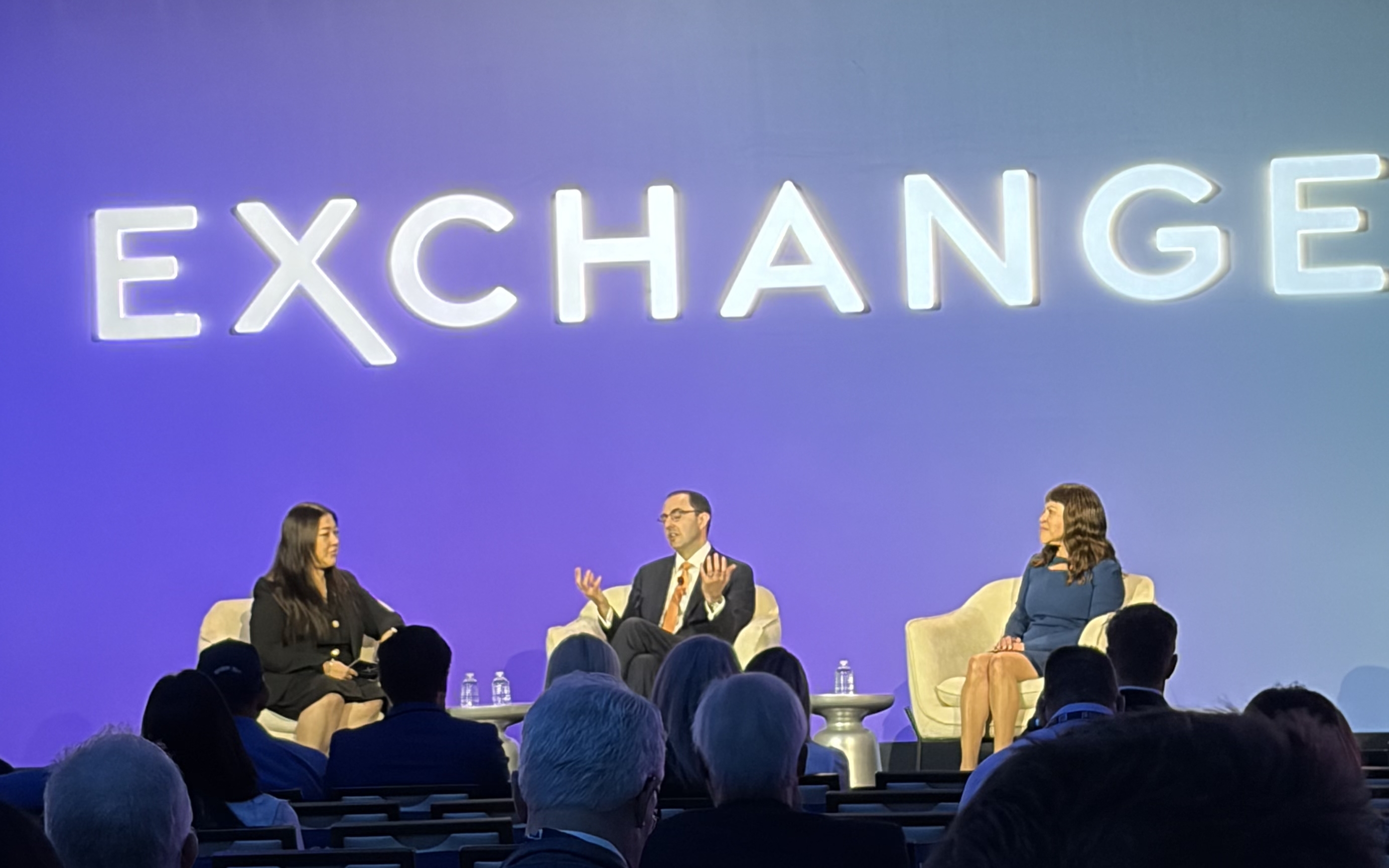
Industry experts at Exchange 2026 explored why only a quarter of advisors have formal succession planning in place and what it takes to execute well.
The Federal Reserve (Fed) kept interest rates unchanged after its Federal Open Market Committee (FOMC) meeting earlier this month. Although investors and economists largely expected this outcome, stocks and bonds sold off immediately after Fed chair Jerome Powell’s post-meeting news conference.
A signed will does not guarantee a smooth transfer of wealth. Families can do everything “right” on paper and still hit a wall the moment someone dies because the assets they need to gather and transfer are behind logins, devices, and two-factor authentication.