Even if the US economy continues outperforming its peers, it will not necessarily remain insulated from the Iran war’s adverse spillovers. Already, higher energy and borrowing costs are exacerbating the affordability pressures many Americans face, creating downside risks for jobs, consumption, and growth.
I just returned from the Investment U conference in Las Vegas, where I presented on gold and the great digital transformation. Sentiment among investors was upbeat, despite great uncertainty in the world right now.
Gold has fallen roughly 21 percent from its all-time high of nearly $5,595 reached in late January to approximately $4,430 as of this writing, and the prevailing narrative in markets is that this correction reflects a genuine shift in the metal’s outlook
Emerging-market (EM) equities have been hit hard since the Iran war began, as investors worry about fallout from the conflict. Yet, history suggests that periods of heightened market stress—when volatility is elevated and uncertainty is still being priced—have created favorable entry points for EM investors in the past.
Leveraging 529 plans and community support can significantly boost college savings. These plans offer potential tax benefits and flexibility. Our Bill Cass explains that involvement from family and friends can provide additional resources and motivation.
Get ready each week with high-conviction insights that go beyond media headlines.
When someone says a retiree is “living off Social Security,” it’s not usually $100,000 a year.
Amid geopolitical uncertainty, dispersion across credit markets – rather than a broad risk-off move – has become the dominant investment signal.
Discover why Strait of Hormuz disruptions extend beyond oil, how supply shocks are transmitting into agriculture markets, and what third-order commodity effects may mean for portfolios.
Investors have no shortage of metrics to evaluate equities, but not all measures capture the same economic reality. In an environment defined by elevated capital spending and market concentration, earnings-based measures may not fully reflect how efficiently companies convert investment into cash.
Join the experts at Measured Risk Portfolios for a product due diligence session covering the MRP SynthEquity® ETF (Ticker: SNTH).
The egregious irony here is, according to Luke Kemp’s Goliath’s Curse, that powerful billionaires like Thiel, Altman, and Hoffman may well have a hand in, or at least be tangentially associated with, ushering in said apocalypse. The primary driver of societal collapse, Kemp believes, is tech-powered inequality, for which Thiel, Altman, and Hoffman are the poster children.
To better understand how AI might affect the labor market and, ultimately, the economy, we’ve summarized Citrini’s bleak outlook alongside rebuttals from Citadel Securities and Bianco Research. These summaries provide a useful primer on how labor markets may adjust to the upcoming major technological changes.
For investors, understanding the full anatomy of fixed income is critical, not only to capture attractive risk-adjusted returns in today’s environment but also to appreciate its indispensable role in powering economic growth and financial stability.
Financial markets have been relatively unaffected by the costly and senseless war the US and Israel are waging against Iran. But what’s really surprising is the ongoing boom in investment banking.
A progressive rallying cry to tax the rich is being welcomed by traditionally Republican states, including Florida and Georgia, looking for a new pitch to draw migrants — especially wealthy migrants — from the coasts.
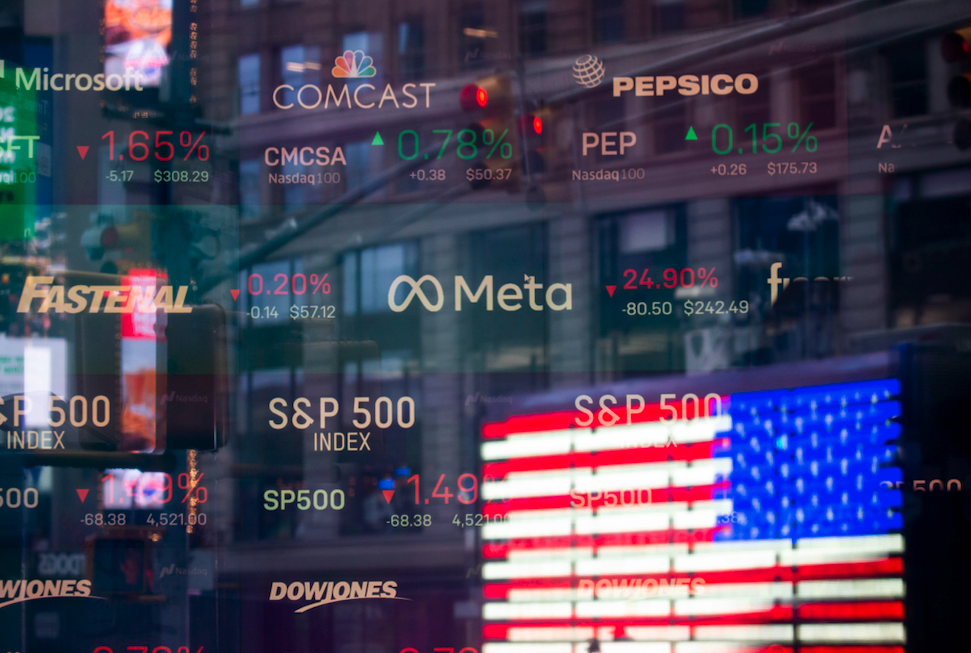
The wreckage in large technology stocks that sent the Nasdaq 100 Index into a correction is flashing signs that have marked turning points for the group in the past.
Some of Wall Street’s biggest bond-fund managers say financial markets are underestimating the risk that the US war in Iran will cause a sharp slowdown in an already sputtering economy.
Sovereign bonds rose around the world as concern the Middle East conflict will derail global economic growth revived demand for beaten-down government debt.
Meta Platforms Inc. was looking like the best Big Tech stock in the market when the year began. But investors’ fears of legal risks and heavy spending on artificial intelligence are bubbling to the surface, culminating in last week’s 11% rout.
I have just spent the last two days with members of our Inner Circle. We visited four technology companies and listened to six other CEOs make presentations here in El Segundo, California. What I want to write about today is a summary of what I’ve seen, which made every single one of our participants extraordinarily optimistic about our future.
Thanks to strong gains in markets over recent years, with many indices at or near record highs, the 60/40 default portfolio has quietly morphed into a bundle of expensive U.S. growth equities and credit exposures offering narrow spreads over Treasuries. In our view, such a portfolio is likely to disappoint investors by delivering low single-digit real returns.
What’s unusual today is the degree of divergence between individual stocks and the cap-weighted index. When a handful of stocks carry enough weight to paper over widespread internal damage, investors holding diversified portfolios feel the pain long before the headlines acknowledge it.
Government statistics are invaluable in deciphering the state of the U.S. economy. But they don’t always tell the whole story.
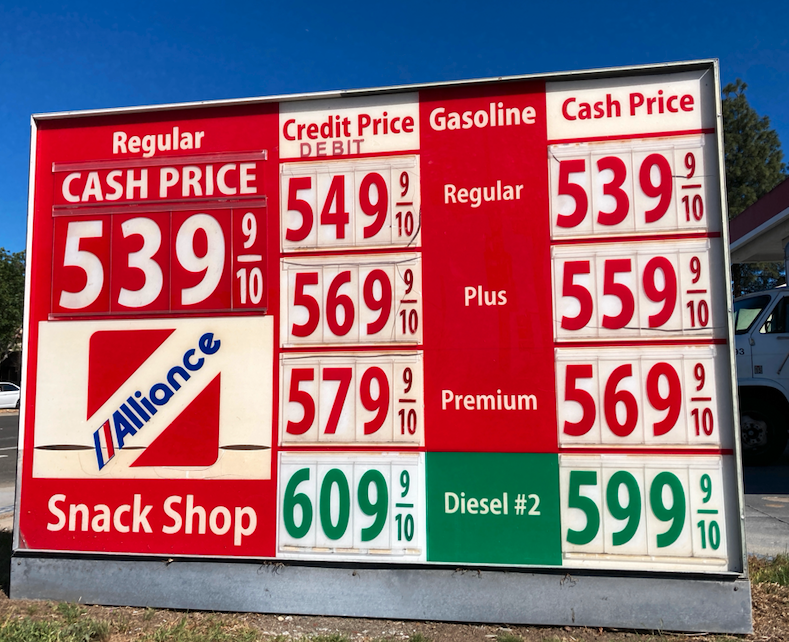
Recent weeks have been a whirlwind of headlines centered on the Middle East conflict and rising oil and gas prices, particularly as the conflict enters its fourth full week.
The conflict in the Middle East has raised concerns about oil prices, global growth and market volatility. Chief Investment Officer Sean Taylor assesses the potential economic impacts of the crisis and its implications for growth and diversification in emerging markets and Asia.
While the tax conversation may seem to end on April 15, we think tax season could be the time to start a better approach to tax planning—a natural moment to reflect on how investments are managed, looking for ways to help reduce tax drag and increase the potential for after-tax performance going forward.
Rationally, no one should feel happy about an income tax refund. The refund is a correction of a tax overpayment; the recipient effectively gave the government an interest-free loan over the course of the prior year.
Investors have taken notice of the eye-popping federal commitments to new nuclear capacity in the U.S. in recent months. Headlines have focused on massive reactor-deployment partnerships and loan authority in the hundreds of billions.
Today, Vanguard decided to join the target-maturity party, launching a suite of corporate bond ETFs designed to assist investors with bond laddering. Vanguard’s entry is significant due to its massive distribution scale in tandem with its low-cost reputation.
Heavily influenced by escalating geopolitical conflicts, last week's economic snapshot reveals a sharp erosion of confidence among consumers and investors alike.
Sharp moves in energy prices rarely arrive at a convenient moment for policymakers. When shocks occur, governments are left juggling two competing imperatives: cushioning households from rising costs while preserving fiscal credibility. T
Weight loss pills and treatments have exploded in popularity since GLP-1 drugs hit the market. From Ozempic to Wegovy, those pills have changed the lives of countless people around the world. They’ve also paid dividends to the companies that produce them.
The conflict in the Middle East remained a key driver of market sentiment this week, with rapidly shifting headlines contributing to heightened volatility.
For investors who understand this distinction, the current pullback may represent an opportunity rather than a warning. Short-term sentiment may dominate headlines, but long-term fundamentals continue to point in a very different direction.
As tax law changes from the OBBBA take effect, taxpayers may want to evaluate their financial plans. Our Bill Cass shares some essential strategies—including Roth conversions that may help taxpayers optimize savings.
The actively managed fund charges a 0.65% expense ratio and uses an options overlay designed to generate income while managing volatility. Energy makes up 45.87% of the fund’s sector allocation, followed by information technology at 25.83%, industrials at 16.43% and utilities at 11.87%, according to the factsheet.
As the ETF industry witnessed expansive growth during the past decade, providers have been engaging in a fee war as competition heats up. Industry giants like Vanguard and BlackRock have slashed expense ratios to near-zero, but that era of fee compression could be reaching an inflection point.
Next week’s releases should help clarify whether recent volatility remains contained or begins to translate into weaker fundamentals.
Private credit managers are feeling sheepish. Some of their investors can’t get their money out as quickly as they’d like — and some may be quite angry about that.
Franklin Templeton is partnering with Ondo Finance to offer tokenized versions of its ETFs that trade around the clock through crypto wallets, bypassing the brokerage accounts and limited trading hours that have defined fund investing for decades.
Eve oversees dozens of brainiac office hands; monitors countless earning calls; keeps tabs on CEOs; parses corporate filings; conducts due diligence; brainstorms stock picks.
The war in Iran may be showing few signs of easing, but Wall Street strategists are encouraging investors to start buying stocks again.
The dollar is on track for its best month since July as the conflict in the Middle East scrambles Wall Street’s playbook for the world’s dominant reserve currency.
Energy cycles have a way of rewarding investors who show up early, while punishing those who assume the next upturn will look exactly like the last one. Supply disruptions caused by the war in Iran that began just under a month ago have upended markets globally, with oil markets taking center stage.
In today’s era of automation, some situations demand a more active approach. Municipal bond investing is one.
Geopolitical volatility is not only increasing investor demand for infrastructure assets; it is urgently reshaping where and how capital is deployed. As energy security, supply chain resilience, and digital sovereignty rise up policy agendas, infrastructure investments that expand capacity and relieve bottlenecks are becoming critical.
Rapid advances in artificial intelligence, persistent geopolitical tensions – particularly the conflict in Iran – and ongoing trade uncertainty have kept headlines loud and emotions elevated, ultimately demanding investors remain adaptive and disciplined. In this kind of environment, the biggest mistakes come from reacting to noise rather than fundamentals.
Bitcoin is now less volatile than some Magnificent 7 stocks, but it's still capable of steep, prolonged declines.
Many people forget that gold was in a bull market in early 2008 but suffered a significant selloff at the onset of the financial crisis when the yellow metal fell 32 percent, giving up about 40 percent of its previous bull market gain. Gold then took off and soared by over 153 percent over the next few years.