In environments of geopolitical stress, diversification* is tested, and investors may need to think more wholistically about the assets included in their portfolio.
The general field called “credit” has seen massive innovation over the course of my career. An Oaktree colleague asked me about the developments that brought the credit sector to where it is today. I came up with the following list.
The traditional 60/40 portfolio is undergoing a structural renovation, but the fixed income sleeve is proving difficult to stabilize.
Bond traders held onto wagers that the Federal Reserve will lower interest rates once this year after data confirmed that US inflation quickened in March as the Iran war led to higher gasoline prices.
Late last month, Blackstone Inc. announced the first inbound Gulf private equity deal since Iran started attacking Middle Eastern hubs, while Citigroup Inc.’s top boss fired off a 600-word memo underlining the bank’s enthusiasm for its business in the region.
US equity futures stalled after a seven-day rally as investors weighed whether a fragile truce between Washington and Tehran can hold, and oil headed for its biggest weekly loss in nine months.
By at least one metric in the $9.5 trillion foreign-exchange markets, demand for the dollar is ebbing amid the tenuous ceasefire between the US and Iran.
Private markets benefited enormously from the post-Great Financial Crisis era of ultralow interest rates that stretched through much of the 2010s and into the early 2020s. Amid regulatory change and muted returns in traditional fixed income during this time, investors were increasingly pushed into alternative areas of capital markets in search of yield.
The One Big Beautiful Bill Act introduces enhanced tax benefits but adds significant complexity. Our Bill Cass explains why strategic planning around key income thresholds is critical to maximize deductions and ensure tax-efficient financial outcomes.
Just last week news broke that SpaceX had confidentially filed to go public, meaning the financials of the company are not disclosed until later. SpaceX is reportedly eyeing a June 2026 listing, and is targeting a staggering $1.75 trillion valuation, seeking to raise between $50 billion and $75 billion. If successful, this would comfortably unseat Saudi Aramco as the largest IPO in history.
The first quarter of the year has offered an early reminder that markets rarely move in straight lines. After the extraordinary enthusiasm that carried investors through 2025, much of it centered on the promise of artificial intelligence, the new year has quickly reintroduced elements of uncertainty.
U.S. headline employment rebounded strongly in March, posting the largest monthly gain since late 2024. The jobs rebound, which was broad-based across industries, was a welcome sign after February’s data showed a sharp decline not usually seen outside of recessions.
Energy-driven inflation and geopolitical risk increase the likelihood of higher-for-longer interest rates, which listed infrastructure has several mechanisms for passing through to earnings.
The famed economist John Maynard Keynes said almost a century ago that “markets can remain irrational longer than you can remain solvent.” He was referring to the unpredictable nature of investor sentiment: an amorphous, hard-to-define concept that nonetheless plays a major role across various asset classes.
While Wall Street obsesses over the Magnificent Seven, a handful of under-the-radar forces may shape the next leg of this market, for better and for worse.
AI’s rapid growth is driving demand not only for electricity but also for the clean water needed to run its physical infrastructure. As data centers expand, rising water intensity is straining supplies and testing long-term sustainability. In our analysis, these pressures create both risks and opportunities for active investors.
The idea that this would be enough for “new UMG” to almost double the current one’s valuation doesn’t add up at a time when artificial intelligence is creating doubts about the industry’s future. And it’s unlikely on its own to tempt dominant shareholders such as French tycoon Vincent Bollore. The proverbial fat lady has yet to sing.
VettaFi sat down with Innovator ETFs CIO Graham Day to discuss the move as well as the future of those defined outcome ETFs. Day, who joined the firm in 2017, has been part of many of the shop’s launches in the defined outcome space, one of the more popular options ETF segments.
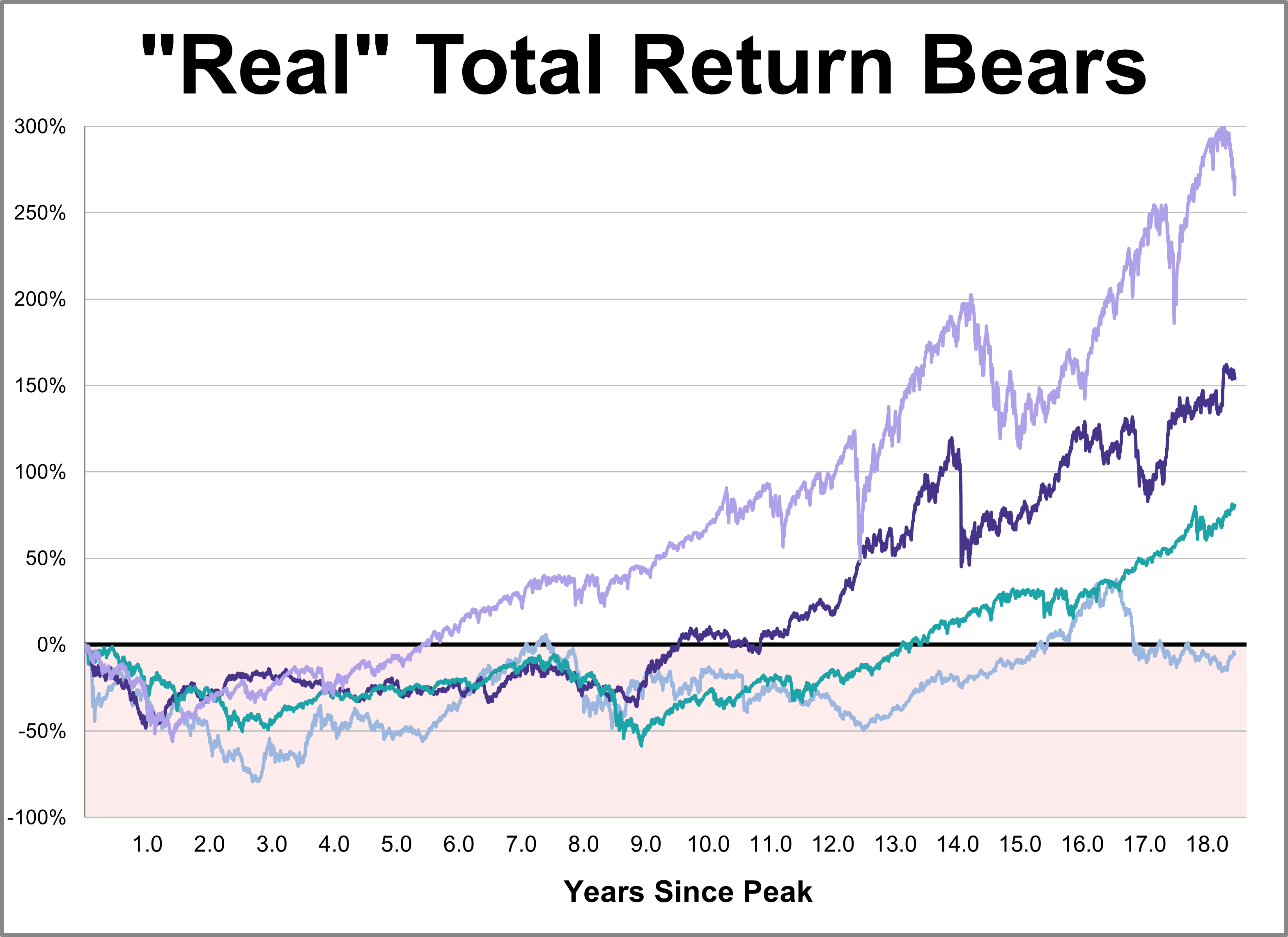
While every market downturn is unique, history offers a crucial lens for understanding recovery. This chart series provides a comprehensive overlay of the Four Bad Bears in U.S. history since the 1929 peak, comparing their recovery paths through the S&P 500's close on March 31, 2026.
Learn how advisors can optimize late-start 529 plans using superfunding, SECURE 2.0 Roth rollovers, and multi-scenario modeling.
Join live, bring your questions, and leave with insights you can use immediately.
Discover how abrdn’s K-1 free ETF outpaced gold and the S&P 500 in March 2026 by providing broad, tax-efficient commodities exposure.
Global equities declined during a volatile first quarter as the war in Iran roiled energy markets and fueled inflation fears that destabilized the economic growth outlook. Mounting geopolitical hazards add to existing worries around concentrated equity markets and the potential for AI to disrupt businesses.
After months of sluggish returns, Nvidia Corp.’s stock is rallying again and close to breaking out of its narrow trading range, which market technicians see as a bullish signal.
Ship traffic through the Strait of Hormuz remained blocked Thursday, even as a handful of Chinese vessels lined up to escape, with a very fragile ceasefire between the US and Iran yet to improve traffic flows in the region.
Every twist in the Iran conflict — every ceasefire bet, every missile strike, every shift in tanker traffic — shows up almost instantly in a $65 million exchange-traded fund that most investors have never heard of.
The debate over whether artificial intelligence has entered bubble territory has reached a fever pitch. For this edition of Bull vs Bear, writers Nicholas Peters-Golden and DJ Shaw discuss the disconnect between infrastructure spending and software revenue.
As AI continues to reduce software development costs, investors need to reconsider what makes a competitive moat durable, particularly for technology companies.
Gambling is rising in popularity, blurring lines between betting vs. investing. Misunderstanding the key differences can endanger financial security.
In essence, the IPO is an acknowledgement that the ChatGPT-maker, which just raised $122 billion from investors at a valuation of $852 billion, needs what seems to be an endless amount of money to fund its race for artificial general intelligence.
Given the combined weight of these markets within EM portfolios, Templeton Global Investments believe incremental improvements in capital discipline could have a meaningful impact on aggregate index-level earnings quality.
Geopolitical conflict involving Iran disrupted energy markets, driving oil and the dollar higher while stocks, bonds, and gold fell. Despite volatility, economic signals are mixed but stabilizing, especially in manufacturing. Muhlenkamp outperformed markets, increased cash and international exposure, while remaining cautious amid inflation, policy uncertainty, and ongoing war risks.
Geopolitical tensions and disruptions to global energy supply often lead to higher gas prices at the pump. Amid the current conflict in Iran, oil prices have surged to above $100 per barrel for the first time since 2022.
The greatest risks in markets are often the ones that don’t look like risks at all. Passive investing – now controlling well over 50% of US equity fund assets and more than $20 trillion globally, up nearly 20x since 2000 – has fundamentally altered how investors define risk. What used to mean the potential loss of capital has quietly been replaced by something far more benign: tracking error.
A geopolitical shock in the Middle East sent oil prices surging more than +70% in Q1, erasing all expected Fed rate cuts and testing how well-diversified portfolios actually were. For many investors, the answer was: considerably better than the S&P 500’s -4.3% return suggests.
On Wednesday, April 8, 2026, Morgan Stanley announced the launch of the Morgan Stanley Bitcoin Trust ETP (MSBT). As Morgan Stanley notes, the launch of MSBT marks the first time a U.S. bank-affiliated asset manager is offering a crypto ETP.
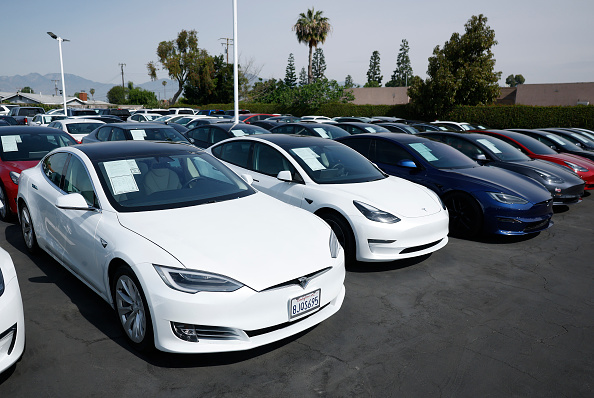
Tesla Inc. and its Chief Executive Officer Elon Musk are a font of big numbers, real or imagined: A million robotaxis deployed, 20 million electric vehicles sold per year, “tens of billions” of Optimus robots stalking the Earth.
While families have limited control over rising tuition, certain college tuition tax deductions may help ease the overall cost of higher education.
Investors are starting to understand that robotics and AI each represent an industry of industries. Not a sector. Not a theme. The foundational technology stack that every other industry increasingly depends on. In Q1, the market decided to stress-test that thesis, and the results tell a more nuanced story than the headline numbers suggest.
Cinthia Murphy, investment strategist at VettaFi, joined Nate Geraci on this week’s ETF Prime to discuss record ETF flows in the first quarter despite challenging market conditions. The industry exceeded $460 billion in total flows, a 50% year-over-year increase from Q1 2025, according to Murphy.
Writing a book can bolster your credibility as a financial advisor, but it does something else that’s equally as valuable: It tells people who you are before you ever meet them.
Whatever you end up doing, make sure you are authentic and honest in your approach. Clients see right through a request or ask that you are uncomfortable making. You have to know what you want, find words that are right for you, and proceed accordingly.
For centuries the so-called cannon shot rule determined who controlled the seas. The legal concept, codified by Dutch jurist Cornelius van Bynkershoek in 1702, was simple: The distance a cannonball reached from shore set the maritime boundary of a coastal state.
Many advisors assume they have a referral problem. They look at their growth, consider how infrequently new clients arrive through introductions, and conclude that clients simply are not inclined to refer as often as they might.
Global bonds surged Wednesday on news that the US and Iran had agreed to a ceasefire, pausing a war that roiled markets for weeks by delivering the worst oil shock in years.
Equity markets staged a meaningful recovery last week, driven by optimism of a ceasefire in Iran. The S&P 500 returned 3.4 percent, the NASDAQ gained 4.5 percent, and the Dow Jones Industrial Average added three percent – the best weekly performance in recent memory.
US stocks rallied after President Donald Trump’s announcement of a two-week ceasefire in the Iran war spurred relief across markets.
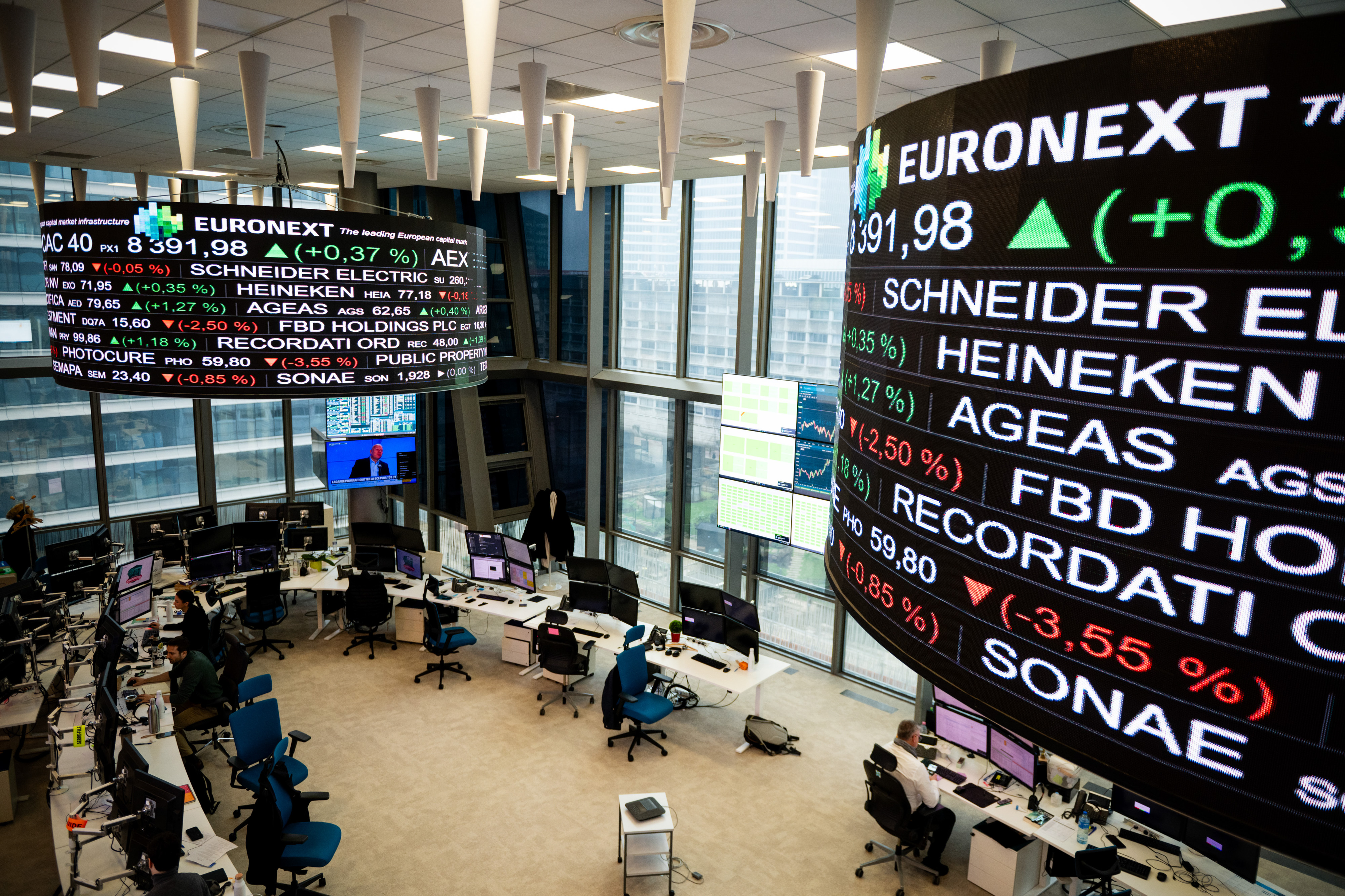
European stocks soared the most in a year as investors rushed to buy stocks in the wake of the US and Iran agreeing to a two-week ceasefire in exchange for Tehran reopening the Strait of Hormuz.
Last month at the Exchange conference in Las Vegas, Anna Paglia, State Street Investment Management’s chief business officer, discussed how the firm’s private credit lineup came to be and how the firm sets about developing some of its products.
If the economic life of AI hardware is shorter than its accounting life, reinvestment needs are higher than reported depreciation suggests. What appears to be capital deepening by hyperscalers is largely capital churn.