In a year that started with volatility, direct indexing had ample opportunity to take advantage of loss harvesting opportunities.
Join ProShares Global Investment Strategist Simeon Hyman for a timely discussion on why many covered call ETFs lag in rebounds—and how newer approaches aim to better balance income generation with long-term equity participation.
Novo Nordisk A/S will integrate OpenAI’s artificial intelligence across the company to accelerate drug development.
Treasuries traded steadily after a reading of US wholesale prices last month rose less than anticipated, affirming wagers that the Federal Reserve will cut interest rates at least once this year even as the broader inflationary outlook remains murky amid the war in Iran.
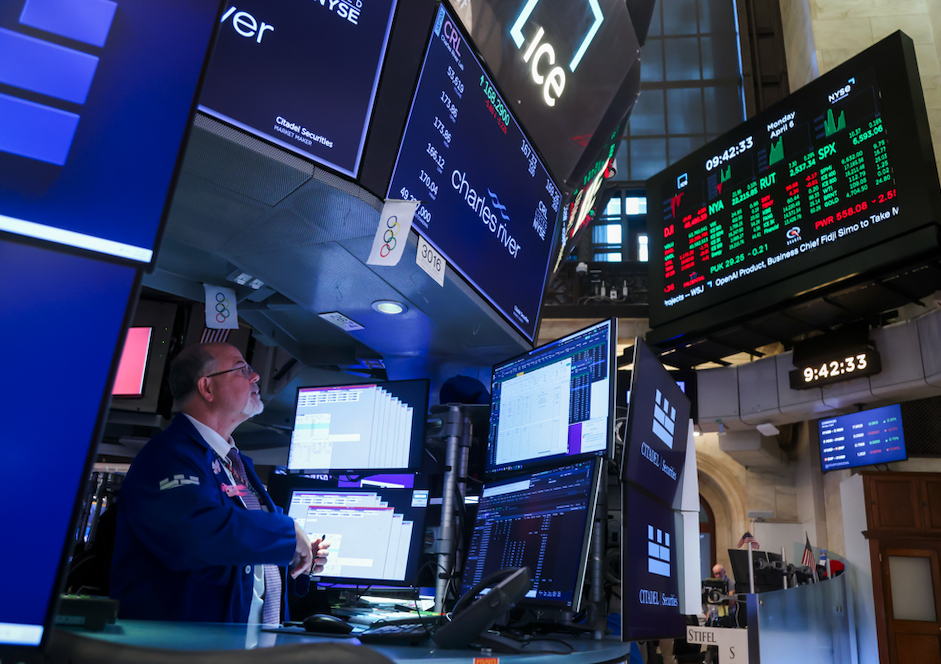
JPMorgan Chase & Co.’s traders posted their highest-ever quarterly revenue in the first three months of the year, with record stock-trading results boosting the total past the firm’s previous record by almost $2 billion.
BlackRock Inc. Chief Executive Officer Larry Fink sees increased demand for private credit from big institutional investors like insurers, even as retail clients grow skittish over the asset class and seek to redeem more of their shares.
The leading cause of recurring tax-time friction is simple: HNW households rely on a roster of professionals who communicate inconsistently, if at all.
Economic conditions are set to be even rockier in 2026, as the US-Israel war with Iran has set inflation on a continued upward trajectory and further rankled markets. Even if there were a de-escalation in the conflict, a domino effect has begun.
Shadow advisors don’t have to be a problem. If a family member has genuine knowledge or carries enough emotional weight to influence your decisions, it may be better to include them than to pretend they don’t exist. The key is transparency.
The gap between what advisors are doing and what's now possible in tax-aware portfolio management has never been wider. The tools have outpaced the practice. Here's where I see advisors falling short, and what to do about it.
When advisors discuss referral strategies, the collective feelings on the subject tend to be very similar. The language varies slightly, but the sentiment is consistent: Such conversations feel awkward, forced or misaligned with the nature of the client relationship.
Saving for education can feel like a race against rising tuition costs, but 529 college savings plans offer families a powerful way to stay ahead.
A strong professional network does far more than provide camaraderie. It’s a growth engine, a source of expertise, a safety net, and often a long-term competitive advantage. The path forward might not be another software upgrade or marketing campaign — it might simply begin with finding the right peer group.
Once upon a time, not so long ago, about a third of all American workers had a gold-plated pension: When they retired, someone paid them nearly their full salary for the rest of their lives. They didn’t have to worry about the market, or inflation, or running out of money.
Tax management is about more than just deferring taxes to reduce this year’s bite. It’s also about managing where and how taxes show up over time. For high-net-worth investors with diversified portfolios, permanently reducing taxes versus deferring them may bolster long-term after-tax wealth. Many investors overlook a potent tax reduction tool: bonds.
The market remains remarkably resilient, but I have expressed a more cautious outlook in the near term as rising oil prices and a renewed pickup in money growth complicate the inflation outlook.
Beyond keeping party balloons aloft, helium plays a far more serious role in the modern economy. Extracted as a by‑product of natural gas production, it is an essential input across semiconductors, medical imaging, aerospace and defense systems.
The Middle East ceasefire sparked a relief rally last week as markets dialed back the risk of a deep, drawn‑out oil supply shock. Stocks have already erased much of the post-conflict drop. Bonds haven’t gotten the memo: Yields are still elevated, keeping a bit of extra term premium on the table.
Investor anxieties surrounding negotiations between the U.S. and Iran paused a rally on Friday, initially sparked by roughly in-line inflation data and the announcement of a two-week ceasefire on Tuesday night.
The question that is increasingly on everyone’s mind is simple: Is this time different? The answer will hinge squarely on what happens to core inflation, specifically the core Consumer Price Index and the core PCE price index.
If you expect Kevin Warsh to quickly take the helm at the Fed and start cutting rates, you need to adjust your expectations.
The first quarter of 2026 ended with a downpour of volatility as the CBOE Volatility Index (VIX) rose 69%. Nonetheless, Goldman Sachs (GS) reported first-quarter 2026 earnings that outpaced Wall Street expectations though a thick fog of uncertainty still lingers in Q2.
Michael Bell of Meketa Capital joins the Alternative Allocations podcast to explore why infrastructure investing is shifting from an institutional-only play to a foundational piece of the modern portfolio and what that means for today's market participants.
In a rapidly shifting geopolitical environment, gold continues to demonstrate both its resilience and its complexity as a financial asset.
For financial advisors, tax season should not be the only time to talk to clients about municipal bonds. However, with April 15 arriving this week, the timing is ideal to examine how muni bond ETFs are rapidly becoming a cornerstone of fixed-income allocations in 2026.
Jason Chura, head of global consulting at Voya Investment Management, outlines a behavioral framework to help advisors project confidence, build credibility, and guide clients through uncertainty.
Over the last few weeks, we have published real-time market commentary as the correction proceeded. The goal was to help investors navigate the more dire outcomes promoted on social media. A largely unexpected outcome was that the S&P 500 outlook changed dramatically in a matter of days.
New ETF launches address concentration and liquidity risks exposed by volatile markets through active and passive strategies.
In this episode of ETF of the Week, Todd Rosenbluth, and Chuck Jaffe discuss why the Goldman Sachs Municipal Income ETF (GMUB) is a timely addition to portfolios. With tax season in full swing, Rosenbluth explains the unique appeal of municipal bonds, highlighting the historical tendency for these assets to perform well following the April 15th deadline
While artificial intelligence is unlikely to replace financial advisors, it can certainly enhance both the quality and the productivity of advisors who embrace it. I agree that AI will boost productivity, but I wanted to put it through the test now to see how accurate and insightful it was. To do so, I gave Anthropic’s Claude a spin.
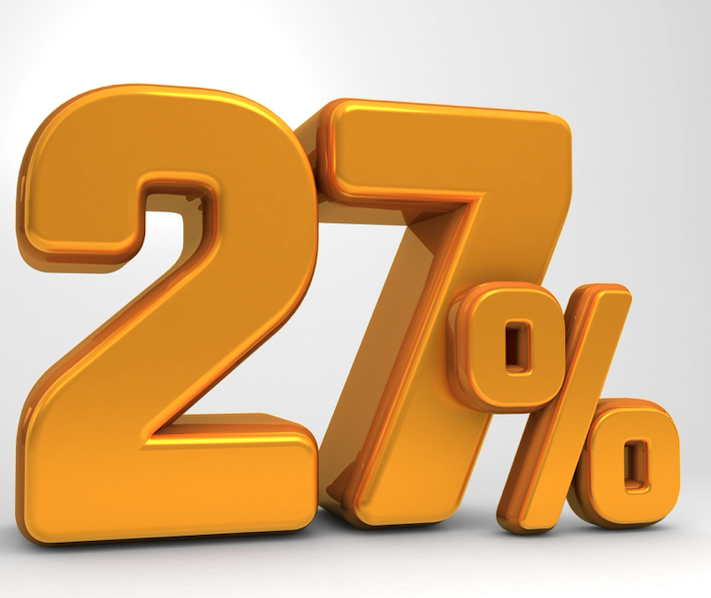
Over 6,537 trading days from 2000 through 2025, about 27% fall into the pure beta category. That 27% is sitting in every trailing return anyone’s ever used to evaluate an active manager, quietly diluting the signal.
While tech giants race to invest billions into AI, executives at Apple are quietly sitting on their hands and a mountain of cash. The puzzling question, however, is why Apple isn't following suit. Or is it taking a different approach to winning the AI arms race?
Inflation fears are not new, but the current path is beyond alarming. The U.S. is spending its way into a rampant inflation catastrophe. That is why gold and commodities are being bid up in price and will likely continue to be bid up.
It goes without explaining at this point, that advisors and investors are keeping an extremely close eye on the trajectory of the Federal Reserve’s ongoing fight against inflation. As of now, the battle certainly seems far from over. Fortunately, tools such as bond ladder ETFs can help portfolios maintain their course and mitigate the brunt of inflation.
Sportsbooks profit from customer losses, making them structurally predatory. Kalshi, by contrast, operates as a peer-to-peer exchange: customers bet against each other, Kalshi takes fees from both sides, and the house has no stake in the outcome. It's a financial market, not a casino.
With the Middle East in flames and a fifth of the world’s supplies of oil and gas in limbo thanks to the uncertain status of the Strait of Hormuz, it’s tempting to imagine that a clean-energy world might leave such conflicts behind.
That article digs into the plumbing behind oil shocks and recession, and exposes why, over the years, I’ve learned to distrust the loudest voices in the room.
Wall Street strategists expect the Federal Reserve to take a slow and careful approach to winding down a program meant to help ease pressure in funding markets.
Accelerating earnings are protecting the S&P 500 from deeper losses and masking a broader pullback in US equities, according to strategists at Morgan Stanley.
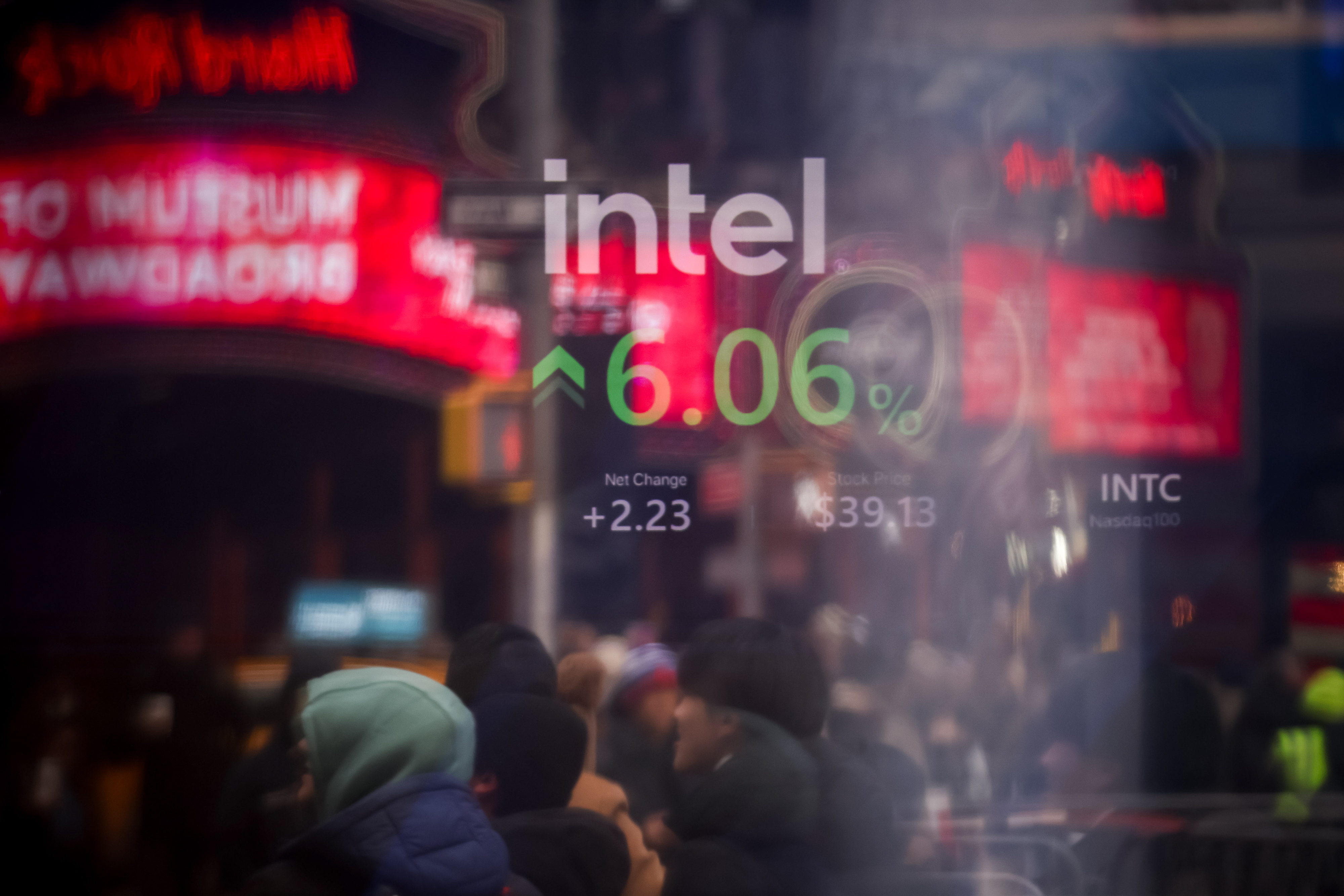
Intel Corp. has quickly become one of the hottest stocks in the S&P 500 Index thanks to a nine-day surge that has added more than $100 billion in market value.
At its core, the P/E ratio represents how much investors are willing to pay for $1 of a company’s earnings. Carnevale emphasizes that valuation is fundamentally about the cash a business generates over time. By applying a multiple (like a P/E of 15) to earnings, investors can estimate fair value and compare it to the current stock price.
Dividend-paying stocks offer an effective hedge against inflation—as well as solid long-term return potential in other environments when actively sourced from the right parts of the market.
Ever since the pandemic – when surging housing demand collided with a decade of underbuilding – housing affordability has become an increasingly important political issue and a larger focus for policymakers.
Today, I freely confess that I don’t have that 2007 certitude. I can certainly see a crisis coming in our future, but the timing, severity, and circumstances around it are cloudy at best. I can make an argument for numerous outcomes.
Over the past year, markets have been shaped by rapid advances in AI, elevated geopolitical tensions – especially involving Iran – and persistent uncertainty around global trade. In environments like this, successful investing rarely comes from chasing headlines or reacting emotionally. It’s about discipline, staying anchored to fundamentals and executing a clear long‑term game plan.
Benefit Street Partners believes private credit has faced scrutiny recently and there are four horsemen of the apocalypse charging toward private credit investors, but three are phantoms. One, however, is real.
During Exchange 2026, experts and thought leaders from firms across the country gathered. They shared different approaches and ideas for tackling the market’s biggest challenges.
A ceasefire in the Middle East is the latest twist for investors who have grown increasingly reactive to each new headline. Volatility has surged: prior to the ceasefire, the VIX had roughly doubled this year and averaged 25 in March—about 67% above year-end levels—underscoring just how uncertain the path forward has been.
While recent market performance reflects optimism over potential geopolitical de-escalation, underlying economic data reveals a complex landscape of intensifying price pressures and cooling growth.
Franklin Templeton Institute examines the evolution of private credit, its risk/return characteristics, and why commercial real estate debt represents a viable alternative to traditional fixed income options.