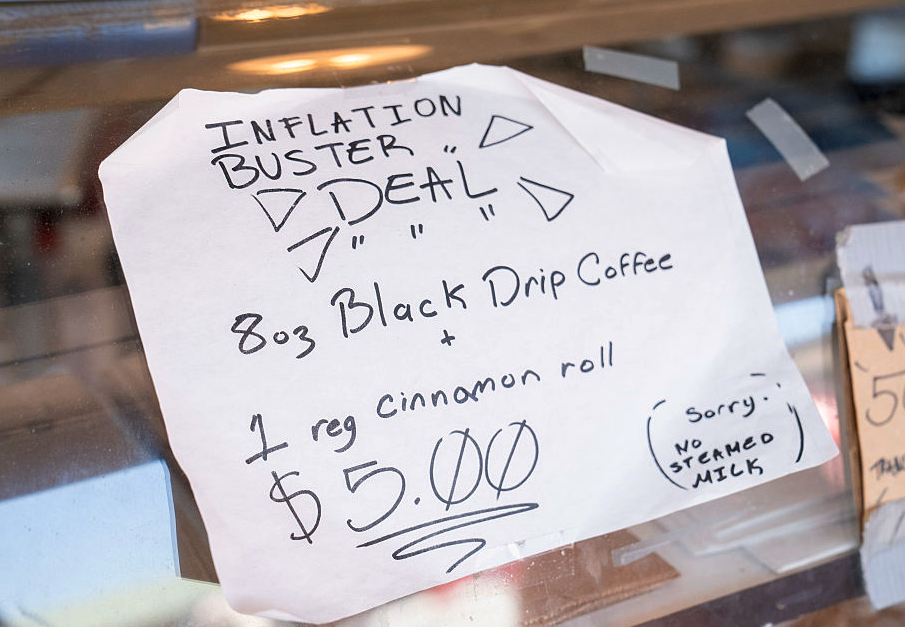
Last week’s economic signals showed cautious optimism and renewed concern. Inflation saw a slight uptick in May.
The Gold Reserve Transparency Act of 2025 (House Bill 3795), calls for a full, modern audit of America's gold holdings—something that hasn't occurred in over 65 years.
Lately, the “deficit narrative” has dominated much of the financial media, particularly those channels that are continual “purveyors of doom.” In this post, we will discuss the “deficit narrative,” the likely outcomes, and why the cure for the deficit may be found in Artificial Intelligence.
Tariff policy has clouded expectations for the second half of the year, but there are ways to navigate through the fog.
Fears of an impending recession may be fading, but economists are still expecting tepid GDP growth for the year.
Just one day after Prime Minister Shigeru Ishiba likened Japan’s debt situation to that of Greece, the country faced its weakest demand for 20-year bonds since 2012.
US economic data continue to send mixed signals, keeping uncertainty high on interest rate cuts from the Federal Reserve later this year.
Alex Veroude, Global Head of Fixed Income, believes fixed income investors can prepare for an uncertain journey by recognising trends and diversifying across different assets.
Global markets may be more rattled than ever, but advisors can count on closed-end funds to offer yield, portfolio diversity, and more.
Unlike most other US public retirement plans of its size, the Tampa Fire & Police Pension Fund doesn’t invest in hedge funds, private equity or private credit.
Summer re-runs are popular on TV, but a repeat of last August's "yen-carry" market upheaval isn't likely on the schedule. A shift in positioning by investors is one reason.
Gold plays a distinct role in the global monetary system. Simply put, it’s perceived as money, and its function as a store of value makes it arguably the world’s most popular hedge against inflation.
Head of EMEA and Asia Pacific Equities Lucas Klein and Head of Americas Equities Marc Pinto argue that progress on the trade impasse, further monetary easing, pro-growth reforms, and an innovation revolution should all prove supportive to equities over the mid term once the market moves past near-term volatility.
When it comes to inflation, America has reached a “Mission Accomplished” moment. Rule No. 1 of inflation reports is never to read too much into one report, but there have now been several months of fairly low inflation, so it seems safe to call it: The Fed did its job. Pandemic inflation is over.
Despite inflation worries, fiscal deficit concerns, and continued geopolitical conflict, equity markets posted strong returns in May on the back of easing tariff tensions, lower probability of recession, and better than expected US Q1 earnings.
After weeks of hand-wringing around demand for long-term US debt, all eyes are on Thursday’s 30-year Treasury auction for a fresh read on whether spiraling deficits are causing investors to shun the maturity.
It’s premature to assume that tariffs won’t push up inflation, but the developments have been pretty encouraging thus far.
The first half of 2025 has been driven by headlines that have caused volatility in both the stock and bond markets. While tariff negotiations have commanded the most attention, we are now pivoting to the federal budget deficit, which feels like a perpetual headline over the last 15 years.
A new culture of reform at Japanese companies offers exciting potential for equity investors.
In the current land of uncertainty the markets and investors find themselves in, the monthly Employment Situation report is ‘must-see TV’ and will remain that way for the foreseeable future.
With the world order in flux, investors can look to fortify portfolios by diversifying across global markets and capitalizing on attractive, high quality yields.
US Treasuries surged as easing US consumer inflation prompted traders to increase their wagers on more than one Federal Reserve interest-rate cut this year.
US stocks oscillated between small gains and losses on Wednesday, as traders look past an upbeat report on cooling consumer prices and assess the outlook for global trade.
Underlying US inflation rose in May by less than forecast for the fourth month in a row, suggesting companies are largely holding back on passing higher tariff costs through to consumers.
While the immediate path for tariffs may drift lower, the U.S. legislative branch is hammering out a tax and spending bill that seems to favor tax cuts over lower spending, reviving worries over the U.S. budget deficit and a growing debt burden that cannot be ignored.
Advisors looking to add or enhance existing gold exposures in their portfolio have a range of strategies to consider within the ETF vehicle.
The global economy is continually evolving due to inflation, interest rates, and geopolitics. How could these and other factors influence the major asset classes over the coming decade?
If we lived in a world where mobile signals were visible, the sky would shimmer like a storm—layers of frequencies rolling over rooftops, crossing oceans and saturating valleys.
The U.S. economy and stock market face a confluence of challenges in the second half of the year, keeping the bar relatively (but not restrictively) high for outperformance.
In recent years, “buying the dip“ and more vulgar variations have often been equated to “dumb money” or retail investors, who are presumed to always make a mistake. However, as investors, we need to rethink how we view “buying the dip” because the whole goal of investing is to “buy low and sell high.”
Small-cap stocks tend to offer greater growth potential than their large-cap peers, but those returns have yet to materialize consistently. What will it take to turn the tide?
Analysts at firms including Barclays Plc and JPMorgan Chase & Co. see further upside for US stocks, in part because they expect institutional investors to abandon their cautious stance and ramp up exposure to equities.
The Fear Trade is what most Western investors are familiar with. It’s the flight to safety during times of uncertainty, driven by concerns over inflation, interest rates, geopolitical risk and more.
I spent the last two weeks of May catching up with partners and clients in Malaysia, Singapore, China, and Hong Kong. Following are some reflections on those conversations.
Investors may revisit international exposure in their portfolios amidst reduced market reactions to tariff announcements, uncertain U.S. policy and lagging U.S. stock performance.
Markets may be fretting over Federal Reserve policy and economic soft landings, but a handful of momentum ETFs have quietly been stealing the show. Across the array of factor funds, momentum has performed best this year.
Back during the Financial Panic of 2008, clickbait media kept screaming “Hyperinflation.” We consistently pushed back against this theme, and argued inflation would not accelerate.
Last week’s employment report was an important stabilizer for the markets. After concerning revisions and weak ADP numbers raised recession alarms, Friday’s payrolls print calmed fears on labor market deterioration.
US Treasuries were trimming overnight gains, with modest weakness in longer dated debt as investors awaited a Thursday auction of 30-year securities that will offer a fresh test of demand for the beleaguered securities.
US stocks flipped between small gains and losses on Monday as investors awaited the outcome of crucial trade talks between Washington and Beijing in London.
The Federal Reserve (Fed) lost its chance to lower interest rates further during the first half of the year, when inflation came down to close to its 2.0% target with very limited risk that its decision would have triggered higher inflation.
Research trips are an integral component of our active, fundamental investment process. Our investment teams meet with different companies, attend conferences, and travel to new markets around the world, gaining insights for our clients and a deeper understanding of potential investments.
Rebounding demand from ETF investors and resilient buying from central banks and Asia retail have propelled gold prices to fresh records north of US$3,000/oz. Find out why we believe there is more room to run.
Last week, the labor market took center stage, presenting a nuanced picture of continued resilience alongside subtle signs of softening.
Treasuries fell as faster-than-expected US job and wage growth prompted traders to trim back bets that the Federal Reserve will cut interest rates this year.
The federal government, financial markets and most Americans are all in a state of denial about interest rates.
Bouts of volatility may continue in the second half of 2025 as bond market investors navigate evolving tariff policy, U.S. government debt, and economic uncertainty.
Kristofer Kraus, portfolio manager and co-lead of PIMCO’s asset-based finance business, charts the nuances behind the overall resilience of U.S. consumers – and explains how these insights shape lending and investment strategies.
Gold’s recent surge to $3,500 was quickly followed by a sharp correction. Each tariff update or diplomatic rumor sends markets into a frenzy—rallying stocks, selling gold, or reversing course the next day.
We remain underweight most developed market stocks as US tariff policy is still unclear but are more enthusiastic about emerging market assets.