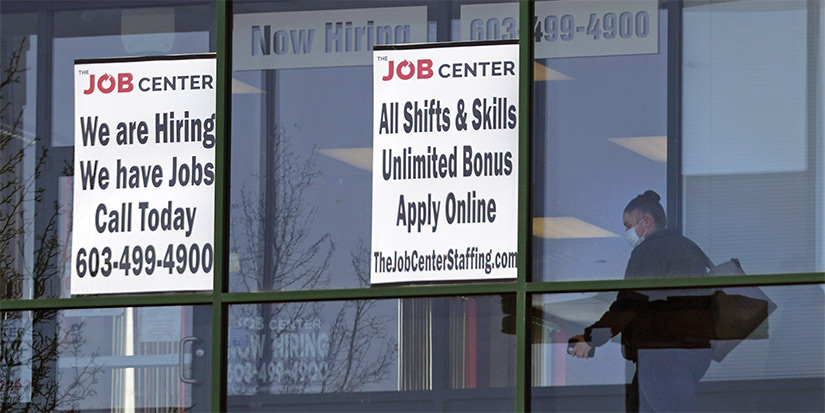
We are in an odd situation where it’s unclear if labor is scarce or abundant. Many employers can’t seem to find enough qualified workers, but the August jobs report said 8.4 million are unemployed and millions more underemployed.
Social Security is in worse shape than we thought. The program’s trust fund is now expected to be insolvent by 2033, a year earlier than anticipated. According to the annual report, its finances have been “significantly affected” by the pandemic and 2020 recession, not to mention “rapid population aging.”
Inflation remained in check following the global financial crisis for over a decade despite a massive expansion of the Fed’s balance sheet.
As the founder of the firm, I am concerned about our reputation and client satisfaction.
New research shows that the ESG portions of mutual funds underperformed the remainder of the funds and did so with higher risk. But the magnitude of those differences was small.
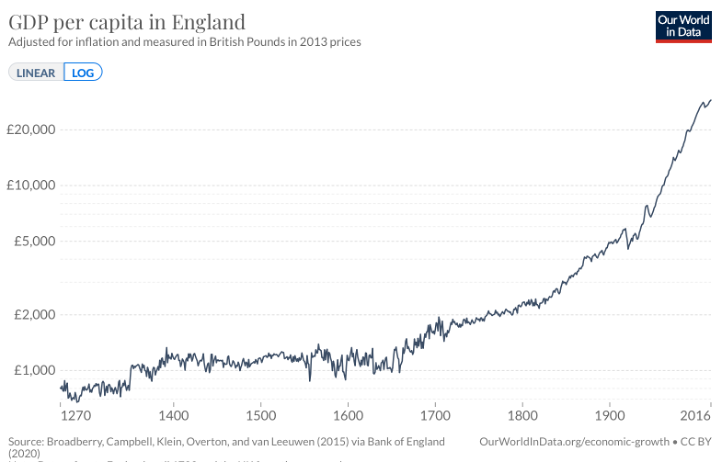
After tens of thousands of years of living at a subsistence level, how did the world suddenly become so rich?
In the fastest bull market in history, the S&P 500 doubled from its pandemic lows.
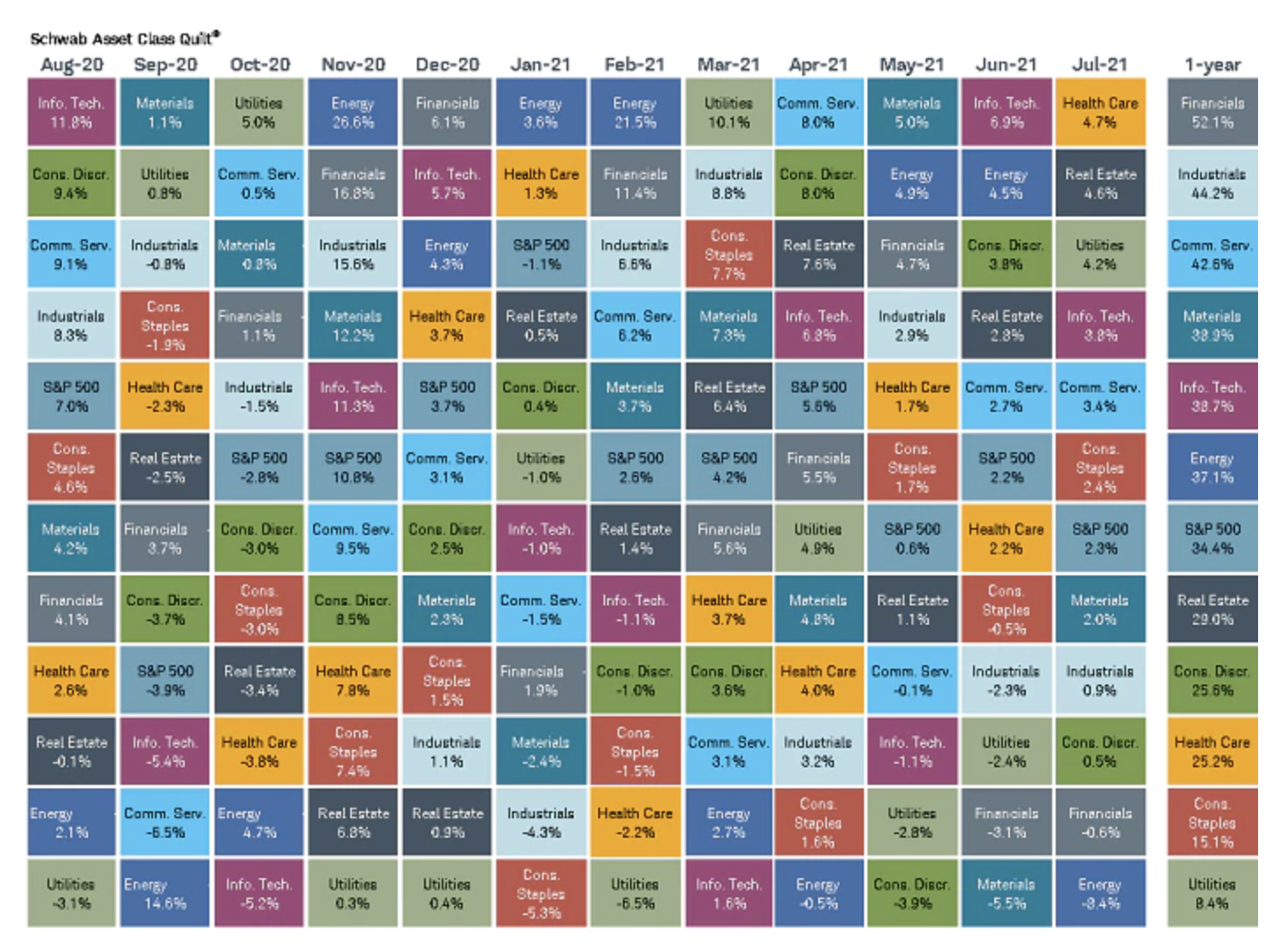
The stock market could use some mouthwash.
Franklin Templeton’s 2021 US Retirement Income Strategies and Expectations survey revealed financial-related concerns across generations of Americans including health care, inadequate savings, and debt management—and the need for a personalized approach to retirement planning.
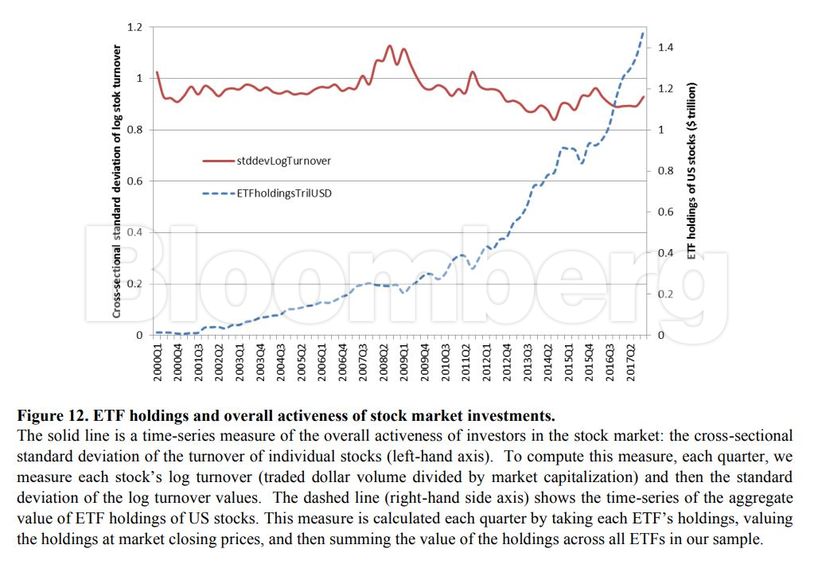
Wall Street’s passive revolution is turning out to be anything but, with active investing alive and kicking in even the sleepiest corners of the ETF world, according to the latest research.
The predominant approach to classifying securities geographically is based on domicile, the legal home of a company. But that approach is losing its relevance. Investors should consider foreign revenue to understand the international risks of investments and portfolios.
New research shows that funds that with an ESG mandate have factor exposures that differ significantly from the market, creating a challenge for investors who seek a specific factor loading for their overall allocations.
So many headlines right now are instilling FUD in investors’ minds, which stands for Fear, Uncertainty and Doubt—from the Afghanistan news to fears on cryptocurrency and the delta variant disrupting travel plans. But don’t fall for it.
New research from quant firm Robeco is lending heft to fears that the day-trader billions flooding the stock market spell trouble for some of Wall Street’s smartest minds.
Mutual Series Portfolio Managers Katrina Dudley and Mandana Hormozi discuss why Europe deserves renewed attention.
Inflation is often a poorly understood concept, with monotheistic explanations abounding.
Going forward, we believe that the traditional international allocation and global emerging markets deserves a rethink.
As I discussed in a Frank Talk this week, the Senate just approved a $1 trillion infrastructure bill that’s now the business of the House.
My colleague Sam Millette, manager, fixed income, on Commonwealth’s Investment Management and Research team, has helped me put together this month’s Market Risk Update.
What we’ve seen this year is an exceptionally high rate of earnings growth across markets, but that’s not going to persist.
We’ve been thinking about John Locke’s “Law of Fashion” in the context of the U.S. common stock market.
From school bells to the bells of New York Stock Exchange—the ringing of bells often signifies the beginning and/or conclusion of an event.
If you’ve never commented on a stranger’s post, then it’s time to start!
Hidden Risks: Can Investors Trust China?
Having suffered through the worst pandemic in a century, we are keenly attuned to catastrophe. Few people are better equipped to document the history of catastrophes and our response to them, for better or worse, than Niall Ferguson.
Having an accurate investor risk profile is the first step in wealth management. But what is in a risk profile? Is it the same as risk tolerance or is there more to it?
The unpredictable nature of politics and government action within individual countries can make a case for disaggregating international exposure, according to our Dina Ting.
The U.S. remains in a deep employment hole, with 6.7 million fewer jobs in June than there were in February 2020. But that overstates the weakness in the economy, with last week's second-quarter gross domestic product report showing American output is back at an all-time high.
If you review the investment research articles and notes published during the 1970s and early 1980s, what you pick up is that during periods of high inflation, equity markets failed to live up to expectations.
Rick Bookstaber warns that investors face the risk of a “leverage liquidity cascade,” where margin calls would trigger forced selling across asset classes.
ESG proponents claim that “green” high-yield bond returns offer better risk-adjusted returns. New research disproves this claim, although ESG investors do not incur a penalty by owning green bonds.
Here are 12 types of clients who have recently established DAF accounts with the assistance and encouragement of their financial, legal, tax advisors.
What is the degree of Emerging Markets (EM) stocks’ undervaluation relative to United States (US) equities?
The industry is now seeing an expansion in data-driven practices, with new ESG and climate datasets emerging and becoming mainstream.
he current inflationary surge is temporary. When flexible prices, especially some of those mentioned, normalize, inflation is likely to follow suit.
Hang on to your hat.
Our economic outlook remains constructive, though we recognize it’s still too soon to know whether the current bout of inflation is transitory. Given the potential for rate increases, particularly after the Fed’s comments in June, we continue to prefer non-investment grade bonds, as they have lower duration and higher yields.
New research documents the abject failure of the vast majority of municipal bond funds to outperform a passive benchmark.
Tweedy Browne is one of the most respected value managers in the world, with a legacy that includes having Benjamin Graham and Warren Buffett as clients. In this interview, members of its investment committee explain why value investing is on the cusp of a resurgence.
Over the next 10 years, the global automotive industry is expected to face one of the most significant changes in its history – the replacement of internal combustion engine (ICE) vehicles with electric vehicles (EVs).
The impacts of passive investing are not as well understood as they should be.
What exactly is “transitory?”
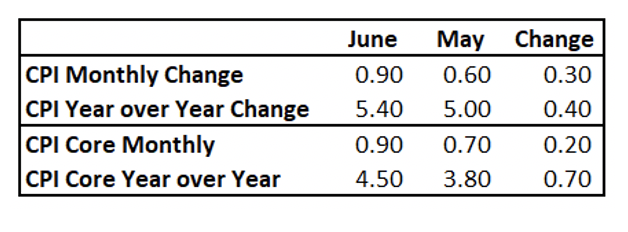
Prices continue to climb, with the US CPI rising in June by the most since 2008.
What can we take from the pandemic and adopt strategically to create the optimal client experience?
We aren’t crass or insulting, but we like to poke fun and give one another a hard time about things we do wrong.
During the second quarter, global equity markets extended their strong performance.
The only feasible explanation for the 10x run-up in Tesla’s stock price was a spreading narrative that it is more than a car company.
Commodities rallied 21% in the first half of 2021, making them the top performing asset group ahead of U.S., European, emerging market and non-Japan Asian stocks. The broad-based index of energy, agriculture, industrial metals and precious metals rose the same amount as high-flying Bitcoin, which pulled back after hitting its all-time high of more than $63,000 on April 13.
Choosing a fund or ETF with a positive ESG profile is fraught with risk. New research shows how carefully investors must weigh considerations such as screening criteria, factor exposures, industry concentration and expenses.
A comeback by megacap growth stocks and the stalling of the value trade arrived at exactly the wrong moment for one $15.3 billion exchange-traded fund.