Advisor Perspectives welcomes guest contributions. The views presented here do not necessarily represent those of Advisor Perspectives.
" .. latching onto things and piercing through them, to see what they really are..."
- Marcus Aurelius
One of the primary investor concerns off late has been the possibility of elevated inflation in response to loose monetary and fiscal policies and its impact on investment portfolios. Many investors are wont to believe that equities provide a good hedge against inflation. However, if you review the investment research articles and notes published during the 1970s and early 1980s, what you pick up is that during periods of high inflation, equity markets failed to live up to those expectations.
The true nature of equities – the equity coupon
In our effort to understand whether equities can serve as an inflation hedge, the first thing to understand is the true nature of equities. What drives investment return from equities? Pose this question to the so-called investment experts and you will likely hear about ideas like GDP growth, earnings expansion, multiple rerating, etc. Yet, as Buffett wrote way back in 19771, equities at their core are like a perpetual fixed-income instrument. The coupon of equities being the return on equity (RoE)2.
As Buffett observed in that article, the RoE of American businesses was rather sticky at around 12%. As I show later in this article, RoE of American business over the past 65 years has averaged at 11.5%. This tendency to hover around that 12% mark means that it can indeed be thought of as the equity coupon. Importantly, this equity coupon serves as the upper limit of the long-term equity returns. Several factors act to suppress the return that investors in publicly listed equities earn.
For one, equities are seldom acquired at their book value. When investors pay multiples of the book value, the underlying investment return declines. This applies specifically to that part of the equity coupon that is paid as dividends and buybacks. The active trading around ownership of securities also acts to reduce the returns in the hands of investors by depositing a portion of it in the hands of financial market intermediaries. Lastly, the government collects its share of that coupon via taxation of dividends and capital gains.
Relationship between return on equity and stock returns – theoretical underpinnings
This section is somewhat technical in nature. If you are not interested in the mathematics involved, please skip to the section titled “RoE: Driving factor of the investment return equation”.
In a research paper published in 19813, Fuller and Petry (F&P) explored the relationship between inflation, return on equity, and stock prices. This section summarizes F&P's discussion about the relationship between inflation and RoE.
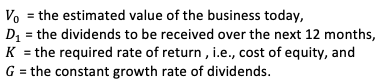
As F&P stated, the value of common stocks can be thought of as the discounted value of all future dividends. Assuming that the net earnings of a business grow at a constant rate forever and that payout ratio remains constant as well, we can calculate the value of the business using the constant growth dividend discount model as below:

where:
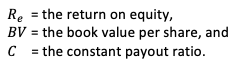
The dividend discount model can be expanded further. Let:
In the formulation above, dividends will equal . Note that this is an accounting identity. Further, if the return on equity remains constant and there is no additional outside financing, growth in per-share earnings and dividends can be approximated by the proportion of the return on equity that is retained, i.e., . The dividend discount model can now be expanded to:
RoE: Driving factor of the investment return equation
The model above makes it clear that for equities to generate greater investment returns over extended periods, RoE will need to increase. Consider what happens to the cost of equity during periods of persistently high inflation, which drives the cost of equity upwards as investors try to maintain the required real return. This, of course, results in valuation multiples contracting as the value of the business will decline as the cost of equity goes up. In this case, for the value of the business to hold at the same level as it was before inflationary expectations took hold, the return on equity will need to increase as well.
Clearly, for equities to serve as an inflation hedge, the return on equity will need to increase in proportion to the increase in the cost of equity. But does RoE respond positively to a significant increase in inflation?
US equities – return on equity through time
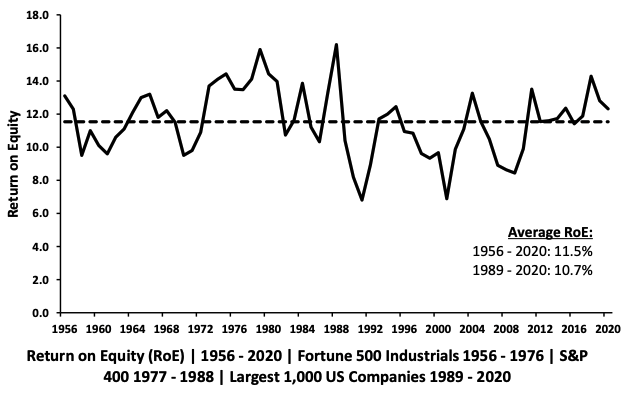
Figure 1 shows the return on equity for publicly-listed American companies since 1956. More than 40 years after Buffett observed that RoE of American businesses was rather sticky at around 12%, that number has stayed in its place. Indeed, the return on equity of American businesses has averaged at 11.5% over the past 65 years.
A quick note on data: F&P, in their paper, provided data from 1956 to 1979. However, as the data wasn't available for the S&P's series, they used the Fortune 500 Industrial series data instead. Later, Frank K. Reilly (Reilly), in a paper published in 19974, updated the F&P dataset to the year 1995. In the Reilly paper, data for the Fortune 500 was used for the period 1956-1976, and data for the S&P 400 was used for the period 1977-1995.
We have constructed a custom dataset of the largest 1,000 US companies by market capitalization for our analysis. On the first of April of every year, the list is rebalanced to have the largest market capitalization companies for that year. Our data runs from 1989 – 2020.
Accordingly, the final dataset for this paper uses Fortune 500 data for 1956-1976, S&P 400 data for 1977-1988, and the largest 1,000 companies dataset from 1989 onwards.
Figure 1: Return on equity for American companies
Factors affecting returns on equity
This section is technical in nature and discusses the formulaic expression of RoE’s decomposition. If you are not interested in the mathematics involved, please skip to the section titled “What can a company do to increase its RoE”.
While the driving factor behind return from stocks is the return on equity and that return on equity has been rather sticky at around that 12% mark, it is important to note that RoE isn't an immutable number. Back in the 1920s, the DuPont Corporation created and implemented a formula that breaks RoE into three components, as shown below:
Note that ,i.e., the net profit margin can be further expanded to account for the impact of interest expenses and income taxes, elements that are mainly external factors. Accordingly, we can decompose the overall RoE as below:
What can a company do to increase its RoE?
The above decomposition provides a complete overview of all factors that are available to a company that can allow it to increase its return on equity. To paraphrase Buffett, to increase the return on equity, the business will need at least one of the following to happen:
- improve the operating profitability of the business – there are natural limits to how high can the margins get to and profit margins are already at all-time highs;
- lower interest rates – a factor that has already been a big positive contributor and is unlikely to be a positive contributor any further;
- lower tax rates – with the current share of the government in corporate profits at near all-time lows and with the fiscal policies incrementally taking a populist tone, this factor is unlikely to be a positive contributor;
- higher leverage – much as is the case with the overall economic system, businesses have been highly levered as well; and
- higher asset turnover – there is some hope of an improvement here.
Corporate profit margins – stable EBIT margin, elevated net margins
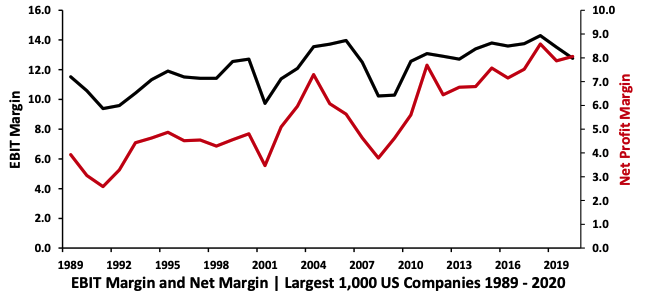
Figure 2 shows the evolution of EBIT margin and net profit margin over the past three decades. As is seen, while EBIT margin has been relatively steady around its average of 12%, the net profit margin has improved substantially.
Figure 2: EBIT Margin for American Companies
Interest rate – a persistent positive contributor
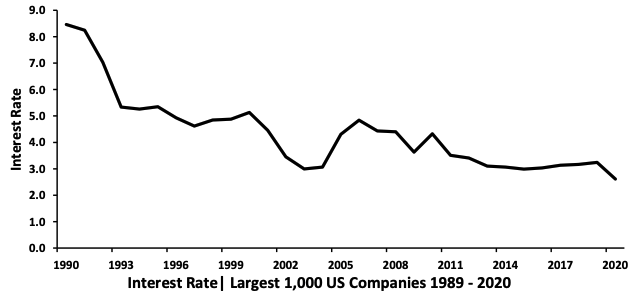
Figure 3 shows the interest rate calculated as interest expense divided by average of beginning of year and year-end external debt (long-term debt plus short-term debt) for American businesses. Not surprisingly, the current interest rate is the lowest of the past three decades and is likely to be one of the lowest, if not the lowest, of the recorded history.
Figure 3: Interest rate – Interest expenses as a % of external debt
Tax rate – the lowest tax rate of the past three decades
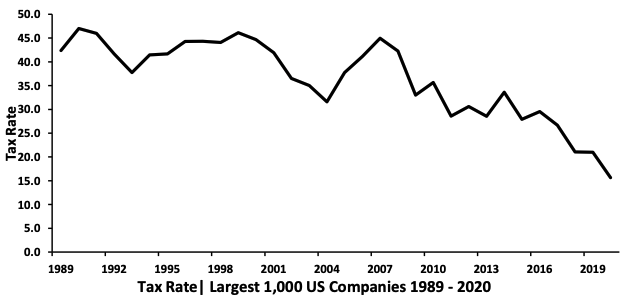
Figure 4 shows the aggregate corporate tax rate as applicable to pre-tax profits. Much as interest rates, taxes have been a persistently positive contributor to corporate America's profitability. These two factors, i.e., low interest rates and low tax rates, account for the peak net profit margins of American businesses.
Figure 4: Tax rate - Tax expenses as a % of profits before tax
Leverage – high and stable
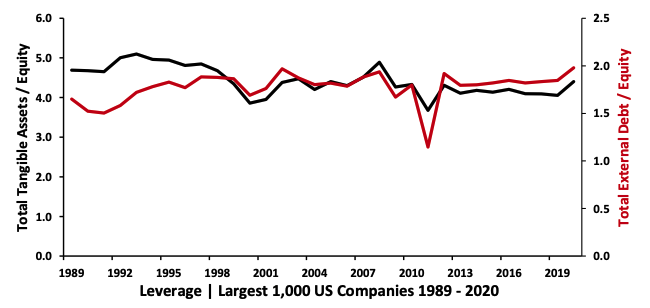
Figure 5 shows the total corporate leverage. When measured as total tangible assets divided by equity, leverage levels are relatively steady. However, when measured as external debt divided by equity, corporate leverage is towards historical highs.
Figure 5: Corporate leverage
Asset turnover
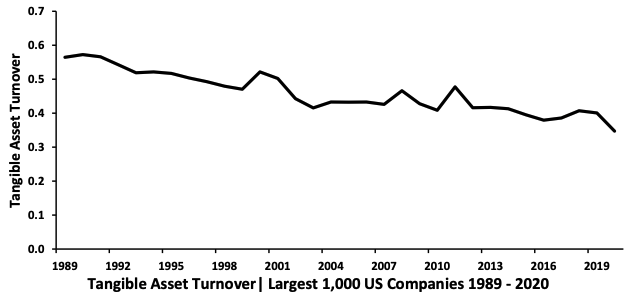
Figure 6 shows the evolution of tangible asset turnover for American companies. This tends to be a slow-changing component. In an inflationary environment, it should aid the corporate RoE as sales increase before assets have to be replaced at higher costs.
Figure 6: Tangible assets turnover
Summary
This article sets up the framework for understanding the long-run rate of returns from equities and identify the primary variable affecting the investment returns of stocks over the long-run. Return on equity is the true driver of investment return from equities. Further, the return on equity indeed behaves as a coupon, very much as Buffett surmised in 1977.
For those investors looking at equities as a way to protect against inflation, they will do well to understand the behavior of various components of the aggregate RoE. Two of these components, interest rates and tax rates, have driven corporate profitability upwards. In turn, they have aided the return on equity of American businesses. However, both these factors may very well be near the end of their positive contributions.
Indeed, if inflation was to rise meaningfully, interest rates will follow suit. Similarly, tax rates are much more likely to go up than down, driven by populist fiscal policies.
Baijnath Ramraika, CFA, is a cofounder and the CEO & CIO of Multi-Act Equiglobe (MAEG) Limited and is the Executive Director at Multi-Act India Advisors Ltd. Contact him at [email protected]. Baijnath’s thoughts and ideas can be read at his blog at www.symantaka.com
Prashant K. Trivedi, CFA, is a cofounder of MAEG and the CIO and Chairman of the Multi-Act Group of Companies.
MAEG is an investment manager and manages the Global Moats Fund, the Global Select Value Fund, the Global Select Private Credit SPC, and the Global Moats Investments LP.
1 How Inflation Swindles the Equity Investor, Warren E. Buffett, Fortune, May 1977
2 For the purposes of this write-up, we define Return on Equity as the Net Earnings of the Business Before Extraordinary Gains & Losses divided by year-end Equity.
3 Fuller, Russell J. & Petry, Glenn H. (1981). Inflation, return on equity, and stock prices. The Journal of Portfolio Management 1981.7.4:19-25.
4 Reilly, Frank K. (1997). The Impact of Inflation on ROE, Growth and Stock Prices. Financial Services Review, 6(1):1-17. ISSN: 1057-0810.
Read more articles by Baijnath Ramraika, Prashant K. Trivedi

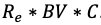 . Note that this is an accounting identity. Further, if the return on equity remains constant and there is no additional outside financing, growth in per-share earnings and dividends can be approximated by the proportion of the return on equity that is retained, i.e.,
 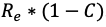 . The dividend discount model can now be expanded to: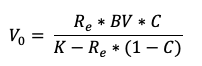

 ,i.e., the net profit margin can be further expanded to account for the impact of interest expenses and income taxes, elements that are mainly external factors. Accordingly, we can decompose the overall RoE as below: