Mohamed El-Erian says the Federal Reserve needs to renew its focus on its fight against rising prices after September’s surprisingly hot jobs report served as a reminder that “inflation is not dead.”
If the risk of stepping too far out into the yield curve is too much to bear, consider using intermediate bond options.
As we look at today’s economy and financial markets, we are at a crossroads: Will it be a long straight highway to a soft landing, or will it be a bumpy road to recession?
Over the past several years, high-yield bonds have delivered impressive returns, outperforming most other sectors of the fixed income market.
September is typically the weakest month of the year for stocks, but thanks to the much-anticipated federal funds rate cut, the S&P 500 turned in its first positive performance in a September since 2019
We expect bond yields to trend gradually lower—but it may be a bumpy ride. These seven strategies may help investors take advantage.
On the latest edition of Market Week in Review, Senior Director and Chief Investment Strategist for North America, Paul Eitelman, and Head of AIS Portfolio & Business Consulting, Sophie Antal-Gilbert, discussed the rally in Chinese equities.
I’ve been too pessimistic about the risks of a so-called hard landing for the US economy over the past few years. Although most of my conclusions that led to that view were correct, such an outcome remains very much in doubt.
CLOs have delivered the most attractive risk-adjusted returns in fixed income over the past decade, but are often deemed 'too complex.'
We believe municipal bonds currently offer a compelling balance of risk and reward for investors in higher tax brackets.
We think it would be a mistake for investors to let tighter spreads and upcoming maturities deter them from the euro high-yield market.
The M2 money supply growth rate in the U.S. accelerated, marking the first time the monthly change exceeded a 5% annualized rate after several months of more moderate increases. A 5% money supply growth is a desirable target, as it reflects 2-3% growth in the economy with 2% inflation. Thus, the uptick in money growth is reassuring and supports the possibility that we will avert a hard landing for the economy.
Our experts explore the implications of wider S&P 500 earnings growth, potential Fed rate cuts, and the outlook for global equities and bonds amidst ongoing economic shifts.
Financial conditions are a collection of asset prices and interest rates that have the potential to affect the real economy.
The economy reached an inflection point, with labor market conditions squarely in focus.
The bond market is overextrapolating recession risk.
Companies and governments around the globe spent the past month streaming into debt markets, seizing on declining interest rates ahead of an uncertain US presidential election that many fear will spur volatility in markets.
While agency mortgage-backed securities offer compelling valuations, not every mortgage is created equally.
The last two years brought challenges for investors across all walks of life, but particularly for retirees.
Despite double-digit dividend yields in many cases and the cushion such high dividends provide, buying agency REITs is not a guaranteed home run in a bull steepener.
VettaFi’s Head of Research Todd Rosenbluth discussed the NEOS Russell 2000 High Income ETF (IWMI) on this week’s “ETF of the Week” podcast with Chuck Jaffe of “Money Life.”
Gold is what you buy when everything isn’t goldilocks. Inflation, deflation, war, pestilence — gold is a certain anxious state of mind made tangible in a seductive but mostly useless metal. In a weird spin, gold has been enjoying a goldilocks period itself, hitting a new record last week. More that that, it seems almost immune to things that would usually drag it down.
Last week, the Federal Reserve made a significant move by cutting its overnight lending rate by 50 basis points. This marks the first rate cut since 2020, signaling the Fed is aggressively supporting the economy amid a backdrop of softening economic data. For investors, understanding how similar rate cuts have historically impacted markets and which sectors tend to benefit is key to navigating the months ahead.
Chair Powell successfully staved off hard landing concerns by reiterating the FOMC is confident in economic growth and inflation progress.
If investors had known in advance the size of the Federal Reserve’s latest interest-rate cut, would they have made big money on stocks and bonds trading on this market-moving intel?
A new exchange-traded fund attempting to carve out a slice of the $6.3 trillion sitting in traditional money-market funds is launching Wednesday.
The economy is not the stock market. And that’s good news.
Explore fixed-income tools that generate income and infrastructure.
A new wave of opportunity seems set to flow into private credit markets, which could enhance risk-adjusted returns and diversify portfolios. What's driving this potential?
In theory, growing a pool of wealth over decades – whether for a family, an endowment, or a pensioner – is a straightforward endeavor.
When stock markets rise, the bullish narrative tends to dominate, overlooking the potential impact of market declines. This oversight stems from two main problems: a basic misunderstanding of math and time’s critical role in investing.
The next president will face a difficult fiscal context.
Fixed income strategy and opportunities have remained relatively unchanged over the past few months. However, the much-talked-about monetary policy change has commenced.
Fixed income investors may want to take a middle-ground approach with bonds and opt for debt with intermediate maturity dates.
Schwab Sector Views is our six- to 12-month outlook for stock sectors, which represent broad sectors of the economy. The Schwab Center for Financial Research (SCFR) combines a factor-based approach with a market and economic assessment to determine the ratings. For the basics on sectors, please see Stock Sectors: What Are They? How Are They Used?
The seasons are changing. This weekend marks the autumn equinox—a time of year when the days get shorter, the weather gets cooler, and the leaves start to turn (at least for our friends in the north). While our calendars will show that fall has officially arrived, it may not feel like it as much of the nation will be enjoying unseasonably warm weather.
I was pleasantly surprised by the Federal Reserve (Fed) decision to begin the easing cycle with a 50-basis point (bp) cut as the real economic data came in relatively stronger than expected.
On September 18, the Federal Reserve cut the Federal funds rate, as expected, announcing at the same time that the Fed will continue to reduce its balance sheet. In my view, both of these decisions were appropriate. The Fed reduced short-term rates by 50 basis points, which was consistent with economic conditions that remain near the threshold of recession.
Since mid-2022, when the Federal Reserve was in the midst of its aggressive hiking cycle, investors piled over $1.6 trillion into money market funds, which include Treasury bills.
For years, the U.S. has been the dominant player in military spending, with American companies like Lockheed Martin and RTX (formerly Raytheon) commanding the global arms market. But now, Europe—specifically its arms manufacturers—may be the next big opportunity for savvy investors.
More than two years after first taking steps to contain swelling inflation, the Federal Reserve (the Fed) has taken a step back, suggesting monetary policy decision-makers have confidence that inflation will continue to move closer to the Fed’s target, allowing them to turn some attention to economic growth.
We expect the Fed to cut rates by 25 basis points at each of its remaining meetings in 2024 and to sustain that pace into 2025. This trajectory would get the Fed down to our estimate of the normal or equilibrium rate of interest of 3%-3.25% this time next year.
As GMO celebrates its 30th anniversary managing emerging debt this year, we offer our comprehensive guide to emerging debt markets. Given the tumultuous recent events – a global pandemic, defaults, repricing of interest rates, relentless strength in the U.S. dollar – we’ll focus on the Why as a starting point. Then we’ll dive into the proliferating How, covering strategies and vehicles.
From "how" to "why now," here are four things investors should understand about bond investing.
Former Treasury Secretary Lawrence Summers said inflation will probably prevent the Federal Reserve from lowering interest rates as much as expected in coming years.
Now that the Fed has begun the rate-cut cycle, investors can use option income ETFs to provide long-term income and risk protection.
With the decision on Wednesday to lower interest rates (for the first time since March of 2020) by a substantial 50 basis points (bps), rather than the 25 bps cut we typically see at the beginning of an easing cycle, the Fed is showing confidence that the disinflation trend will continue.
What history can tell us about seasonal returns.
We believe the Fed is on a path to continue to cut rates over the next several meetings to realign monetary policy with a now more “normal” U.S. economy.
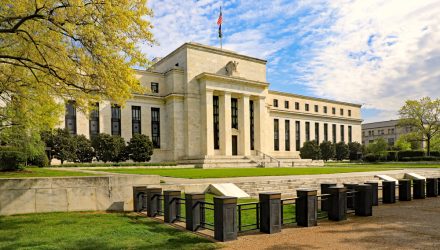
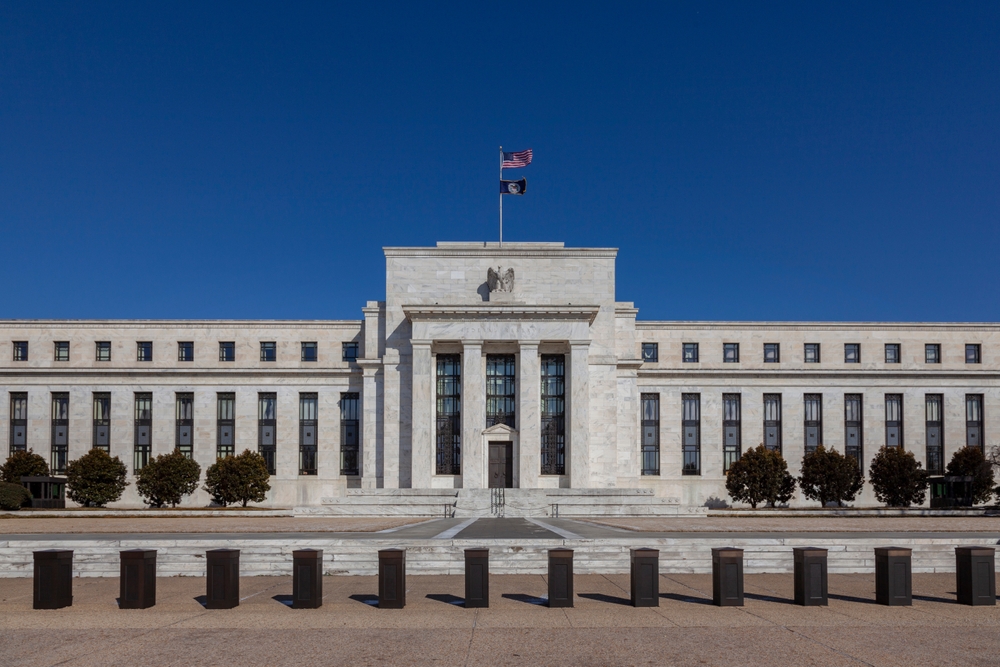
The Fed enacted a 0.50% interest rate cut, the first in the Fed’s historic fight against inflation that’s lasted over two years.