Investor sentiment and stock market valuations are getting increasingly stretched as indexes trek higher, but solid underlying breadth has been a positive offset for now.
VettaFi’s Brian Coco explains the index construction process and highlights three future indexing trends. Financial regulation expert Sean Tuffy discusses crypto ETFs, importance of multi share class structure, SEC’s swing pricing proposal, and more. CVA’s Ben Harburg spotlights the Core Values Alpha Greater China Growth ETF (CGRO) and offers the overall investment case for China.
The apparent disconnect between the state of the US economy and voters’ perceptions of it has puzzled economists for months. Unemployment is low, inflation has come way down and real wages are no longer lagging behind.
OPEC+ strategies and geopolitical tensions could roil markets.
A group of systematic investors betting on large Chinese companies has emerged largely unscathed from this year’s “quant quake” that’s sparked turmoil in the stock market and a crackdown by regulators.
Bitcoin and gold were both top of mind at this past week’s 2024 Investment U Conference in Ojai, California, which I had the privilege of presenting at.
The only thing that matters to Alphabet Inc. investors is whether it can get artificial intelligence right.
If you need to sell your home in the next few months, I’d get on with it. As we enter the spring selling season, it’s becoming increasingly clear that the period during which sellers had the leverage in the housing market is over.
Adding real assets to a stock and bond portfolio can help boost returns and smooth volatility when inflation runs above 2%.
Despite conventional wisdom, political uncertainty doesn’t necessarily pose acute risks to the healthcare sector.
In the early months of the COVID-19 pandemic, many people with the means to do so left New York City and New York state. With state finances in particular highly dependent on high earners’ income taxes, this was a worrying development.
Big Tech stocks created, and have so far dominated, the trillion-dollar club in the US. For the first time, there’s a race brewing for an outsider to join their ranks.
Over the past year and counting, money managers have ramped up exposure to a handful of Big Tech companies – swelling market valuations along the way.
Today’s episode will focus on the Human Capital Factor (HCF). This factor applies workplace behavioral science, financial acumen and deep data science to capture the powerful connection between human capital and stock performance. By understanding company culture and intrinsic employee motivation, my guests have transformed these insights into investment strategies. For advisors looking for a way to generate additional alpha in client portfolios, understanding the HCF and how these products fit in a portfolio may lead to better returns and greater client satisfaction levels.
If you’re losing your mind and plagued by fear of missing out, it might be that you’re best served with some passive investment exposure in your portfolio. Not because it will do well, at least not in our estimation, but so you don’t lose your mind.
What caused the system’s funded status to deteriorate from 100% to 79.3% over the past 40 years? And more importantly, what actions will Congress take to reform the system?
Three consecutive quarters of strong growth have put productivity either back on trend or well above it, depending on which recent trend line you’re following. Productivity’s sharp rise and fall from 2020 to 2022 was apparently just another one of those weird pandemic phenomena, now disappearing in the rearview mirror.
Many investors remain in cash, but we think it’s time to shift exposure to bonds.
To the casual observer, the backdrop to this year’s record-breaking stock rally has been one of epic calm in markets. To Wall Street’s math wizards, it’s been anything but.
Regarding the surprisingly strong employment data, Fed Chair Powell said the quiet part out loud. The media hopes you didn’t hear it as we head into a contentious election in November.
Your choice is stark: Adapt to engage this emerging demographic or risk obsolescence.
A key economic mistake people make is thinking growth leads inflation. One reason they do that is because inflation is a monetary phenomenon. When money is too easy, first growth rises, and then inflation rises with a longer lag due to excess dollars in the system.
Even at the risk of sounding like a parrot by repeating the same thing again and again, we think that it is, once again, appropriate at this time to do so: “One data point doesn’t a trend make.”
More hedge funds are agreeing to conditions on their performance fees, reflecting a tougher environment for attracting investors to riskier strategies.
The consumer price index (CPI) for January showed that core inflation held steady at a rate of 3.9% last month, a small setback in a trend of moderating inflation in the U.S. Healing in global supply chains and a rebalancing of the U.S. labor market have helped to dramatically tame inflation over the past year.
ETF Prime Host Nate Geraci is joined by Bloomberg’s Eric Balchunas, ETF Think Tank's Cinthia Murphy, and VettaFi's Todd Rosenbluth to recap the ETF event of the year and discuss the industry's hottest trends.
The latest consumer price index reading indicated that core prices — excluding volatile food and energy — rose 0.4% in January from a month earlier, exceeding the median economist forecast.
One of the major benefits of municipal bonds is that the interest earned is exempt from federal income taxes. The appeal of earning money that you do not have to pay taxes on understandably piques the interest of many investors.
A new approach to environmental, social and governance (ESG) research could ease investors’ frustrations with sourcing and evaluating the data required for objective credit analysis. Thanks to a surge in company reporting, ESG metrics can now be quantified and incorporated into analyses that were historically rooted in fundamental research alone.
In studies, 90% of drivers think they are above average. We believe that 100% of the people who pick stocks for a living think they will be above average.
We see the usual mess and risks in the world as you do, but we also are seeing more than enough interesting things in which to invest capital.
Investors experienced a shift in global risk sentiment during Q4, marked by lower inflation and the anticipation of an end to the rate hiking cycle.
With a laser focus on the future, David Mann, our Head of Global Exchange-Traded Funds (ETFs) Product and Capital Markets, shares his 2024 outlook for the ETF industry and the key trends he sees taking shape.
Your active managers are more competent than they look.
At its core, inflation is too much money chasing too few goods. That was the case in 2020 through 2022. This is not the case anymore.
While focus remains on when the Fed will start cutting rates, history suggests other factors must be looked at when assessing forward stock market performance.
Treasuries are headed for their biggest two-day loss in months as strong economic data reinforced the message of Federal Reserve officials including Chair Jerome Powell that interest-rate cuts are unlikely to begin before May.
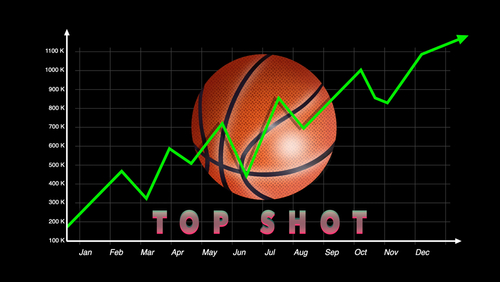
State taxes are not just a footnote in the financial statements of NBA players; they are a central element in the negotiation process.
A period of market volatility and consolidation is likely as markets have already priced in much of the economy's good news.
Modern economies, even small ones, are unfathomably complex. The number of variables is far more than any human can comprehend or any model can track. It’s really no wonder so many forecasts are wrong.
In Russell Investments’ factor portfolios, the Global Large Cap Growth, Momentum and Size factors outperformed the MSCI All-Country World Index during Q4, while the Global Large Cap Value and Low Volatility factors underperformed the index. The Global Lage Cap Quality factor was flat for the quarter.
As the calendar closed on 2023, investors were once again treated to magnificent returns in their stock and bond portfolio.
History shows that monetary policy drives investment performance. When the Federal Reserve (Fed) hikes or cuts the fed funds target rate in response to economic conditions—or stays on hold while it assesses the data—performance will differ by sector.
Andy Rothman reviews data points that offer insights into the coming quarters.
Given the interplay of economic data, cognitive biases, and political agendas, it’s no wonder that our views on inflation are complex and may not reflect economic reality.
BlackRock’s Jay Jacobs discusses the recent debut of the iShares Bitcoin Trust (IBIT) and offers key takeaways from the firm’s 2024 thematic outlook. VettaFi’s Stacey Morris highlights indexes underlying the Texas Capital Texas Oil Index ETF (OILT) and the Alerian MLP Index ETN (AMJB). GMO’s Tom Hancock expands on the quality factor and the GMO U.S. Quality ETF (QLTY).
C.S. Lewis coined the term ‘chronological snobbery’. According to Lewis, the definition of chronological snobbery is “the uncritical acceptance of the intellectual climate of our own age and the assumption that whatever has gone out of date is on that count discredited.”
Last July, I issued an open letter to the annuity industry requesting the introduction of a product to meet the needs of independent advisors who adhere to a safety-first, goals-based investing philosophy. That call has been answered.
Much discussion of economics since the publication of Thomas Piketty’s book has indeed been influenced by his data and analytic framework.
Value investing is the lens through which many view financial markets. Yet, a simple value factor has performed poorly for the last 16 years. Is the value effect over, or will it come back in 2024?