Stocks fell and volatility rose this morning as banking sector worries persist.
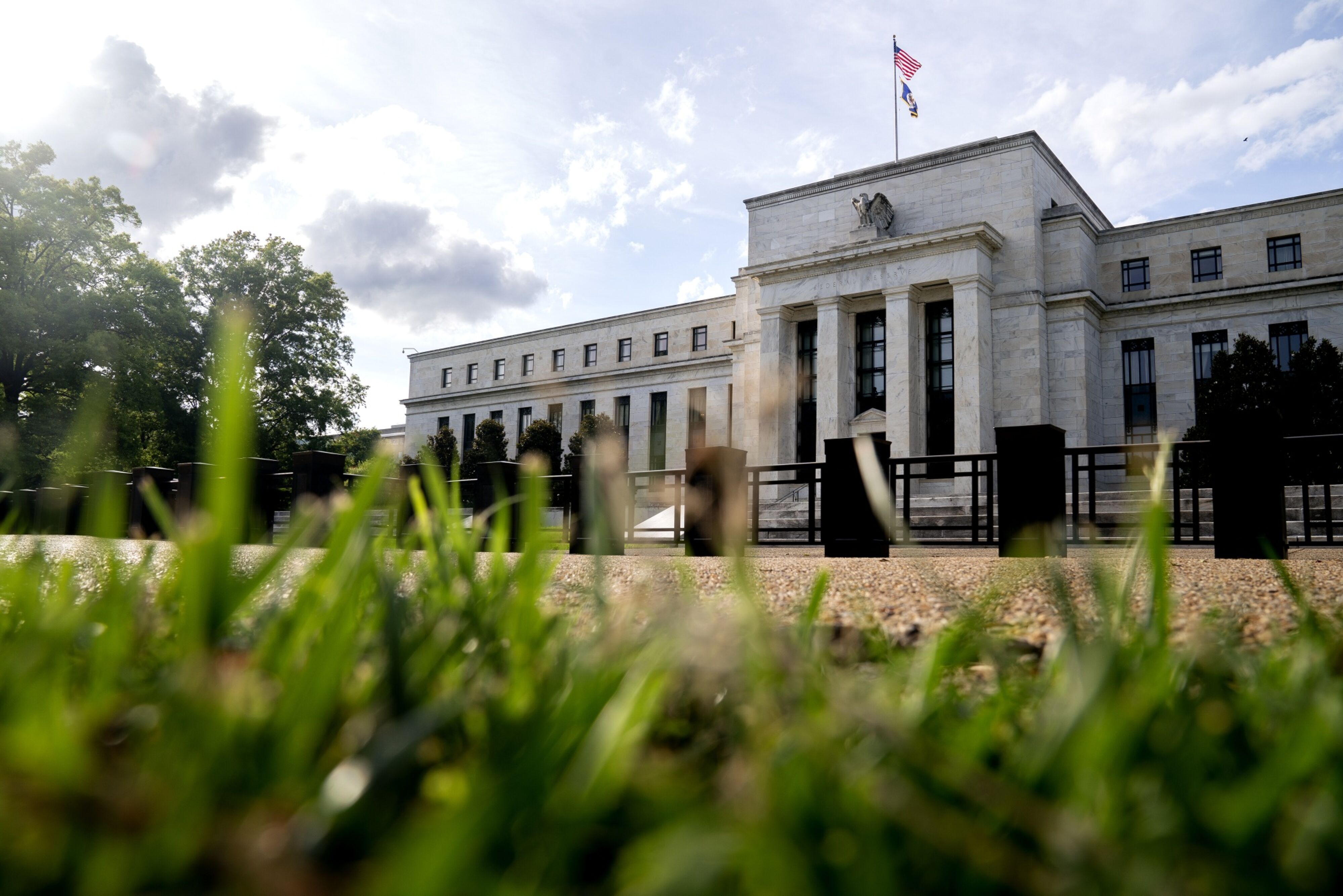
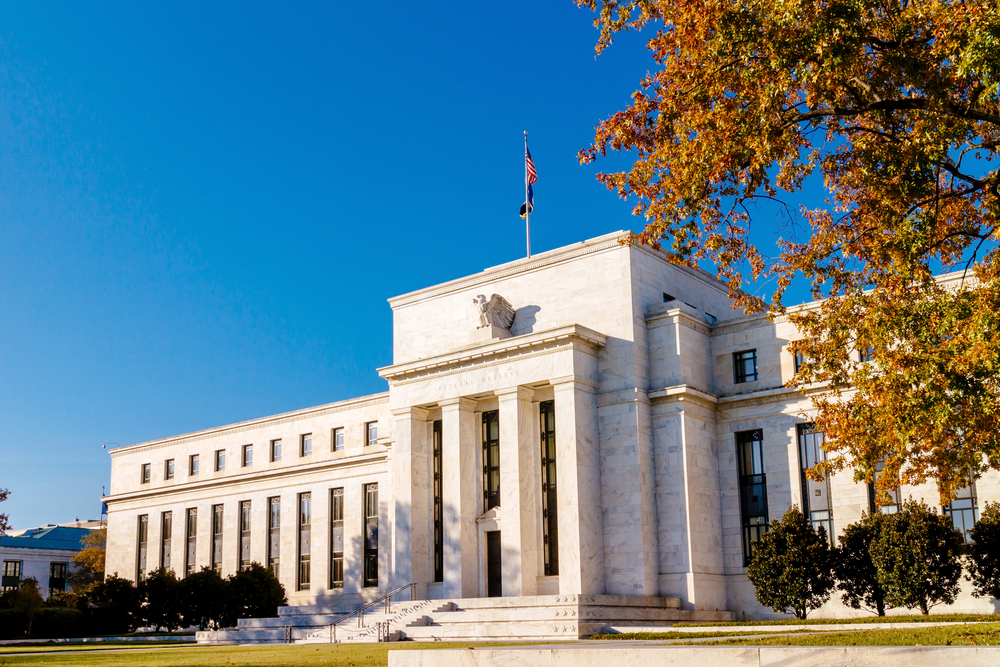
Yesterday, the Fed completed its regular meeting and announced that it would increase interest rates by 25 bps, or a quarter percentage point.
Lower interest rates and more liquidity are the keys to boosting confidence in the financial sector, but they impede the Fed's ability to fight inflation.
Financial markets seem to have returned to trying to time a dovish Federal Reserve turn, but Franklin Templeton Fixed Income CIO Sonal Desai says with a tight labor market and inflation running at 5%-6%—don’t bank on it.
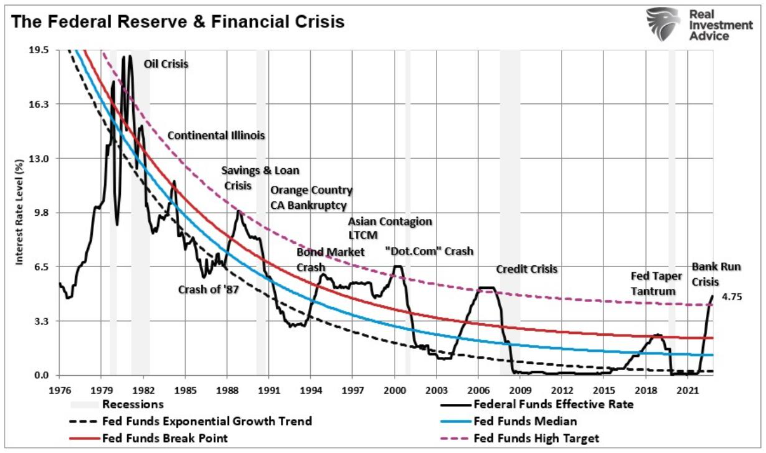
In a closely watched decision, the Fed lifted its benchmark lending rate by 25 basis points to a range of 4.75% to 5% at the conclusion of its March policy meeting.
The Fed raised short-term rates by another 25 basis points (bp) today and made no changes to the expected peak for short-term rates later this year.
The Federal Reserve raised interest rates by a quarter percentage point and signaled it’s not finished hiking, despite the risk of exacerbating a bank crisis that’s roiled global markets.
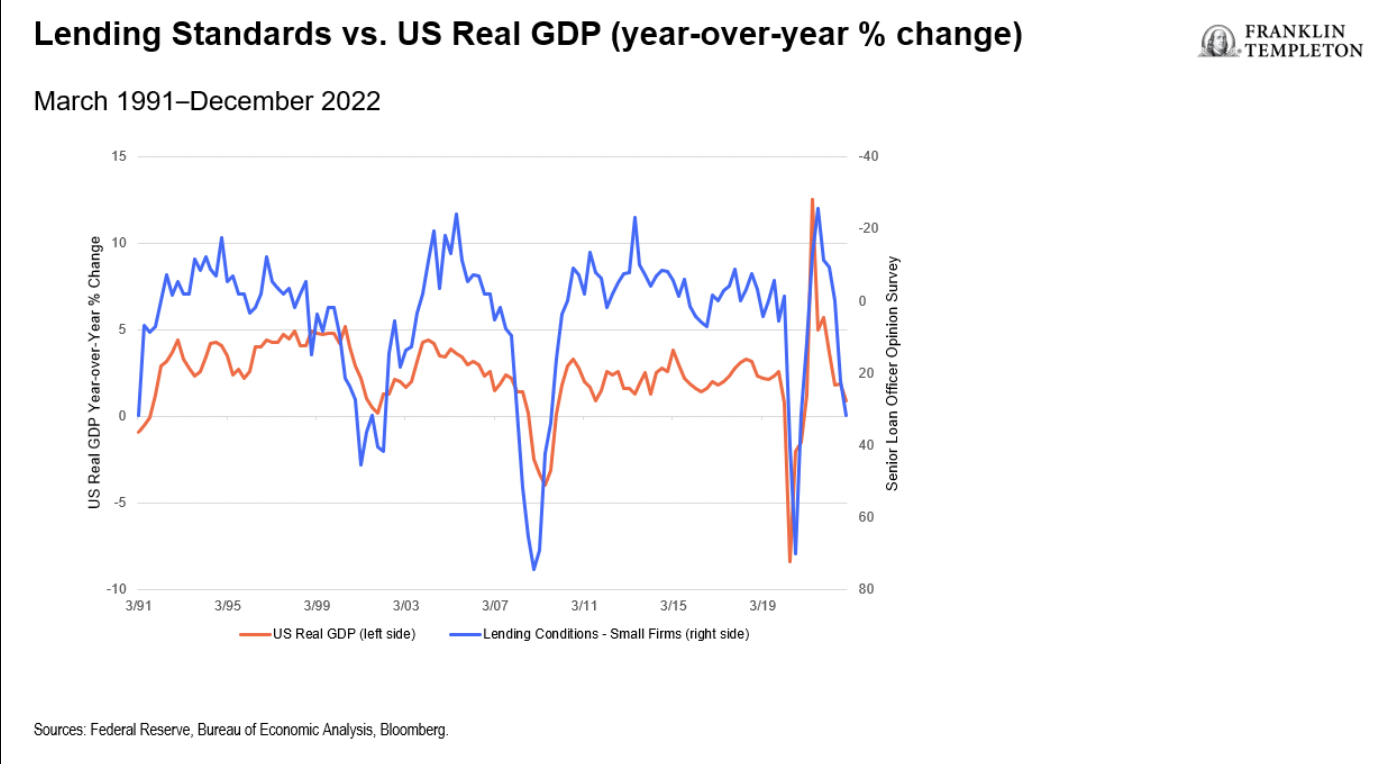
Both the leading indicators of growth and liquidity continue to suggest growth will slow as 2023 progresses.
U.S. stocks climbed for a second straight day Tuesday, with the tech-focused Nasdaq Composite ending near a five-week high, as jitters over bank instability eased.
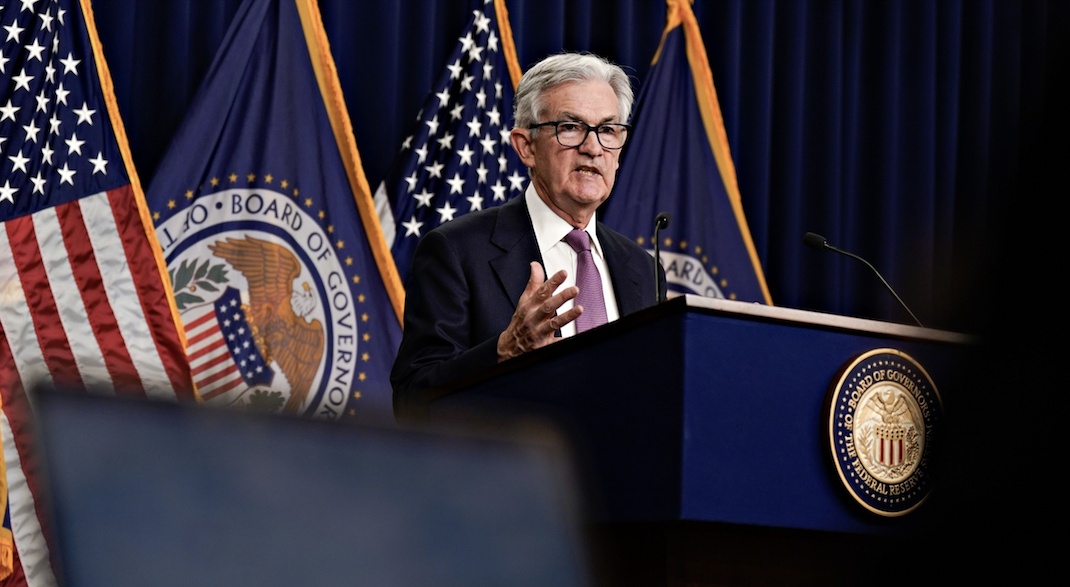
All eyes in the financial and economic world will be laser-focused Wednesday on the Federal Reserve as Chair Jerome Powell tries to balance his fight against inflation against a sudden banking crisis.
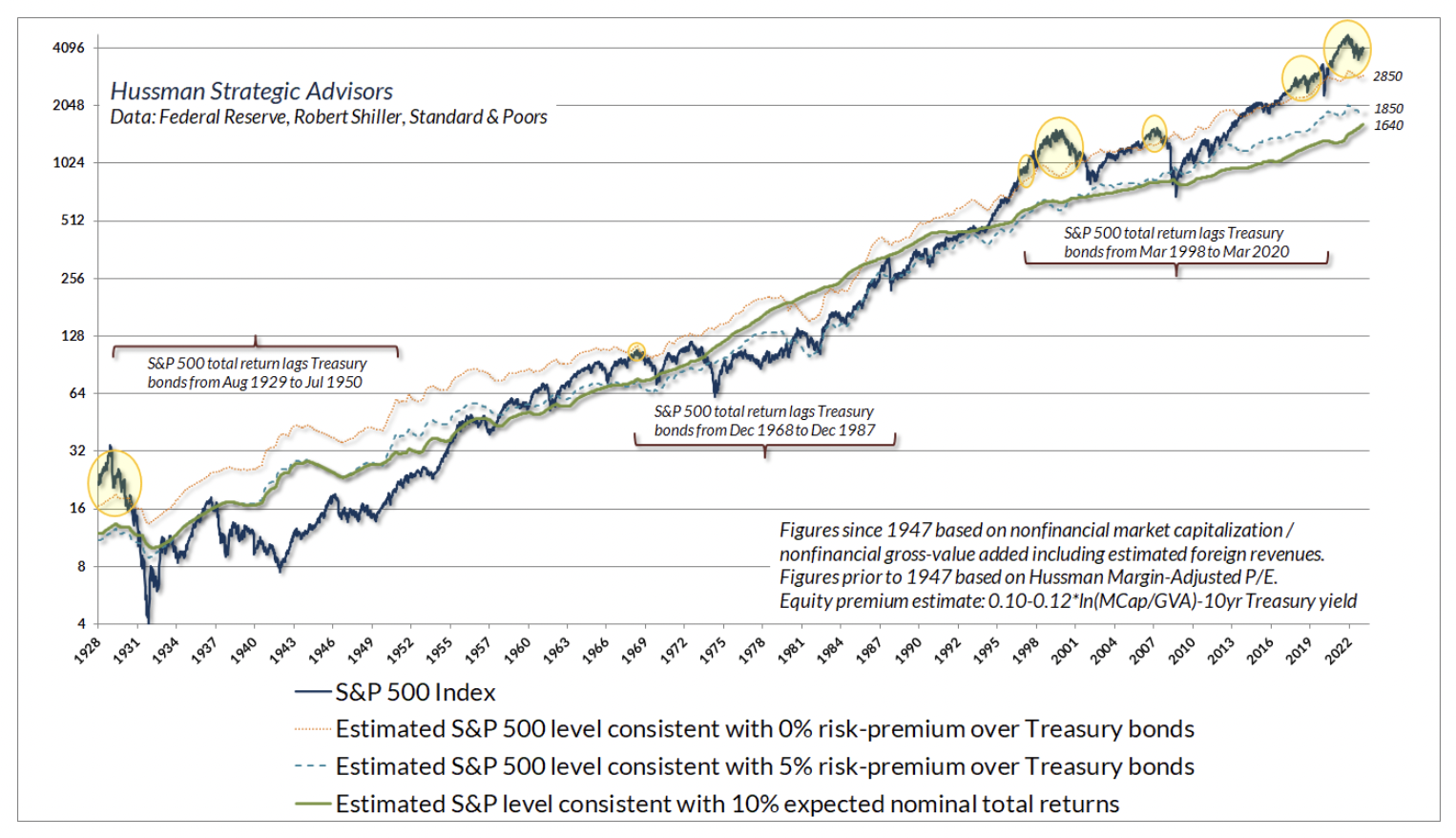
We have been reminding everyone that we believe we are unwinding a financial euphoria episode that Charlie Munger called the biggest of his career, “because of the totality of it.”
Banking turmoil continues to rattle the global markets and investor confidence.
CIO Larry Adam outlines the positive events that are outweighing negative developments and looks at dynamics to focus on in the week ahead.
The simplest thing that can be said about current financial market and banking conditions is this: the unwinding of this Fed-induced, yield-seeking speculative bubble is proceeding as one would expect, and it’s not over by a longshot.
Chief Economist Eugenio J. Alemán discusses current economic conditions.
Steve Chiavarone doesn’t want to scare anyone, but what he remembers most from the last banking crisis was how sure most people were that it wouldn’t happen.
Markets have been trading as if the end of the world is at hand – but what most participants see, behind the recent financial turmoil and contagion fears, is a still-strong US economy, the MLIV Pulse survey shows.
The late great Supreme Court Justice Antonin Scalia was often in dissent in key legal cases during his long career.
Robust risk management is essential for fixed income investors. In his latest commentary, Marcus Moore explains why our sustainable investing team considers ESG factors as material business risks, similar to the traditional risks they also analyze.
Franklin Templeton Investment Solutions explores the shared macro concerns that set the stage for the recent banking crisis, its ripple effects on the broader economy and implications for multi-asset investing.
A TIPS is risky in the short term and riskless in the long run, which is precisely the opposite of, and complementary to, a T-bill, which is riskless in the short term but, because of reinvestment rate volatility, risky in the long run.
With the collapse of Silicon Valley Bank, questions of potential “bank runs” spread among regional banks.
Could the consensus view of a “no recession” scenario be wrong? As portfolio managers, this is the question we ask ourselves daily.
For years I’ve used a sandpile metaphor to describe complex systems like banking. Keep dropping grains of sand long enough and you will eventually trigger an avalanche.
Sixty-six million Americans currently receive monthly benefits from Social Security, which, if nothing changes, is expected to be insolvent by 2035 at the latest. It’s time for Americans to take a greater role in their own retirement planning.
The full story of SVB is still unfolding, but we offer some initial reactions.
My “five-step investment process” provides an ongoing systematic framework for making portfolio decisions, and further incorporating financial planning and tax considerations into overall portfolio construction.
GMO 7-year Asset Class Forecast: February 2023
The key to if — or when — the US economy falls into recession will depend on how the latest turmoil in the banking sector spills over to Main Street.
U.S. equities are lower as pressure has returned to the banking sector, which remains top of mind.
Following this week’s banking crisis and the return of government bailouts, investors and traders alike are once again calling for a Fed pivot.
The market gyrations are not rooted in a banking crisis, but in financial cracks from rapid rate hikes.
Portfolio manager Peeyush Mittal and research analyst Swagato Ghosh say India has a fiscal playbook to chart a path of stability and growth.
In a dovish move, the central bank raises rates by half a point.
Implications of SVB and Credit Suisse on the European banking sector—check out highlights from our recent panel discussion with Kim Catechis, Investment Strategist with the Franklin Templeton Institute.
Is upheaval in the banking sector the prelude to a financial crisis, or just the biggest bump yet on the road to restoring order to the economy? Stock investors clinging to hopes this too shall pass are having their tolerance for pain severely tested.
Although the dust has not yet settled, we think it’s a good time to pause and consider the implications of the recent Silicon Valley Bank (SVB) collapse.
Financial market volatility has followed the collapse of Silicon Valley Bank. Stephen Dover, Head of Franklin Templeton Institute, shares his thoughts on possible implications outside the United States.
What our experts think about today's market action.
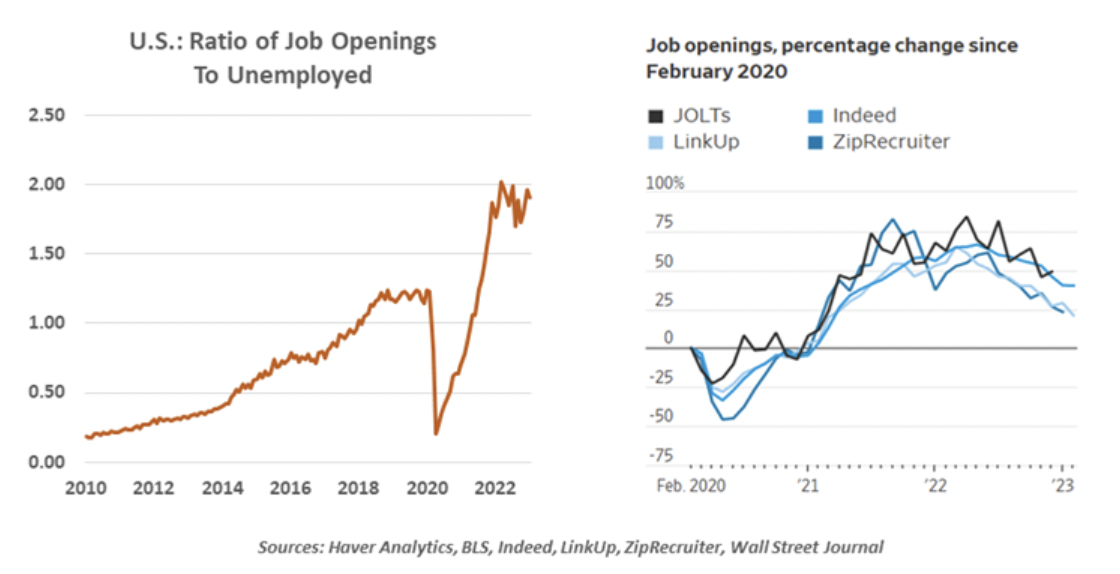
Elevated job openings may not give an accurate view of labor market conditions.
The banking earthquake is sending shockwaves through the financial markets. The financial and economic aftershocks, soon to follow, are underappreciated and will prove worse than the earthquake.
Advisors are increasingly using annuities when they determine that it is in their clients’ best interests. They recognize that it is a client’s income – not their wealth – that matters in retirement, and annuities are the only way to provide a longevity-protected income solution. Rising inflation and uncertainty over high market valuations have made the need to secure lifetime income more acute, and rising interest rates have made annuities more affordable.
Here to discuss how to help clients and prospects determine if an annuity is a good fit for their financial needs are three members of the Protective Life team: Lori Marino, Tom Sullivan and Mark Berwanger.
U.S. stocks are falling in pre-market trading as recent banking turmoil on this side of the pond made its way to Europe.
The failure of Silicon Valley Bank raises questions for Fed policy and economic growth.
Government debt yields plunged globally as mounting financial-stability concerns prompted bond traders to abandon bets on additional central-bank rate hikes and begin pricing in cuts by the Federal Reserve.
101 Lesson of Structural growth versus recovery growth investing.
Bridgewater Associates founder Ray Dalio warned Silicon Valley Bank’s failure shows cracks widening in global finance, joining other US billionaires raising the alarm on fallout from the lender’s collapse.
Headline CPI came in today as expected at 0.4%, however core inflation (ex food and energy) came in slightly higher at 0.5% versus the estimated 0.4% increase.
The extreme “tail” risk ahead may be disorienting.
The new SECURE Act 2.0 (Setting Every Community Up for Retirement Enhancement Act) seeks to make it easier for U.S. taxpayers to save for retirement and expands access to retirement plans.