While 3Q23 growth showed the economy expanded at a 4.9% annualized rate, it is important to remember that the GDP report is backward-looking.
Tesla’s stock has fallen 20% the past month as bears continue to apply pressure following the electric automaker’s Q3 earnings report. A Tesla turnaround or more selling will provide enough volatility for traders unsure of which side to take, which is where leveraged exchange-traded funds (ETFs) can help.
While bond prices are generally down, the income they provide is up, providing potential opportunities for fixed income investors.
More investors are turning to active management for their fixed income exposure. In a poll conducted by VettaFi, a third of respondents have more than half of their fixed income exposure tied to active management.
Higher macro and market volatility, along with greater dispersion, creates a favorable environment for active trading, according to K2 Advisors. Get the team’s latest hedge-fund strategy outlook.
Identifying problems is great. Identifying solutions is even better, especially when the politicians who are supposed to be solving our big problems don’t even try.
A transition away from fossil fuels is likely required to avert a significant warming of the planet. Rising temperatures could lead to crop failures, storm intensification, ocean acidification and deoxygenation, and infrastructure damage, among several other risks.
Capital Group is seeing an opportunity for investors to load up on global equities after the Federal Reserve held rates on Wednesday, signaling an end to its aggressive tightening cycle.
Recent economic data, we believe, suggests sticky inflation with positive GDP growth is more likely in 2024 than a soft landing. We expect that interest rates will stay higher for longer on the back of increased Treasury supply and hawkish Federal Reserve rhetoric.
Ultimately, October was a positive month in several different areas for the precious metal. It saw an increase in not only its price but also investor engagement on VettaFi digital properties. On top of that, a pair of gold miner ETFs saw a bump in their performance.
Jon Fee and Jane Edmondson dive into HIPSTR, an income generated index that utilizes closed end funds in MLPs, BDCs and REITs.
I remember the exact moment in 2007 when I knew the financial industry was headed for a reckoning. There was no data point that tipped me off, no great insight about the housing market.
The selloff in US debt appears close to being over as the Federal Reserve nears winding up its most aggressive rate hikes in a generation.
Investment taxes can have a real impact on a portfolio. Investors should be aware of four key tax realities they currently face. Without a plan to manage these taxes, investors may find their ability to retire comfortably could be compromised.
It all starts with the firm’s flagship ETF, the KraneShares CSI China Internet ETF (KWEB). The fund is designed to capture the growth opportunity in China. The concentrated thematic China ETF has a 10-year track record — and it’s volatile.
With unanimity, the Fed opted to keep the fed funds rate unchanged but remains attentive to the idea that inflation risk should still be paid attention to.
I have always had an affinity for short-term interest rates, and it is from my days as an index arbitrageur.
The US economy just enjoyed its strongest quarterly growth outside of the pandemic era since 2014, expanding at a 4.9% annualized rate in the three months ended Sept. 30.
A recent survey asking economists about the probability of recession next quarter shows a retreat in expectations from a high of 47 percent at the end of 2022 to just 34 percent, according to the Philadelphia Federal Reserve.
In this video, Chuck Carnevale, Co-Founder of FAST Graphs, a.k.a. Mr. Valuation will discuss the current investment opportunity in Realty Income (O), a popular real estate investment trust (REIT).
Private real estate fundraising plunged in the third quarter as higher interest rates cooled investor appetites for risk.
It’s been a great year for alternative income strategies as inflation, interest rate, and recession risk fears dominated markets. Garrett Paolella of NEOS and Christian Magoon of Amplify ETFs joined VettaFi’s Tom Lydon to discuss alternative income opportunities at the Income Strategy Symposium hosted by VettaFi on October 27.
Less than a third of Gen Z feels financially secure while just more than half feels “very or extremely worried about not having enough money,” according to a recent study by consulting firm EY. “Welcome, the water’s warm!” says every American millennial.
Washington seems determined to ignore the country’s rapidly worsening fiscal picture, but sooner or later policymakers will be forced to pay attention. When they do, they’ll find that changes to Social Security are unavoidable.
Advisors plan to allocate more to fixed income ETFs as 2024 approaches. In a poll conducted by VettaFi, attendees were asked what bond changes they were considering heading into year-end. And 60% of respondents said they plan to add to fixed income ETF exposure using proceeds from cash and/or equities.
Contrary to many analysts’ expectations, emerging markets have not spiraled into a debt crisis. This can be partly attributed to central banks’ decision to reject populist policy proposals in favor of a modern iteration of macroeconomic orthodoxy.
Inflation has been coming down since its peak in the summer of 2022. Because the U.S. has so far avoided a recession, soft-landing hopes have risen along with the decline in inflation.
Franklin Equity Group portfolio managers Daniel Scher and Blair Schmicker make the case that REITs are more than just a “collection of assets,” as they were once viewed, and instead offer exposure to quality business models and professional management teams with long track records of value creation.
The typical American is a lot richer now than they were just before the pandemic — and this improvement is at least partially due to government support for families and businesses in 2020 and 2021.
Yields are at some of their highest levels in over a decade. This means that if you own fixed income in your portfolio, there is a good chance that you are seeing unrealized losses on your monthly statements (fixed income math = yields higher, prices lower).
The significant outperformance of US stocks over the last decade is unlikely to repeat over the coming 10 years, according to Goldman Sachs Group Inc.’s chief global equity strategist.
Earnings results thus far underscore the strong bifurcation within the market, which is confirmed by the continued deterioration in breadth throughout the current correction.
The renewed opportunity set in fixed income is enabling investors to achieve attractive returns while taking on less risk.
Households are better off today than before the pandemic.
Harness the power of neuroscience and psychology to help your clients reach their long-term planning goals.
To have a shot at taming inflation, the Federal Reserve is intent on tightening financial conditions across the economy. But they haven’t made much of a dent in corporate America yet.
Direct Indexing empowers RIAs to transform tax losses into valuable assets, helping clients offset capital gains on federal tax returns and minimize annual income tax liabilities.
In this article, Portfolio Managers Jonathan Curtis and Ryan Biggs share their insights on where they see opportunities in digital transformation and how they are thinking about the relative attractiveness of public and private company investment opportunities.
Chief Economist Eugenio J. Alemán discusses current economic conditions.
Calamos Investments and Aksia joined forces this year to launch the Calamos Aksia Alternative Credit and Income Fund (CAPIX), an interval fund designed to provide advisors and their clients access to private debt investments – most of them historically only accessible to institutions – with the liquidity investors demand. The accessibility concept was nothing new for Calamos – it created one of the first retail liquid alternatives funds three decades ago – and for private credit, it engaged a partner, Aksia, that has been managing private credit for institutions almost as long. (For its part, this is Aksia’s first foray into advisors and retail clients.). Calamos’s Bob Behan is here to talk about the partnership and the current opportunity set in private credit.
Like many advisory firms, we work with many multi-generational families and use a team approach that matches our younger advisors with clients in the same demographic to help them prepare to be good stewards of assets they earn and inherit.
While getting your loans wiped out in one fell swoop can seem like a lifesaver, it may come with some negative financial implications. I cover what you need to know.
The financial world’s computer-loving crowd is preparing for the dawn of a new AI-powered era — but that doesn’t mean they’re ready to fully embrace the technology just yet.
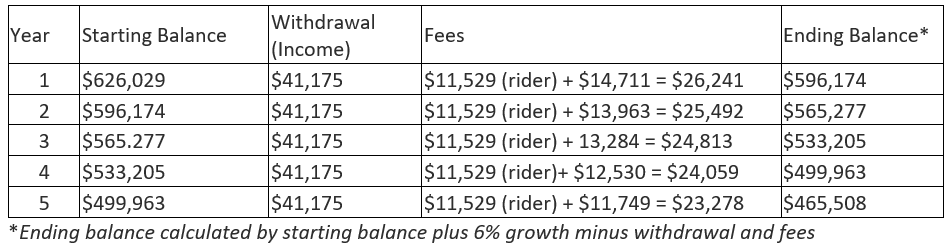
I analyze the math of annuity income riders and how you pay the insurance company to draw down your own assets. It is highly unlikely the insurers will pay a dime, which makes those riders questionable.
On October 27, 2023, VettaFi hosted an Income Strategy Symposium that saw nearly 900 advisors and investors register for the event. The symposium was a success for everyone involved, and included some of the top firms and individuals in the industry offering their insights into several different income-related topics.
Many entry-level jobs, especially those in education and social services, do not pay well enough for recent graduates to balance their student loan payments with rent and other expenses. This is where income-based repayment plans for student loans come in.
With the Federal Reserve poised to change direction, investors who have been investing in very short-term securities may soon face "reinvestment risk."
With 10-year Treasury yields hovering around 4.84%, the flirtation with 5% is ongoing and dangerous, spooking many fixed income investors in the process.
In our latest fixed income insight, we highlight four compelling investments for the remainder of 2023 and into 2024.
VettaFi hosted an Income Strategy Symposium that saw nearly 900 advisors and investors register for the event. The symposium was a success for everyone involved and included some of the top firms and individuals in the industry offering their insights into several different income-related topics.