Underlying US inflation ran at a faster-than-expected monthly pace in August, leaving the door open for additional interest-rate hikes from the Federal Reserve.
PIMCO’s Global Advisory Board discusses economic and geopolitical factors shaping the long-term global outlook.
There has been lots of speculation lately regarding China’s economic “decline” or potential economic “perils,” so much so that newspaper articles about the coming demise of China’s miracle economic growth over the previous decades continue to take (our) time away from other, perhaps, more important topics.
Higher yields on cash have allowed some de-risking.
Changes in sentiment may drive the performance of the Eurozone equity markets, even with disappointing economic data.
Everyone — from moms and pops to corporate treasurers and the mega asset managers — is piling in, won over by a unique opportunity: To lock in a 5% yield, and protect themselves from uncertainty over the US economy.
Concern over China’s sputtering economy has created a “dramatic shift” in investors’ equity allocation — a rush toward the US and an exodus from emerging markets, Bank of America’s latest global fund manager survey showed.
We expect yields to fall later this year and into 2024 as inflation continues to cool.
In September, where volatility can strike at any time, investors will want the safety cushion of bonds for their portfolio. At the same time, short duration continues to be the default play as the U.S. Federal Reserve still attempts to cool down inflation further.
The U.S. dollar has dropped to its lowest level against other currencies in 15 months. In this environment, a wide range of assets stand to profit, not least of which is the AI-infused U.S. technology sector. However, no space stands more ready to benefit from this environment than emerging markets..
New research shows that stocks have historically been a poor hedge against inflation over anything but very long horizons.
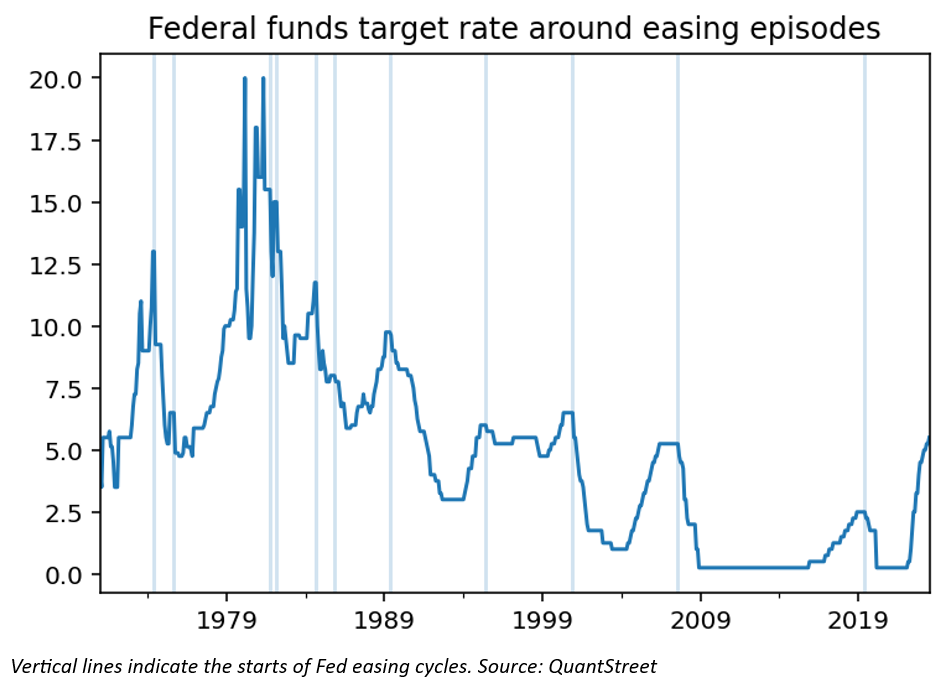
The Fed typically starts to ease ahead of economic weakness. But this isn't necessarily bad news for financial markets.
It’s an important time for Medicare beneficiaries to optimize their healthcare coverage and costs, and financial advisors are in the perfect position to guide clients through this crucial planning opportunity.
Mega-cap stocks continue to dominate the market in 2023. The question is, why? After all, many other great companies have arguably much better valuations and fundamentals.
All eyes this week will be on the release of the US consumer price index for August on Wednesday, especially after the sharp reduction in inflation from 9.1% in June 2022 to just more than 3% in July.
Morgan Stanley has pushed back against Treasury bears, saying investors should buy US sovereign debt as markets may be too optimistic over the prospect of a soft-landing for the economy.
Traders in the $325 billion industry for emerging-market exchange-traded funds are shifting cash toward strategies that focus on brighter spots in the developing world as China’s economy stumbles.
The S&P 500 Index’s surprise 16% rally this year is rewarding traders who bought in early and punishing those who’ve remained skeptical. But fear of a downturn remains.
Even though past performance doesn’t guarantee future results, investors should prepare for continued market volatility this month.
Resilient consumer spending has been a pillar of the US economy. While activity may soften, we think the consumer will help the coming slowdown stay mild.
With government stimulus over, accumulated savings starting to become depleted, rents soaring, and student loans about to switch back on, it appears a credit cycle has begun where borrowers struggle to fulfill their financial commitments.
On the interest rate front, the Federal funds rate is now close to systematic benchmarks that have historically been consistent with prevailing core inflation, nominal GDP growth, and unemployment.
Vanguard has forecasted that inflation will remain sticky, so the U.S. central bank will continue raising rates. But the investment giant also estimates that a recession still won’t hit the U.S. this year.
Tony Davidow, Senior Alternatives Investment Strategist, at Franklin Templeton Institute, shares some takeaways from a panel discussion on the topic.
Dina Ting, Franklin Templeton ETFs’ Head of Global Index Portfolio Management, explores the positive trends that are making a case for holding UK equities.
Many investors are starting to look for ways to diversify their portfolios and protect their wealth. One way investors have done so in the past is through investing in gold.
The August jobs report confirms the labor market's continued slowdown, which is for now consistent with the Fed's soft-landing desires—but not without warning signs.
Surging oil prices are set to power the next leg of the dollar rally, as the US economy benefits from its rise as an energy exporter.
August saw modest market pullbacks across the board, as investors were nervous about risk.
Two essential questions are facing the US economy right now: whether the Federal Reserve’s next change in its policy rate will be a cut or an increase, and whether the central bank’s inflation target of 2% needs to change.
I write a few newsletters, and I frequently get feedback from my subscribers. Sometimes, they’re just saying hello, and sometimes, they’re ripping on me, but sometimes, they’re telling me about things they see in the economy that are of interest.
Powell’s recent Jackson Hole Summit speech was mainly as expected. Well, except for the part where Powell obfuscated the truth behind the surge in inflation.
When money becomes less valuable and costs rise, the money you have saved affords you exponentially less. In the short term, you may not notice the difference.
The latest monthly employment report showed 187,000 nonfarm jobs were added in August. An industry breakdown of that number shows a gain of 151,000 service-providing jobs and a gain of 36,000 goods-producing jobs.
As soft-landing calls engulf Wall Street, traders are betting that a market calm will endure across investing strategies — despite the latest selloff in US stocks and bonds.
In the second part of our series on global supply chains, portfolio managers Inbok Song and Peeyush Mittal examine the regions and countries that may benefit from industries and companies shifting operations.
Restricting the money supply will help contain inflation.
This week was packed with several key economic releases that helped provide insight into the overall state of the U.S. economy. Policymakers and advisors closely monitor economic indicators to understand recession risk and the direction of interest rates because the data can ultimately impact business decisions and financial markets.
VettaFi’s vice chairman Tom Lydon discussed the WisdomTree Japan Hedged Equity ETF (DXJ) on this week’s “ETF of the Week” podcast with Chuck Jaffe of “Money Life.”
Reported inflation has been improving for months, but Federal Reserve policymakers are still understandably worried that it’s a head fake — perhaps none more than Governor Christopher Waller, who has repeatedly referenced the risk of being hoodwinked by the data.
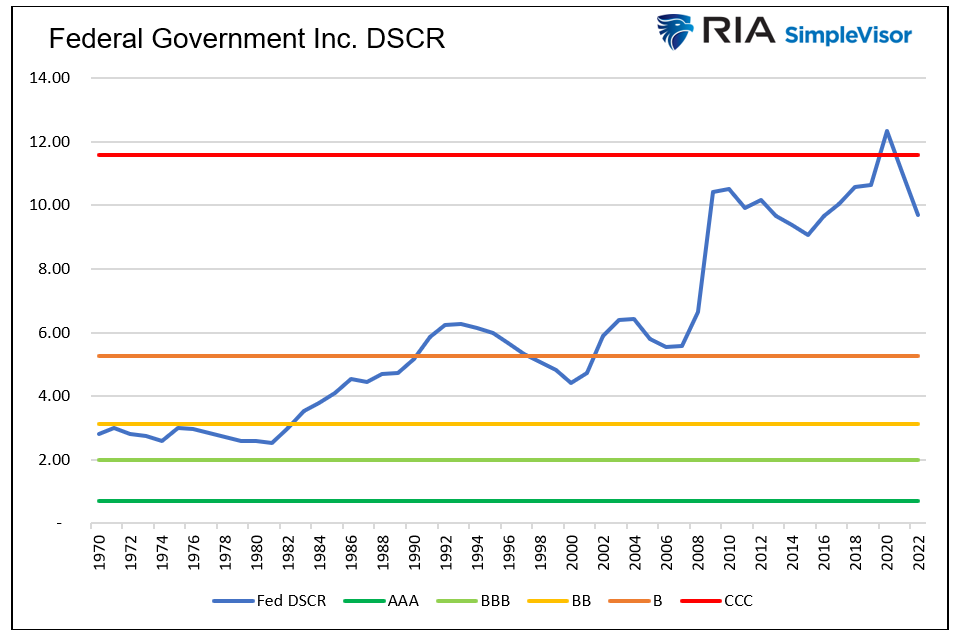
Investors believe that U.S. government debt is risk free. Why shouldn't they? Every economic and financial textbook, media outlet, and bond guru says so.
The cumulative increase in college tuition has been much higher than inflation over the past 40 years.
Last week we changed our economic forecast because the economy has remained stronger than we expected. We delayed the start of the recession to the first quarter of 2024 rather than the last quarter of 2023.
As multi-asset income investors, we seek to help a wide range of clients meet their income needs. The benefits of an income-centric approach are especially relevant for investors as they enter retirement – and that’s especially true today. We bring that to life with two case studies.
There are differing opinions all around, but some reputable sources like Goldman Sachs are saying it’s increasingly unlikely. Yet the Fed is going to be raising rates further, from what it looks like because inflation is higher than they want.
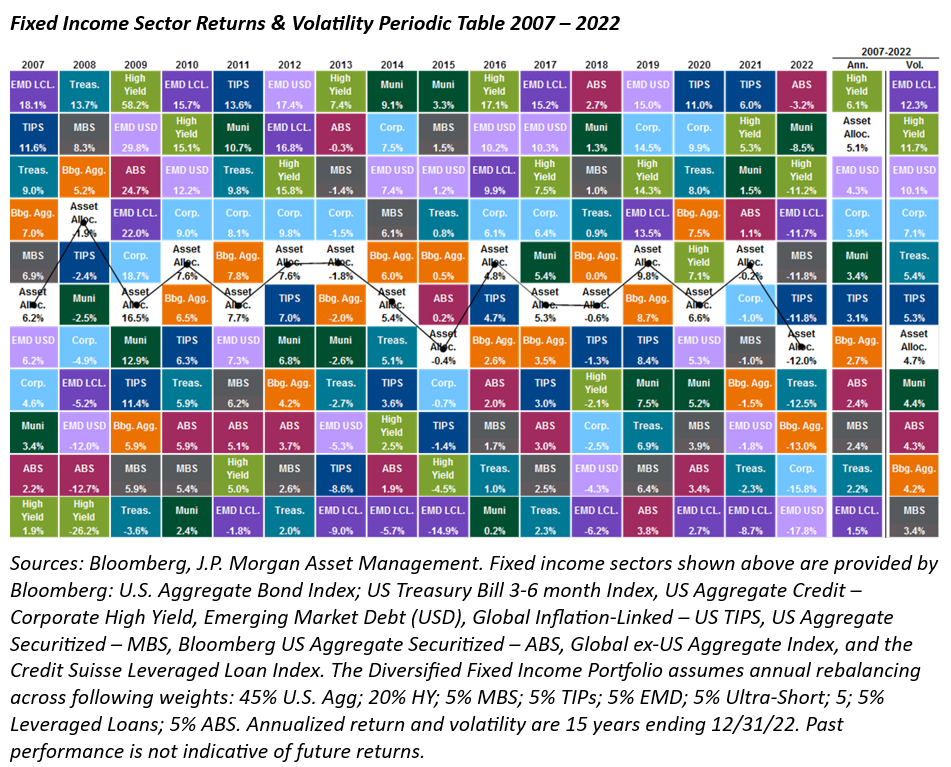
Multi-sector fixed income strategies can deliver significant benefits to investors – including yield enhancement, volatility reduction and diversification of asset-class exposures – because of managers having the freedom to make tactical shifts between fixed-income sub-sectors.
Stocks are up 18.7% year-to-date, which is good news for portfolios and 401(k)s, but did you know that most of the heavy lifting has been done by a very small number of S&P 500 stocks?
When future economic historians write of our times, the thrust will be that it was a time of transition.
The favorite in Argentina’s presidential election has vowed to eliminate the central bank and dollarize the economy. Which path will the country follow?
We believe idiosyncratic credit events may occur over the next 12 months, but systemic bank risk is remote.