Rising rates and inflation acted as a wrecking ball to investment portfolios in 2022. U.S. equities and investment-grade fixed income witnessed double-digit declines, leaving investors scrambling for protection.
Higher interest rates aren’t just a thorn in the side of prospective residential real estate buyers and owners. Additionally, commercial real estate is feeling the pangs of a high-rate environment. That could bring out more bears in the sector.
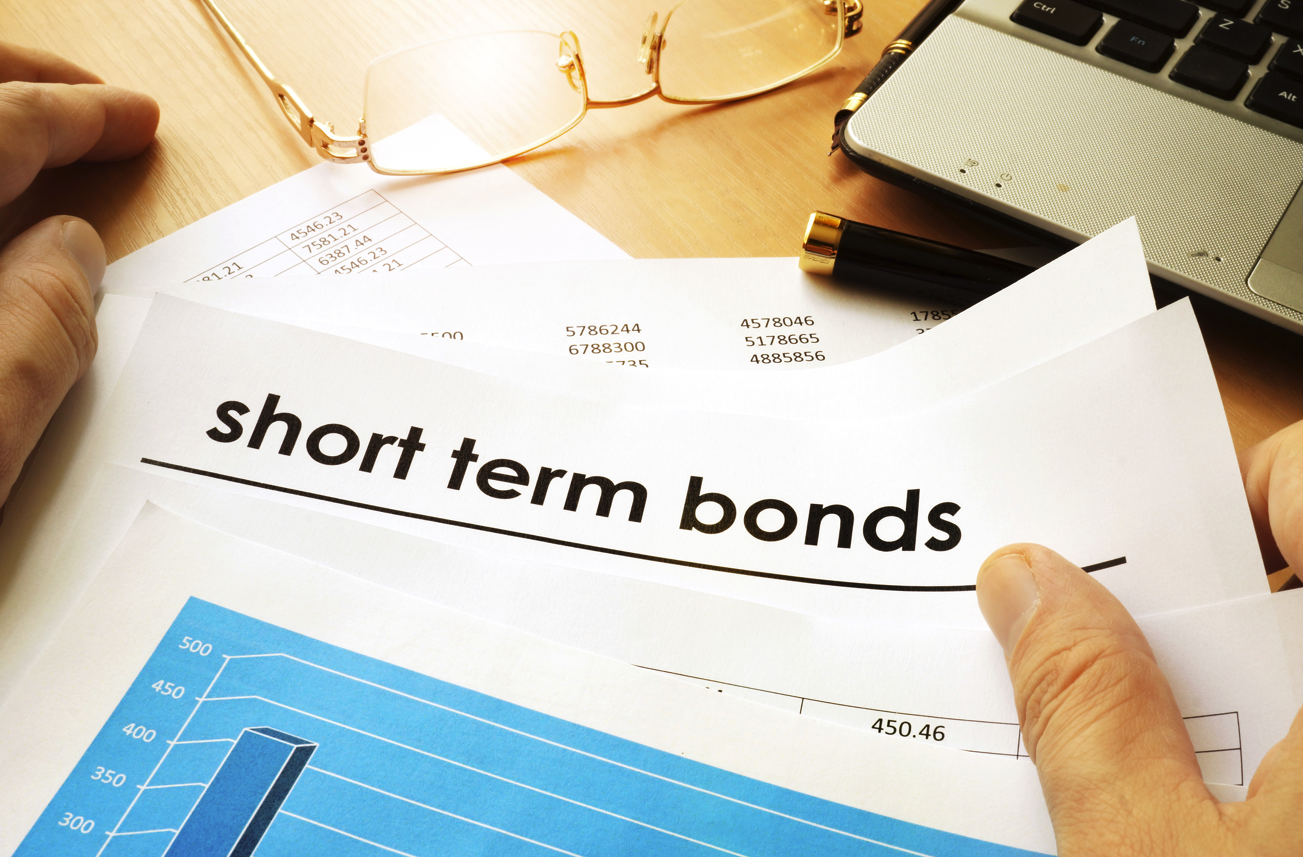
The U.S. Treasury yield curve is currently inverted, with yields on short-term bonds higher than yields on longer-term bonds. Some expect this to unwind with short-term bond yields falling faster than longer-term yields. Amid these expectations, those investors are wondering if they should consider reallocating to shorter-term bonds.
Savvy investors are aware that geopolitical tensions and uncertainty can significantly influence the financial markets.
Reshoring and nearshoring are key trends for investors in global markets. As geopolitical tensions escalate and more businesses shift operations away from China, investors are considering the impacts of deglobalization.
With yield curves still inverted, a short-dated high-yield strategy continues to make sense for return-seeking investors with a defensive mindset.
The US economy has been more resilient than many pundits had anticipated over the past year—but can this resilience continue? Stephen Dover, Head of Franklin Templeton Institute, recently hosted a discussion with economists from across our firm to explore where the risks and opportunities for investors lie today and into year-end.
One mark of true brilliance is the ability to make complex ideas seem simple. I think this is why so many of us fondly remember our early schoolteachers.
This article will demystify what a 401(k) rollover truly entails, why it’s an option to consider, and how it could play a role in shaping the landscape of your financial future.
As heightened inflation has lingered, the Federal Reserve diminished hopes of 2024 interest rate cuts and economic data suggests a mild recession in the first half of 2024.
For the past 18 months, Federal Reserve Chair Jerome Powell has frantically been trying to break Americans' borrow-and-spend habits. It’s critical to his fight against inflation.
Japanese stocks have outperformed global equities by a wide margin this year. Is this a false dawn or can inflation continue to breathe life into the market?
US employment unexpectedly surged in September by the most since the start of the year, illustrating a durable labor market and bolstering the case for another Federal Reserve interest-rate hike.
The BoE will have to do more to bring inflation back down to target.
How long can the #economy stomach higher rates and avoid any major damage? In this month’s newsletter, we dive into why cuts need to happen soon, the fallout if they don’t, and how investors can position portfolios heading into year end.
Emerging-market currencies erased their Friday gains and were poised for a third week of declines as a stronger-than-expected US jobs report underscored global interest rates could remain higher for longer.
Not so long ago, families, businesses and governments were effectively living in a world of free money.
Investors had gotten used to smooth sailing with the economy remaining resilient, the equity market soaring double digits, and volatility remaining (mostly) subdued.
In an era of new economic challenges, we expect value investing to trump growth-oriented strategies for investors in Chinese equities.
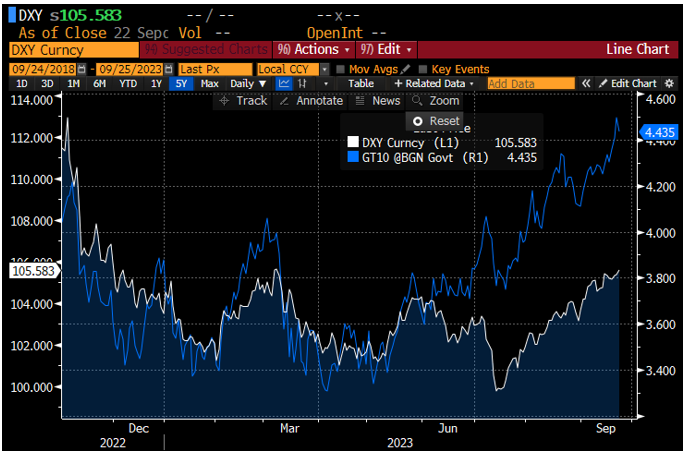
Expectations of "higher for longer" U.S. interest rates has helped drive the dollar's recent rally.
After having maintained near-zero interest rates for decades, the Japanese central bank may be forced to hike rates if inflation remains persistently high. But Japan’s enormous government debt and vulnerable banking sector mean that doing so could trigger a systemic financial crisis.
Housing affordability has been stretched thin across the United States. Joe Prestamer and Michelle Luu discuss some of the ways municipalities are tackling this complex issue.
At least for now, the US government has avoided a shutdown. Stephen Dover, Head of Franklin Templeton Institute, opines on what may come next after this temporary resolution, and the impacts on the markets.
At a pivotal time for monetary policy around the world, Capital Group fixed income portfolio manager Tom Reithinger offers his outlook for inflation and the impact it’s having on global interest rates.
More than two years and over 500 basis points later, the Federal Reserve (the “Fed”) has executed one of its most aggressive monetary policy moves in decades, bringing the Federal Funds rate (the rate that banks charge each other to borrow or lend excess reserves overnight) to a current target range of 5.25%-5.5%.
Economists, policymakers and politicians are used to there being two variables that serve as a scorecard for how the public feels about the economy — unemployment and inflation. A year ago, when inflation was at 40-year highs, public unhappiness made sense.
For the last 40 years, interest rates have gone pretty much one way: down. In the last 18 months, however, rates have crept up, and many are worried they will stay high.
Losses on longer-dated Treasuries are beginning to rival some of the most notorious market meltdowns in US history.
There are compelling arguments that interest rates will remain low rather than rise.
The Federal Reserve may be putting its hoped-for soft landing of the economy at risk by tacitly accepting a run-up in long-term interest rates to the highest levels since 2007.
While government shutdowns impact the economy directly and indirectly, the magnitude of the impact is determined by the length and scope of the shutdown. Some operations can continue in a “partial shutdown” scenario, and thus impact the economy differently.
Emerging markets (EM) bulls may have to continue playing the waiting game after a rough end to the third quarter. Thankfully, leveraged exchange traded funds (ETFs) can keep traders in the game.
Good news for bond investors: yields are likely to stay higher for longer. We share strategies for making the most of this environment.
Northern Trust’s Capital Market Assumptions (CMA) report, an annual report of long-term average annualized return expectations for a wide range of asset classes, forecasts below-trend global growth at an annualized rate of 2.4% over the next 10 years, moderating developed-market inflation of 2.4%, and a lower global equity return of 6.3% a year on average. The CMA report’s asset class forecasts are driven by six key themes that Northern Trust investment experts see affecting markets and the economy over the next 10 years: restraints on global economic growth, geopolitical fault lines, adaptation to persistent inflation, central bank concessions to inflation, a sustainable green transition, and growing private markets.
Rooted in the firm’s deep capital market analysis, the CMA report informs the investment decisions and asset allocation recommendations made by Northern Trust, which as of June 30, 2023, had US$1.4 trillion in assets under management. Forecasts are created with a “forward-looking, historically aware” approach, analyzing the past drivers of returns across asset classes and developing investment themes that inform how those return drivers may evolve in the future.
The Fed’s “soft landing” hopes are likely overly optimistic. Such was the context of the recent #BullBearReport, which discussed the long record of the Fed’s economic growth projections.
If you go to a financial adviser to chat about investments, here’s how your first meeting will probably go: They will ask you about your attitude to risk. How much money are you prepared to lose?
The queue of soothsayers warning of impending doom is lengthening; growing concern about US domestic politics as well as the global economic backdrop risks sparking a full-blown market rout.
It’s getting bleak for equity bulls hoping for a reprieve from the US stock market’s “higher-for-longer” tantrum.
Stock bulls reeling from the worst month of 2023 have at least one reason for optimism: Corporate profits are set to rebound sharply in the fourth quarter.
As global financial markets reel under the possibility of 5% benchmark Treasury yields, the question on investors’ minds: how much worse could it get?
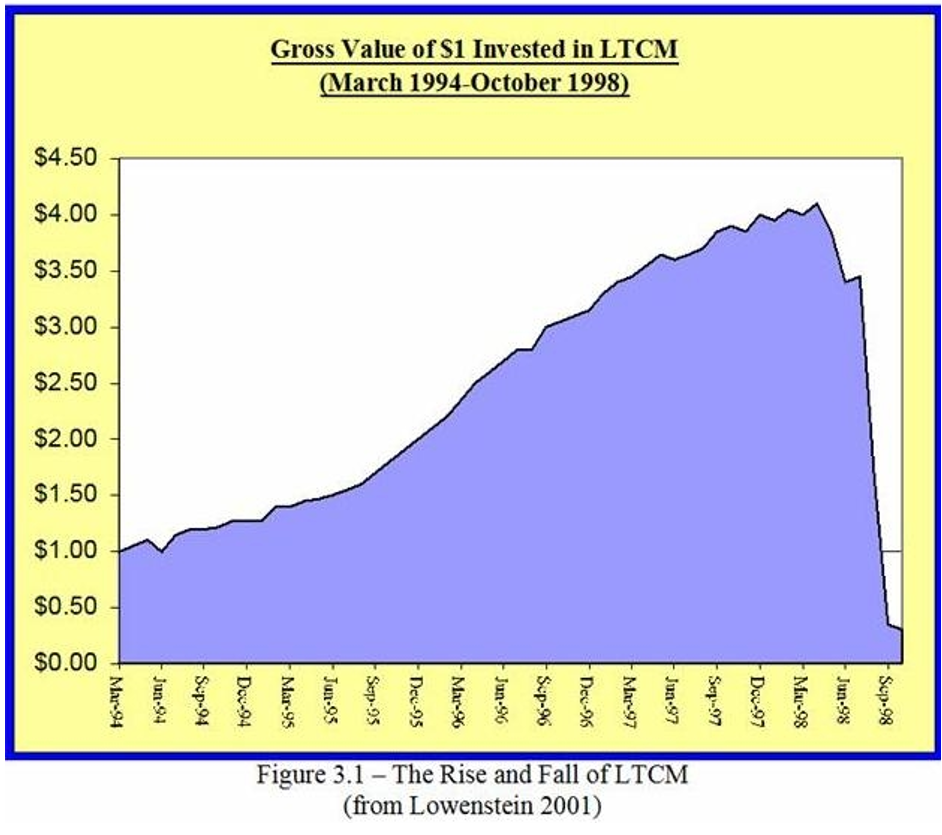
This is the 25th anniversary of the collapse of LTCM, so let’s reflect on the similarities between that debacle and what might unfold in the capital markets today.
Rising rates in the second half of the year have brought year-to-date returns for the US Aggregate (“Agg”) benchmark index negative.
During Q4, we believe there is an elevated risk of market volatility when monthly U.S. inflation data is released, quarterly earnings season begins, and major central banks meet.
Gold and silver prices slid lower to close out the third quarter. Entering trading for the fourth quarter, the metals are back, once again, in the middle of the range where they have languished for more than three years.
Inflation has declined considerably from last year’s peak of ~9.0% to ~3.7%. However, policymakers still think they have more work to do and have signaled that one additional rate hike is likely.
Many Americans believe that Gen Z is financially illiterate and uninformed. But the story is not that simple.
From inflationary tailwinds for earnings growth to corporate reforms that unlock shareholder value, multiple regime shifts are underway to restore the appeal of the Japanese equity market, according to the Templeton Global Equity Group team.
Public credit markets offer high quality investments with attractive yields and downside resilience, while we see growing longer-term opportunities in private markets.
Downside equity market volatility can be unsettling, but it is important to put the pullback in perspective and identify the drivers of the negative market reaction. First and foremost, the equity market was due for a modest pullback.
With negligible incremental risk, a RAFI Global Index hypothetically outperformed a Cap-Weighted Global Index by 40 bps per annum and a Cap-Weighted Global Value Index by 2.2% from 2007 to 2022—a 16-year period covering the long value rout and its aftermath.