Franklin Equity Group portfolio managers Daniel Scher and Blair Schmicker make the case that REITs are more than just a “collection of assets,” as they were once viewed, and instead offer exposure to quality business models and professional management teams with long track records of value creation.
The typical American is a lot richer now than they were just before the pandemic — and this improvement is at least partially due to government support for families and businesses in 2020 and 2021.
US employment costs unexpectedly accelerated in the third quarter, heightening concerns that a strong labor market risks keeping inflation above the Federal Reserve’s target.
Households are better off today than before the pandemic.
Michael Gladchun, Associate Portfolio Manager, estimates underlying core PCE is already running at or near a 2% annualized inflation rate, and he sees progress ongoing if imbalances continue to normalize.
To have a shot at taming inflation, the Federal Reserve is intent on tightening financial conditions across the economy. But they haven’t made much of a dent in corporate America yet.
Forecasting economic outcomes is a challenging exercise, even under steady conditions. Geopolitical events have only added to the complexity facing economies worldwide.
Over the past seven days, bitcoin has surged more than 20%. That’s a bull market unto itself. It’s also one fueled by speculation that the SEC will soon approve ETFs with spot bitcoin exposure.
Sugar prices continue their upward journey to new highs, but that shouldn’t prevent consumers from curbing their Halloween spending. From an investment standpoint, getting exposure to rising sugar prices amid inflationary pressures is an ideal move.
Chief Economist Eugenio J. Alemán discusses current economic conditions.
The world’s auto industry is accelerating in two directions at once. Unless those contradictions are resolved, carmakers risk running themselves off the road.
The S&P 500 closed at 4,117 on Friday, more than 10% below its recent peak in late July. Some are saying it’s a brand-new bear market for stocks.
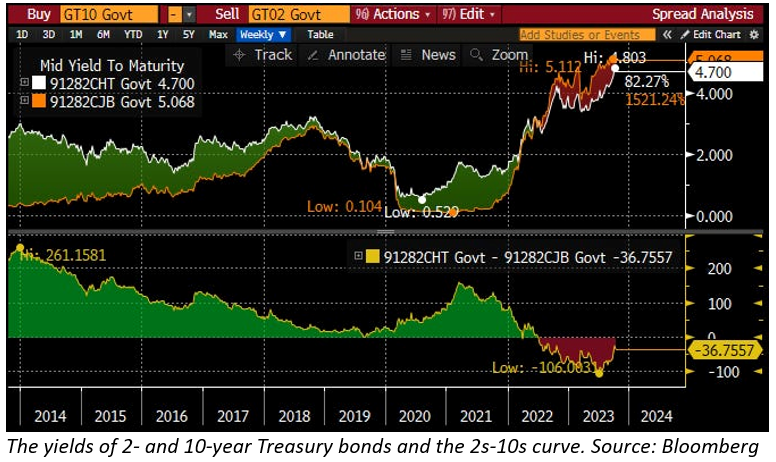
The yield on 10-year Treasuries went above 5% last week for the first time since July 2007, when the first Transformers movie was topping the box office and the Dow Jones Industrial Average surpassed 14,000 for the first time in history.
If you believe that an easy solution to improve lower-class standards of living is to raise the minimum wage, or you are curious about what university presidents spend their time on, Angus Deaton’s new book provide insightful answers to those and many more questions that, taken together, challenge the relevance of modern economics and the capitalism it supports.
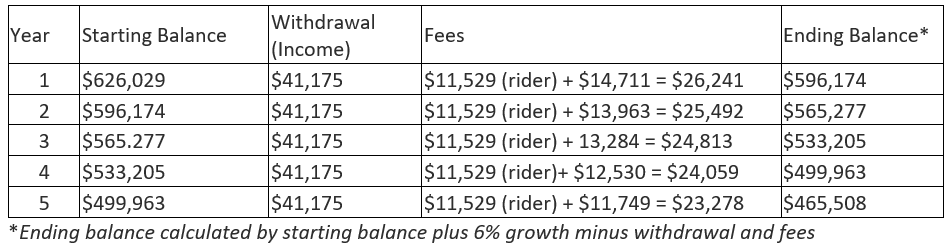
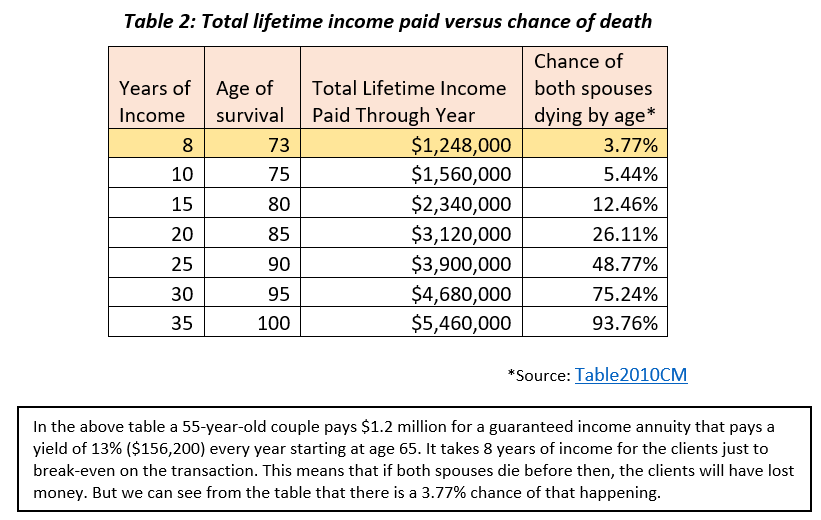
I analyze the math of annuity income riders and how you pay the insurance company to draw down your own assets. It is highly unlikely the insurers will pay a dime, which makes those riders questionable.
The “pain trade” continues to be higher into year-end.
With the Federal Reserve poised to change direction, investors who have been investing in very short-term securities may soon face "reinvestment risk."
In our latest fixed income insight, we highlight four compelling investments for the remainder of 2023 and into 2024.
Much like Halloween, it has been a scary time for investors.
Credit volumes witnessed some strong highs and lows in the third quarter. Notably, July—a month where trading volumes are generally steady—saw very inconsistent flows over the month. September, meanwhile, followed historical trends with an increase in primary market supply, reflecting higher volumes in the secondary.
The data science wave is here, and bond managers must adapt traditional investment processes to harness new technologies and amplify human talent.
Bitcoin has jumped on bets that the first US exchange-traded funds investing directly in the token are set to be approved. The question now is whether an actual green light for the products would spur some profit-taking.
The ancient Greeks had a word κάθαρσις, which in English we now spell as “catharsis,” although it’s pronounced basically the same. It originally referred to purifying religious ceremonies, medical treatments, and so on.
Despite progress on bringing down inflation from mid-2022 highs, data from online job postings suggests that wage pressures may be reaccelerating. Beneath the surface, growing divergence in wage gains across occupation categories may be adding a layer of complexity to the outlook for labor markets.
US consumers have kept buying these things despite high inflation and the contractionary policy of the Federal Reserve, and they deserve thanks not only for the recession that still has not come, but for the fast pace of recent economic growth.
Embattled debt investors like the look of 5% Treasury yields as they weigh the risk-versus-reward scales for the world’s biggest bond market.
There are periods of time in the investing world when contradictions and disagreement among “experts” run rampant. Often, those periods tend to coincide with inflection points in cycles, although you only really know that with the benefit of hindsight, in my opinion.
The calendar third quarter of 2023 was a messy one for financial markets at large, and we were not immune to its lack of charms. Nonetheless, it’s been a pretty good year for our small-cap strategy.
Since taking a big leap upward in the 1940s and 1950s, the homeownership rate in the US has been remarkably steady since the 1960s, with close to two-thirds of households owning their homes.
Before we get carried away anew with declarations about how “the investing world is forever changing,” it’s worth remembering how fluid the relationship has proved over the past couple of years — and how another twist is always just around the corner.
The US economy grew at the fastest pace in nearly two years last quarter, fueled by a surge in consumer spending.
As 2023 enters the home stretch, I reflect on asset class performance for the year and discuss what my firm’s models are saying for the next 12 months.
Higher for longer. The Federal Reserve will likely maintain higher interest rates and remain open to another rate hike. Borrowing costs for households, businesses and governments have risen with soaring rates.
There are reasons to be cautious in many markets, but low volatility and high/sustainable dividend stocks can help mitigate risk while providing income and equity exposure. The Franklin Templeton Investment Solutions Team weighs in.
The strength in consumer demand has been one of the defining characteristics of a very resilient U.S. economy and September’s retail and food services sales report confirmed that the U.S. consumer is alive and well.
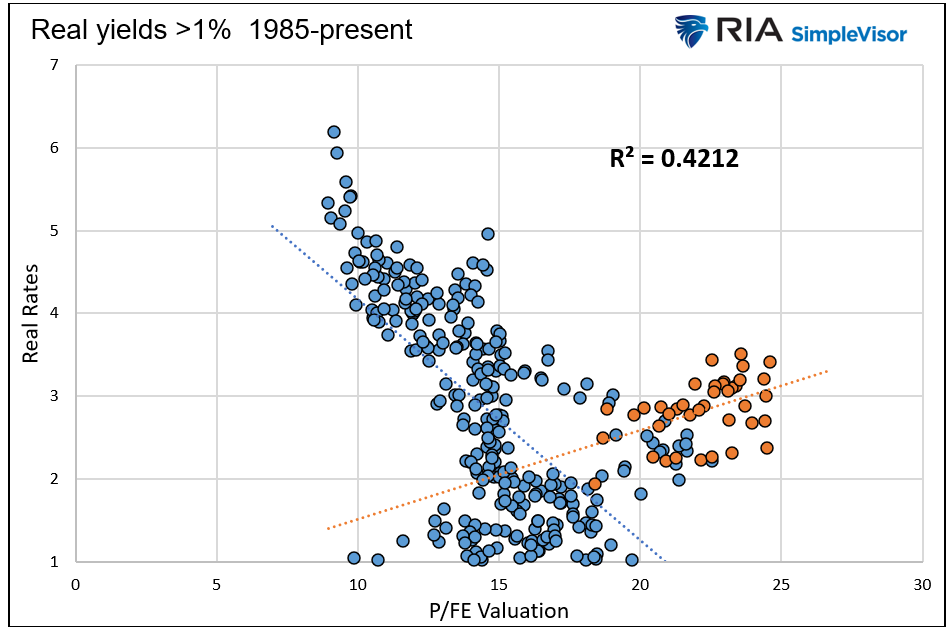
The relationship and the recent divergence between real rates and stock valuations is critical. Be ready for the historical trend to reassert itself.
In the fiscal year that just ended, the US government borrowed $1.7 trillion, more than 6% of gross domestic product. Bear in mind, that was with an economy running hot, with high inflation and more than full employment.
Municipal-bond yields at the highest in more than a decade are spurring optimism on the part of investment managers, who have been dealing with persistent fund outflows this year as the market has struggled along with the rest of fixed income.
U.S. Treasury debt has long been considered a “risk free” asset. Gold bugs hold a different definition of risk free, but for most of Wall Street and the investing public the assumption has been that there’s zero chance the U.S. government will ever default on its debt.
We still think a recession is coming, but it definitely didn’t start in the third quarter. Instead, as we set out below, it looks like real GDP expanded at a 4.7% annual rate.
Investments in alternative energy have become unattractive due to higher interest rates, not changes in government policies, adoption or pricing of green technologies.
Lately, Federal Reserve officials have been paying greater attention to financial conditions – that is, to the influence that market phenomena such as stock prices, bond yields and housing prices have on economic activity, above and beyond the effect of the short-term interest rates that the central bank controls directly.
What do we know, and not know, about macroeconomics? My co-author and I are currently revising our economics textbook — one of our decisions is to emphasize the Great Recession and the pandemic over the Great Depression — so I might be expected to have an answer to this question.
With interest rates at near 20-year highs, guaranteed lifetime income locks in those rates for the rest of one’s life, creating better retirement outcomes.
Corporate America’s spending on share buybacks, a driver of the US stock market rally for over a decade, is slowing in the face of higher-for-longer interest rates and an uncertain economic backdrop.
On Monday, the 10-year Treasury yield climbed over 5%, a 16-year high. It’s a level few would have predicted during the long run of rock-bottom interest rates that followed the Great Financial Crisis.
U.S. equities have ruled the roost for the better part of the last decade, but another region may emerge as the leader if the business cycle changes.
Big tech has obviously been a major mover for the stock market in 2023. With third quarter earnings forthcoming, there should be plenty of opportunities for broad-based ETF as well as single-stock ETF plays.
Discover strategies for a “higher for longer" interest rate environment and gain insights into inflation, areas of opportunity, and building a resilient fixed-income portfolio for the times ahead.