VettaFi discusses oil’s recent price moves and energy stocks as a geopolitical hedge.
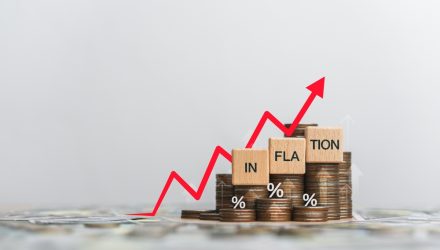
Cash strategies may seem safe, but inflation can bite into returns. Instead, investors can try to outperform inflation with equities.
With over 20 years of experience in web design and development, I’ve seen firsthand how the right website can transform a financial advisor’s business.
How you connect with your prospects and how you position yourself in their eyes is crucial to becoming their Trusted Authority.
As Boeing Co. lurches from one crisis to the next, there’s been one constant for the embattled planemaker: Its predicament appears to be only getting worse.
Earnings season is here, and the US stock market’s furious $9 trillion 2024 rally is facing perhaps its biggest test of the year.
In an age of accelerating progress in artificial intelligence, everyone is debating AI’s implications for the labor market or national security. There is far less discussion of what AI could or should mean for philanthropy.
Vietnam may be quickly outgrowing its role in the global tech industry as the attractive manufacturing sidepiece to China.
If money makes the world go around, it hasn’t been doing a very good job lately. Beyond developed nations — in eastern Europe, Latin America and Africa — people and businesses are increasingly finding themselves cut off from global payments. An unintended consequence of necessary measures to enforce sanctions and thwart criminals, the trend is doing significant damage to trade and economic growth.
The $20 billion club is a group of pension plans near $20 billion and more in global pension liability. We have been reporting on this group since 2011.
Has the Federal Reserve achieved an economic "soft landing"? A resilient U.S. economy suggests it may have.
The disruptive effects of the pandemic are still reverberating across the economy and giving incorrect signs, in this case, of the U.S. labor market.
Exchange-traded funds (ETFs) have grown in popularity as one of the most flexible and accessible investment vehicles available today. Offering a blend of stock-like liquidity and mutual fund-like diversification, ETFs can serve as a core component in the portfolios of both novice and experienced investors
Interest rates are falling but growth is holding up. Still, we see ways to proactively shore up private allocations.
There are two types of economists in the world…demand-siders and supply-siders. Without digging too deeply, one huge difference shows up in government policy.
The need for old age support is on the rise, as is its cost.
Agency REITs are not for buy-and-hold investors. They tend to perform well in specific economic and interest rate environments and poorly in others. I believe the current bullish steepening shift in the yield curve could offer investors opportunities with the agency REIT sector.
The looming wealth transfer from Baby Boomers and the Silent Generation to younger generations is set to reshape the financial landscape in unprecedented ways. Estimated at $84 trillion, this transition is a huge financial event.
U.S. stocks have handily outperformed their global peers over the past few decades, as well as in the post-World War II period. We document the scale of the outperformance and ask whether it can continue.
Bond investors are going on defense as the outlook for the Federal Reserve’s interest-rate cutting path turns more uncertain.
Take a snapshot of markets right now, and it’s a picture of health. Stocks are at records, corporate bonds show no signs of worry and commodities remain buoyant on global economic optimism.
Nvidia Corp.’s shares are roaring back after the company successfully calmed investor concerns about product delays and its long-term growth prospects.
The top corporate conference calls are attended by dozens of Wall Street analysts whose job it is to maintain detailed earnings and valuation models filled with minutiae. Quarter after quarter, they populate their spreadsheets with revenue and cost assumptions to predict exactly what earnings per share will be months and years into the future.
On this episode of the “ETF of the Week” podcast, VettaFi’s Head of Research Todd Rosenbluth discussed the Neuberger Berman Option Strategy ETF (NBOS) with Chuck Jaffe of Money Life. The pair discussed several topics related to the fund to give investors a deeper understanding of the ETF overall.
Everything I’ve learned and experienced in 50+ years of watching the economy tells me not to expect a soft landing. But maybe that’s because I’ve never actually seen one.
For decades, a key component of many investors’ portfolios was a fixed income ladder. It was intended to provide ballast to the more volatile equity allocation and help reduce interest-rate risk.
The latest Employment Situation Report released on October 4, 2024, showed nonfarm payrolls increasing by 254,000 in September, with the unemployment rate holding steady at 4.1%.
As the Fed shifts its stance, investors must now weigh the broader economic implications.
Credit indices rallied during the third quarter, despite a variety of economic headwinds, and it appears FOMO (fear of missing out) is fueling the bullish sentiment more than fundamentals.
The latest S&P 500 rebalance introduced Dell and Palantir to the index, and Apple’s weight grew with annual float changes, signaling technology’s ongoing influence.
The bond market is growing less convinced by the day that the Federal Reserve will embark on two further interest-rate cuts this year.
The market continues to trend higher on Goldilocks pixie dust.
BlackRock Inc. reaching $450 billion in alternative assets is putting a finer point on a case it has been making all year: it’s not just an ETF powerhouse.
JPMorgan Chase & Co.’s net interest income was the hot topic of its third-quarter results, much to the irritation of Chief Executive Officer Jamie Dimon, who grew impatient with quibbling over details of the bank’s outlook on its earnings call on Friday.
September was a solid month for investors, capping off a strong quarter for markets. Falling interest rates helped support stock returns, with the S&P 500 and Dow Jones Industrial Average setting new record highs during the month. Even bonds were up, marking five straight months with positive fixed income performance.
Quarterly recap: Fed rate cut and Chinese stimulus take the spotlight.
Taxes are top of mind for many. See what the US presidential candidates stand on tax policy as we enter the final weeks before the election. Our Bill Cass compares their plans.
Foreign investors have been buying more US corporate bonds, a trend that will likely continue as Federal Reserve monetary easing lowers the cost of hedging and investors hunt for yield.
Traders are pushing the dollar toward its second-straight weekly gain in anticipation of a slower pace of interest-rate cuts by the Federal Reserve.
Elon Musk unveiled Tesla Inc.’s highly anticipated self-driving taxi at a flashy event that was light on specifics, leaving investors questioning how the carmaker expects to achieve its ambitious goals.
After the Fed's 50-basis-point rate cut, big banks kick off earnings season amid fears that lower rates could hurt the net-interest income that propelled growth the last two years.
We have openly promoted increasing duration over the last several months. An increase may seem like an odd “wish” as it implies taking on greater price risk.
With storm clouds forming above equities and fixed income markets, is now the right time for institutions to grab their private credit labeled umbrella?
In the wake of pandemic shocks, economies appear more “normal” than at any time since 2019. Yet policy rates remain elevated.
The 2022 broad market downturn across major asset classes came as a nasty surprise to investors. Historically, such an event is very rare, and no one was expecting to see almost all asset classes down for the year. Yet, even though it might seem as if diversification was of no help in 2022, the story changes if we look beyond the major headline asset classes.
Supply chain disruptions related to the port workers’ strike loom, the impacts of which we know can be incredibly destructive.
A series of unprecedented and historic events has completely shifted the candidates and dynamics of the race for the presidency and Congress.
Should China deliver sufficient stimulus to break the cycle of tightening fiscal policy, we may find China, and emerging markets, investable again.
The puck has certainly moved since our last market commentary. This month, we argue that the needle on portfolio construction should move with it. Equities have been the driver of returns for much of the last few years.
Alpha (α) is a fundamental yet poorly understood concept in finance. Simply put, it is the difference between the return of an investment and that of a risk-adjusted benchmark. In a more advanced definition, alpha is the residual in an asset pricing equation (see Appendix A). Alpha is what active managers strive to achieve and passive managers do not pursue.