Building wealth isn't difficult, so why don't people do it? As younger generations reach the point where they have finally saved enough to begin investing it may seem overwhelming to know where to start.
This Knowledge Leader has been instrumental in revolutionizing today’s technology landscape in a range of areas from enhancing graphics for immersive gaming experiences to turbocharging scientific research and steering the future of autonomous vehicles.
UK gilts rally after headline and core inflation numbers surprise to the downside.
Equity markets have rallied since October, but the Franklin Templeton Investment Solutions team thinks markets have run ahead of both current and expected growth. Learn why—and what it may mean for investors.
In a unanimous decision, Federal Reserve policymakers raised the federal funds rate to 5.5%, the highest point since 2001.
High-quality investment grade municipal bonds provide growth-like returns for investors in a relatively more conservative investment vehicle than equities. Have your financial advisor assess the opportunity as it pertains to your specific goals.
Monetary and fiscal indicators continued to tighten significantly in the second quarter pointing towards a material slowdown in the U.S. economy.
Mortgage rates are the highest they’ve been in over 30 years, keeping home affordability in unprecedented territory. However, mortgage rates above 7% aren’t the only factor keeping home prices high.
Our emerging market debt valuation metrics across all but the U.S. interest rate dimension remain unambiguously attractive. In our Quarterly Valuation Update, we provide our Q2 assessment.
Central banks are set to hike policy rates this week. Markets expect rate cuts to soon follow due to cooling inflation, whereas we see central banks holding tight.
A favorable inflation report is just one step in a long journey.
While caution in some areas of the commodities space may be prudent, there are also reasons for optimism, according to Fred Fromm, portfolio manager, of Franklin Equity Group. He offers his mid-year outlook and potential investment opportunities.
There are multiple factors to consider, including your tax rate.
Investors are paying close attention to China, Japan, and India ETFs lately, according to VettaFi’s Explorer data and analytics tool. Interest in non-U.S. economies is high as investors look for more ways to diversify their portfolios.
TCW is the latest well-established asset manager poised to enter the ETF business. But unlike some of its peers, TCW is going the acquisition route. Today, TCW announced it is buying the Engine No. 1 ETF business.
ESG scoring and mandates remain a subject we have contested since it sprang to life in 2020. The push of “woke activism” on, and by companies, to meet nebulous or artificial standards has led to various bad outcomes.
There is a particular “setup” that we’ve historically found to be associated with abrupt “air pockets” and “free falls” in the S&P 500. It combines hostile conditions in all three features most central to our investment discipline: rich valuations, unfavorable market internals, and extreme overextension.
The recent broadening out in market breadth has been accompanied by frothier investor sentiment, but using sentiment as a market-timing tool is tricky (if not impossible).
China's re-opening surge did not last.
High-quality fixed-income assets may offer the best return potential in more than a decade along with diversification benefits as a likely recession approaches.
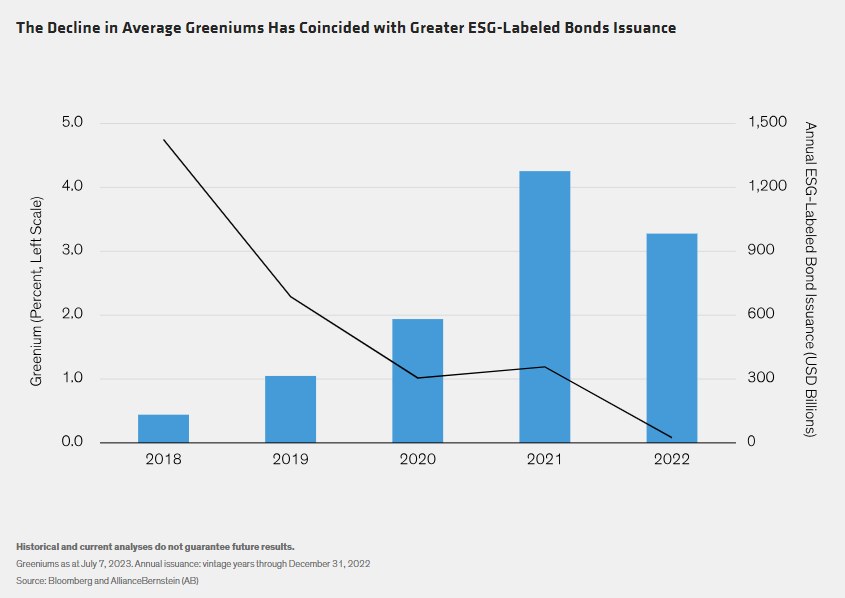
Investors in ESG-labeled bonds expect well-structured issues with strong green or social credentials to command higher prices than the same issuer’s conventional bonds.
With inflation falling and growth slowly grinding lower, time is running out on many global central bank tightening cycles – especially for the Federal Reserve (Fed) that meets next week.
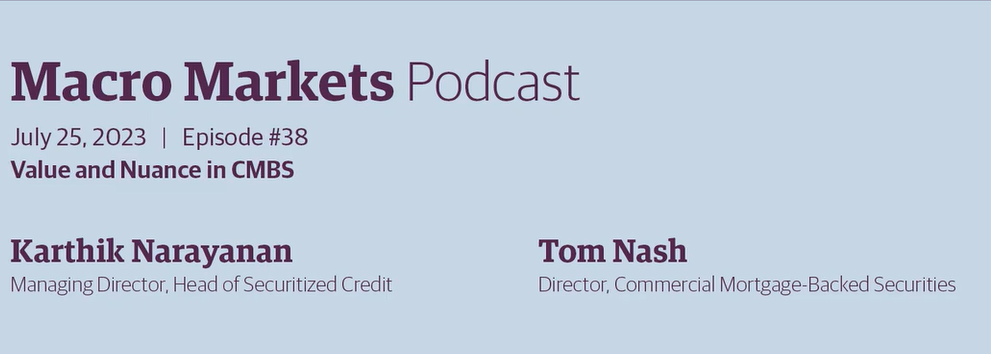
Karthik Narayanan, Head of Securitized Credit for Guggenheim Investments, and Tom Nash, a director on our Commercial Mortgage-Backed Securities (CMBS) sector team, join Macro Markets to discuss drivers of performance, current conditions in real estate, and where they are finding value in CMBS and in other types of structured credit.
To find the best stocks to invest in, there are more than 19,000 stocks to pick from in the US and Canadian markets alone. Consequently, how is the individual self-directed investor able to find the best stocks to meet their goals objectives, and risk tolerances?
Commodity ETFs have seen a significant dip in financial advisors' interest and YTD flows in 2023.
Multilateral development banks are the only institutions that provide the combination of expertise, staying power, low-cost financing, leverage, and knowledge-sharing capabilities needed to assist developing countries. But to help transform these countries' future, the MDBs must first transform themselves.
The Northern Trust Economics team shares its outlook for U.S. growth, employment, interest rates and inflation.
Before you say “not me” to Matthews’ jewel of introspection, you should know that at some point(s) in your life you probably did – want to be someone else. So did I. As a matter of fact, since my early 20’s I’ve always dreamed of being a rock star.
No one should be popping champagne when they see Thursday’s GDP report. The good news is that it won’t be negative.
One of the unforeseen side effects of the current travel boom has been flight delays, mostly because of staff shortages, and this has raised the issue of pilot retirements.
Money market allocations hedged investors from tumbling equity markets last year and for the first time in a long time, generated considerable interest income. While cash-like investments offer liquidity and risk management, they do have some drawbacks. What other options do investors have?
The volatility index is so low it has to go higher eventually. Such seems obvious, but this year, despite the banking crisis, higher interest rates, and slowing economic data, investors continue to abandon hedges amid bullish optimism.
Housing is by far the biggest expense for most American households. Any inflation analysis that ignores housing misses not only the elephant in the room, but the room itself.
Financial companies that help address some of the world’s most pressing socioeconomic challenges deserve attention from sustainability-focused investors.
So far in 2023, equity markets have shrugged off banking stress, recession risk, and monetary tightening in favor of a more optimistic view. While risks remain, alternative data suggests that inflation may fall faster than expected as the economy remains relatively healthy.
The Sovereign Debt Wave is at a historic peak and appears set to continue growing. With higher inflation and reduced liquidity, some countries will be able to continue to issue debt easily, while some will not.
Despite persistent inflation and elevated short-term interest rates, the economy appears to be holding up well, and we believe the Fed may deliver the “soft landing” it has been trying to engineer.
This Knowledge Leader aims to provide solutions that can help societies overcome complex challenges. For example, NEC makes biometric identification systems, video analytics systems, and digital government solutions designed to improve the efficiency and transparency of government operations.
It is no secret that the biggest virtual event of the summer is the coming July 24 Fixed Income Symposium. Here’s why advisors can’t afford to miss this event.
El Niño will test the resilience of both infrastructure and food supply chains.
An advisor’s greatest contribution to an investor’s bottom line is their guidance through volatile markets.
Economic indicators are released every week to help provide insight into the overall health of the U.S. economy. In this article, we examine indicators from the past week, such as inflation, that shed light on both inflationary trends and sentiment within the market.
Head of Franklin Templeton Institute Stephen Dover recently moderated a panel of our leading economists and asked this key question: What’s in store for investors in the second half? Here’s a quick take on their answers.
The stock market has got to be the weirdest market in existence. It is the only place where people go to buy things and hate it when those things go on sale.
The Chinese economy’s current travails illustrate the growth challenges facing many other countries around the world. By re-engineering ineffective growth models and improving domestic economic management, developed and developing countries can avoid falling into the growth trap China now finds itself in.
Home country bias means that investors may be overlooking international bonds. Certainly, the flows into U.S. fixed income ETFs dwarf the flows into international bond ETFs. That could be a missed opportunity.
Transitioning to a green net-zero economy requires climate solutions that enable the economy to decarbonise, such as renewable energy, electric vehicles, and recycling technologies.
After stubborn U.S. inflation in the first half of 2023 kept the Federal Reserve raising rates, June’s softer inflation report suggests July may mark the end of the hiking cycle.
Markets can present challenges for investors as volatility, direction, supply, outside influences, and future expectations are continuously changing.
Corporate profits are being challenged by market forces, diminishing pricing power.