In the report, Fixed income portfolio managers Brent Olson and Tim Winstone reflect on the initial credit market response to President Trump’s tariffs.
Traders boosted their bets on Federal Reserve interest-rate cuts this year and US Treasuries rallied as a solid report on American jobs failed to calm markets.
Investors crushed the stocks of consumer discretionary companies on Thursday in response to President Donald Trump’s tariff announcement, making little distinction between home goods companies such as Williams-Sonoma Inc., apparel names including Nike Inc. or restaurants such as Cheesecake Factory Inc.
The combination of slowing economic growth and stubborn inflation, combined with uncertainty about U.S. tariff policy, is keeping investors cautious.
Social Security faces funding issues by 2035, but major changes to the program are unlikely in the near term.
The absolute best time to start investing would be the day you turned 18 and could legally open a brokerage account.
Adam Hetts, Global Head of Multi-Asset & Portfolio Manager, and Oliver Blackbourn, Portfolio Manager, give their thoughts on how US President Trump’s ‘Liberation Day’ tariffs have reshaped global trade dynamics, emphasising the benefits of diversification at a time of heightened uncertainty about the prospects for growth.
Active ETFs just topped the $1 trillion threshold, making up nearly 10% of the total ETF pie. Enhanced yield is the name of the game.
With nearly half of the bond market now outside of the Agg, a number of opportunities exist for those seeking exposure beyond the benchmark.
U.S. ETFs saw record first quarter flows this year, bringing in $296 billion during the first three months of 2025.
Bond traders ramped up bets on interest-rate cuts from the Federal Reserve amid concern that Donald Trump’s trade war will backfire on the US economy, sending the yield on benchmark Treasuries toward the closely-watched 4% level.
Market volatility is likely to rise as investors digest the president's plans.
Compensation dynamics are commanding investor attention once more. For the first time in decades, Japan's pay increases—finalized at +5.46% in this year's shunto negotiations—have notably exceeded compensation growth rates in the United States.
Turbulence is expected to continue until markets gain more clarity.
Investors face new challenges as their wealth grows. So it’s a good thing that direct indexing is designed to fit their allocations just the way they are.
In recent weeks, market volatility has surged, driven by uncertainty surrounding the growth picture and Washington's economic policy
An early-term recession, though difficult, can create strategic opportunities to push a bold and transformative agenda forward.
Even in the best-case scenarios, implicit trust tends to erode when a marriage unravels. On occasion, the divorce process uncovers secrets, hidden rifts, and breaches of trust that can expose both parties to scrutiny and trouble.
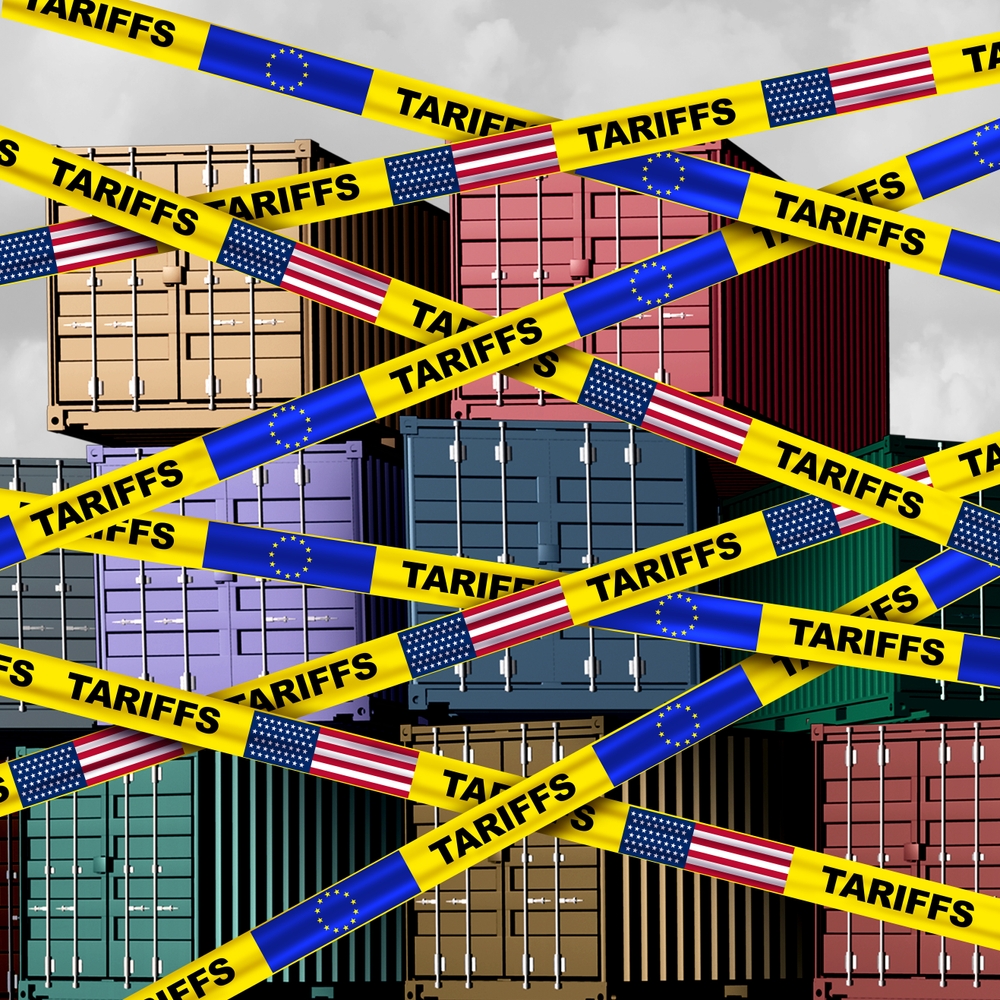
There’s a lot of uncertainty over whether President Donald Trump will actually go through with all his planned tariffs, whether the economy will stall or go into reverse as a result, and whether Congress will eventually decide that it has had enough of ceding its tariff authority to the president.
2025 has been marked by U.S. tariff news, geopolitical tensions and market volatility. Recent comments by Treasury Secretary Scott Bessent and President Donald Trump seem to confirm that the “Trump put” of his first presidential term is no longer in place.
Since mid-January, a new political regime in Washington has shaken the geopolitical landscape and global markets. In this volatile environment, bonds have performed well, resuming their traditional role as ballast against falling stock prices and attracting strong demand from investors.
Stocks are mixed around midday after seeing some mid-morning buying as investors position ahead of tomorrow's "Liberation Day".
Doug Drabik discusses fixed income market conditions and offers insight for bond investors.
Investors often debate the merits of value versus growth investing, but when it comes to developed international equities, the conversation isn't static; it moves in cycles.
The world has entered a period of geopolitical uncertainty, with the U.S. now at the center of the storm.
Fixed income investors can opt for corporate bonds to maximize yield opportunities without sacrificing too much credit risk.
They took the concept of a mutual fund, rewrapped it in a low-cost, easily traded package, and offered it to investors on a silver platter. Today, ETFs account for $15 trillion AUM globally, making them one of the most dominant forces in modern markets. And behind the scenes, they’re working even harder than you think.
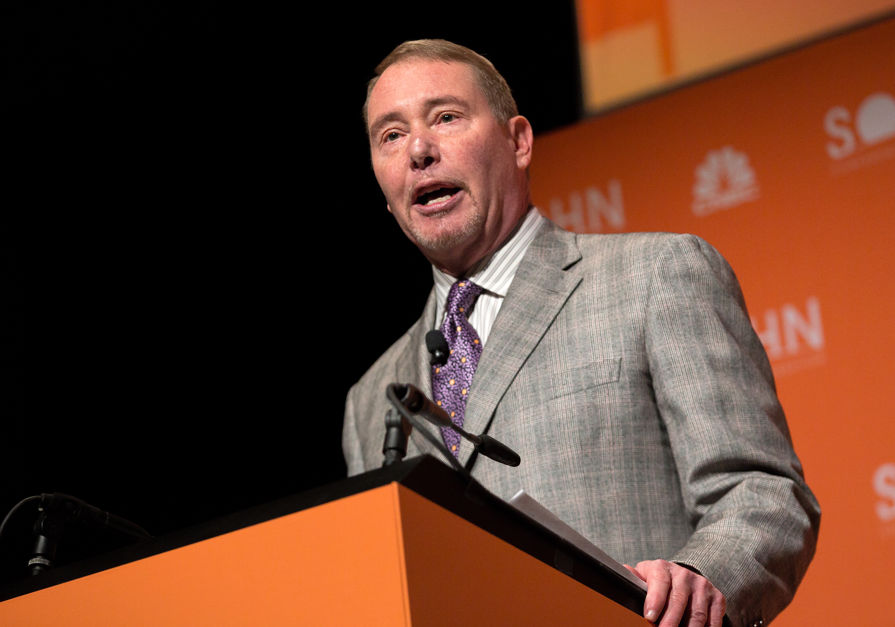
A duo of emerging-market bond veterans at Jeffrey Gundlach’s DoubleLine Capital is taking no chances as Donald Trump rolls out his trade agenda.
Investors are fretting that a year-long rally in global credit is papering over the risk that US policy uncertainty tips the world’s largest economy into a recession.
Amid a market correction and heightened policy, inflation and growth concerns, valuations are back in the spotlight.
In the current installment of The Roundup, Oaktree experts explore various investment risks and opportunities, including the heightened demand for mezzanine financing, potential entry points for special situations investors, the limited competition for unrated asset-backed finance investments, and the growing need for specialized life sciences lenders.
Economic activity hit a soft patch in the first quarter—whether it was fueled by the big pullback in confidence or one-off factors such as cold weather, a harsh flu season and an acceleration of imports ahead of pre- announced tariffs, our economist expects the slowdown will prove short-lived.
Dr. David Kelly, chief global market strategist, J.P. Morgan Asset Management, provided insight on current opportunities at Exchange.
On this week’s episode of “ETF of the Week,” Chuck Jaffe of “Money Life” discussed the Invesco CEF Income Composite ETF (PCEF) with Roxanna Islam, head of sector and industry research at VettaFi. The pair discussed several topics related to the fund to give investors a deeper understanding of the ETF overall.
If a dividend is not a gain, then what is it? Here is my irony-drenched-but-accurate definition
Last week's economic reports painted a stark picture of rising inflationary pressures and plummeting consumer confidence.
Today I’ll try to cut through some of this fog and look at why the US has a trade deficit. As you’ll see, it is a built-in, necessary feature of our money. Plus, it is time to start watching for a recession. Let’s jump in.
We were in the camp that the new administration was using the threat of tariffs as an instrument to negotiate deals with other countries, especially with our largest trading partners, Canada and Mexico.
On March 18, 2025, Jensen Huang stepped onto the stage at Nvidia's GPU Technology Conference (GTC) in San Jose with the presence of a man who knows he's about to redefine the trajectory of an industry—again. His message was clear: AI has hit an inflection point, and if you're not paying attention, you're already behind.
Uncertainty dominates the day, with market volatility sparking investor questions not seen in years. With this in mind, we’ve put together a concise cheat sheet covering key topics on everyone’s radar.
One reason Apple Inc.’s brand is so valuable is that for decades, it had a reputation for only making promises it could keep.
Longtime Investor Alert readers have often seen me say that government policy is a precursor to change. What this means is that, when policymakers act—whether through subsidies, sanctions, tariffs or regulations—markets can sometimes respond swiftly and dramatically. We’re seeing that play out right now in real time, especially in the copper market.
The world’s largest asset manager is betting big on a growing breed of derivatives-powered ETFs that’s shaking up the art of active portfolio management.
From New York to London and Hong Kong, investors are cutting back risk ahead of next week’s tariff announcements, while keeping cash ready to pounce the moment opportunities arise.
As the first quarter comes to a close, there is one word that has become the new go-to term to describe the investment backdrop: uncertainty.
Portfolio Managers John Kerschner, Nick Childs, and Jessica Shill discuss the AAA CLO ETF landscape and highlight the most important considerations for investors.
Total assets held by actively run ETFs in the US have hit the $1 trillion milestone, as investors sink cash into a new generation of strategies — shaking up the passive reputation of this booming corner of money management.
While we sympathize with consumers who have had difficult interactions with the healthcare system, we believe that much of the antipathy toward health insurers is misplaced. Their role as middlemen is a vital and increasingly important one in a U.S. healthcare system that struggles to balance between the incentives of providers and consumers.
Since May 2020, inflation (CPI) has gone from a low of 0.1% to a high of 9.1% and back to 2.8%. It is no wonder why any investor might at least pause in this period of uncertainty.
The global economy is undergoing an unprecedented wave of industrial and infrastructure expansion, driving relentless demand for commodities across energy, metals and agriculture.