My unifying theory of finance is that everything goes seriously wrong when people start seeing something — a bond, a mortgage-backed security, a crypto exchange — as risk-free when it isn’t.
The Fear Trade is what most Western investors are familiar with. It’s the flight to safety during times of uncertainty, driven by concerns over inflation, interest rates, geopolitical risk and more.
Here’s the blunt truth: Many great investment strategies fail because of poor implementation. Robust capabilities in trading, transition management, overlays and currencies are critical to executing a strategy.
Investors looking to move big blocks of corporate bonds have long relied on exchange-traded funds listed on stock exchanges to jump in and out of positions. But now, they’re increasingly trading directly in the debt market.
The push to put private assets in the hands of individual investors is breathing new life into a relatively quiet corner of the asset management industry: interval funds.
Investors may revisit international exposure in their portfolios amidst reduced market reactions to tariff announcements, uncertain U.S. policy and lagging U.S. stock performance.
After falling 0.7% in April, the S&P 500 gained 6.3% last month, marking the index’s best May return since 1990 and its best monthly return since November 2023 (see the chart).
VettaFi’s Head of Research Todd Rosenbluth discussed the Fidelity Enhanced International ETF (FENI) on this week’s “ETF of the Week” podcast with Chuck Jaffe of “Money Life.”
Investors nearing or in retirement who are currently defaulted into TDFs need to stop defaulting and move to safety now.
As small business clients look toward ambitious growth, advisors have the chance to offer something foundational: a term life insurance strategy that turns ambitions into a legacy.
US Treasuries were trimming overnight gains, with modest weakness in longer dated debt as investors awaited a Thursday auction of 30-year securities that will offer a fresh test of demand for the beleaguered securities.
Yale University’s $41 billion endowment, led for decades by the late investing giant David Swensen, has been the envy – and the blueprint — for many US universities eager to secure their financial future.
Increasing investor preference for actively managed strategies continues in this year’s tumultuous environment. With active ETFs taking increasing market share, advisors and investors have ever-expanding choices when looking to augment existing passive exposures.
Today we’ll continue our SIC highlight series featuring a relatively new face who is now indispensable, plus some new ones who were crowd favorites.
It would seem evident that most investors would understand that consumer spending drives economic growth, ultimately creating corporate earnings growth. Yet, despite this somewhat tautological statement, Wall Street appears to ignore this simple reality when forecasting forward earnings.
The Federal Reserve (Fed) lost its chance to lower interest rates further during the first half of the year, when inflation came down to close to its 2.0% target with very limited risk that its decision would have triggered higher inflation.
Systematic fixed-income investing is attracting increased attention but needs specialist skills and resources. Would your manager have what it takes?
Rebounding demand from ETF investors and resilient buying from central banks and Asia retail have propelled gold prices to fresh records north of US$3,000/oz. Find out why we believe there is more room to run.
The bill contains several tax-code changes that could affect municipal bonds, although we don't think it reduces the appeal of munis for high-income earners.
The ETF market saw a noticeable slowdown of new products launched in May; however, innovation continued to be a driving force.
Treasuries fell as faster-than-expected US job and wage growth prompted traders to trim back bets that the Federal Reserve will cut interest rates this year.
The federal government, financial markets and most Americans are all in a state of denial about interest rates.
The White House is seriously considering the proposal, at the behest of some of the country’s largest financial firms.
Bouts of volatility may continue in the second half of 2025 as bond market investors navigate evolving tariff policy, U.S. government debt, and economic uncertainty.
Kristofer Kraus, portfolio manager and co-lead of PIMCO’s asset-based finance business, charts the nuances behind the overall resilience of U.S. consumers – and explains how these insights shape lending and investment strategies.
Abstract SMID-cap investing offers stronger performance and lower volatility than small-caps alone. By using the Russell 2500 index, investors can retain top performers longer, reduce turnover, and enhance portfolio resilience and flexibility.
Privacore Capital, an affiliate of Janus Henderson and an open-architecture solutions provider for alternative investment products tailored to the private wealth market, and Partners Capital Investment Group, a global Investment Office, today announced the launch of the Privacore PCAAM Alternative Growth Fund (“AltsGrow”).
Gold’s recent surge to $3,500 was quickly followed by a sharp correction. Each tariff update or diplomatic rumor sends markets into a frenzy—rallying stocks, selling gold, or reversing course the next day.
We remain underweight most developed market stocks as US tariff policy is still unclear but are more enthusiastic about emerging market assets.
For four decades, the USA has relied on debt-financed consumption and a service-heavy economy to mask an unsustainable model.
Given the large pool of options available to fixed income investors in the bond market, the ideal option given the current economic uncertainty is still Treasuries. With that, Vanguard has three options worthy of consideration for any portfolio.
With tariffs toggling on and off and a major tax bill still in flux, investors should brace for headline-driven volatility through July, particularly around trade and fiscal policy.
Wall Street is cranking up the bond machine as US homeowners — finding that buying a new house is out of reach since mortgage rates started climbing in 2022 – are instead getting home equity loans and sprucing up their current properties.
A new line of yield-chasing crypto funds is forcing the Securities and Exchange Commission to confront unresolved gaps in its regulatory framework, just as the Trump administration eases oversight of digital assets.
Bond traders priced in an earlier start to expected Federal Reserve interest-rate cuts on fresh clues the US job market is losing momentum.
Since 2019 and the establishment of the ETF Rule, traditional active managers, armed with decades of expertise, have flocked to ETFs.
In the last three months tariff news has whipped financial markets around remarkably in response to President Trump’s ever changing tariff policies. The most pronounced reactions were concentrated in the US stock market.
Private investments demand patience, but the rewards could be worth the wait.
Early signs of diminishing economic activity and inflation could be a harbinger for bond prices to rise. If so, consider taking advantage of a potential bond rally with a pair of ETFs from Vanguard.
In our view, using quantitative methods in a transparent, repeatable way to extract alpha through diversified factor tilts offers a compelling alternative in this new IG environment.
JPMorgan Chase & Co. is putting Marianne Lake, one of the leading contenders to one day take over for Chief Executive Officer Jamie Dimon, in charge of strategic growth and the firm’s fast-growing overseas consumer bank.
Value stocks and related ETFs have been decent performers of late. They’ve been generating buzz for a group of equities that long trailed growth stocks. Enthusiasm for value could earnestly be reborn. If so, investors should take that as a reminder to be judicious regarding evaluating value ETFs.
Closed-end funds can offer stable income streams, but also have some benefits over ETFs when it comes to fund structure.
On the trade front, investor uncertainty eased for a short time as President Donald Trump’s “Liberation Day” tariffs seemed to lose traction. Several key developments contributed, including a 90-day tariff pause with China, the signing of a US-UK trade agreement and progress on negotiations with other partners, including Europe.
Lasting change happens through something called “memory reconsolidation.” It is the brain’s way of updating emotional patterns we have carried for years — often since childhood.
After more than a half-decade cleaning up Wells Fargo & Co.’s scandals, the chief executive officer has cleared away the firm’s biggest impediment to growth: the Federal Reserve’s seven-year-old cap on assets.
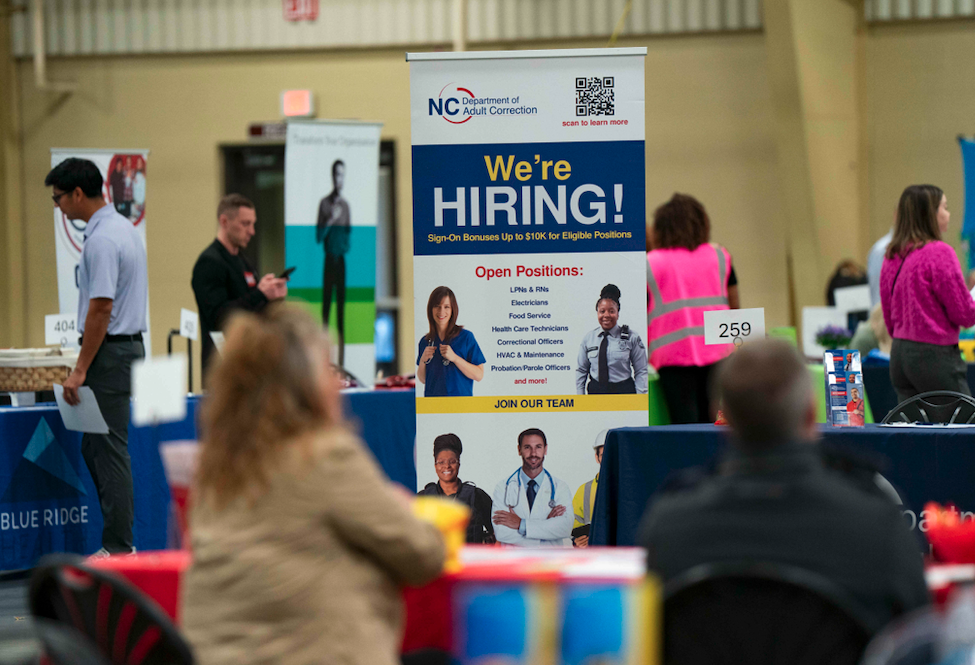
US job openings unexpectedly rose in April in a fairly broad advance and hiring picked up, indicating demand for workers remains healthy despite heightened economic uncertainty.
Duration is an often confused term when it comes to financial fixed income investing. After all, in your everyday life, the definition of duration is the length of time it takes for something to occur.