Despite headline noise from U.S. tariffs and mixed earnings, India’s structural growth pillars—credit expansion, services exports and infrastructure delivery—remain firmly intact in 2025.
While the One Big Beautiful Bill Act (OBBBA) has something for each constituency in President Trump’s political coalition, we think it could be a squandered opportunity to alter the unsustainable trajectory of federal debt.
You’ve probably seen versions of these headlines this summer. They’re all designed to grab your attention by sounding the alarm, then close with a hand-wringing quote from someone who probably missed the last bull run.
While growth may slow in the near term, Europe's longer-term outlook appears to be improving.
The United States has been on a remarkable run: exceptional growth and innovation, multiple structural advantages, and the financial market dominance to match.
Stock bulls have another reason to worry that the blistering rally in American equities may be about to cool.
As the turn of the calendar occurred on Friday, the bull streak for the market since the April lows ended. Such was not unexpected, and the correction has been a topic of discussion in our daily market commentary over the last two weeks.
If you’ve been following the luxury sector, you’ve probably seen your fair share of sobering news.
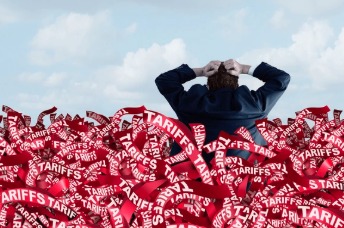
Constant threats are souring U.S. relations with its trading partners. Stop-gap deals of the kind agreed recently will not mark the end of the trade war, as the pacts leave high tariffs in place.
The ability of the US economy to avoid a recession in 2022-2023 rested, in part, on the resilience of non-residential investment, which was propped up by a strong private investment push from companies taking advantage of provisions in both the CHIPS Act as well as the IRA.
We believe several forces—tariffs that weigh on U.S. household income, shifts in fiscal and economic policy abroad, and evolving macroeconomic conditions—could compress growth differentials between the United States, Europe, Japan, and China.
Despite some wide swings over the last few years, most bond yields still remain elevated.
Trade is an economic alliance that benefits both countries. There are no losers only winners…And trade helps strengthen the free world.
Now that we're more than halfway through 2025, let's take a look at the top 10 most-read charts so far for the year.
This video examines the top 10 most-read charts for the first half of the year. From market updates and valuations to consumer attitudes and gas prices, these charts have provided crucial insights into the economic landscape that has shaped the first six months of 2025.
As we move into the second half of 2025, it is an opportune moment to reassess our market outlook and provide updated insights for investors.
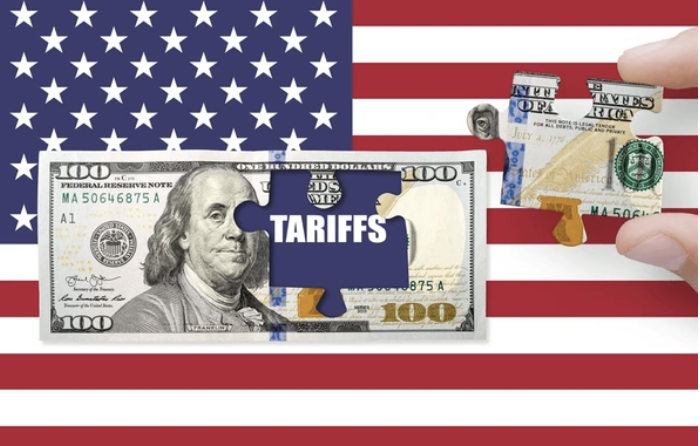
U.S. customs duties topped $100 billion for the first time ever in a single year this month. That number is even more remarkable when you consider that most of President Donald Trump’s new tariffs haven’t even taken full effect yet.
Unfortunately, the lush financial terrain we enjoyed from 2008 to 2022 was more like artificial turf. It wears out, gets ugly holes, and eventually needs replacement. But how to replace it without causing other problems? That turns out to be a real problem.
Current volatility and optimism are some of the topics being discussed in this new roundtable from Royce Investment Partners.
High yield bonds have historically delivered attractive long-term returns, and since the Great Financial Crisis they have also become higher quality, as weaker borrowers have departed the sector for the private credit and leveraged loan markets.
It is easy to invest when markets are rallying, but it can be tough for investors to stay in their seats when markets inevitably decline again.
Every year around this time, we update our Periodic Table of Commodities Returns to reflect the performance of raw materials in the first six months. I’m biased, but few tools do a better job of providing a clear, interactive picture of the commodities landscape than ours.
The resilient job market has supported stock gains, but Washington policy has been a primary market driver so far this year.
The Treasury market rallied after an auction of 10-year notes drew strong demand, easing concerns that investors will balk at financing swelling US deficits.
Liberation Day seems like a lifetime ago. But the 90-day pause is almost over, and—thus far—there are few deals that have been consummated.
We expect tariff policy to remain a key part of the narrative pushed by the administration.
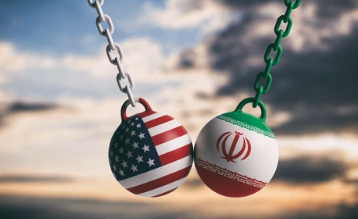
In the weeks leading up to last month’s Israeli and U.S. strikes on Iran, oil prices climbed – not due to actual supply disruptions, but in response to a geopolitical risk premium.
Our strategy work and quantitative insights suggest the conditions behind more than a decade of U.S. equity outperformance are starting to shift.
This video examines and compares the two main measures of inflation: the Personal Consumption Expenditures (PCE) Price Index and the Consumer Price Index, with data through May 2025.
ClearBridge Investments believes positive forces from One Big Beautiful Bill Act passage and future interest rate cuts should soon outweigh negative forces of tariff actions.
We upgrade equities to neutral from underweight as falling interest rates and improving economic conditions in emerging markets offset uncertainty over US tariff policies.
Tariffs have been the dominant theme in economic policy this year. While President Trump has long held protectionist views, his administration’s approach to international commerce has been more belligerent than was seen in his first term.
After a tumultuous few months, June of 2025 saw a strong rally which took global markets to (or close to) new highs. The rally was broad-based, with international and U.S. markets all up strongly.
As the global economy navigates a complex landscape, investors are left wondering: are they right to be optimistic or are they being complacent? This article from Franklin Templeton Institute explores the signs of resilience as well as numerous risks.
Equity markets continued to march higher in June, seemingly unfazed by heightened Middle East tensions (which were short-lived) and the looming July 8 deadline for the administration’s pause on reciprocal tariffs.
We began the year optimistic that an environment of slowing growth, disinflation and easier monetary policy would be favorable for fixed income markets. Now at midyear, we maintain that view, while acknowledging that policy uncertainty and geopolitical risks may likely result in continued volatility.
The marathon Senate budget vote took center stage early and stocks slipped from yesterday's all-time highs. Job openings, Powell, and manufacturing data are top of mind.
A potential conflict with Iran has consistently appeared in our monthly Market Risk Monitor for over two years. Now that risk has materialized. Our equity portfolio managers assess the implications for global markets.
Easing trade tensions and hopes the Senate could pass a budget gave stocks an early lift after Friday's record highs. The week is packed with jobs news and Powell talks tomorrow.
Readers of a certain age will no doubt recall President Ronald Reagan launching one of the most ambitious military buildups in American history.
Market breadth can help gauge strength or weakness. Methods include tracking the number of stocks trading above or below moving averages or making new highs or lows.
Growth is expected to decelerate, but not come crashing down.
Stocks are wrapping up a stellar quarter at all-time highs amid signs of progress in US trade talks while hopes the Federal Reserve will resume its rate cuts drove Treasuries toward their biggest first-half stretch in five years. The dollar eyed its longest monthly slide since 2017.
Are we experiencing an energy transition? According to geologist and fund manager Jane Woodward, we are — and it’s proceeding more quickly than almost anyone expected.
Index futures inched upward premarket as the headline May PCE data landed in line with expectations, though the core data and annual figures were up slightly.
While both valuation and technical factors suggest to us that the dollar may continue to weaken in the near-term, we would caution investors against reading too much concerning the US’ long-term economic stability into further dollar weakness.
As tensions in the Middle East mounted to start the week, Wall Street strategists had a message for US equities investors: Stay calm and buy into market declines. The call looked prescient on Tuesday after President Donald Trump announced a ceasefire between Israel and Iran.
The U.S. Dollar Index, when measured against a basket of other major currencies, has declined by approximately 10% this year through mid-June and is currently trading at its lowest level in three years.
When investors approach the financial markets, there’s a tendency to imagine that conditions can be judged as favorable or unfavorable based on one single measure or another. The fact is that market conditions at any moment in time are a composite of interdependent forces.