The deferral of “reciprocal” tariffs on most U.S. trading partners suggests that the peak of tariff uncertainty may have passed.
Banks blew Q1 earnings expectations out of the water, benefitting from high trading volumes, but CEO commentary remains cautious for 2025.
Federal Reserve Bank of Cleveland President Beth Hammack said she’s keeping an open mind about the direction of interest rates because of uncertainty over President Donald Trump’s policies and how they will affect the economy.
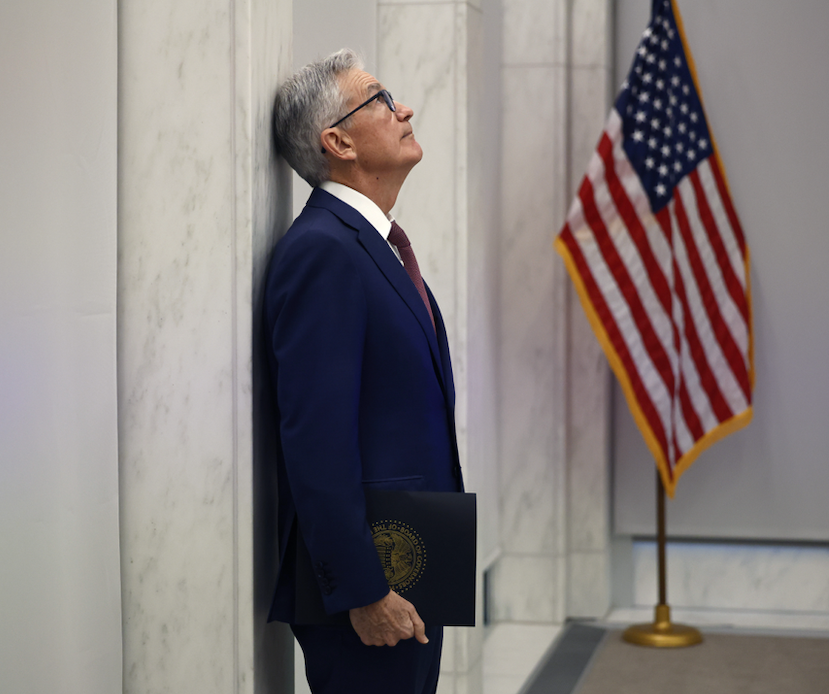
US Treasuries fell, snapping three days of gains, as traders pared bets on Federal Reserve interest-rate cuts after Chair Jerome Powell reiterated his commitment to keeping inflation in check.
With Congress out for the next two weeks for Easter recess and a short trading week in New York, it should be a quieter week – though tariff-related news continues to capture headlines.
The month of April will unfortunately go down in financial market folklore as being one of the more noteworthy on record.
CIO Sean Taylor assesses a better-than-expected quarter for emerging markets and takes stock of the drivers that may support the asset class in what could be difficult months ahead for global markets.
Inflation affects everything from grocery bills to rent, making the Consumer Price Index one of the most closely watched economic indicators. What does inflation mean at the micro level — specifically to your household?
A three-day rebound in US Treasuries will be tested on Wednesday as investors await commentary from Federal Reserve Chair Jerome Powell as well as key data and a bond auction.
Last week, the S&P 500 was up 5.7%, the strongest week for the market since November 2023.
As we write this, stocks have bounced back as Trump retreated from electronic tariffs from China. Nevertheless, this was a remarkable week for markets with Trump’s tariff policy taking center stage for market stress across stocks, bonds and currencies.
While we continue to feel the U.S. has structural investment advantages, we are mindful that the scope of the current administration's policy shifts may present challenges to our sustained economic momentum.
The current market unrest over the potential for tariff increases and their impact is unpredictable. The volatility can be unnerving.
The reciprocal reprieve does not alter the tectonic shift in the trade outlook.
Markets have had a wild ride these past couple of weeks, alongside chaotic tariff-related news, with volatility (and its policy triggers) most elevated in the bond market.
US equities extended a rebound into a third session Tuesday as traders weighed the ongoing global trade war against a slew of positive earnings reports from Wall Street banks.
On this episode of the “ETF of the Week” podcast, VettaFi’s Head of Research Todd Rosenbluth talked about the Neuberger Berman Commodity Strategy ETF (NBCM) with Money Life host Chuck Jaffe. The pair covered a range of topics related to the fund, providing investors with a deeper understanding of the ETF.
This month’s roller-coaster ride through the markets has been more frightening than exhilarating for many Americans, who have more than $44 trillion invested in retirement accounts.
A new cryptocurrency aims to occupy the final frontier of investor safety — cash that doesn’t lose purchasing power to inflation.
Some of the reasons, but not the only ones, why our trade deficits are so large is because government expenditures are too high and/or we are not collecting enough taxes.
The American consumer is tapped out. The savings buffer is gone, wage growth is declining, and credit costs are rising. Corporate America is already adjusting to this new reality, with companies issuing cautious guidance for 2025.
On Monday, April 7, the S&P 500 dropped as much as 4.7% at the session low before whiplashing higher on reports of a potential tariff delay—closing the day up 3.4% from Friday’s close.
We think it’s important for the Fed to move gradually. The US dollar has weakened lately, and, as a result, there is little case for a drastic loosening of monetary policy. The Fed could let up somewhat on bank regulations and capital requirements, which would help the struggling bond market.
Significant government policy shifts, particularly in tariffs and regulatory restructuring, have created uncertainty and volatility. We continue monitoring potential risks like inflation and recession while remaining focused on identifying profitable investment opportunities amidst these changes.
Commodity markets face uncertainty from tariffs, global growth risks and geopolitics, but may show resilience. Tight supply and global stimulus support a constructive long-term outlook.
If Trump is successful in ending — or at least significantly changing — the current global economic structure, the economy and geopolitics will change dramatically. Initially, this will be highly challenging from an investment perspective.
You probably noticed we are having one of those “weeks when decades happen.” Notice also, however, that we are still here. Your investments and businesses may be bruised but you’re still in the game.
Yield spreads are critical to understanding market sentiment and predicting potential stock market downturns. While yield spreads have widened, they remain well below the long-term averages. However, if recession risks increase due to tariffs, sentiment, or illiquidity, those yield spreads will widen further.
Last week’s data can be summarized by a volatile market reacting to tariff news and a backwards-looking inflation reprieve.
After starting the year on a high note with the S&P 500 index of U.S. Large Cap stocks posting an all-time high on February 19th, equities retreated during the second half of the quarter, officially falling into correction territory (down 10 percent) on March 13.
Another period of heightened volatility in the markets reminds us why tax management can be such an essential part of fixed income investing.
It was a wild week on Wall Street after President Donald Trump announced a broad new tariff policy that went beyond what most analysts had anticipated, spurring a plunge in both stock and bond markets.
On 9 April, President Donald Trump announced a 90-day pause on the higher “add-on” reciprocal tariffs on 50-plus countries that had been announced the previous week, precipitating a historic equity market rally and showing that there was seemingly a limit to how far he would go to move forward with his trade agenda.
Spending cuts, tariffs and recession risk—Jan van Eck’s latest outlook breaks down what to watch and why he’s focused on gold, bitcoin, semiconductors and India.
Bonds have gained as investors sought shelter amid growing fears around a tariff-driven global economic slowdown.
Morgan Stanley’s stock-traders delivered first-quarter revenue that exceeded analyst predictions, as Wall Street’s biggest banks continue to benefit from turbulence ignited by President Donald Trump’s policies.
Getting into Donald Trump’s head is no easy task. And to the extent his economic intentions are decipherable and coherent, can Trump impose his economic will on other countries? As tariffs go into place, albeit with a partial pause, that remains to be seen.
US wholesale prices fell in March by the most since October 2023, restrained by energy costs and adding to evidence of muted inflation ahead of the Trump administration’s tariffs on US trading partners.
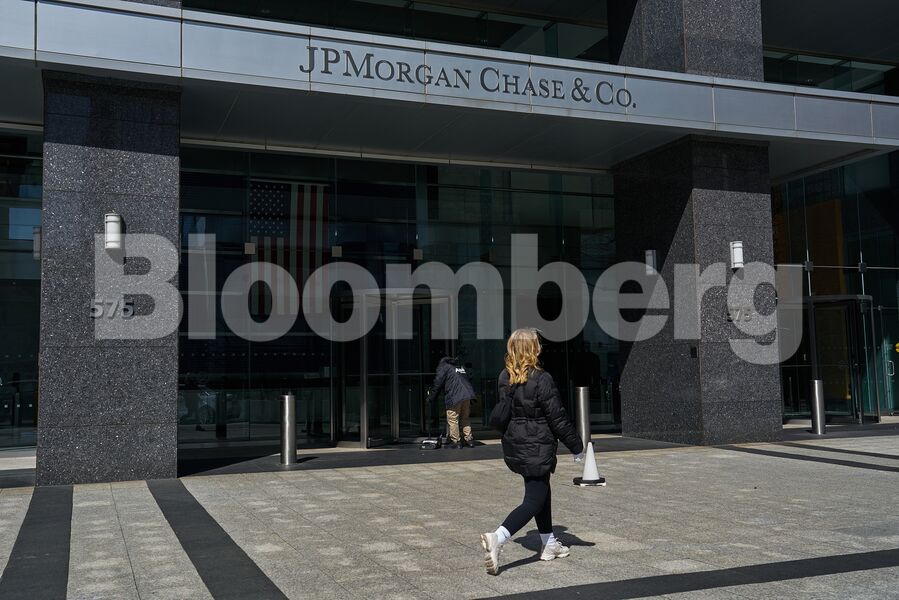
JPMorgan Chase & Co.’s stock traders took in a record haul in the first quarter, boosted by chaotic market moves set off by President Donald Trump’s policy announcements after he took office in January.
The markets are in the middle of a historic decline. Not so much in the magnitude—while we are approaching a bear market, these happen fairly regularly—but in the speed of the drop.
On 2 April, the Trump administration announced sweeping tariffs that were more aggressive than many had expected. Then on 9 April, the administration announced a 90-day pause on most of the new country-specific “reciprocal tariffs.”
Markets responded swiftly to President Trump’s recent announcement of sweeping reciprocal tariffs, with the S&P 500 falling more than 3% in a single day.
Concerns about a trade war have rattled markets so far in 2025, but we believe fixed income investors need to be patient, stay defensive, and see how things evolve before making any big decisions.
Global equities faced fresh challenges in the first quarter of 2025 amid growing trade-war concerns and developments in artificial intelligence (AI).
Q1 earnings season is about to kick off amidst what some might consider to be the most uncertain environment for US corporations since the COVID-19 pandemic.
Last week President Trump announced tariffs on nearly all US trading partners, a move that far exceeded the most pessimistic expectations of market participants.
With the financial markets still wrestling with the tariff announcements from last week, one thing is still certain: uncertainty remains an integral part of the investment landscape.
Social Security is at the center of the fiscal emergency that threatens the US. Yet Washington is always reluctant to grapple with it honestly, partly because the issue is misunderstood.
US inflation cooled broadly in March, indicating some relief for consumers prior to widespread tariffs that risk contributing to price pressures.
Federal Reserve officials are prepared to hold their policy rate steady to minimize the risk that President Donald Trump’s tariffs trigger a persistent rise in inflation, even if the labor market softens further.