Bond traders priced in less monetary policy easing by the Federal Reserve this year — and briefly set the odds of a first move in June to less than 50% — after a gauge of US manufacturing activity showed expansion for the first time since 2022.
Reasonable people can disagree about whether US disinflation is actually stalling and what it might mean for Federal Reserve monetary policy. But it’s getting much harder to deny the underlying strength of the economy, suggesting central bankers can afford to wait before reducing benchmark interest rates.
What an impressive start to the year for US stocks! Not only did the S&P 500 Index achieve its largest first-quarter gain since 2019, it did so amidst significant challenges.
Implementing the TIPS ladder is clunky, so I challenged the fund industry to simplify and improve with a TIPS ladder Fund. Stone Ridge Asset Management has done just that with its new LifeX Inflation Protected mutual funds.
A downside of investing in defensive sectors is that those groups command above-average valuation and below-average volatility traits.
More investors are willing to take on credit risk in order to attain yield, but there are other ETF options to consider.
Gold staged a blinding comeback this week, surging to fresh all-time highs above $2,200 an ounce.
Our outlook is still positive, but it may be difficult to replicate the strong returns of the past few quarters.
Guessing the direction of interest rates is no easier than any other tactical or market timing decision. The yield on the benchmark 10-year Treasury note is just under 3.9%. That is about 100 basis points less than it was a few months ago. Fed policy is uncertain, inflation has not been fully controlled, and fiscal deficits loom as a long-term risk for yields to go higher.
Those factors argue in favor of an allocation to floating-rate notes. My guest today will help us explore this asset class, its opportunities and its risks.
Federal Reserve Chair Jerome Powell’s increasing focus on protecting the job market is encouraging a swath of bond traders putting bets on inflation rates to remain elevated.
After two volatile years, we believe conditions are especially compelling for fixed income.
The upcoming US presidential elections transcend mere political rivalry. Stephen Dover, Head of Franklin Institute, examines the policy differences between the major parties and their potential implications on capital markets in the years to come. He also discusses whether elections and their outcomes have significantly affected equity markets or if other factors made more of an impact.
For this edition of Bull vs. Bear, Karrie Gordon and Nick Peters-Golden debate whether alts deserve portfolio allocation in 2024.
We believe optimism over a soft-landing scenario—where economic growth slows but a recession is avoided—may deliver more near-term market gains, as inflation declines and central banks look to start easing around mid-year.
Rate cuts should help ease volatility in the bond markets, making it ideal for prospective bond investors to get core exposure.
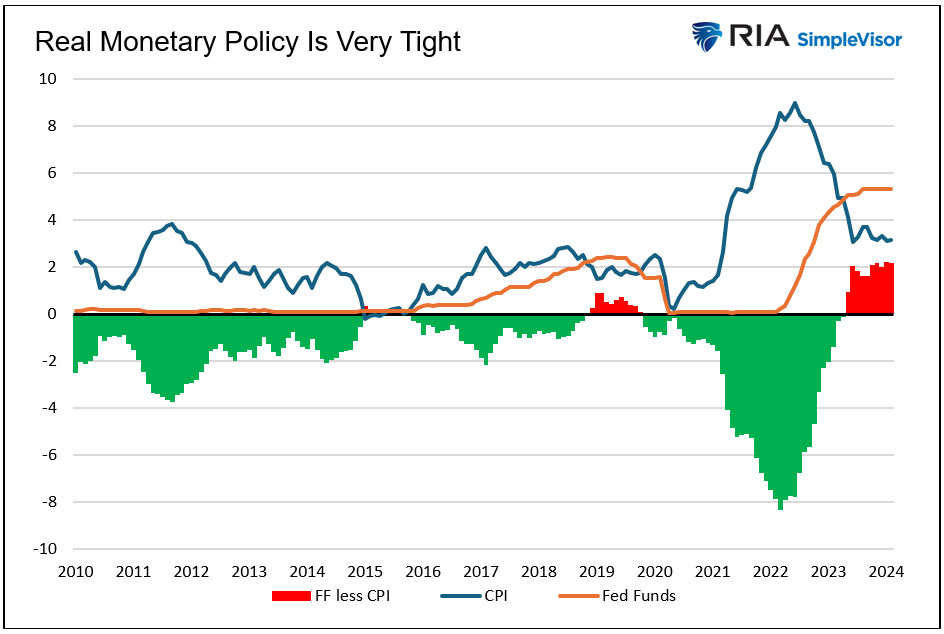
Easy financial conditions and tight borrowing conditions make monetary policy difficult for the Fed to balance.
Bob Doll, CEO & CIO at Crossmark Global Investments, explains why double-digit earnings growth and multiple Fed rate cuts seem incompatible.
Global Head of Client Portfolio Management Seth Meyer discusses the hidden risks and potential strategic pitfalls of sitting in cash.
Larry Adam takes stock of how the economy and markets have performed since the beginning of the year and take a fresh look at where we are heading as we progress through the year.
Bond traders are cautiously reloading wagers that burned them just weeks ago as the Federal Reserve and key global peers finally appear set to begin reducing interest rates as soon as June.
If one wants a guaranteed store of real purchasing power to pay off a future liability or to provide a multi-year income stream such as for retirement, then a ladder of TIPS provides a much stronger guarantee than other readily available assets.
At a time when financial professionals are increasingly looking for differentiated alternative investment products for diversification and return benefits, these are the three things you need to know about the growing asset class.
As the anticipation of rate cuts build, it may cause fixed income investors to fret, but an ultra-short option could help ease those worries.
Many investors seem content to sit in cash. But with the market pricing in rate cuts by July, we think it’s time for muni investors to jump back in now. Here’s why.
There have been several big changes in the municipal bond market lately. Here's what you should know.
Gold staged a blinding comeback this week, surging to fresh all-time highs above $2,200 an ounce. The rally, which has added around 10% to gold’s value since mid-February, caught many market watchers off-guard.
With three potential Fed interest rate cuts forecast for this year, gold remains an attractive equity hedge.
The Bank of Japan (BOJ) has bid farewell to its negative interest rate policy (NIRP), yield-curve control (YCC) and quantitative and qualitative easing (QQE), marking the end of an era of extraordinary monetary easing.
Corporate defaults have been on the rise. As such, investors may want to consider investment-grade debt until credit risks subside.
Based on the valuation measures we find best-correlated with actual subsequent S&P 500 total returns across a century of market cycles, the stock market presently stands at valuation extremes matched only twice in U.S. financial history.
We will explore research concerning passive, covered call income strategies, give an overview of the derivative income category and due diligence considerations, and take a closer look at an ‘active-active’ approach deployed in a new ETF.
Treasury yields are on the rise following new economic data and upcoming indicators from the Federal Reserve.
Using a tactical approach to fixed income investing based on the evaluation of yield spreads across a variety of fixed income sectors makes sense.
The Bank of Japan raised interest rates for the first time since 2007 and has eliminated the yield curve control framework. Franklin Templeton Fixed Income Economist Rini Sen expects the bulk of further tightening will likely come in 2025 as BoJ seeks to reach a sustainable 2% inflation target by end of fiscal year 2025.
The heated debate surrounding traditional 60/40 portfolios in today’s markets has dwindled in recent months. Given ongoing market volatility and the growing popularity of alternatives, does the traditional portfolio hold up today?
Doug Drabik discusses fixed income market conditions and offers insight for bond investors.
Russ Koesterich discusses the reason that bonds are not providing the same diversification benefit to equities as in prior decades.
The Federal Reserve weighs the data while investors wonder: When will rate cuts begin?
Capital markets appear content with playing the rate cut waiting game as the S&P 500 continues to rise to new highs. Meanwhile, renewed volatility could make investors reconsider adding an equal weight strategy to their portfolios.
Here are five notable charts to consider in global commodity markets as the week gets underway.
While investing strategies should be consistent, changes in markets and the economy make some advice more relevant than it was in the past. Here are the top 10 things I’m telling clients.
Gold prices have done well around Fed easing cycles. In addition, inflation concerns and high interest rates make the year-ahead gold return forecast attractive.
Sentiment data is beginning to match relatively strong "hard" economic data.
For the first time in quite a while, there is an alignment between what the Federal Reserve is signaling about its interest-rate setting this year and what the markets think will happen.
Snap up more Japanese stocks, ratchet up shorts on government debt and keep buying the yen: these are some of the most popular calls from big-name money managers ahead of a central bank meeting that may end the world’s last experiment with negative interest rates.
Fresh data on inflation and unemployment filings gave Federal Reserve officials more reasons to hold off on cutting interest rates, even as retail sales suggested a slowdown in consumer spending.
Bitcoin extended a retreat from its latest record high amid an intensifying debate about whether the bull run in cryptocurrencies is evidence of speculative froth in global markets.
Gold has definitively broken out of the range it's been stuck in since the start of this decade, reaching a record $2,195 per troy ounce this month.
After dialing back their expectations for 2024 Federal Reserve interest-rate cuts substantially since the start of the year, bond traders on Wednesday will take their next cue when policymakers release their own updated projections for their benchmark.
Nobel laureate Harry Markowitz famously asserted that diversification is the only free lunch in investing. His insight was simple yet profound: by diversifying across assets, investors can achieve higher returns without necessarily increasing risk.