Foreign investors are flooding into South Africa’s government bond market to take advantage of one of the best emerging-market trades of recent years.
While stock indexes generally give a broad idea of what is happening, they can greatly overlook the performance of many individual stocks.
While the US has indeed enjoyed a tremendously exceptional economic environment over the past 125 years, this has not translated into earnings growth that US companies could freely tap into.
To benefit from a corporate buyback, an individual must sell their shares to the company. Conversely, those holding on to their shares are not compensated.
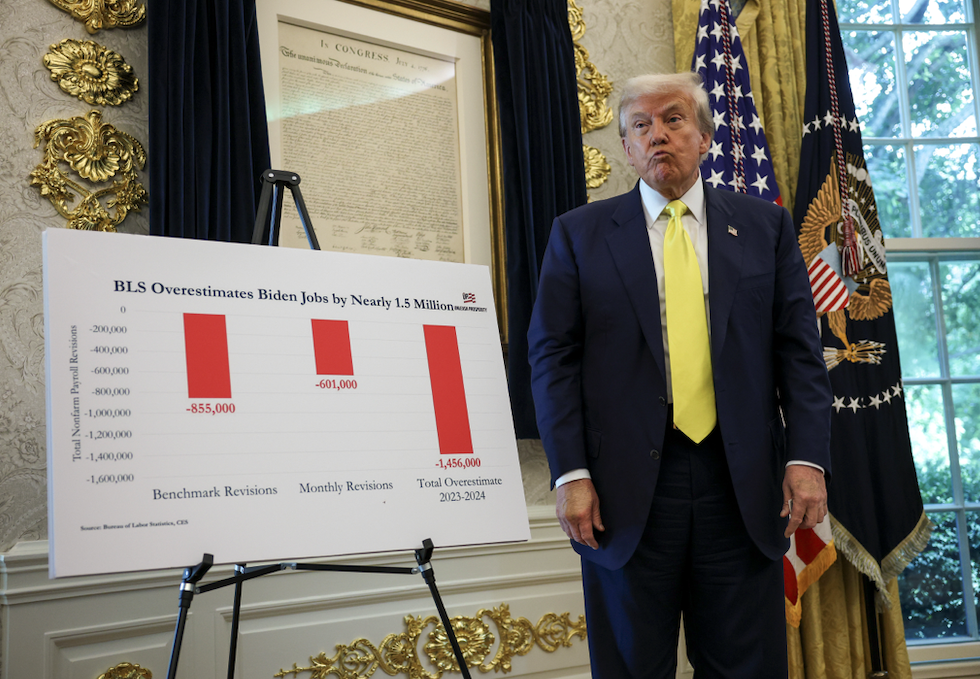
With economic data, the challenge is that our instruments are more error prone. The monthly jobs reports rely on employers responding to surveys correctly and quickly.
U.S. economic growth slowed decisively in the first half of the year amid concern about rising tariffs, although corporate fundamentals have remained strong.
The U.S. economy is like a finely tuned sports car—powerful, tough, and built for speed. It has managed to climb steep inclines in recent years, competently maneuvering past multiple roadblocks.
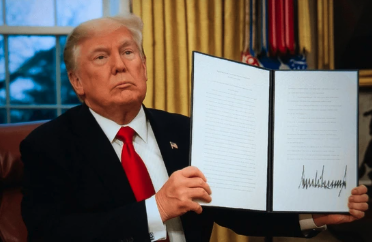
The day of reckoning is here. Earlier in the summer, the Trump Administration set a global trade deal negotiation deadline of August 1.
High yield ETFs, particularly short high yield, have been a significant contributor to portfolio performance, providing relatively reliable fixed income return with relatively little volatility.
Last week, the S&P 500 had a rally that took it to 3 straight record highs. The momentum cooled as economic data painted a complex picture.
July’s Consumer Price Index (CPI) report showed headline year-over-year inflation remained steady at 2.7%, below the anticipated level of 2.8%.
Traders are snapping up risky assets of all stripes in the hope that falling US interest rates will add rocket fuel to an economy that’s so far been able to withstand the effects of Donald Trump’s trade war.
The word “bubble” gets tossed around quite a bit. Usually, it comes in the form of verbal arguments about whether prices have advanced to a point that’s “too high” in some sense. We can do much better than that. A bubble is a mathematical object.
Economic resilience allowed the Fed to remain in wait-and-see mode in July, but July’s non-farm payroll report may cloud the horizon.
President Donald Trump’s chaotic tariff policies have upended global trade and led to questions about whether the days of US exceptionalism and leadership that attracted capital from around the world are over.
The July CPI data indicated moderate price inflation and boosted optimism for a September interest rate cut, even though monetary inflation is on the upswing.
As investors re-evaluate their allocations to US assets, we think they should consider euro-denominated bonds.
As we move through the final peak week of earnings season, the blended growth rate for S&P 500 has now moved into the double digits, hitting 11.8% with 90% companies reporting.
This video examines two key market valuation metrics: the Trailing Twelve-Months (TTM) P/E ratio and the more reliable P/E10 ratio. Using data through July 2025, we explore their differences, historical context, and what they reveal about the current market's valuation.
US short-dated bonds yields fell to their lowest levels in more than three months, reflecting conviction among traders that the Federal Reserve will cut interest rates in September.
We have been pleasantly surprised by how well stocks have handled the sharp increase in tariffs. Since the market low from the early April tariff scare, the S&P 500 Index has gained more than 28%.
It’s always fun to return to classic novels for summer reading and accordingly, this year’s Charts for the Beach returns to the time-honored basics of the economy and of investing.
For the second straight month, consumer borrowing was weak, indicating Americans might be close to their credit limits.
While the One Big Beautiful Bill Act (OBBBA) has something for each constituency in President Trump’s political coalition, we think it could be a squandered opportunity to alter the unsustainable trajectory of federal debt.
The first full week of August offered a concise lesson in how quickly the policy calculus can shift when both politics and data align. Equity markets wobbled after reports that Governor Christopher Waller, not Kevin Warsh, is now the front runner for the next Fed chair.
A cooler labor market was long in the making.
Now that we are six months into the second Trump administration, it is worth revisiting the economic philosophy that I refer to as “TrumpBessenomics.” The term captures the fusion of Donald Trump’s populist, growth-oriented agenda with the strategic and data-driven approach of Treasury Secretary Scott Bessent.
You’ve probably seen versions of these headlines this summer. They’re all designed to grab your attention by sounding the alarm, then close with a hand-wringing quote from someone who probably missed the last bull run.
US stocks rose on Tuesday after the latest consumer price index report stoked bets that the Federal Reserve is virtually certain to resume cutting interest rates next month.
Emerging-market stocks and currencies erased their early declines after a key US inflation report came in line with estimates, encouraging bets that the Federal Reserve will be able to start cutting interest rates next month.
While growth may slow in the near term, Europe's longer-term outlook appears to be improving.
At the last meeting two weeks ago, Chairman Jerome Powell got the Federal Reserve to stand pat on interest rates, but not without a struggle.
If investors are mining for opportunities, the Sprott Gold Miners ETF (SGDM) should be on their list. The ETF is up over 70% this year. That confirms the momentum for the yellow metal has yet to wane and the latent upside by miners could be in its early stages.
There are hints that at least a few within the federal government are toying with the idea of revaluing U.S. gold reserves.
The U.S. economy is slowing down but don't expect a hard landing.
Despite ongoing tariff uncertainties and hawkish post FOMC meeting commentary towards the end of the month, US equities extended their rally into July amid resilient Q2 earnings, progress on trade negotiations, and improving consumer sentiment.
The central theme of “Our Dollar, Your Problem” is the global dominance of the U.S. dollar and what might dethrone it in the future. Rogoff’s concern about U.S. government debt and its possible effect on the value of the dollar is warranted.
Almost everything we think we know about the economy comes from initially flawed data. Jobs data, inflation data, spending data, production data, all of it is imperfect. There is no certainty in this business. But that doesn’t make the data useless.
As the specter of stagflation ripples through equity markets, investors are zeroing in on the upcoming consumer inflation report to see how close the dire economic scenario is to becoming a reality.
Jack McIntyre’s US global bond fund, aided by a slumping dollar, is posting one of the best performances in its almost two decades of existence. His challenge is convincing investors that it’s more than just a flash in the pan.
The Fed has long been criticized for reacting too slowly to economic developments, an inevitable consequence of relying on lagging government data. Now the Fed and BLS are likely to face even more pressure to catch up.
Most economists, including us, were wrong about the ‘ensuing’ recession back in 2022 and 2023 as the US Federal Reserve (Fed) increased interest rates to fight higher inflation.
Despite inflation pressure, tariffs and immigration policy are leading to slower job growth and consumer spending, which may prompt the Federal Reserve to cut interest rates soon.
The Fed confronts a dilemma as hiring slows while inflation heats up.
The likelihood of recession has declined during our three-year forecast period, as such we increased equity exposure.
The ICE BofA Fixed Rate Preferred Index returned 1.45% in July, bringing YTD gains to 2.47%. The $25 par ICE BofA Core Plus Fixed Rate Preferred Securities Index rebounded with a 2.77% return, while ETF inflows exceeded $150 million.
Foreign equities investing is hot this year, and it’s clear to see why. U.S. equities face myriad challenges calling for diversification abroad.
The United States has been on a remarkable run: exceptional growth and innovation, multiple structural advantages, and the financial market dominance to match.
As the Federal Reserve (Fed) conducts its quinquennial review of monetary policy, it must recognize the severe shortcomings of its current policy framework.