To widen your audience, deepen client bonds, and carve out a strong market presence, a webinar strategy is your ticket to success.
Given the uncertainty over a recession, there are other incremental steps that investors may want to consider instead. These include making adjustments to a portfolio’s market beta and credit exposure.
A return to the Great Moderation Era looks unlikely, which might lead to an increasingly volatile—and somewhat unfamiliar—inflationary, economic, and geopolitical landscape.
Celebrating an exciting milestone: Franklin Income Fund turns 75. Learn more about this flagship strategy and read some fun facts from back in 1948.
How do you stand out in the crowded inbox and get more email opens?
Now seems like a good time to talk about wrappers and which ones are best for different situations. How do you decide whether to use an ETF, a mutual fund, or something else?
When markets are in a rising tide, all boats (aka stocks) can benefit. When the waters are choppier, active equity selection aims to identify the sounder vessels. Tony DeSpirito reviews five reasons why he believes the new environment is setting up to favor an active approach.
VettaFi’s Dave Nadig covers the launch of the first ETF holding 0DTE options, along with IPOs in ETFs, flows, and stories to watch moving forward. Astoria’s John Davi spotlights their recently launched U.S. Quality Kings ETF (ROE) and discusses current model portfolio positioning. Fort Washington Investment Advisors’ Laura Mayfield explains the management process behind two Touchstone ETFs, including their Securitized Income ETF (TSEC).
His approach to investing was both timeless and accessible to the average investor. It also achieved incredible results.
Forced deleveraging to be chaotic, causing a new Fed and banking panic.
AI, with its data analysis and predictive power, can revolutionize investing. However, humans remain a crucial part of the process. Franklin Templeton Investment Solutions provides use cases into how different investors can harness AI to achieve their desired outcomes and workflows.
BlackRock and Human Interest have found that American workers earning less than the national average are not saving due to lack of access to saving tools. Broadening access requires an intuitive and automated approach to retirement savings.
Last week the World Gold Council reported that central banks continued to add to their global gold reserves during the month of July. The World Gold Council also highlighted that China, Poland and Turkey were among the countries that were the largest buyers of gold during the month.
The consensus is wrong, and the Fed has not engineered a “soft landing.” A recession is all but certain in the first half of next year, according to Jeffrey Gundlach.
In February this year we wrote an article entitled A Funny Thing Happened on the Way to the Recession. Fast forward to the current situation, where opinion has shifted away from recession in favor of a soft-landing scenario. Does that same contrary analysis mean a recession is now more likely? The simple answer is no, not yet anyway!
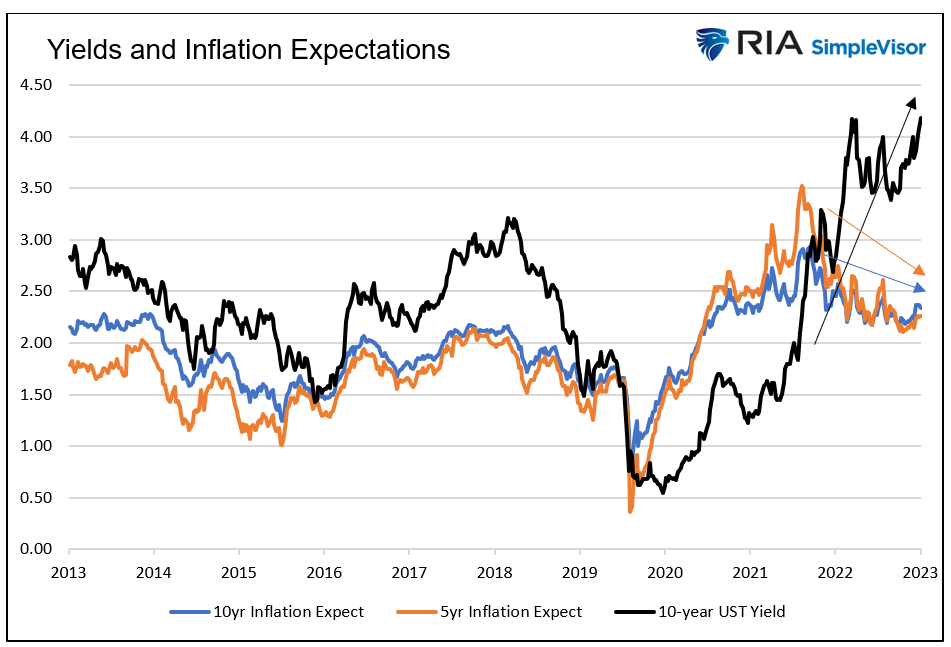
The 10-year Treasury yield has climbed steadily over the past two years. But we believe fixed-income investors should be prepared for lower yields ahead.
For the savvy private wealth investor, portfolio diversity is key to success. Investing in infrastructure is one option that can help you both optimize your portfolio and make a positive and meaningful impact on your local community.
VettaFi’s vice chairman Tom Lydon discussed the iShares MSCI USA Quality Factor ETF (QUAL) on this week’s “ETF of the Week” podcast with Chuck Jaffe of “Money Life.”
Let me share some reminders about what needs to be in place for team members to thrive and stay inspired.
We expect yields to fall later this year and into 2024 as inflation continues to cool.
It’s an important time for Medicare beneficiaries to optimize their healthcare coverage and costs, and financial advisors are in the perfect position to guide clients through this crucial planning opportunity.
Even though past performance doesn’t guarantee future results, investors should prepare for continued market volatility this month.
Launches of emerging-market equity funds that exclude China have already reached a record annual high in 2023, as investor concerns grow over weak returns as well as the risks of investing in the nation.
For some organizations, a partial outsourcing of their investment program is preferable to total outsourcing. Despite this, some OCIO providers will still try very hard to sell companies on a full OCIO solution.
Powell’s recent Jackson Hole Summit speech was mainly as expected. Well, except for the part where Powell obfuscated the truth behind the surge in inflation.
After a slow start to asset gathering, U.S.-listed equity ETFs were in vogue during the summer. At the end of August, the asset category had $165 billion of net inflows, more than $125 billion for fixed income.
Seven mega-cap US-based companies – Apple, Microsoft, Amazon, Google, Nvidia, Tesla, and Meta (Facebook) – have stayed top of mind for many investors this year.
Bond investors have been looking for an approach that delivers attractive, repeatable, uncorrelated active returns. Is their wait over?
Reported inflation has been improving for months, but Federal Reserve policymakers are still understandably worried that it’s a head fake — perhaps none more than Governor Christopher Waller, who has repeatedly referenced the risk of being hoodwinked by the data.
There are differing opinions all around, but some reputable sources like Goldman Sachs are saying it’s increasingly unlikely. Yet the Fed is going to be raising rates further, from what it looks like because inflation is higher than they want.
Stocks are up 18.7% year-to-date, which is good news for portfolios and 401(k)s, but did you know that most of the heavy lifting has been done by a very small number of S&P 500 stocks?
The resilience of US growth, earnings and markets has been the big surprise of 2023. Stephen Dover, Head of Franklin Templeton Institute, opines on the factors at play—and whether they will last.
The Fed's asset portfolio is on an uncharted course.
In China’s current economic travails, US and other Group of Seven nations increasingly see evidence of deep-seated structural problems that ultimately will strengthen the West’s hand against a weakening geopolitical competitor.
Despite softening demand, US home prices remain elevated. The culprits are high interest rates, limited supply and owners' reluctance to take on new mortgages.
Michael Lebowitz: Inflation, deficits and QT don’t mean higher yields
Disrupted global trade is weighing on Germany's performance.
China's economy may have spillover effects on global economic and earnings growth, but it's unlikely to lead to global financial contagion and send stock markets materially lower.
Whereas my last article focused on what I call the “balanced believer,” this piece explores the “private investigator” mindset.
You hear a lot these days how unaffordable housing has become in the US. One way to think about affordability is to look at home prices relative to household incomes.
Today we continue our study of the historical cycles suggesting a major crisis is in our near-term (5‒8 years) future. We don’t know the precise timing or nature of the crisis, but the patterns indicate one is coming and could be severe.
Declining commercial real estate valuations will not likely lead to a wave of defaults among muni issuers, according to Franklin Templeton Fixed Income’s municipal bond team.
It’s premature to call off a recession. Lower shelter costs will ease inflationary pressures. Treasury supply dynamics caught the market by surprise.
If you’re interested in investing in mutual funds or exchange-traded funds (ETFs) – or you already have some in your portfolio – you may be wondering what exactly the difference is between an active and a passive fund.
Supply chains are realigning, to China's dismay.
With the path of least resistance for stocks seemingly lower for now, key to watch will be a stabilization in interest rate volatility and clarity on the path of monetary policy.
The role of the human psychological cycle in driving stock and bond prices is well understood and pre-dates behavioural economics. There are elements that suggest we may be going through another period of ‘irrational exuberance’ as several long-term investors seem stuck in the mindset that ‘There Is No Alternative’ (TINA) to US equities.
Whereas the U.S. is investing in new airport infrastructure and modernizing facilities to meet ambitious climate goals, European airports are choosing to combat emissions by restricting the number of flights.
We expect inflation and rates to remain higher than the last decade. We favor tech within growth and cyclicals within value.
Todd Rosenbluth appeared on TD Ameritrade to discuss artificial intelligence in advance of VettaFi’s upcoming August 30th AI Symposium.