The overall size of the municipal bond market is over $4 trillion. While this a very large market, an investor’s personal situation combined with the nuances of the municipal bond market can sometimes make it feel much smaller.
Investors should not be overly distracted by the recent spate of political headlines and social media updates.
Treasuries rallied, led by 10-year yields dropping 10 basis points as traders boosted bets on Federal Reserve interest-rate cuts, with US President Donald Trump’s tariff plans weighing on risk appetite.
Economic indicators provide insight into the health of the economy. They are closely watched to help them make informed decisions about business strategies.
Attractive yields and a broad opportunity set bolster active bond investments amid today’s uncertain macroeconomic and market outlook.
Taxable municipal bonds may be an attractive option for investors in lower tax brackets, but there are things investors should know before making a decision.
Chief Investment Officer of Global Asset Allocation, Anwiti Bahuguna, Ph.D., outlines the investment themes and return expectations from our new 10-year outlook.
Long maturity treasuries can provide downside protection to offset equity risk, in our view.
Lofty U.S. stock valuations call for a renewed focus on risk assessment and portfolio diversification.
Treasury Secretary Scott Bessent said that any move to boost the share of longer-term Treasuries in government debt issuance is some ways off, given current hurdles that include elevated inflation and the Federal Reserve’s quantitative tightening program.
It has been some time since the financial markets were in a position similar to where they are today.
There's plenty of uncertainty due to the threat of tariffs, but to counter volatility, market experts are recommending bonds.
On this episode of the “ETF of the Week” podcast, VettaFi’s Head of Research Todd Rosenbluth discussed the NEOS Nasdaq 100 High Income ETF (QQQI) with Chuck Jaffe of Money Life. The pair discussed several topics related to the fund to give investors a deeper understanding of the ETF overall.
The latest reports on consumer & wholesale prices indicated persistent inflation pressures. Retail sales posted a large drop.
This week brought a mixed bag of economic data, yet markets continue to demonstrate impressive resilience.
Stocks bounced back after tariffs on imports from Mexico and Canada were delayed, but tariff issues are not yet solved and still hold the potential to drive market volatility.
While it seems unlikely that digital solutions or the internet will ever fully supplement human advisors, the ecosystem of financial advice and information is likely to continue to evolve and increasingly be online in the future.
For a few months now, I’ve been referring to today’s heightened geopolitical climate as the “new red Cold War,” where artificial intelligence (AI)—not necessarily fighter jets and nuclear weapons—serves as the primary battleground between the U.S. and its adversaries, most notably Russia and China.
How will potential trends in inflation, the US dollar and supply deficits across many raw material markets affect the environment for investing in commodities?
US retail sales slumped in January by the most in nearly two years, indicating an abrupt pullback by consumers after a spending spree in the closing months of 2024.
’ll first summarize their projections and note what I think are some shockers. Then I’ll take a look at how accurate their past forecasts have been. Finally, I’ll conclude with what I’m changing in my own portfolio...
Treasury yields dropped to weekly lows Friday after weak January retail sales data prompted traders to restore bets that the Federal Reserve will cut interest rates by September.
Markets always look their very best at the top - that's increasingly the case with gold as it nears $3,000 a troy ounce. It's behaving like a Veblen good, an item for which, contrary to the laws of economics, demand increases with price.
It’s mid-February and earnings season is in full swing. All I really want to know is if Mr. Market is going to be my Valentine… or not. Earnings data hits, political comments are made, and investors react. The CNN Fear & Greed Index is at dead neutral.
The January Employment Situation Report reaffirmed the resilience of the U.S. labor market, with nonfarm payrolls rising by 143,000 and the unemployment rate ticking down to 4.0%.
Building a bond portfolio these days isn’t easy. Interest rates have been volatile. Credit spreads are tight. And sweeping change in US fiscal, trade, and regulatory policy is underway. We think securitized assets deserve a closer look.
At the same time, the Fed has mostly ignored the impact of easy financial conditions—the combination of stock, bond, and credit conditions—offsetting increases in interest rates by bolstering wealth and confidence.
Cash flow and income sometimes get commingled, potentially creating confusion. Cash flow and yield typically represent two different components that can be used to accomplish different objectives.
Microsoft Corp. is bigger than most countries’ whole stock markets and its bond rating would be the envy of many nations.
US wholesale prices rose in January by more than forecast on higher food and energy costs, highlighting only limited progress on inflation ahead of tariffs imposed by the Trump administration.
Recent developments may just offer advisors and investors fresh pathways with which to attain higher yield in 2025.
The article introduces CC CAPE, a modified version of Shiller CAPE, which corrects index biases for improved forecasting. While both measure market valuations for long-term return forecasting, the CAPE Spread helps gauge sentiment for medium-term predictions.
Michael Contopoulos breaks down why CLOs offer attractive relative value, why short-duration positioning may help manage interest rate uncertainty, and the importance of an active approach for this year in particular.
Could the U.S. dollar lose its place as the world's reserve currency? Despite a long-term trend toward currency diversification, we don't see the dollar losing dominance anytime soon.
Market valuation indicators are used by investors and analysts to gauge whether markets are overvalued, undervalued, or fairly valued relative to historical norms. Tune in for a summary of the four market valuation indicators we update monthly.
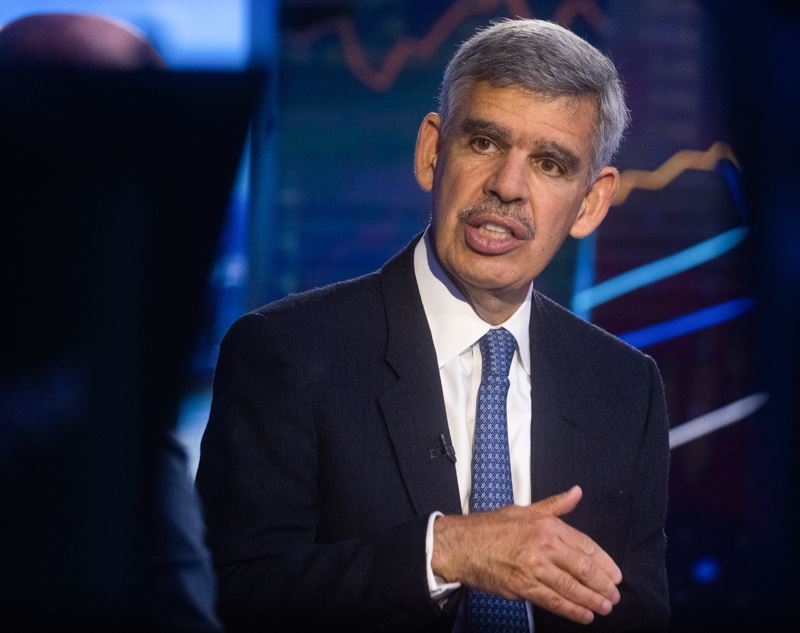
The Federal Reserve is set to refrain from cutting interest rates for “quite a while,” following a hotter-than-expected inflation report, according to Mohamed El-Erian.
The employment report was uniformly strong except for one component: the average hours worked per week fell to the lowest level since the pandemic, which may be weather related.
Over the weekend, President Trump announced tariffs of 25% on both Canada and Mexico, as well as a 10% tariff on China.
Exploring the delicate balance between protectionism and global cooperation
Adding cash-flow-matched bond strategies to a total return strategy appears to improve total return relative to risk by reducing the likelihood of poor outcomes.
While Merton is one of the most brilliant financial economists who ever lived, high-level quantitative chops do not guarantee financial success.
On this episode of the “ETF of the Week” podcast, VettaFi’s Head of Research Todd Rosenbluth discussed the MFS Active Core Plus Bond ETF (MFSB) with Chuck Jaffe of Money Life. The pair discussed several topics related to the fund to give investors a deeper understanding of the ETF overall.
Looking for an investment idea that’s paid off handsomely in commodities markets over the past six months? Try betting on the tropics.
In today’s era of automation, some situations demand a more active approach. Municipal bond investing is one.
A look at our most widely read articles for January reveals a motley crew, ranging from thought pieces on best practices for managing your advisory firm to explorations of the potential for stock market disaster.
The best performing US blue-chip bond funds of 2024 are sticking to their winning playbook: investing in debt from riskier blue-chip companies, as well as firms that can handle economic turbulence — and avoiding corporations sensitive to interest-rate risk.
US government bonds fell as mixed employment data left traders holding tight to expectations that the Federal Reserve will keep interest rates steady until later this year.
Raymond James CIO Larry Adam looks at how the proposed tariffs may impact the economy and financial markets.
The first month of 2025 is now in the rearview mirror, and investors recently experienced a fortnight (14 days) of headline-making activity, ranging from President Trump taking office, the January FOMC meeting, and of course, the developments surrounding the DeepSeek news.
In a first quarter 2025 asset allocation report, Confluence expects resilient economic growth in the short term.