Nvidia Corp., the chip developer at the heart of the artificial intelligence boom, increased the size of its share buyback plan by a record $150 billion, reflecting Chief Executive Officer Jensen Huang’s confidence in its continued growth.
Among the world’s top fuel-consuming nations, Japan is the most energy insecure. Its import-dependency ratios are scary: It buys overseas 99.9% of the oil it needs; 99.7% of the coal; and 97.8% of the natural gas.
The yield on the 30-year hit a multi-decade high this week, spiking amid continued fiscal and monetary concerns. The 30-year hitting 5.45%, its highest mark since 2004, comes amid an already busy year for bonds.
Asset owners want private-market exposure, but liquidity remains their biggest hurdle, an opening advisors can meet with public alternatives.
I do not know whether quantum computing is in that kind of window right now. Nobody does, and I am suspicious of anyone who claims certainty in either direction. What I can say is that the pattern-matching is uncomfortably familiar.
US stocks climbed as oil and Treasury yields pulled back from the recent surges ahead of data on inflation expectations.
The Facebook parent’s shares had jumped 36% in September through Thursday’s close following the release of its Muse personal AI assistant, which has risen quickly to the top of app charts and muffled concerns that heavy spending on AI won’t pay off. The stock is on pace for its best month since July 2013 and within striking distance of joining an elite group of companies worth at least $2 trillion.
The exchange-traded fund (ETF) market is pacing toward a record-breaking year in 2026, driven by an unprecedented wave of new product launches and historic capital inflows.
Confluence Investment Management offers various asset allocation products, which are managed based on “top down,” or macro, analysis. We publish asset allocation thoughts on a bi-weekly basis, updating the report every other Monday, along with an accompanying podcast.
Doshi said gold holding $4,000 during the correction and later rallying to $4,700 before last week's Fed rate hike strengthened his conviction that the broader gold bull market remains intact despite continued headwinds from the Iran war oil shock.
Investment bubbles are inherently dangerous beasts. Like a natural Ponzi scheme, an investment bubble needs to draw in ever larger amounts of capital to keep it going. Nothing attracts capital like apparent success, so an inflating bubble that is creating fortunes for those who got in early will inevitably draw in capital. Unfortunately, this means the amount of money lost when the bubble bursts can outstrip the gains created on its way up.
Yields on the US’s longest-dated bonds climbed to the highest level in more than two decades, the latest milestone in a global selloff driven by inflation fears and concern about government debt burdens.
Cathie Wood is putting one of her investment funds on the blockchain for the first time, deepening her ties to the growing world of tokenized assets as Wall Street experiments with a new financial infrastructure.
We know from recent history why this question feels so timely. Fixed income remains a foundational portfolio building block, offering low-correlated or uncorrelated diversification and downside risk mitigation. However, holding long-dated bonds in recent years has been notoriously painful.
Looking ahead, markets are priced for additional hikes. And our base case is that the FOMC will likely deliver one or two more 25-bp rate hikes through this year and into early next. However, looking further out, anticipating appropriate Fed policy through a financial-conditions-targeting framework has its own limitations. Hence, a neutral rate anchor is still useful.
LPL Research analyzes S&P 500 margin expansion, assessing how much is structural versus cyclical and what that means for future earnings forecasts.
Global growth remains resilient but uneven. In the United States, expansion is supported by private demand, a stable labor market and AI investment, while Europe and Japan continue to show surprising strength despite ongoing risks.
While the AI trade absorbs nearly all available investor attention, owning energy covers our absolute risk while creating the risk budget to cover the AI relative risk more effectively.
Major US equity indices finished the week mixed. The NASDAQ gained 0.7 per cent while the Dow and S&P 500 slipped. The divergence reflected a tug-of-war between fears of slower AI development early in the week and a rebound in AI-linked shares by Friday.
For many advisory firms, portfolio management creates a practical tension. Standardized models can simplify implementation and support scale, yet they may not reflect a firm's investment philosophy, tax realities, legacy holdings or preferred managers. Building every portfolio internally preserves control, but it also demands time, systems and ongoing investment oversight.
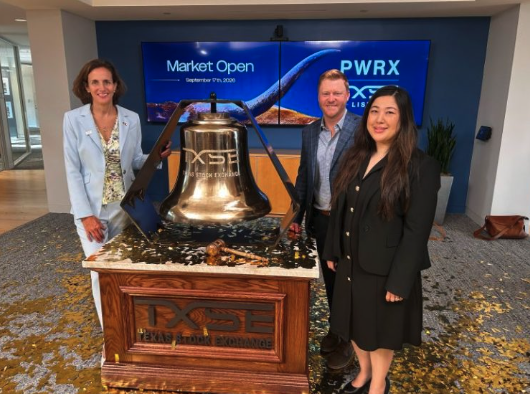
The Texas Stock Exchange (TXSE) is more than a regional milestone — it is a shift in competition among U.S. capital markets. After months of anticipation, the TXSE reached a major landmark last week as Texas Capital’s TXS and OILT ETFs became its first primary listings, followed a day later by PWRX as the first new ETF to launch on the exchange.
Markets have dealt with serious whiplash from the Federal Reserve’s dramatic policy pivot this year. In just six months, the Fed funds futures market went from pricing in two rate cuts totaling 50 basis points to now pricing in two rate hikes in 2026.
AI can do the prep. It writes the file notes, assembles the meeting brief, and produces a credible first version of the plan. The time saved is real, and no one should hand it back. The bill arrives later. A skill you stop practicing gets weaker, and professional judgment is a skill.
The two largest municipal bond exchange-traded funds just recorded their largest weekly inflows ever, shortly after a bond rout fueled outflows in other muni funds.
Every runner has a natural pace: the speed that we maintain under optimal conditions like flat terrain, cool temperatures and a good night of sleep. Runners can train to speed up to meet a target time, or slow down for endurance.
Some economists and market participants view inflation as one of the most important economic indicators. Market participants spend a lot of time worrying about a lot of things, but inflation is pretty close to the top of the list most of the time.
Dividend growth is back, and it’s fair to say that outperformance among dividend growth stocks may simply be overdue amid a shift in U.S. equity market leadership beyond a small group of mega-cap technology companies.
Share buybacks are when a company purchases its own shares, reducing the total number of shares on the market. Oftentimes, these buybacks occur on the open market, but companies may also look to buy shares from existing shareholders as well.
Cryptocurrency can complicate divorce even when no one is hiding it. Early identification and collaboration can prevent a misunderstood transaction or unilateral decision from becoming a costly dispute. This preparation also gives both spouses a reliable basis for evaluating settlement terms and trade-offs.
A popular trade in US Treasuries has shrunk to its smallest size in over two years, in what Wall Street strategists say reflects fewer dislocations in the bond market for hedge funds to exploit.
When billionaire Mat Ishbia’s mortgage company was facing significant losses on soured hedges earlier this year, he called old friends at Oaktree for help.
Goldman Sachs Asset Management launched two new ETFs Monday, expanding exposure to emerging and international equities. The ETF duo includes the Goldman Sachs Data Enhanced Emerging Markets Equity ETF (GEMQ) and the Goldman Sachs Data Enhanced International Equity ETF (GIEQ). That pair joins an ETF landscape in which those segments are seeing growing interest.
Early this week, I was in Los Angeles at the All-In Summit along with about 4,000 others, including tech investors, money managers and entrepreneurs. The ticket wasn’t cheap, but it was well worth it.
Chris Galipeau and Taylor Topousis discuss high-conviction insights that go beyond media headlines.
In August, a flurry of ETF-related deals were announced and expected to close by early 2027. Goldman Sachs is buying NEOS Investments. T. Rowe Price plans to add F/M Investments. Victory Capital is acquiring First Eagle.
As summer officially gives way to fall on September 22, it's not just the weather that's changing. The global monetary policy landscape is shifting as well. After spending much of the past two years focused on supporting growth, central banks have increasingly turned their attention back to inflation, especially with oil prices climbing back above $100 per barrel.
I typically avoid business books when I am on vacation. But I made an exception during our sojourn last month for Andrew Ross Sorkin’s 1929. Nearly a century after the Great Crash, that era is still being studied for lessons that might be relevant in the current day. The potential for financial instability is ever-present.
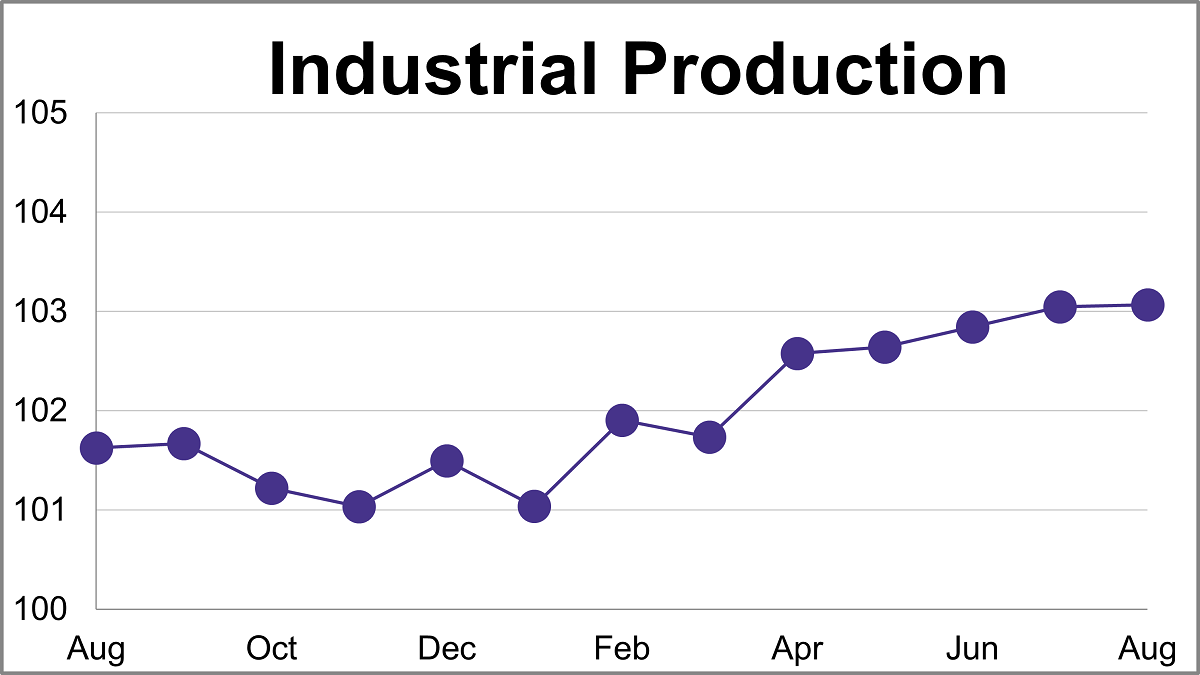
Industrial production grew 0.02% in August after July's 0.2% growth. This was lower than the expected 0.3% growth and marks a 1.4% increase compared to one year ago.
Join the experts at Thornburg Investment Management for a product due diligence session covering the Thornburg Premium Income Builder ETF (THOR), an active ETF which combines a high-conviction global portfolio of dividend paying companies with an actively managed options overlay.
The Federal Reserve increased rates by 25 basis points this week, a remarkable turnaround with major implications for portfolios of all kinds; one underexamined impacted area may be annuities.
The K-shaped economy is real, and it is old. What changed isn’t the shape of the economy; it’s just that the media found a narrative that gets lots of clicks and views, and we let headlines do our thinking for us.
Throughout this Indexing Redefined series, we explored how traditional market-capitalization indexing ties portfolio weights directly to stock prices, creating hidden concentration risks. Furthermore, we discussed how fundamental indexing offers a disciplined alternative by weighting companies according to their real-world economic footprint. In this final installment, we address the dilemma investors face in highly concentrated equity markets.
Bitcoin surged near $85,000 to its highest since late-January, extending a sharp rebound as falling oil prices and a broader return of risk appetite helped cryptocurrencies move past setbacks on US crypto legislation and monetary policy.
Investors in the US Treasury market are shifting their focus to owning shorter-dated government bonds, a bet that the Federal Reserve will eventually emerge victorious in its fight against inflation.
Catherine LeGraw and B.J. Brannan of GMO's Asset Allocation team discussed the role of liquid alternative strategies in today's investment landscape.
According to the latest SPIVA U.S. Scorecard report, broader isn’t always better for active managers. Following a volatile start to the year, the S&P 500 rebounded sharply in the second quarter to gain 10% through June 30 thanks to robust corporate earnings.
Advisors outsourcing at least 20% of assets reported saving 9.1 hours per week, or approximately 473 hours annually. WisdomTree research found 90% of investors welcomed third-party model portfolios, suggesting clients may be more comfortable with outside expertise than advisors expect.
We are never going to get rid of the FOMC for political and practical reasons. For those of us who would like to see the market set rates without an FOMC intervening, this is as good as it’s going to get.
Janus Henderson Investors today announced two senior investment appointments that will further deepen the firm’s leadership across its global equities franchise.
Gold rallied alongside Treasuries as a slump in oil prices helped ease concerns about inflation, following the Federal Reserve’s first interest-rate hike since 2023.