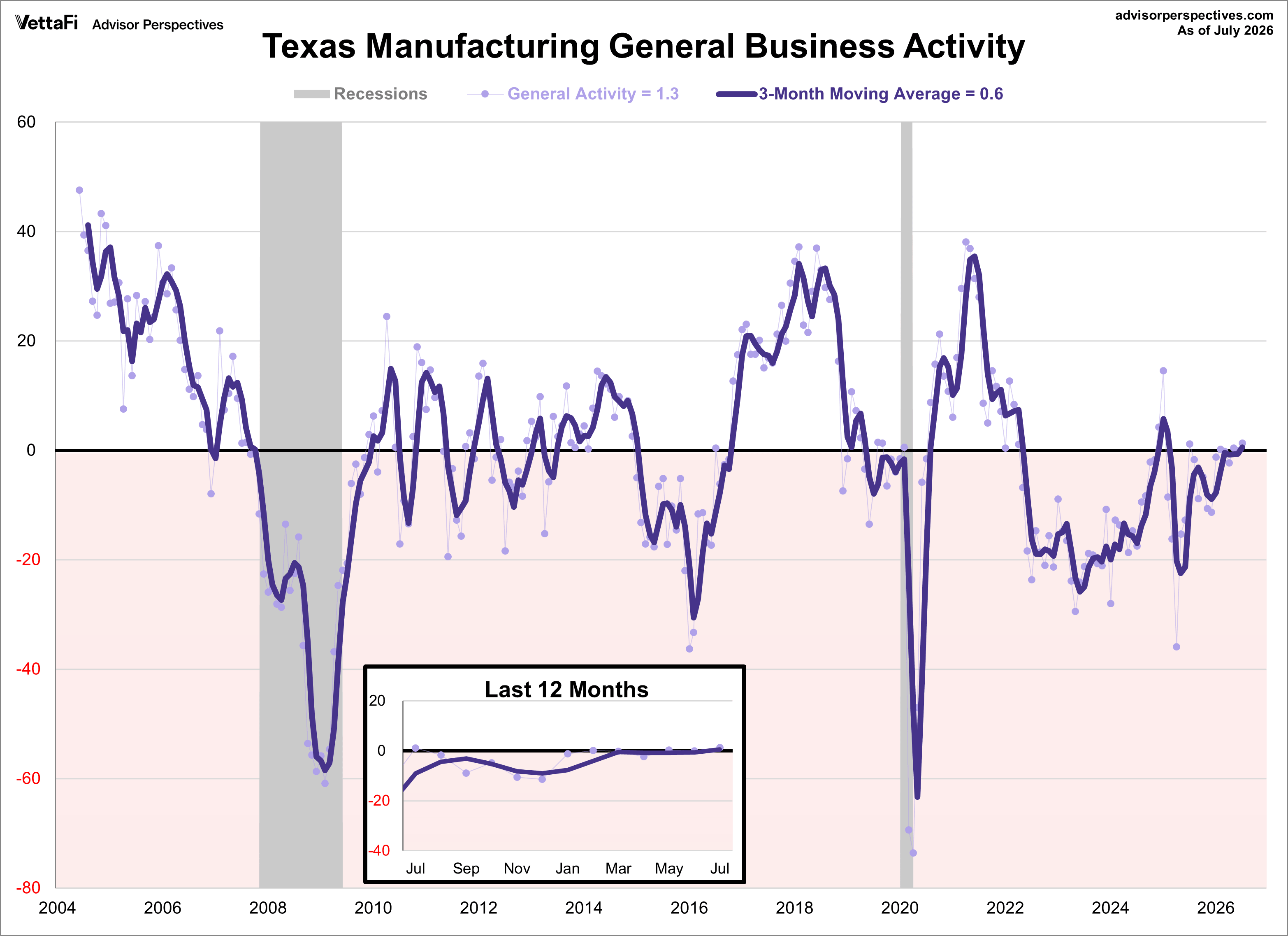
The Dallas Fed released its Texas Manufacturing Outlook Survey (TMOS) for July. The general business activity index rose 1.3 points to 1.3, indicating accelerated growth of manufacturing activity and improved business conditions perceptions.
Texas manufacturing output growth accelerated in July, according to business executives responding to the Texas Manufacturing Outlook Survey. The production index, a key measure of state manufacturing conditions, increased six points to 10.1.
Other measures of manufacturing activity also showed solid growth. The capacity utilization index and the shipments index were relatively unchanged at 5.9 and 8.8, respectively. The new orders index increased to 6.4 from 2.3.
Perceptions of broader business conditions improved in July. While the general business activity index was little changed at 1.3, the company outlook index jumped 11 points to 13.4, signaling a notable improvement in outlooks. The outlook uncertainty index fell five points to 6.4.
Employment growth and work hours were relatively stable in July. The employment index dipped two points to 12.2, remaining above its series average. The hours worked index edged down to 4.3 from 5.9.
Price and wage pressures remained markedly elevated, though the indexes showed mixed movements in July. The finished goods prices index fell three points to 25.6. The raw materials prices index was relatively unchanged at 41.3. The wages and benefits index ticked up five points to 30.8.
Background on the Texas Manufacturing Outlook Survey (TMOS)
Monthly data for this indicator only dates back to 2004, so it is difficult to see the full potential of this indicator without several business cycles of data. Nevertheless, it is an interesting and important regional manufacturing indicator. The TMOS is a monthly survey of 100 Texas manufacturers that provides an assessment on the state's factory activity. The survey asks firms to whether output, employment, orders, prices, and other indicators have increased, decreased, or remained unchanged over the previous month. Results are aggregated into balance indexes where negative readings indicator contractions while positive ones indicate expansion.
The Dallas Fed on importance of Texas Manufacturing:
Texas is important to the nation’s manufacturing output. The state produced $296 billion in manufactured goods in 2023, roughly 11 percent of the country’s manufacturing output. Texas ranks second behind California in factory production and first as an exporter of manufactured goods.
Texas turns out a large share of the country’s production of petroleum and coal products, reflecting the significance of the region’s refining industry. Texas also produces over 13 percent of the nation’s chemical products and over 10 percent of nonmetallic mineral products, such as brick, glass and cement.
Here is a snapshot of the complete TMOS.

Texas Manufacturing Survey Future Outlook
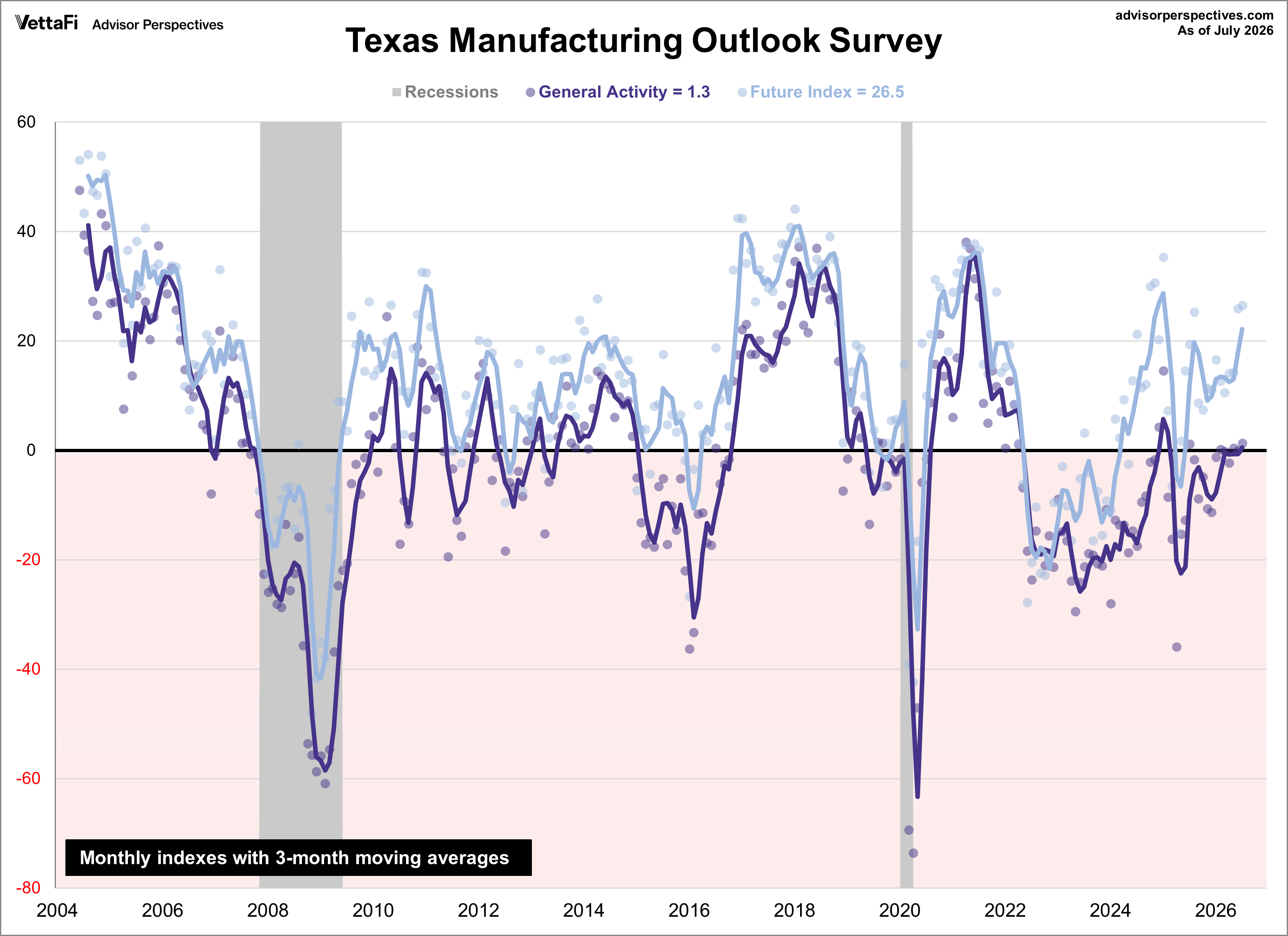
The next chart is an overlay of the general business activity index and the future outlook index — the outlook six months ahead. Future general business activity expectations rose to 26.5 this month, the highest level since January 2025.
Expectations are for increased manufacturing activity six months from now. The future production index and the future general business activity index remained unchanged at 34.6 and 26.5, respectively. Other indexes of future manufacturing activity remained in positive territory.
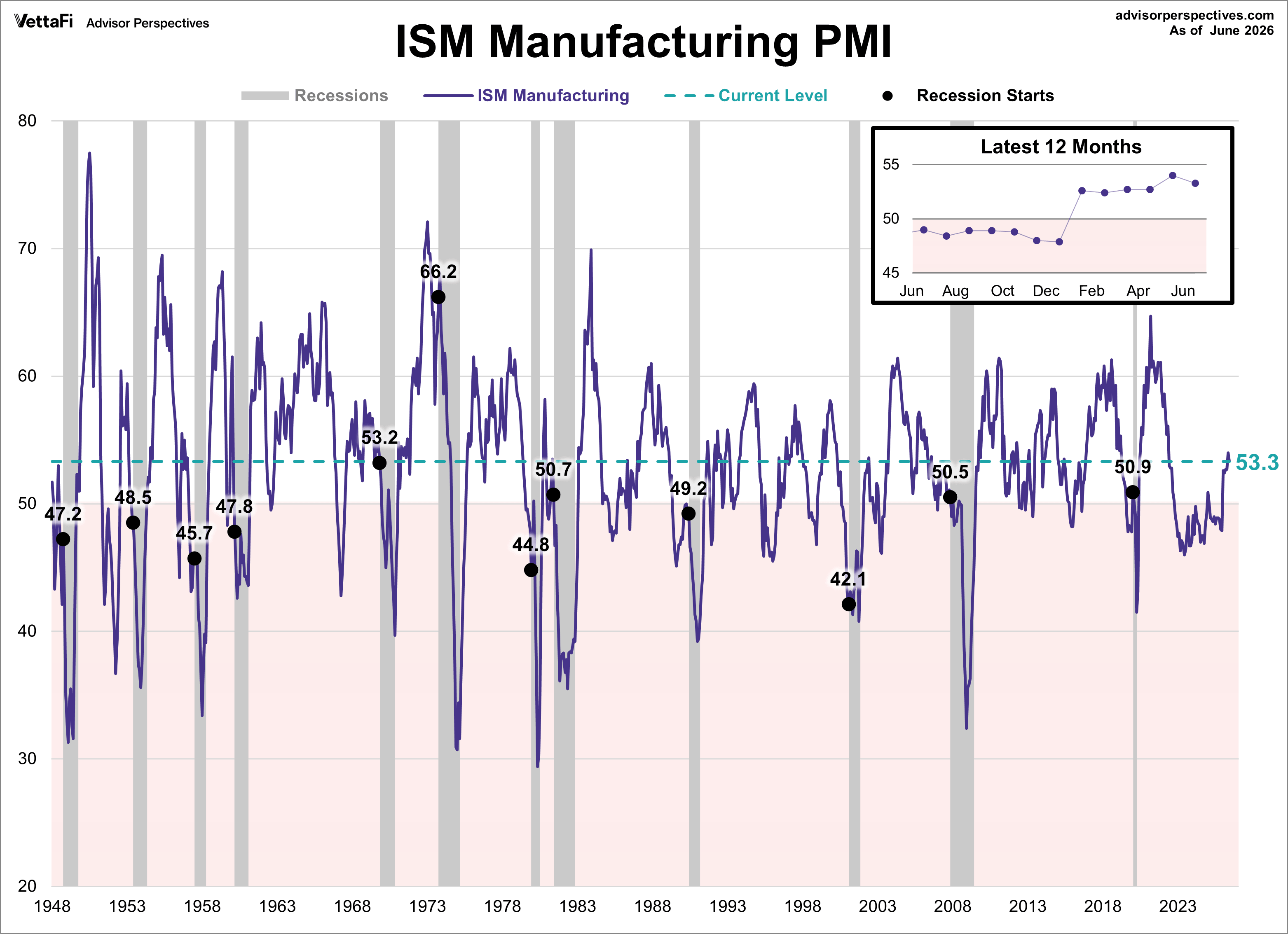
For comparison, here is the latest ISM Manufacturing survey.
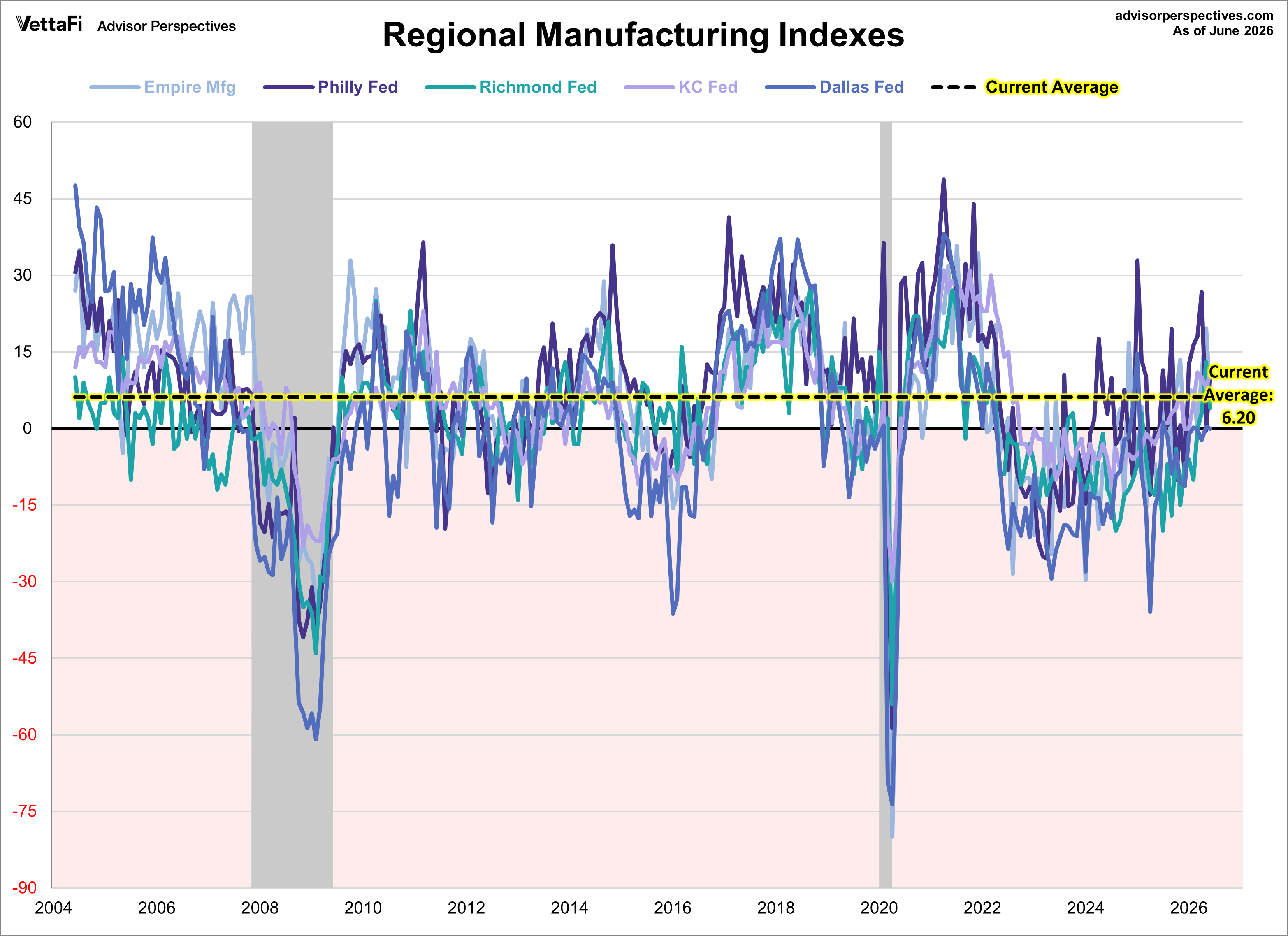
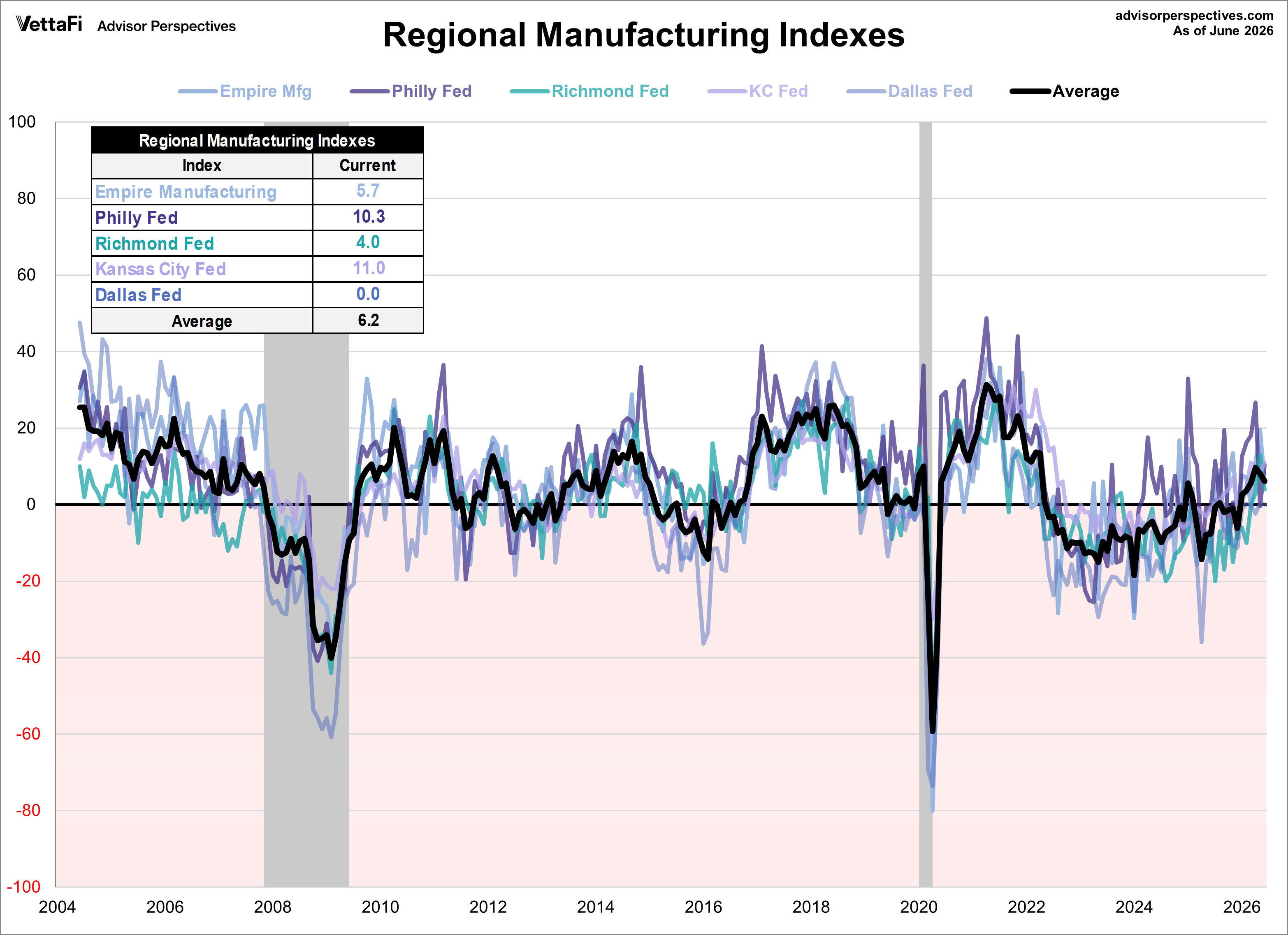
Let's compare all five regional manufacturing indicators. Here is a three-month moving average overlay of each since 2004 (for those with data).
Here is the same chart including the average of the five.
ETFs associated with industrials and manufacturing include: First Trust Industrials/Producer Durables AlphaDEX Fund (FXR), Industrial Select Sector SPDR Fund (XLI), Vanguard Industrials ETF (VIS), and iShares U.S. Industrials ETF (IYJ).
Read more updates by Jen Nash