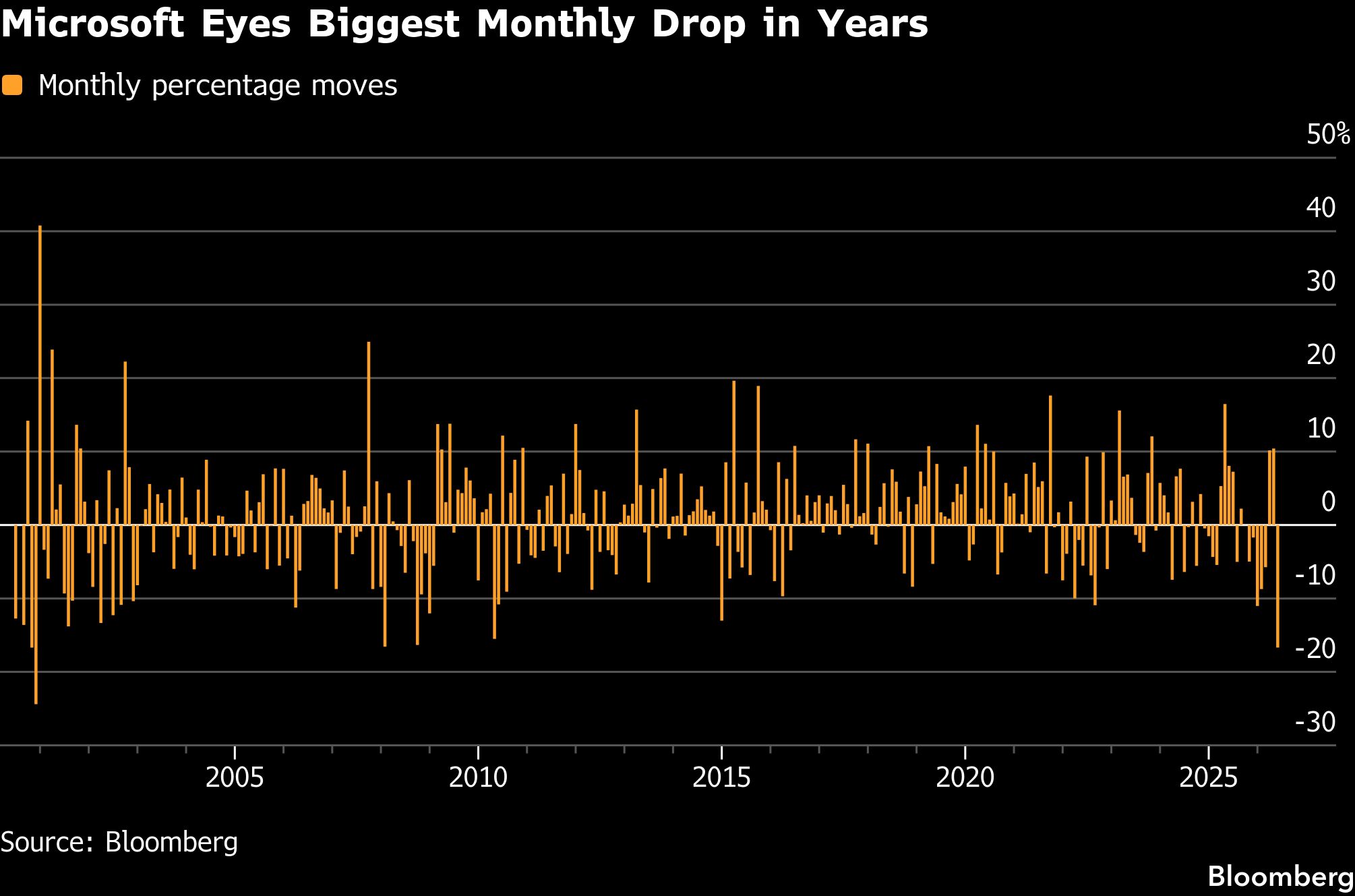
Microsoft Corp. shares are heading for their worst month in years as investors continue to fret about how the software giant will fare in a world marked by artificial intelligence.
The stock at one point fell more than 20% in June, which would have represented its worst monthly showing since December 2000, although a two-day gain has helped it recover some ground, and it currently is looking at its worst month since the financial crisis in 2008. Shares rose as much as 1.8% on Monday.
The selloff has erased more than $530 billion in market value and pushed the stock to its lowest closing price since 2023 on Thursday before rebounding.
“Microsoft is getting hit on two sides with worries about both AI spending and AI disruption,” said Jack Ablin, chief investment strategist at Cresset Wealth Advisors, which owns the stock. “While it looks like a pretty good deal with the valuation so low, I’m getting the sense that investors are shooting first and asking questions later.”
Microsoft’s slump stems from a number of trends that have made investors increasingly cautious. While the company is spending aggressively to build out AI infrastructure and release its own AI products, there continues to be broad apprehension about whether the technology will erode demand for traditional software.
“Whether Microsoft Word or Excel will be rendered obsolete by AI remains to be seen,” Ablin said. “But the spending is certainly a concern, especially since so many are going to the bond market to borrow, suggesting their cash piles won’t be enough to sustain the buildout.”
The selloff has left Microsoft valued at the cheapest in a decade. At 19 times profits estimated over the next 12 months, the stock is trading at a rare discount to the S&P 500 at 20 times and well below its average of 27 over the last 10 years.
Microsoft’s weakness has enticed Michael Burry, the investor whose bet against the US housing market before the 2008 financial crisis was featured in The Big Short. Burry bought Microsoft call options with strike prices in the low $700s that expire in 2028, he wrote in a Substack post late on Thursday. That helped send Microsoft shares up 5.7% to $372.97 on Friday, their best day since May 2025.
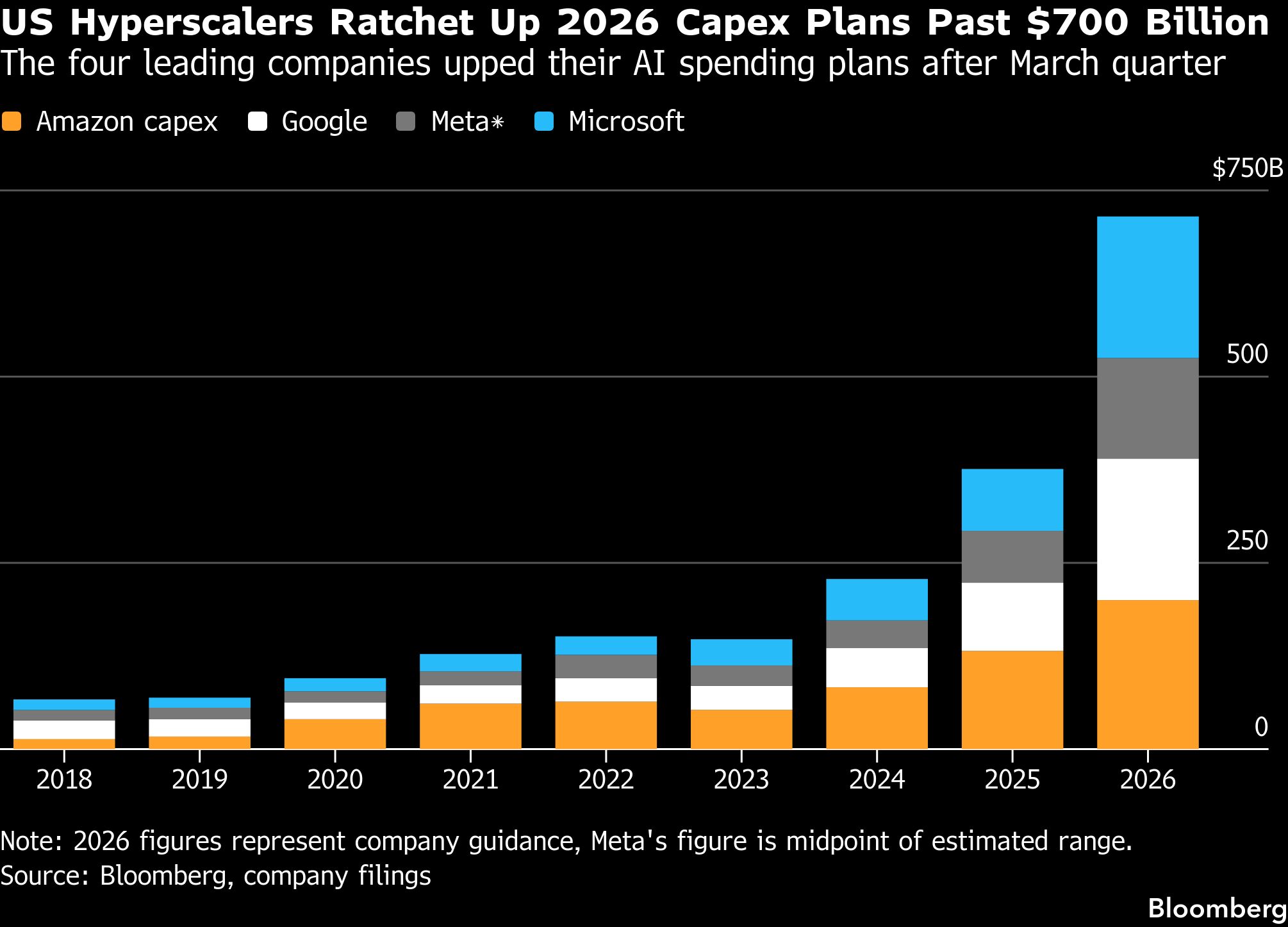
Concerns that Microsoft’s heavy spending on AI infrastructure isn’t generating sufficient returns were reignited in late April when its fiscal third-quarter earnings revealed underwhelming growth in its Azure cloud-computing business. Microsoft also forecast $190 billion in capital expenditures through the end of December, more than Wall Street was expecting.
The aggressive investments are a key risk for Microsoft because they threaten profitability, according to Stifel analyst Brad Reback. Given “compressing Azure gross margins from accelerating capex, we believe estimates appear meaningfully too high,” he wrote in a June 25 note cutting the price target on Microsoft shares to $400 from $415.
Of course, there are reasons for optimism aside from Microsoft’s beaten down valuation, specifically revenue growth. Sales are expected to expand 17% in Microsoft’s current fiscal year, which ends on June 30, according to the average of analyst estimates compiled by Bloomberg. That would be the fastest growth since 2022, and it’s expected to accelerate to 18% in fiscal 2028 and 20% in 2029.
Keith Fitz-Gerald, principal at the Fitz-Gerald Group and portfolio manager of the Fitz-Gerald Must Have Portfolio ETF, is among those betting that Microsoft is poised for a rebound even though he is nervous about AI-related risks.
“We don’t know what the environment is going to look like in a few years, which opens up very real questions like, will we even use a Microsoft suite anymore?” he said. “It’s a very high-stakes question, and one I’m watching carefully.”
He believes Microsoft is undervalued, but is holding off on adding to his small position amid the uncertainty.
“There’s no question the current price represents something darn close to an epic buying opportunity, and I expect that when the AI spending starts to translate into better earnings, this thing will go up like a rocket,” Fitz-Gerald said. “In the meantime, I think the misunderstanding around AI will persist for a while, which is why I’ve kept my position smaller. The selloff has been a real conviction test, and one I’m gritting my teeth through. I hope that if it continues to drop, I have the confidence to buy.”
Tech Chart of the Day
“Equity Insights” are short stories on equity market color, combining key insights from traders, strategists, reporters and more. They can be found by running NI EQINSIGHT, and can be subscribed to here.
“Before the Bell” is a daily story with all you need to know before the open on Wall Street. On the Terminal, click here to see it and subscribe.
The “S&P Week in Review” is a wrap of equity events, published every Friday. On the Terminal, click here to see it and subscribe. The “S&P Month in Review” comes on the last day of the month. Click here to see and subscribe.