Why consider volatility as a separate asset class? Because it is endemic.
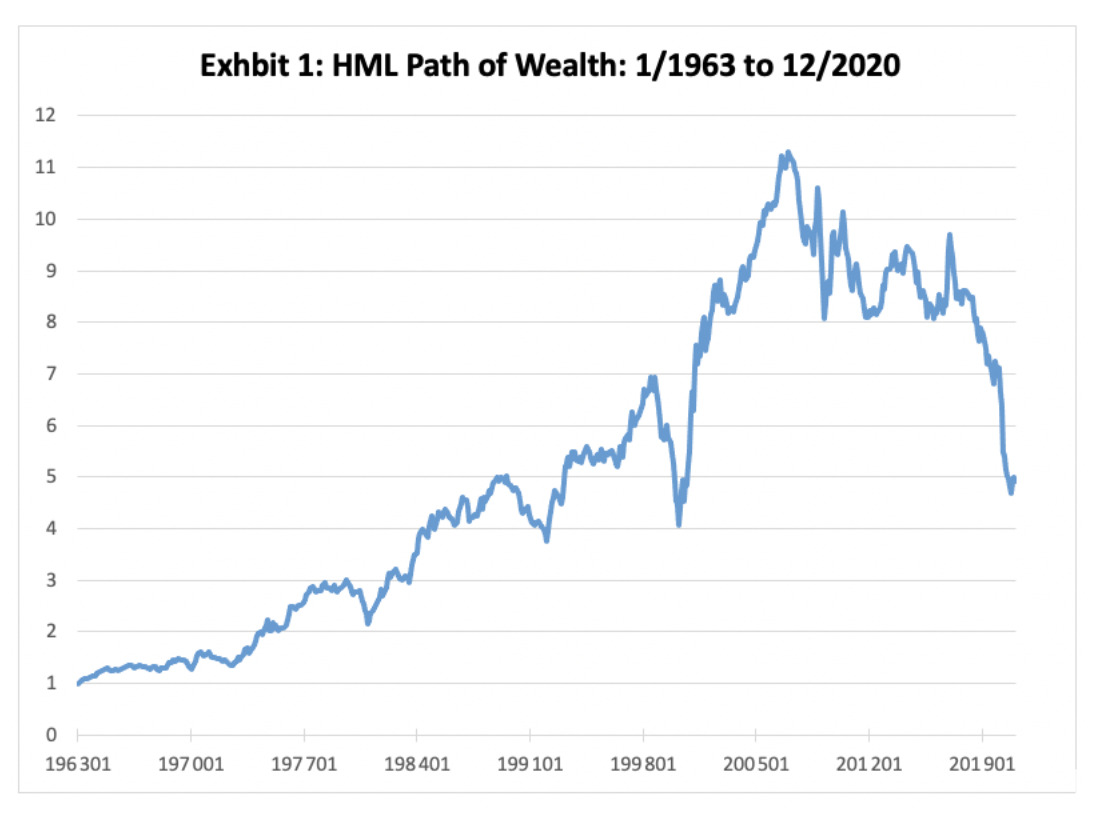
The demise of the value premium in the last 12 years has led to doubts regarding the efficacy of this approach and efforts to adjust the accounting ratios to make them more robust. Those efforts are misguided. Value investing amounts to comparing estimates of fundamental value with price and that accounting ratios, however tweaked, are not a reasonable way to estimate value – it requires a full-blown DCF analysis.
Coherent thinking is interested in how things are related; where they come from, where they go, and the mechanisms by which they affect each other.
Commodities prices have been moving higher this spring amid rising demand and rising inflation expectations globally as economies emerge from the pandemic.
A brief monthly update on what's happening in the municipal bond market.
With only a few brief downturns in an otherwise upward trend in the U.S. equity market since the Global Financial Crisis, declining interest rates have pulled forward the net present value of distant earnings and propelled growth stocks (and the market as a whole) higher.
Transitory is defined as being of brief duration, tending to pass away and not persistent
I can understand the confusion when this past week I discussed the issue of “If everyone sees it, is it still a bubble?”
The International Energy Agency (IEA) was founded in 1974 in response to oil embargos the previous year that caused the global price of oil to surge 300% from $3 per barrel to $12 per barrel. From the start, the IEA’s mission has been to help member nations deal with major oil supply disruptions.
If you could ask the world’s top central bankers what really terrifies them, I think the honest answer would usually be “deflation.” It is their greatest nightmare. They think a little inflation is good (thus the 2%+ target), and they’re confident they can subdue it if necessary. Deflation is a bigger problem.
Is the stock market disconnected from the economy?
I use a mathematical model to illustrate the parallel paths traveled by infectious viruses and market volatility.
The week’s selloff was dramatic. By Wednesday, Bitcoin was down more than 40% from its all-time high of $64,000, set in mid-April. The token’s market dominance fell to a three-year low of 40%.
“If everyone sees it, is it still a bubble?” That was a great question I got over the weekend.
I don’t question Elon Musk’s good intentions, but I respectfully disagree with the underlying insinuation that crypto miners in particular are a threat to the climate. It’s just not true, for reasons I explain below.
With commodity prices soaring, money supply growth exploding, and government spending surging, there is a palpable fear of a return to 1970s-style inflation.
Municipal bonds have held up well this year, despite rising interest rates and inflation. Munis’ long-term outlook is strong too. What accounts for their outperformance in today’s environment?
It is a particularly good time to invest in the commodities markets.
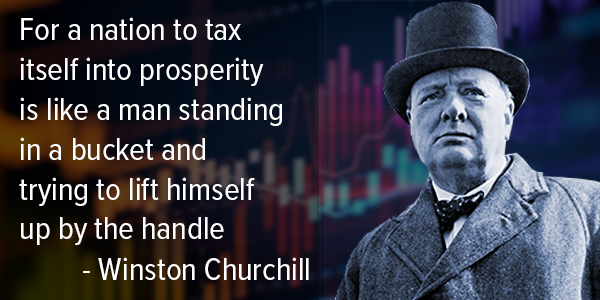
One of my all-time favorite quotes comes from Winston Churchill, who was just as witty as he was a great leader: “We contend that for a nation to try to tax itself into prosperity is like a man standing in a bucket and trying to lift himself up by the handle.”
It was ever so tempting to devote today’s letter to a discussion of President Biden’s latest massive government spending, which he proposed Wednesday night in his “First Hundred Days” speech before Congress.
Inflation is likely to rise in 2021—but will the rise be sustained? That seems to be the million-dollar question lately.
One of the interesting aspects of “bull markets” is the further they go, the lower forward returns fall.
In recent months, two investment themes have been rewarding investors with outperformance: defense sector companies and those participating in share buybacks.
Much has changed since the oil-market collapse in the early pandemic days of 2020, when prices actually turned negative. Franklin Templeton Fixed Income Research Analyst/Portfolio Manager Bryant Dieffenbacher looks back at industry developments since then, and outlines opportunities he sees in the high-yield energy bond market today.
Nuclear decommissioning trusts (NDTs), the pools of money accumulated over decades used to dismantle nuclear power plants and safely dispose of radioactive materials, allocate about 40% of their assets to fixed income securities.
Although we remain constructive about the economic outlook, the recent increase in speculative activity gives us some pause. We continue to favor a cautious approach in the near-to-medium term.
New research shows that, since 2010, “green” stocks – those of companies with a low carbon footprint – have outperformed “brown” stocks. That may have been caused by increased demand from investors pursuing an ESG mandate, which means the effect is temporary and brown stocks now have higher expected returns.
There is no way this bull market doesn’t end very badly.
Although it’s early in the first quarter earnings reporting season, it’s worth a look at the progress so far and the implications for the rest of the season, as well as valuations.
Hundreds of years of history shows us that investment bubbles have been a regularly occurring feature of the financial markets.
Economics used to offer lots of metrics that claimed to show when growing economies were approaching some kind of speed limit. But increasingly, inflation is the only one that’s taken seriously.
From 1949 through 1964, the S&P 500 enjoyed an average annual total return of 16.4%. In the 8 years that followed, through 1972, the total return of the index averaged a substantially lower 7.6% annually; strikingly close to the 7.5% projection that Graham had suggested based on prevailing valuations, yet still providing what Graham had suggested would likely “carry a fair degree of protection” against inflation, which averaged 3.9% over that period.
Another round of stimulus totaling $1.9 trillion is making its way through the US economy, with hopes it will trigger a sharp rebound from the ravages of COVID-19.
Joel Bruckenstein of T3 and I just released the 2021 T3/Inside Information Advisor Software Survey, which includes user ratings and market share statistics (and year-on-year changes to both) for more than 400 different software products and services in 32 different categories.
As Shakespeare might put it, “full of sound and fury, signifying nothing” is perhaps an apt way to describe the character of the market so far this year.
Defining a quality business is easier said than done. We have found that the highest quality businesses either consistently exercise pricing power while maintaining market share or consistently grow market share by undercutting incumbents. A choice few companies we call “compounding machines” can both raise price and increase market share.
I’ve spent more time explaining bonds to clients than stocks, mostly overcoming eight great misconceptions about fixed income.
The corporate tax-cut party President Donald Trump kicked off will soon be over if his successor proves able to enact proposals to roll back half of the 2017 domestic income-tax reduction and to radically revamp levies on profits earned abroad.
Policymakers in major economies have pointed to 2023 as the date the stimulus payback may begin.
Everywhere you look, there’s a valuation lens that makes stocks look frothy. Also everywhere you look is someone saying don’t worry about it.
Standard neoclassical economics is a failure and is driving many of the crises facing our world.
Data has shown that investment strategies that address ESG issues constitute a third of professionally managed U.S. assets. That has led some to claim that asset prices have been driven up to the point where investors should expect poor performance going forward. That narrative is false.
As harrowing as it has been to watch bond yields jump, watching them sit still would’ve been worse for stock investors banking on a major revival in earnings this year.
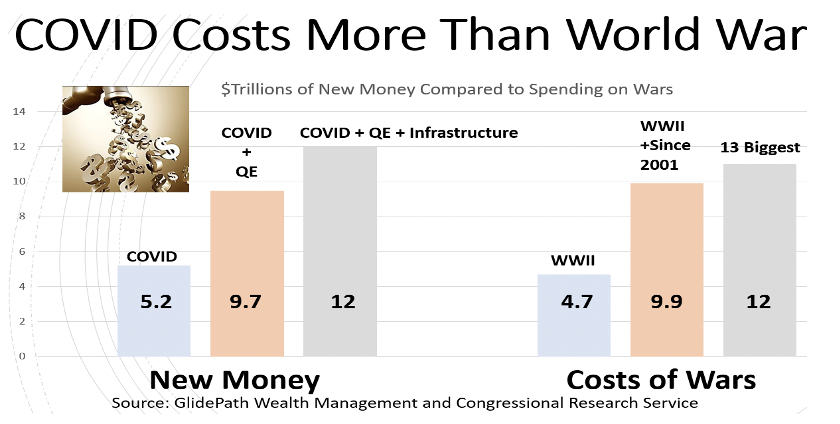
The government’s COVID relief programs have cost $5.2 trillion, more than World War II, which cost $4.7 trillion. Those mountains of money will cause inflation, raise interest rates and reduce in stock prices.
A woman to whom I was referred because she is facing a nasty divorce turns out to be a close acquaintance of mine.
The COVID-19 pandemic has been devastating for individuals and economies around the world.
President Joe Biden’s economic team at the White House is determined to make good on his campaign pledge to raise taxes on the rich, emboldened by mounting data showing how well America’s wealthy did financially during the pandemic.
Real rates in the United States have moved sharply higher since the beginning of 2021.
Last year featured a jaw-dropping list of extremes, from a once-in-a-century pandemic to record-breaking market moves. Howard Marks writes in his latest memo about approaching the investment environment left in 2020’s wake – one generating many questions and no easy answers.
A better appreciation of the history of market bubbles should help advisors and their clients sidestep some of the carnage when they inevitably burst. It is our intention in this article to take a more clinical approach by quantifying what we mean by a “bubble” solely in terms of market action. In that way, it is possible to compare conditions between individual markets and arrive at a rough standard. There are of course, many other aspects to bubbles and manias, several you can read about here.