Last week, the labor market took center stage, presenting a nuanced picture of continued resilience alongside subtle signs of softening.
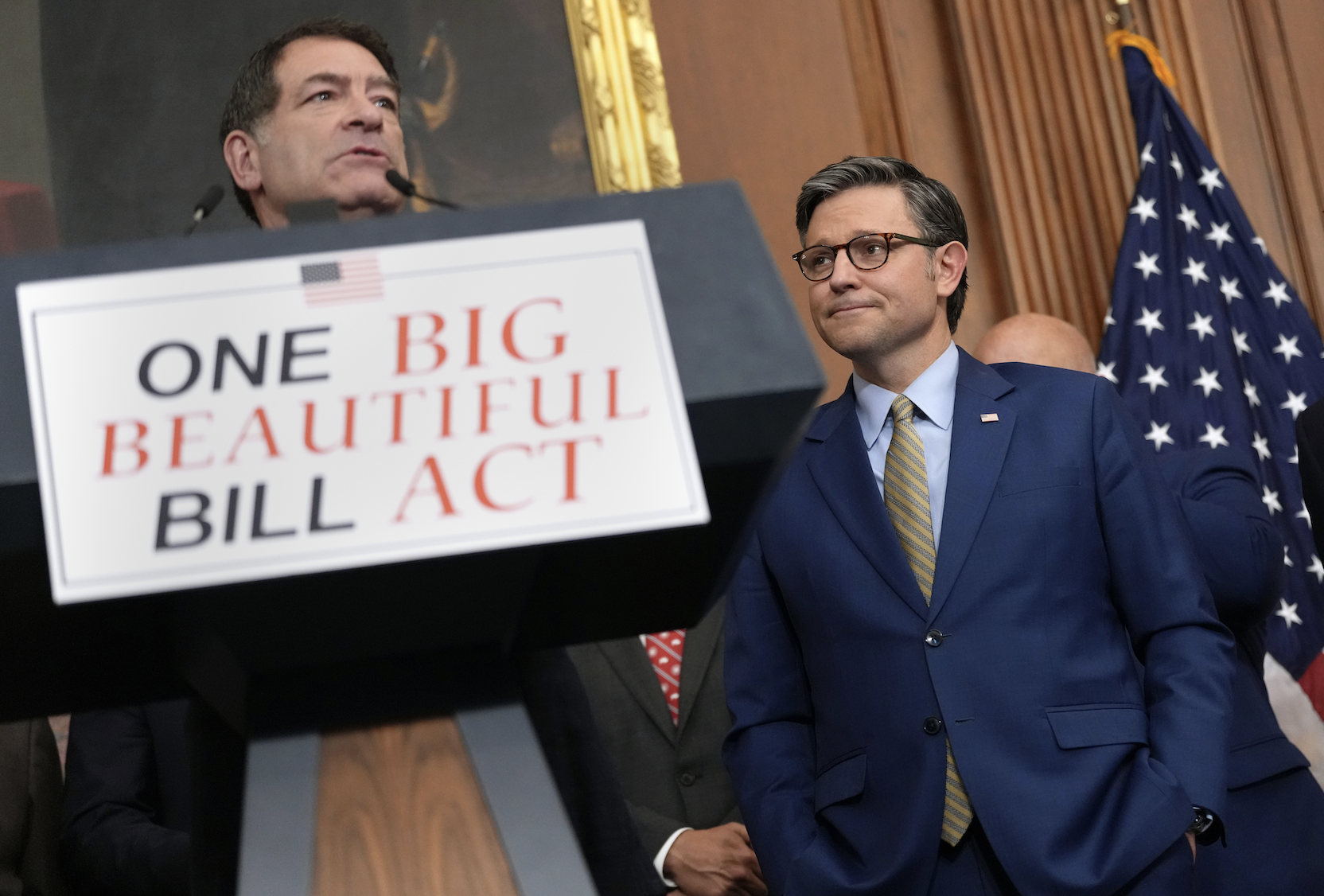
The bill contains several tax-code changes that could affect municipal bonds, although we don't think it reduces the appeal of munis for high-income earners.
Treasuries fell as faster-than-expected US job and wage growth prompted traders to trim back bets that the Federal Reserve will cut interest rates this year.
The federal government, financial markets and most Americans are all in a state of denial about interest rates.
Bouts of volatility may continue in the second half of 2025 as bond market investors navigate evolving tariff policy, U.S. government debt, and economic uncertainty.
Gold’s recent surge to $3,500 was quickly followed by a sharp correction. Each tariff update or diplomatic rumor sends markets into a frenzy—rallying stocks, selling gold, or reversing course the next day.
We remain underweight most developed market stocks as US tariff policy is still unclear but are more enthusiastic about emerging market assets.
Given the large pool of options available to fixed income investors in the bond market, the ideal option given the current economic uncertainty is still Treasuries. With that, Vanguard has three options worthy of consideration for any portfolio.
With tariffs toggling on and off and a major tax bill still in flux, investors should brace for headline-driven volatility through July, particularly around trade and fiscal policy.
Bond traders priced in an earlier start to expected Federal Reserve interest-rate cuts on fresh clues the US job market is losing momentum.
In the last three months tariff news has whipped financial markets around remarkably in response to President Trump’s ever changing tariff policies. The most pronounced reactions were concentrated in the US stock market.
Investors may revisit international exposure in their portfolios amidst reduced market reactions to tariff announcements, uncertain U.S. policy and lagging U.S. stock performance.
On the trade front, investor uncertainty eased for a short time as President Donald Trump’s “Liberation Day” tariffs seemed to lose traction. Several key developments contributed, including a 90-day tariff pause with China, the signing of a US-UK trade agreement and progress on negotiations with other partners, including Europe.
Market leadership is shifting and the once-dominant Magnificent 7 may no longer be so magnificent. Our latest report reveals why broader opportunities are emerging across sectors and regions, with quality, value, and growth converging in unexpected places.
Treasuries have been the default go-to safe haven bonds during times of heavy market volatility. But with Moody’s recent downgrade, an opportunity for mortgage-backed securities (MBS) exists.
Treasury floating rate notes and ETFs like the WisdomTree Floating Rate Treasury Fund (USFR) are often seen as beneficial tools to fixed income investors when yields on U.S. government debt are rising.
Amid a fair amount of market tumult, we wrote two months ago that the best course of action was to stay invested in roughly the same portfolios that we’ve had throughout, and let the market stabilize.
This article presents a different perspective on the question of why bond yields are rising. I focus on the difference between narratives and fundamentals.
Last week's economic data presented a mixed but generally more positive outlook. Inflation continued its downward trend in April.
As discussions about reshoring continue to dominate economic policy debates, VettaFi hosted a timely webcast with Dr. Daniela Rus, director of MIT’s Computer Science and AI Lab (CSAIL).
Today I’m going to highlight some speakers who added an equity market perspective to their big-picture views. Getting both right would be much easier if more investors behaved rationally. Alas, they don’t, which is why stock prices do incomprehensible things. Fortunately, you can succeed without catching every twist and turn.
While headlines scream about the latest deal or tariff suspension, Maharrey argues that investors are dangerously distracted from the real threat: America’s exploding national debt and the systemic consequences that follow.
Gold reached a fresh all-time high in April, continuing its strong upward trajectory over the past six months.
Assessment and selection of covered call funds is based on criteria like total return, distribution rate (sometimes referred to as yield), and fees.
Corporate credit spreads, whether investment grade or high yield, can often hint at hiccups in the stock market and the economy. But they tend to keep a low profile.
The market for Treasury securities is sending an increasingly troubling signal. As of last week, investors were demanding about 90 extra basis points in yield to compensate for the added risk of lending longer-term to the US government.
Emerging markets debt held its ground in the first quarter, but staying ahead means staying selective. We’re reassessing positioning across high-, low-, and frontier-beta currencies and rates as trade tensions and U.S. policy inject fresh uncertainty.
There could be a silver lining in the volatile clouds hovering above the bond markets. Investors may want to give municipal bonds a closer look given their sound fundamentals.
Remember last July and August when the yen carry trade blew up? At the time, the central bank surprised the market by signaling a faster pace of rate hikes than expected. Investors sold foreign currency, bought back yen and sent markets into a tailspin.
A lot of people are worried about the level of US interest rates. “I think we should be afraid of the bond market,” billionaire investor Ray Dalio said last week.
The long-term bearish case for the dollar remained intact after a court ruled that the vast majority of President Donald Trump’s global trade tariffs are illegal, amplifying uncertainty over the US economic outlook.
Sell in May and Go Away? This old market saying tends to resurface around Memorial Day, suggesting investors should scale back their equity exposure ahead of what’s perceived as a seasonally weaker stretch for stocks.
Markets have recovered from their post-Liberation Day sell-off. Investors are feeling better about the outlook. But there are still clouds on the horizon.
Residential mortgage-backed securities, or MBS, are a big part of the securitized investment market. Here's what to know about MBS investing.
Proposed tax-cut extensions and higher debt costs could amplify fiscal concern.
With US economic policies driving financial and economic volatility and rousing the bond vigilantes, it is an open question whether we are witnessing the fragmenting of the international order, or just a bumpy ride toward a beneficial overhaul. Five factors could clarify the answer.
Moody’s finally downgraded US government debt on May 16th to Aa1, its second highest rating. With the US $36 trillion (and rising) in debt, it’s not hard to see why. But Moody’s was late to the party with S&P and Fitch (the other two major ratings agencies) having done so long ago.
Friday’s market tremor was ignited not by economic data, which brought limited new releases, but by revived political uncertainty—specifically, President Trump’s abrupt reinvigorated tariff threats.
Many buffer ETF providers advertise these products as substitutes for bank products such as CDs. However, for residents of high-tax states, T-bills are more attractive than CDs, so for us that’s the more relevant comparison.
Let’s unpack the state of the markets today, explore where opportunities lie and review several strategies to navigate the months ahead.
There’s a lot to like about the travel industry right now from an investment standpoint. You just have to know where to look.
My next few letters will share some initial thoughts from SIC organized around the major topics. Today we’ll start with inflation, and specifically the sharply different views of David Rosenberg and Jim Bianco, then balance them with some thoughts from other speakers.
Looking to reduce volatility without sacrificing income potential? Consider short-maturity high yield.
Markets rallied after a surprise tariff rollback, but with valuations stretched and policy signals still mixed, investors appear to be leaning toward flexibility, fundamentals, and selective exposure.
Long-term interest rates have become much less predictable, and that means volatile prices for long bonds.
Bond investors are demanding more and more compensation to hold long-dated US debt as global markets grow anxious about the widening fiscal deficit in the world’s biggest economy.
Shopping for bonds? The bonds you choose should align with your risk tolerance and goals. Discover what to consider before buying any bond.
What investors thought was going to be a nice start to a weekend in May got turned around with a late Friday announcement that Moody’s had just downgraded the U.S. long-term credit rating.
The market narrative appears to change on a dime these days. Stocks may have staged a comeback to recoup almost all their post-“Liberation Day” losses. But the bottom line on the fixed income market hasn’t changed all that much.
Discounted municipal bonds could expose you to unexpected taxes. Here's what to know before you buy.