It’s easy to make the case that the US equity market is in bubble territory. After all, the major metrics point in the same direction.
I’ve said it before, and I’ll say it again: it’s not the political party that matters, but the policies. Investors, I believe, are better served when they focus not on the partisan noise and headlines but the policies that bring about change.
We are in a debt trap. Our political process can’t reduce spending and/or raise taxes enough to balance the budget, so the debt grows and grows. This has to end, and I think it will do so in the event I’ve called The Great Reset.
Municipals posted their weakest July return in more than two decades. The Bloomberg Municipal Bond Index returned -1.85%, underperforming most investment-grade fixed-income sectors and marking just the fifth negative July return over the past 30 years.
Earnings drive market corrections. That’s the finding, and the next serious decline won’t arrive with a headline about capital spending or the deficit but will begin exactly where all eight of the others began, in the profit cycle, surfacing in credit spreads and revision breadth well before it reaches any earnings report you can actually read.
A few months into the second Trump administration, I found myself in a packed room alongside senior officials of the Bureau of Labor Statistics. The topic, “Ensuring the Quality of US Statistics,” would have drawn little more than a collective yawn a decade ago.
Fifty-eight billion dollars. That’s what the Department of War just awarded Lockheed Martin for PAC-3 interceptors, the missiles that have been knocking Iranian ballistic missiles out of the sky for the past five months. It’s one of the largest munitions awards in U.S. history.
In January 1790, the House of Representatives put a simple question to its new Treasury Secretary: what should America make for itself? Alexander Hamilton took almost two years to answer.
Market volatility—and the feelings of uncertainty that follow—tend to frighten investors. Yet for investors with an overlay program, one approach to volatility is evergreen—rebalancing.
This week’s vote from the Federal Reserve FOMC committee is going to have implications for quite some time. I think most of the pundits who are writing about this have their analysis wrong. This was not just a vote to not raise rates. I think there was a lot more going on behind the scenes.
At the party, hosted on a hot day last July at HPS business development head John Christmas’ New Jersey beach house, bandana-clad colleagues across his teams mingled poolside with the wind at their backs. With the addition of HPS, one of the biggest names in private credit, it seemed BlackRock was set to break through in the market in a way that had eluded the asset manager for years.
Brent crude crossed above $100 a barrel this week, all due to a 20-mile-wide stretch of water some 6,500 miles away from the U.S. Tanker traffic through the Strait of Hormuz—the Persian Gulf bottleneck that carried roughly a fifth of the world’s seaborne oil before the fighting started—has fallen to virtually zero.
Investors continue to benefit from two powerful tailwinds: strong stock-market performance and bond yields that remain attractive compared with much of the post-financial-crisis period. Higher yields have improved the income generated by fixed income portfolios and given investors more flexibility to balance income, liquidity, and interest rate risk.
For a Federal Reserve (Fed) chairman committed to reducing noise coming from the institution and/or to changing how the Fed communicates, his first attempt to do so was not very promising. Just after Chair Warsh’s first press conference, we argued that inflation was not a choice, as he suggested during the press conference.
LPL Research analyzes China’s declining crude imports, inflation risks, and the resilient U.S. economy driving above-trend growth.
Whenever I speak at investment conferences, I like to point out that we invest in a number of publicly traded airports. I even list them: Spain’s Aena. Aeroports de Paris. Zurich Airport. Airports of Thailand. Two of the world’s largest operators, Grupo Aeroportuario del Sureste and Grupo Aeroportuario del Pacifico, trade in Mexico.
Discover the top 10 most-read charts from the first half of 2026, covering historic market valuations, record margin debt, recession indicators, and global index performance.
General Douglas MacArthur once remarked that “rules are mostly made to be broken.” He was at odds with U.S. President Harry Truman over the conduct of the Korean War, feeling that the restrictions placed on his forces weren’t supportive of success.
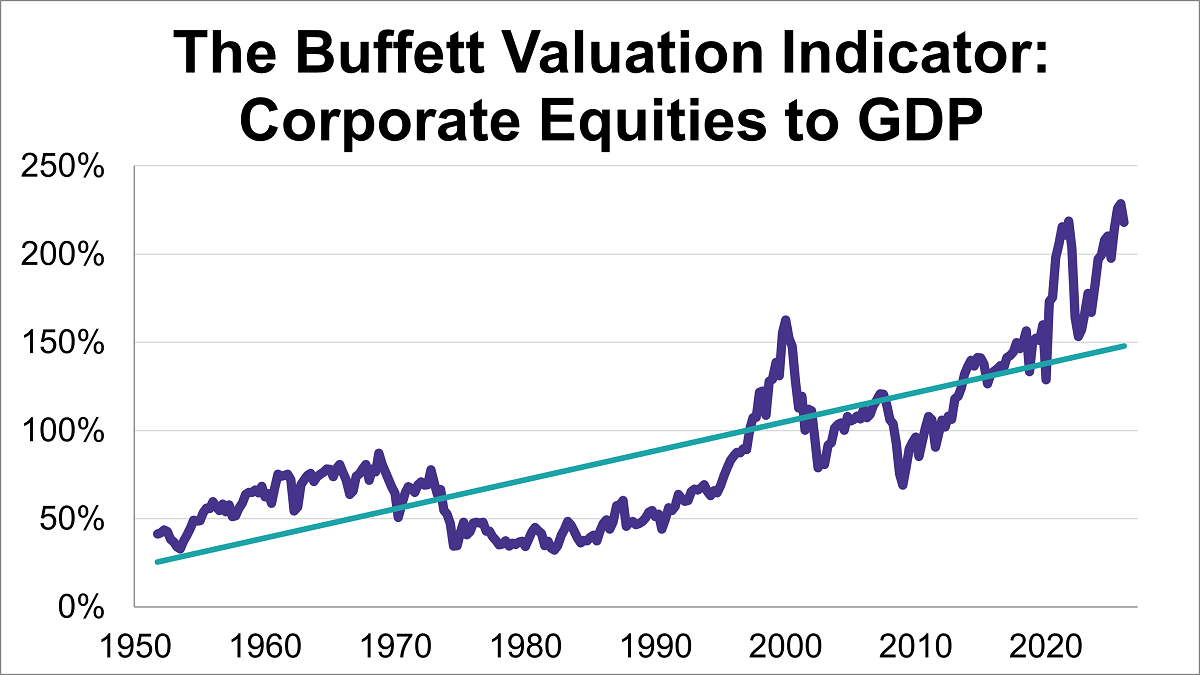
The current level of stock market valuations remains – easily – the most speculative extreme in U.S. financial history, beyond both the 1929 and 2000 extremes. Our baseline estimate is that the S&P 500 has a material risk of losing something on the order of 75% over the completion of this cycle.
Markets enter the second half of 2026 facing a familiar wall of worry—geopolitical conflict, oil prices, inflation, Federal Reserve policy, and questions around the durability of an AI-led equity rally. Yet the economic backdrop still looks resilient: growth remains solid, inflation has moderated, unemployment is reasonable, and market leadership appears to be broadening.
For investors who have been tracking this space, the signing is a continuation of a policy architecture that has been assembling with surprising speed.
Central bankers expect de-dollarization to continue over the next several years, with gold and other currencies taking on a growing role in the global monetary system, according to a survey by the Official Monetary and Financial Institutions Forum (OMFIF).
Following the Q1 GDP third estimate, the 'Buffett Indicator'—the ratio of corporate equities to GDP—now stands at 218.1%. This marks the fourth-highest reading in history.
Rising prices increase the value of collateral in every margin account, which automatically increases how much each investor can borrow under Reg T. Debt rises BECAUSE the market rose, not the reverse. That single fact is what breaks the ratios we’re about to examine, and it lies at the core of why margin debt risk is so often misjudged.
Close to 40 years ago, I moved from Canada to the U.S. after acquiring a controlling interest in U.S. Global Investors. I’ve built my entire life and career here, and in all that time, I’ve never stopped marveling at my adopted country.
What is remarkable about Livermore is that his rules are still incredibly valuable. The markets he traded in no longer exist. The technology, the communication speeds, and the regulatory framework of his day are unrecognizable compared to today. But the principles and behavioral patterns he identified are as operational in 2026 as they were a hundred years ago.
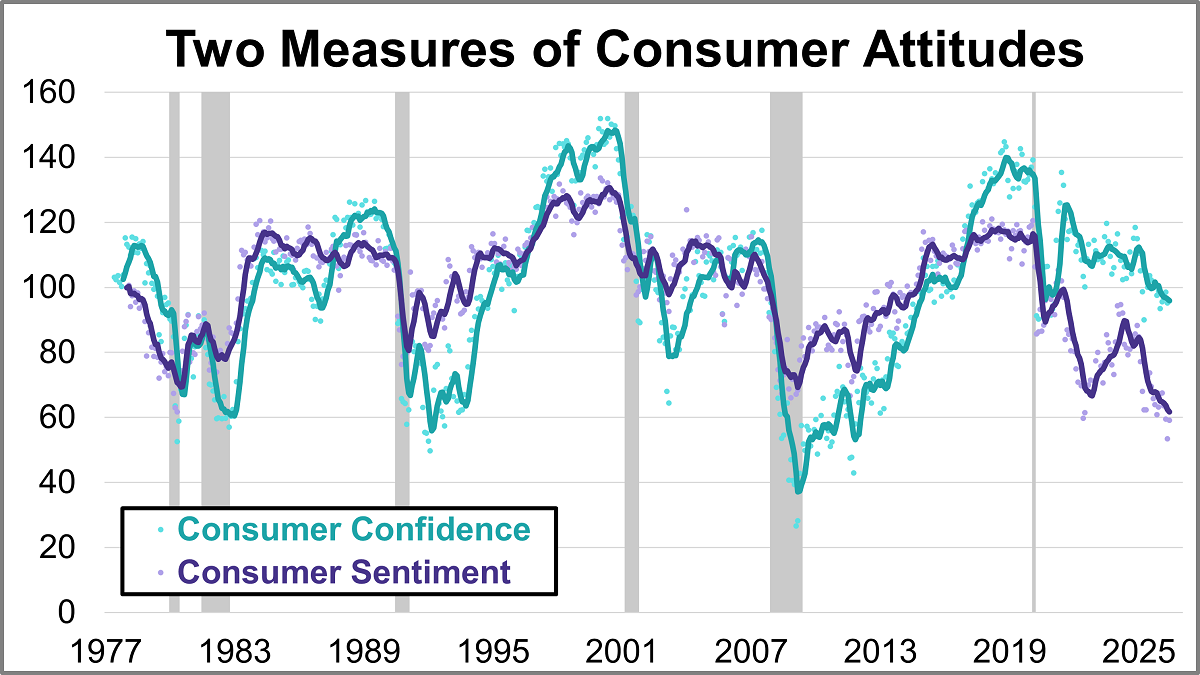
What are consumers thinking about the economy? Their collective mood offers crucial clues for businesses, investors, and policymakers alike. In June, the two leading benchmarks, the University of Michigan’s Consumer Sentiment Index (MCSI) and the Conference Board’s Consumer Confidence Index (CCI), offered similar views with both showing slight improvement despite ongoing inflation concerns.
Ten years ago this week, the world watched the United Kingdom vote to walk away from the European Union. While the political class was clutching its pearls and every talking head on television was promising Armageddon by Christmas, I told you something different.
As the market continues to broaden in 2026, a balanced approach matters more than ever.
In broad terms, there appears to be little headline risk facing advisors and income investors mulling municipal bonds. All 50 states carry investment-grade credit ratings, confirming that their credit quality remains solid.
For more than four decades, PIMCO’s Secular Forum has provided a disciplined framework for stepping back from short-term market noise to assess the structural forces that will shape the global economy and markets over the next five years. Yet rarely has this exercise been more consequential than it has recently.
LPL Research analyzes bond markets as yields rise, exploring Fed policy expectations, inflation trends, and whether bad news is already priced into Treasuries.
In case you’ve been living under a rock for the past few months, three of the world’s largest and most consequential private companies—SpaceX, Anthropic and OpenAI—are preparing to go public in the same year. Together, they could add nearly $4 trillion in market cap to public markets.
The latest Emerging Markets Insights discusses companies across various sectors that have expressed cautious optimism for the second half of 2026 despite ongoing geopolitical pressures and higher input costs. Templeton Global Investments highlight what they observed at a recently attended summit.
When it comes to systematic investing, numbers tell only part of the story. Traditional quantitative models rely on prices, earnings, and balance sheet data, but words matter too.
The U.S. economy appears resilient, judging from key economic measures. AI-driven capex continues to power investment, support equity markets, and sustain a wealth effect that has propped up consumption. Real GDP growth remains positive. Private sector balance sheets are in generally good condition and many higher income and wealthy households have benefited from equity markets gains.
Emerging markets offer important exposure to economic growth through rapid industrialization, natural resource endowments, and strong demographic dynamics.
If you’re not familiar with the name Leopold Aschenbrenner, you should be. A 24-year-old wunderkind, Aschenbrenner was hired by OpenAI in 2023 to work on the company’s “superalignment” team, essentially trying to figure out how to keep AI systems safe once they become smarter than the people building them.
The essential feature of a useful alternative asset isn’t that it’s unusual or exotic, but that its returns aren’t tightly linked to the risks that already dominate the portfolio. The value of an alternative asset comes from the way it interacts with the other assets in the portfolio.
As globalization gives way to reshoring and resurgent resource nationalism, emerging markets may offer fresh alpha opportunities through their ability to supply the raw materials required to fuel the AI boom.
Kevin Warsh was officially sworn in as 17th Federal Reserve chair on May 22. Warsh is likely to build consensus at the Fed rather than push for aggressive action to cut rates.
An unexpected rap on your front door is sometimes cause for anxiety. You are not sure who or what is out there, wanting to get in.
After three decades of watching market cycles play out from both sides of the trade, I’ve come to a simple conclusion: Wall Street’s love of simple rules is one of the most dangerous aspects of investing.
Almost two-thirds of fund managers permit some level of “nuclear exposure,” with 34% allowing investments in nuclear weaponry, according to Jefferies Financial Group Inc.’s fourth-annual ESG and defense survey.
Private markets (private equity, private credit and real estate) have historically delivered an “illiquidity premium”. Institutions and family offices have recognized this illiquidity premium and have historically allocated significant capital to capture it.
Global bond yields are reaching frightening levels due to the continued war in Iran and the effective closure of the Strait of Hormuz. Continued high oil prices and the threat of reverberating inflation are causing investors to demand higher yields on government bonds.
Watching your children step into financial independence is one of the most rewarding and complex milestones families experience. As young adults begin earning income, managing expenses, and making major life decisions, the habits and financial knowledge they develop can shape their long-term success.
LPL Research examines rising inflation risks amid geopolitical tensions, while resilient growth and strong investment support continued expansion.
Alex Evangeli has traded ETF products since 2007. He founded and led the fixed income trading business at Virtu Financial in Europe before relocating to New York to trade and lead the development of fixed income trading technology for the ETF block business.