More Market Wisdom From Jesse Livermore
Membership required
Membership is now required to use this feature. To learn more:
View Membership Benefits Advisor Perspectives welcomes guest contributions. The views presented here do not necessarily represent those of Advisor Perspectives.
In part one, we shared some market wisdom from one of the greatest traders, Jessie Livermore. While Livermore's name is not always mentioned alongside other great investors and analysts, such as Warren Buffett and Peter Lynch, his sage advice is priceless.
Interestingly, much of what Livermore teaches his readers runs counter to what Warren Buffett and Peter Lynch preach to investors. Buffett and Lynch are more fundamentally grounded, while Livermore was a much more market technical analyst who acutely understood his behavioral flaws and those of competing investors.
While we should respect and read as much as we can about the legends of the investment world, we must also keep in mind that there is no such thing as a proven method for investing. Every investment strategy, no matter how conservative or risky, has flaws. Livermore’s trading record is no exception, as he died broke. That said, his acute knowledge of investor behavior is priceless. With that, we now proceed to rules 10 through 21.
Rule 10: Never Sell a Stock Because It Seems High-Priced
Rule 10 is the mirror image of rule nine (never buy a stock because it has had a big decline from its previous high). A stock that appears expensive by traditional fundamental metrics can continue rising if the underlying business is genuinely growing or investor capital continues to flow toward it.
Valuation is a useful tool for estimating long-term expected returns, but it is a poor gauge of timing. Moreover, we advocate using multiple valuation techniques to truly judge valuations. For instance, in addition to the well-followed P/E ratio, investors must also consider a stock's PEG ratio and forward P/E.
Selling quality assets simply because they have appreciated has cost investors enormously over the past several decades. Amazon (AMZN) appeared expensive in 2012, and Apple (AAPL) in 2016. Price alone is not a sufficient reason to exit a position.
Rule 11: I Become a Buyer as Soon as a Stock Makes a New High on Its Movement After Having Had a Normal Reaction
Basically, Livermore recommends investors buy on a breakout after a healthy consolidation. For example, when a stock pulls back or consolidates in an orderly manner and then pushes to a new high, it signals that the selling pressure has been absorbed and buyers are back in control. He believes this is one of the lowest-risk entry points in an uptrend. An orderly pullback is fundamentally different from a breakdown. The former is a pause in the trend; the latter is a reversal. Distinguishing between the two is one of the core skills of technical analysis.
Rule 12: Never Average Losses
Averaging down is one of the most dangerous and most common practices in investing. The logic seems sound: If you liked the stock at $50, you should like it more at $40. In practice, this approach can transform manageable losses into catastrophic ones. When a position is declining, the market is providing information: Either the original thesis was incorrect, or the timing was premature.
Adding capital to a position that is not working does not correct the error; it makes it worse. Livermore called this out as among the most destructive habits a trader can develop.
Rule 13: The Human Side of Every Person Is the Greatest Enemy of the Average Investor or Speculator
Well before the field of behavioral finance existed, Livermore articulated a hard truth: Investors are not rational. Loss aversion causes investors to hold losers too long. Overconfidence causes us to size positions incorrectly. Anchoring causes us to make decisions based on what we paid for something rather than what it is worth. Recency bias causes us to extrapolate recent trends indefinitely.
These behaviors, and others, are deeply embedded cognitive patterns. Recognizing them does not eliminate these flaws, but it allows us to create a discipline that can partially override them.
Rule 14: Wishful Thinking Must Be Banished
Wishful thinking is what happens when hope replaces analysis. It is the moment when an investor stops asking, "What is the market telling me?" When looking at our holdings, we periodically ask ourselves, “If I did not own this position today, would I buy it at the current price with the current information?” If the answer is no, then why are you still holding it?
Rule 15: Big Movements Take Time to Develop
The most significant returns in markets come from extended trends — whether they are multi-month or multi-year moves in individual stocks and sectors. These trends take time to develop, and they take even longer to fully play out.
Impatience often causes investors to exit positions prematurely and miss the majority of the return on their best ideas. Trend identification is important, but equally important is having the patience to let confirmed trends run.
Rule 16: It Is Not Good to Be Too Curious About All the Reasons Behind Price Movements
Financial media continuously provide explanations and narratives for every stock and market movement in real time. The problem is that many of those explanations are constructed after the fact to fit what has already happened.
Many times, stocks go up and down for unknowable reasons. Chasing explanations for individual price movements frequently leads to incorrect conclusions and second-guessed decisions. Price action, which describes what is actually happening in the market, is more reliable information than narratives.
Rule 17: It Is Much Easier to Watch a Few Than Many
There is a point at which a large portfolio becomes a liability rather than an asset. Holding 50 or 100 positions may reduce risk, but it distributes your attention so thinly that no individual position can be monitored with sufficient rigor.
Livermore focused on a small number of leading stocks in leading sectors that he could watch closely. In his opinion, concentrated, well-understood positions in the right market environment consistently outperform the false diversification of owning too many stocks. There is a meaningful difference between diversification as risk management and diversification as an excuse not to do the work.
Rule 18: If You Cannot Make Money out of the Leading Active Issues, You Are Not Going to Make Money out of the Stock Market as a Whole
In every market cycle, a relatively small number of stocks capture the majority of capital inflows. With the rising popularity of passive investing, that is even more true today.
If an investor cannot identify and profit from those leaders, the likelihood of generating returns through secondary or lagging names is low. Investors who are avoiding the technology sector in favor of underperforming stocks and broader diversification may be missing the primary driver of recent returns. This is the impetus behind the SimpleVisor sector and factor rotation analysis.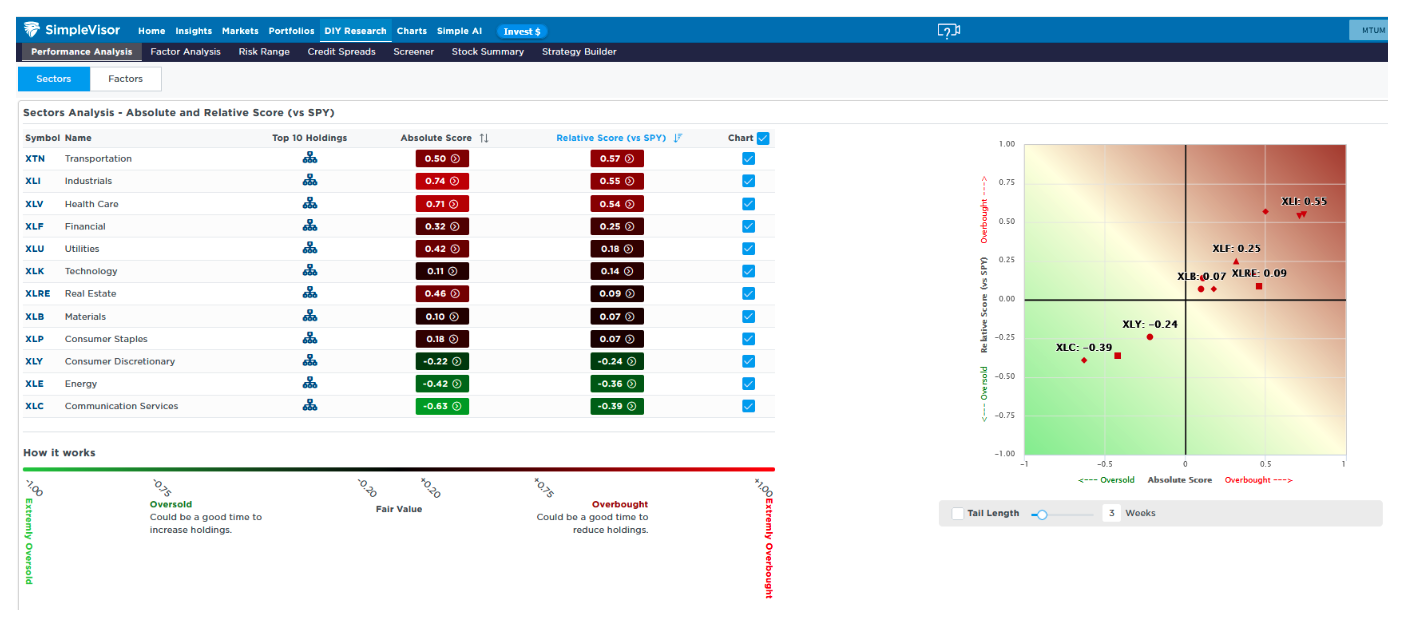
Rule 19: The Leaders of Today May Not Be the Leaders of Two Years From Now
Sector and factor leadership rotates, often dramatically, across market cycles. The Nifty Fifty stocks of the early 1970s became the underperformers of the late 1970s and early 1980s. Technology dominated the late 1990s, then became the worst-performing sector for the following decade. Energy stocks were among the worst performers from 2014 through 2020, then produced some of the best returns of any sector in 2021 and 2022. Remaining rigidly committed to yesterday's leaders is a reliable path to underperformance in the next one. The question to ask is not what has worked, but what the conditions favor going forward.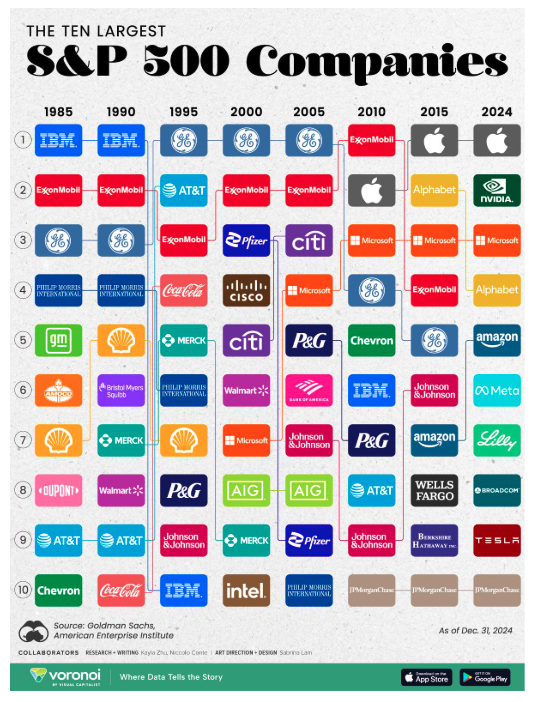
Rule 20: Do Not Become Completely Bearish or Bullish on the Whole Market Because One Stock in Some Particular Group Has Plainly Reversed Its Course From the General Trend
A single data point is not a trend. One company's earnings disappointment does not indicate sector-wide deterioration. One stronger-than-expected inflation reading does not signal a sustained reversal of the disinflation trend. One bank failure does not necessarily portend a systemic crisis.
Context and weight of evidence matter far more than individual observations. The market is a complex system, and the tendency to extrapolate from isolated events can lead to costly mistakes. Sound analysis requires aggregating multiple data points before reaching broad conclusions.
Rule 21: Few People Ever Make Money on Tips. Beware of Inside Information. If There Were Easy Money Lying Around, No One Would Be Forcing It Into Your Pocket
Times have changed since Livermore's era. A cocktail party tip has been replaced by social media threads, financial influencers, and web-based trading services. While information sources have changed, the economics have not. If a genuinely asymmetric opportunity existed and was widely known, it would stop being asymmetric immediately.
The people promoting "sure things" are either misinformed, selling something, or both. More broadly, this rule is a caution against any investment process that relies on someone else's judgment rather than your own analysis. Outside research has significant value, but the ultimate investment decision must be grounded in a framework you understand and can evaluate independently.
As we often say, read as much research as you can on views that oppose yours.
Summary
Livermore made and lost fortunes numerous times over. A troubled personal life, depression, and the new regulatory environment created by the SEC in 1934 all took their toll. On Thanksgiving Day, in 1940, he took his own life, leaving behind a note that described himself as a failure. History has judged him rather differently.
What is remarkable about Livermore is that his rules are still incredibly valuable. The markets he traded in no longer exist. The technology, the communication speeds, and the regulatory framework of his day are unrecognizable compared to today. But the principles and behavioral patterns he identified are as operational in 2026 as they were a hundred years ago.
Simply, the markets have changed, but the irrational human beings participating in them have not.
Read more by Michael Lebowitz:
- Old Lessons From Jesse Livermore for Today’s Market
- The IPO Boom: Where Will the Money Come From?
- Quantum Computing: Hype or the Real Deal?
Michael Lebowitz is a portfolio manager with RIA Advisors and author for Real Investment Advice. For more information, contact him at [email protected] or 301.466.1204.
Join RIA Advisors and elevate your career within a deeply experienced team focused on innovation. Our collaborative environment is built on a foundation of advanced technology and effective investment models, designed to enhance your ability to serve clients and grow your practice. Benefit from a supportive culture that encourages professional development and fosters a forward-thinking approach. By joining our team, you’ll be part of a group dedicated to excellence and continuous improvement, empowering you to focus on building meaningful client relationships and pursuing your business ambitions. Discover the advantages of working with our accomplished advisory team by starting your conversation today.
A message from Advisor Perspectives and VettaFi: Discover something new! Click here to register for our upcoming webcasts
Membership required
Membership is now required to use this feature. To learn more:
View Membership BenefitsSponsored Content
Upcoming Virtual Events View All