The market dislocations and skyrocketing inflation of the last year put longstanding retirement maxims to the test and that test isn’t over yet.
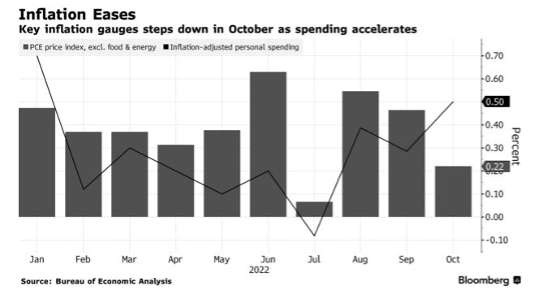
The Federal Reserve’s preferred inflation measures eased in November while consumer spending stagnated, suggesting the central bank’s interest-rate hikes are helping to cool both price pressures and broader demand — with more tightening on the way.
As is our custom, we conclude the year by reflecting on the 10 most-read investment and planning articles over the past 12 months. Tomorrow, we will highlight the 10 most-read practice management articles.
Banco Bradesco SA, Brazil’s second-biggest bank by market value, plans to buy more minority stakes in tech companies to speed up its expansion in the US.
U.S. equities are modestly higher but near the unchanged mark in pre-market action.
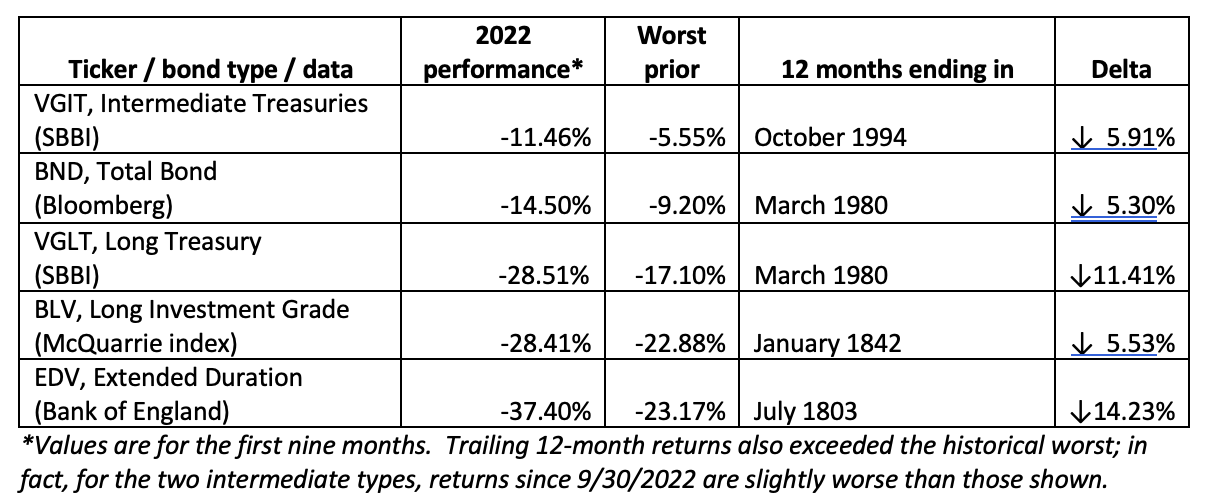
The bond market humbled Wall Street’s best and brightest in 2022.
U.S. stocks are falling sharply, giving up yesterday's rally.
It is easier to give stock than cash as a gift, and there are benefits for you.
Rick Rieder and team outline how to think about portfolios as we enter 2023.
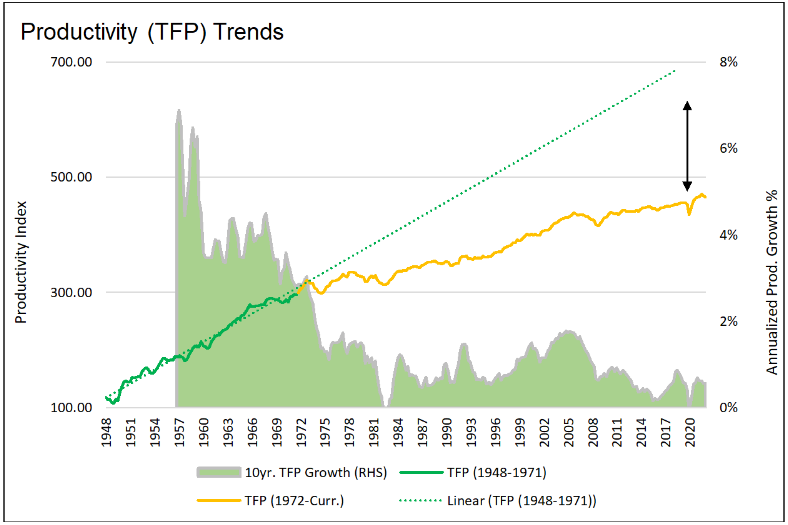
The Fed’s repeated manipulation of the price of capital has weakened productivity growth and reduced economic activity. Ultimately it is the citizens that pay the price.
Investors ready to turn the page on the worst year for equities since the global financial crisis should brace for more pain heading into 2023.
The year isn't yet done with rattling investors' cages. The Bank of Japan’s surprise widening of its yield curve-control policy on 10-year government bonds will have an impact far beyond its shores.
Certain events change the course of history, or at least the trajectory of the global economy. To name a few: the Black Death, the invention of the steam engine and World War II, and now the scourge of Covid-19.
Capital represents the resources and labor used to produce goods and services.
Here are nine tips that will help your family members stay healthy and financially secure as they age.
The research is clear: Americans are becoming less generous over the holidays. Not to sound too much like a Scrooge, but this is not necessarily a bad thing.
Surging mortgage rates have brought the housing market down from its giddy highs earlier this year.
The collapse in the personal US saving rate to near a record low has fueled a narrative that consumers are clearly strapped heading into 2023.
Here’s how advisors can deliver massive value using “buckets” and “guardrails” to empower clients to act during times of economic turmoil.
Allan Roth’s recent article, The 4% Rule Just Became a Whole Lot Easier, promises too much, makes inaccurate comparisons and blurs the notion of risk.
What a difference a year makes!
The economics teams looks back at the most significant stories we covered during 2022.
The Fed has massively inverted the yield curve. We explain why investors might be frontrunning themselves and why the long-term rate won’t budge.
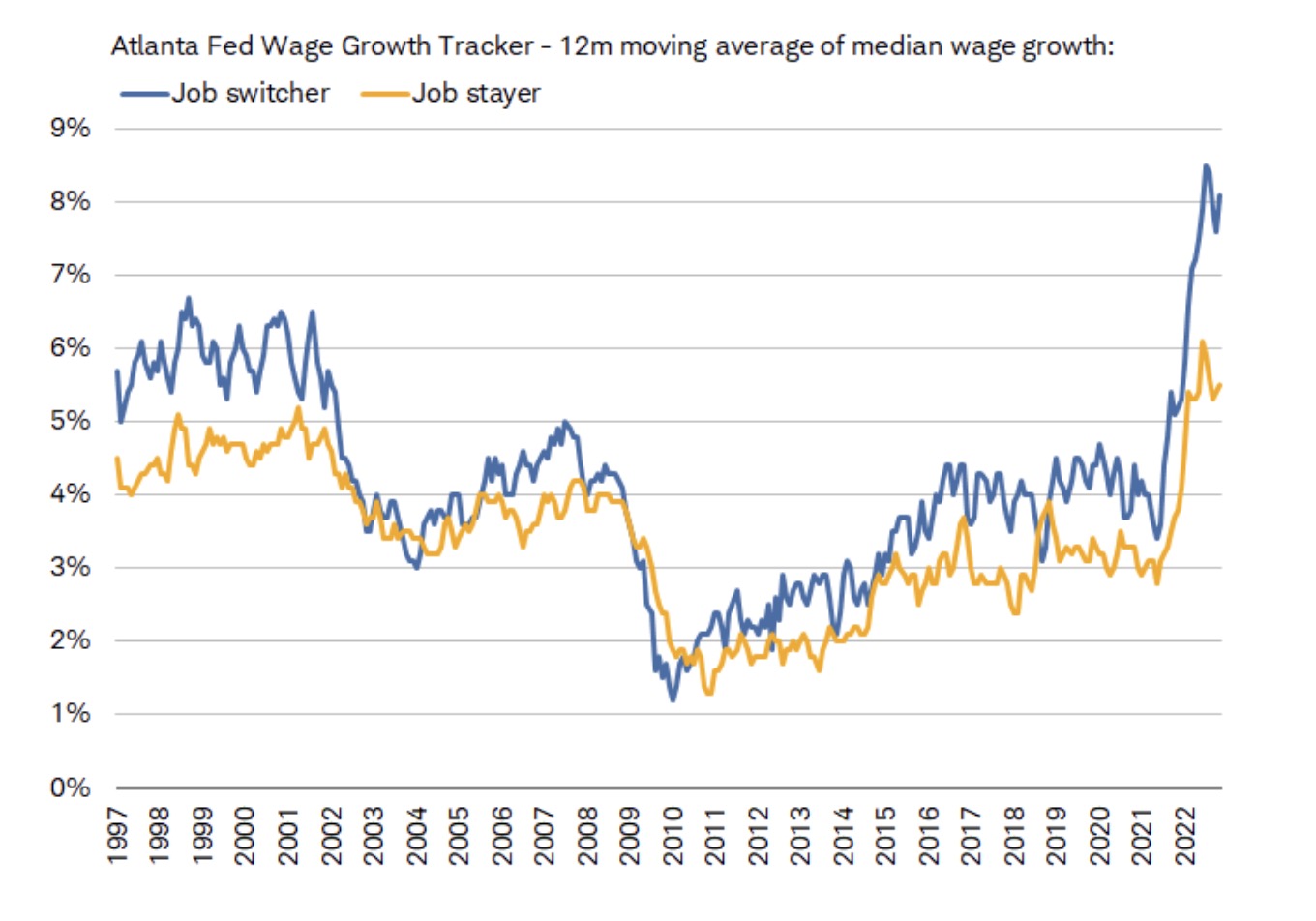
Structurally tight labor markets are providing support for tighter monetary policy, but the Fed may be fighting an uphill battle.
Amazon.com Inc.’s founder has long been obsessed with the company’s beginning — and its end.
Monetary policy is more like the World Cup than it is like mathematics or great literature.
A handful of giant firms are gaining dominance over the hottest corners of the hedge fund industry. This year showed why.
It was a weird year on Wall Street.
Investors are spurning mutual funds at a record clip, driving a $1.5 trillion gap in the flow of money from the old-school investment vehicles and into ever-popular ETFs.
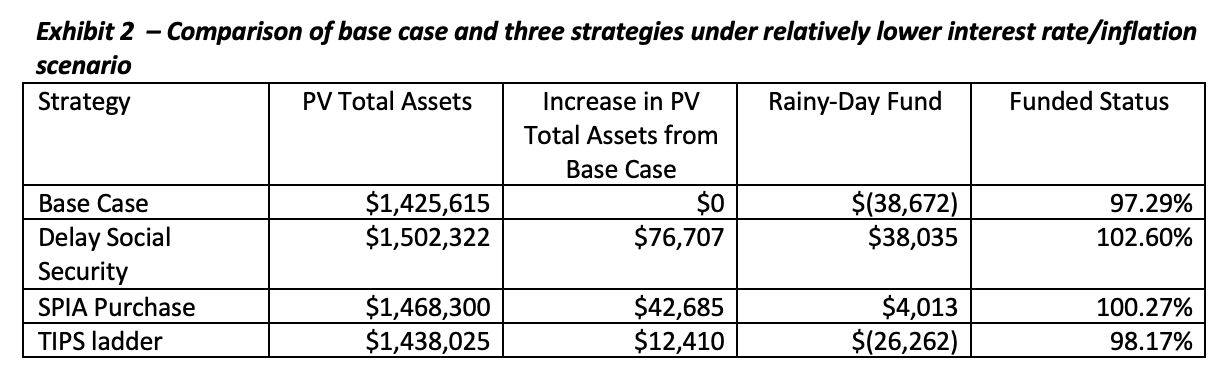
I will use an example and an actuarial model to compare the efficiency of three strategies for strengthening a retired or near-retired client’s balance sheet under both a lower and a higher assumed future inflation scenario.
The economic tea leaves suggest that 2023 could be another challenging year for both stocks and bonds. However, the outlook is more balanced given that equity valuations are much lower and bond yields much higher.
Rising interest rates was the dominant story in 2022. Did fixed income losses cripple insurance companies? Or has the insurance industry shifted the risk to your clients who purchased their products?
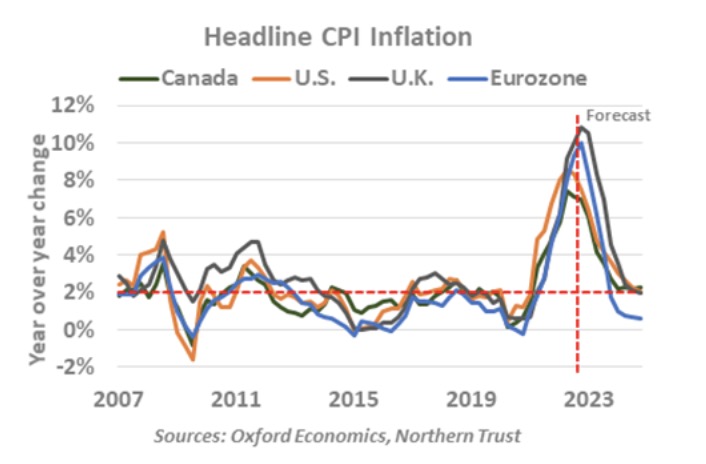
Inflation trends are moving in a favorable direction, but the change is likely too slow for the Fed to take its foot off the brake anytime soon.
This will be my last letter of 2022. I want to use this letter as a set-up for my annual forecast issue the first week of January. That means we will touch on a variety of topics, kind of a snapshot into where my mind is today. Get ready to travel the world but let’s start at home with the Federal Reserve meeting this week.
Chief Economist Eugenio J. Alemán discusses current economic conditions.
Stephen Dover, Head of Franklin Templeton Institute, shares his scorecard on some market prognostications for 2022, and what his team is watching in 2023—from blockchain to balanced portfolios.
The key takeaway from Wednesday’s FOMC meeting: despite encouraging inflation news, the Fed believes they have a long inflation fight ahead.
Confused about whether your student loans will be forgiven? Everyone is.
In part 1 I covered a model portfolio that was built on August 24, 2021, with the primary objective of generating a higher level of current income safely.
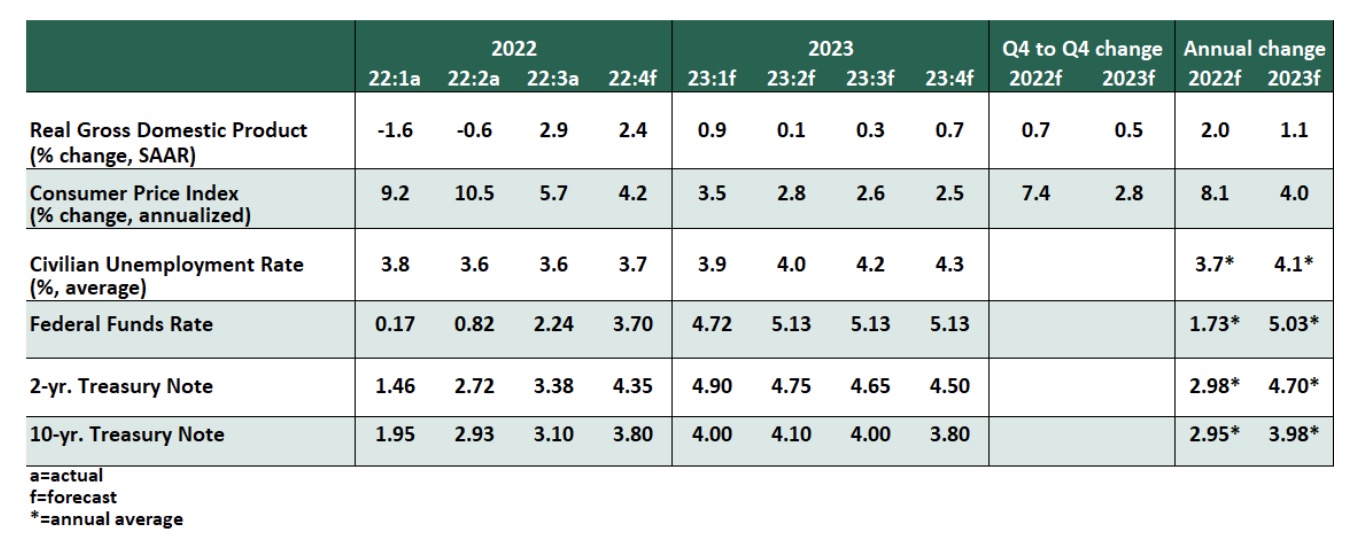
The Northern Trust Economics team shares its outlook for inflation, growth, employment and interest rates.
If you think high-yield savings accounts offer juicy rates to park some cash, wait until you see what money-market funds are paying.
U.S. stocks are solidly lower as the markets continue to digest the economic implications of yesterday's 50-bp rate hike from the Fed.
In our 2023 outlook, we outline three key themes for the new year and highlight several implementation solutions investors can use to navigate potential challenges and grow client portfolios in the new year.
Andy Rothman explains the three reasons why he’s now bullish on China after being cautiously optimistic.
Starting in 2012, it became more and more difficult for prudent dividend growth stock investors looking for income.
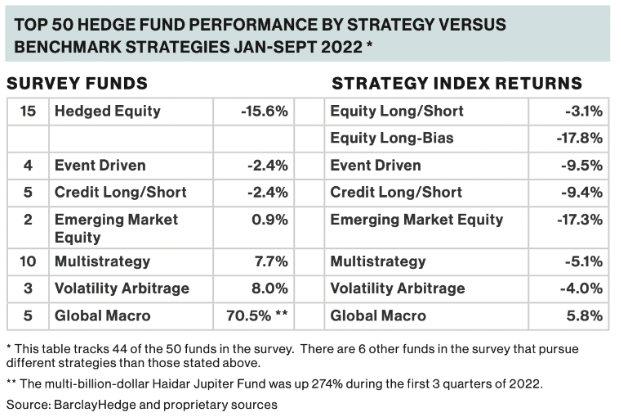
Global Investment Report's 3Q Update of the 2022 hedge fund survey.
There are two types of tax-advantaged accounts for saving for college expenses: A Uniform Transfers to Minors Act (UTMA) account and a 529 Plan. While both plans have their differences and advantages, consider both as viable options.
Things are looking up for people who are close to retirement, according to a Morningstar report published Monday.
The world’s biggest bond market got the ammo it needed from a below-forecast consumer price figure to fully lock in a Federal Reserve downshift in their policy-rate tightening pace, though not enough to wave an all clear sign for Treasuries.
Yield is set to be a more important component of total return for investors during the next few years as the “Fed Put” exerts less influence on markets.