The June jobs report underscored our thesis that while the labor market remains in the 'economic plus column,' some of the prior months' increases in new hiring seemed a bit too high.
Over the first half of 2026, markets faced some expected — and unexpected — tailwinds and headwinds, ranging from geopolitical developments, blockbuster corporate earnings, increasing artificial intelligence (AI) scrutiny, resilient economic data, and a new Federal Reserve (Fed) Chair.
Model portfolios are seeing billions in inflows, and part of that success may be from how these strategies implement ETFs and private assets.
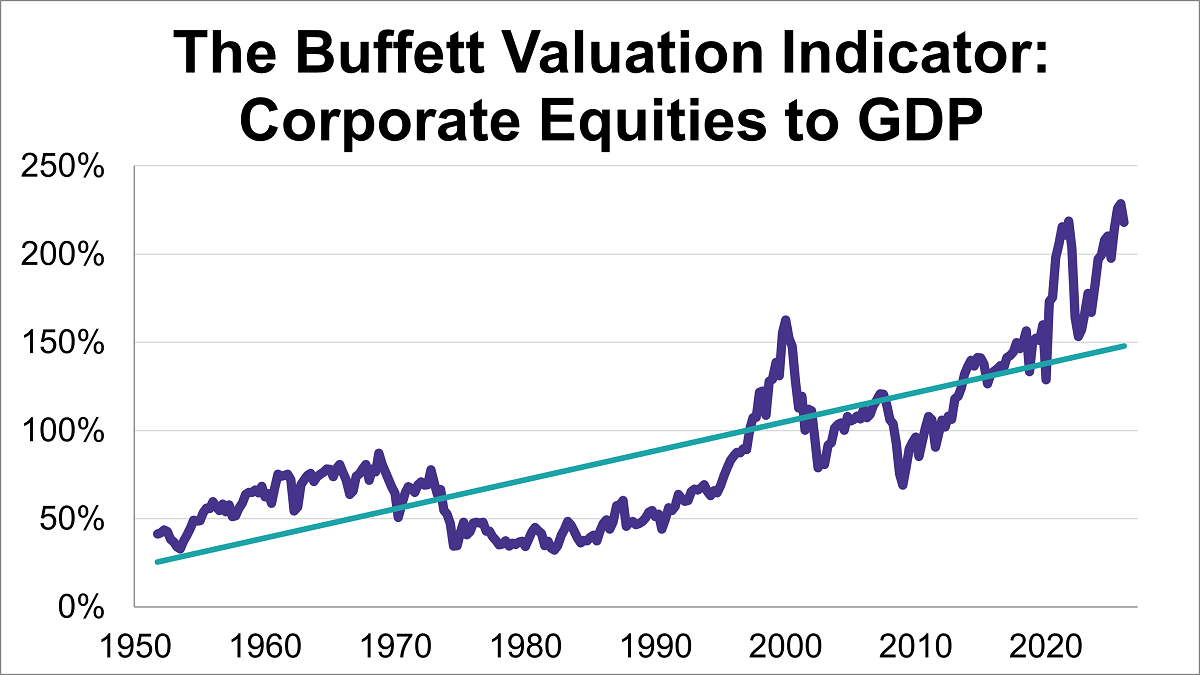
Following the Q1 GDP third estimate, the 'Buffett Indicator'—the ratio of corporate equities to GDP—now stands at 218.1%. This marks the fourth-highest reading in history.
Widowhood does not happen on paper. It happens in the middle of grief, changing income, tax questions, family expectations, housing decisions, administrative demands, and a profound shift in identity. The math may still work, but the human operating system has changed. And that is why advisors need to stress test — not only for portfolio survival, but for survivor usability.
After years of working with advisors and studying client behavior, the reasons clients leave come down to three core patterns. They are predictable. They are preventable. And they almost always trace back to a conversation that never happened in the first meeting.
Rising prices increase the value of collateral in every margin account, which automatically increases how much each investor can borrow under Reg T. Debt rises BECAUSE the market rose, not the reverse. That single fact is what breaks the ratios we’re about to examine, and it lies at the core of why margin debt risk is so often misjudged.
Royce Investment Partners: In this second quarter recap, Francis Gannon discusses how US small-and micro-cap stocks have continued to lead the US equity market in a robust period for equities.
Fixed income transition costs are increasingly driven by what happens in credit markets. As credit trading becomes more efficient, the cost of transitioning fixed income portfolios is coming down, and how those transitions are executed is changing too.
The shortened trading week brought the second quarter of 2026 to a positive close. Stocks ended slightly lower for month, but closed the quarter on a nice uptick. The US and Iran resumed peace talks, helping stocks push higher.
The first half of 2026 has provided a considerable amount of news for investors to digest. Notably, equity markets were higher by nearly 10%, oil prices spiked over 50% before retreating nearly back to where they started, there is a new Chair of the Federal Reserve in Kevin Warsh, and AI infrastructure spending surged.
AI may reshape the labor market in ways that are difficult to predict, and it won’t be the first time this has happened. In the short term, the labor market appears to have stabilized and there are some early signs of acceleration.
Steven Pinker's latest book digs into why the knowledge we hold in common matters and how it helps society operate more smoothly.
The word fiduciary no longer answers the only question that matters: Whether the advice you are given is shaped by what the advisor earns from giving it. Many advisors will tell you, accurately, that they are fiduciaries, and many will say they have no conflicts without disclosing the ones they hold.
For years, the Magnificent Seven tech giants commanded investors’ attention, dominating the S&P 500 Index and determining which way the overall stock market was headed. Those days are over.
When Mark Zuckerberg gets a bold new business idea, he likes to throw money at it. Last summer, he dropped $14.3 billion for a 49% stake in Scale AI, allowing him to poach its wunderkind founder Alexandr Wang to lead a new project to build artificial-intelligence systems that surpass human intelligence.
ETF Database saw a massive surge in readers this past June. The most popular pieces focused on everything from breaking SpaceX IPO news to the technical mechanics behind top-performing ETFs.
Chris Galipeau discusses high-conviction insights that go beyond media headlines.
Right now, advisors are facing a massive generation of clients trying to navigate retirement. That’s challenging enough, but with inflation and the cost of living rising, assuaging those clients’ concerns and delivering for them has become much trickier. Income ETFs can help meet those clients’ goals, with new, daily covered call ETFs an appealing option.
Close to 40 years ago, I moved from Canada to the U.S. after acquiring a controlling interest in U.S. Global Investors. I’ve built my entire life and career here, and in all that time, I’ve never stopped marveling at my adopted country.
Bypass the headaches of individual closed-end funds. Discover how Invesco's PCEF bundles over 100 CEFs to capture June's debt rallies.
The U.S. Treasury launched the Trump Accounts for childhood wealth building. Discover the five low-cost index ETFs anchoring the program.
While the Federal Reserve left interest rates unchanged at the latest meeting, investors increasingly speculate that rate hikes are on the table in 2026.
A growing share of central bankers argue that artificial intelligence will ultimately push neutral interest rates higher. Intuitively, if AI boosts productivity and lifts long-run growth, then households have less incentive to save, pushing up the real neutral rate.
Six months is enough time for a lot to change. Your income, your expenses, your goals, and even the broader economy may look different than they did at the start of the year. And a plan that made sense in January might not fit the reality you're living in now.
Most global investors are not attuned to what can be seen on the horizon, not far from shore. After the Great Financial Crisis, Europe was slow to address the underlying capital issues. Rather than guillotining the problems, they allowed a slow bleed to take place.
Midway through 2026, Franklin Templeton Institute’s Global Investment Outlook framework remains a valuable lens—but the landscape has shifted.
The war in Iran has delivered an oil shock into a bond market that had not fully shaken inflation pressures. Higher energy prices have revived concerns about the path of inflation just as central banks were edging toward rate cuts, forcing a reassessment of what investors require to hold long-term bonds. That reassessment is now playing out in higher long-term yields and steeper yield curves globally.
AI-related disruption, asset valuations and borrower stress have put private credit under a microscope lately. Is this a market facing its first major test after a decade of rapid growth? If it is, we expect it to pass comfortably.
This July, the United States marks its 250th anniversary, and that has many Americans thinking about what independence really means. In many ways, genuine independence is about more than political rights. It’s financial.
The Federal Reserve left interest rates unchanged at its June 17 meeting, but investors were more focused on the future under new Fed Chair Kevin Warsh, whom Trump appointed in May.
Federal estate taxes may not affect most households, but state death taxes can still be significant. Learn key planning considerations and strategies to help preserve wealth.
Productivity is an essential component of economic success. It allows for growth without inflation; compensates for demographic deficits; and helps nations attract investment.
The dollar holds a central place in global markets due to its role as the world’s reserve currency. Its movements influence cross-asset correlations, shape liquidity conditions, and often offer early indications of shifts in the broader macro regime. In short, it is a critical variable that warrants close attention.
Today’s market backdrop reflects a tension between expectations and reality. Despite higher oil prices and plenty of geopolitical noise, the US economy remains resilient and durable, supported by steady consumer spending, a labor market finding its footing, ongoing fiscal support and a surge in AI and infrastructure investment.
At VettaFi, we’ve been talking a lot about bottlenecks as a concept. Some of the brightest equity market opportunities for capital growth are tied to bottlenecks in a supply chain-context.
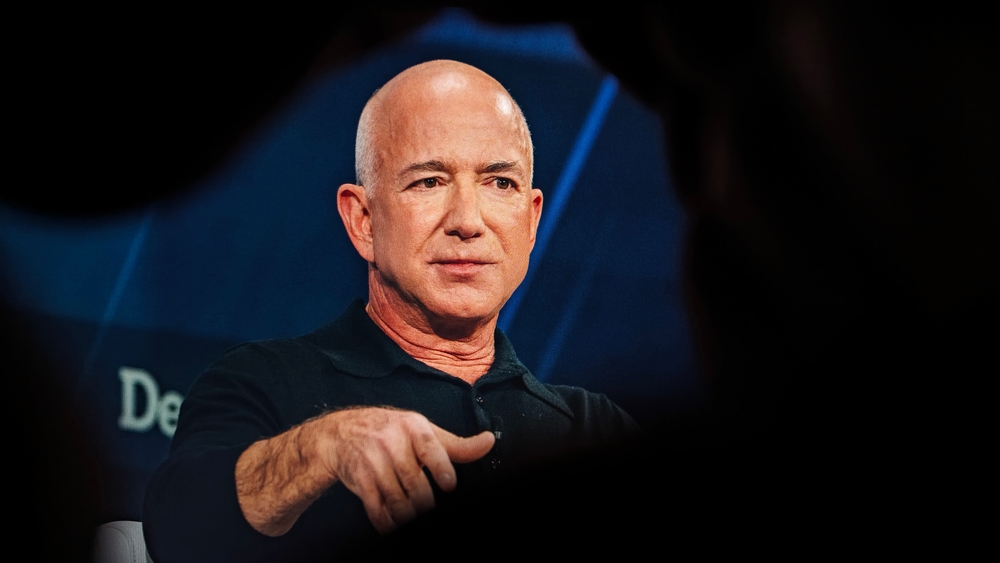
Slate Auto, the electric vehicle start-up backed by Jeff Bezos, is a grand experiment in whether austerity sells — and a warning for the US auto sector.
U.S.-listed ETFs locked in a record-breaking first half of the year. Read the analysis on active ETFs, fixed income shifts, and equity flows.
The second quarter wraps up today, and it was a good one. With the S&P 500 having returned more than 14% (including dividends) with just one trading day left, it will almost certainly end up being the best quarter for the index since the second quarter of 2020. Technology was the leader despite the June weakness.
A look at the resilient global economy, evolving market opportunities, and key risks shaping the investment outlook.
At first glance, allocating to emerging markets appears to add diversification to a portfolio. Look more closely, and the reality is more nuanced. In the late 1990s, the MSCI EM index was dominated by materials and telecoms, driven by the growth of mobile telephony and the internet bubble.
Markets weathered turmoil in the first half, helped by solid earnings with signs of broadening beyond a few AI beneficiaries. If the war in Iran eases, oil prices could normalize, reducing inflation pressure. Still, growth, inflation and policy risks may be underestimated.
There’s no doubt the most important aspect to the June FOMC meeting was the fact that policymakers kept the Fed funds rate unchanged and removed its prior easing bias. But, this was not just your normal, run-of-the-mill policy gathering. It was Kevin Warsh’s first meeting as Fed Chair and instead of being a ‘rubber stamp’ for rate cuts, as some market observers were opining, the new FOMC leader put his stamp on the Fed in a different way.
June saw strong market fundamentals once again in conflict with macroeconomic uncertainties, creating a choppy market. While a durable peace plan with Iran is seemingly underway, investors have regarded the negotiations with caution, pricing in potential setbacks.
Markets may have ended the first quarter with a thud, but stocks put another record run in the books to close out the first half of 2026. The U.S. ETF market had already shattered records, crossing the $15 trillion threshold and cruising past $1 trillion in net inflows right before summer officially began.
It’s been a long time coming for the asset management world, but ETF share classes are now a reality. Fidelity Investments has joined that movement, with the launch of its first ETF share classes for some of its mutual funds.
A private bond market dating back more than a century is opening a new front in the trillion-dollar AI funding boom, allowing tech borrowers to sell debt directly to deep-pocketed insurance firms.
A strong quarter across major indexes. The second quarter is winding down and what a quarter it has been with the S&P 500 up 12.6% quarter to date, while the Nasdaq-100 and Russell 2000 are both up over 20%. Despite some twists and turns, the path of least resistance for stocks broadly remained up and to the right for much of the last three months.
Startup equity decisions often happen before a founder has a full advisory team in place. Formation documents get signed, vesting schedules are approved, and the tax consequences may not feel urgent because the company is still young.
In our view, this divergence continues to reflect how the buildout of artificial intelligence (AI) is influencing both the economy and markets as it progresses across the value chain, even as the associated costs continue to climb.