Investors should consider where in the capital structure they are best compensated for risk. Equity may offer income with upside potential from active asset management, whereas debt may offer income with downside mitigation.
The first half of 2026 reinforced an important lesson for fixed income investors: Tax-loss harvesting opportunities don’t always arrive at year-end, often appearing during short periods of market dislocation when interest rates rise, new-issue supply increases or investor sentiment shifts.
The tech-heavy NASDAQ benefited from a semiconductor rebound and renewed enthusiasm for AI infrastructure names. The Dow, weighted more toward “old economy” stocks than high-growth names, captured none of last week’s gains.
LPL Research examines how sticky inflation, Fed leadership changes, and AI-driven borrowing are shaping the fixed income outlook for 2026.
Historically, many in the pension industry viewed funding above the "plan termination level" as having little incremental value. Once a plan reached “plan termination level”, thought of as roughly 110% funding, conventional wisdom suggested additional surplus had little economic value because it is effectively "trapped capital."
It has been an eventful six months, and we are delighted that the Equity Dislocation Strategy has risen to the occasion. The Strategy generated a 9.05% net return in the first half of 2026, compared with a 1.3% return for MSCI ACWI Value minus MSCI ACWI Growth, a broad proxy for the value-growth spread.
The Fed's recent shift into a more hawkish mode creates concern about banking profits later this year, but second-quarter results are seen strong thanks to IPOs, mergers.
Regardless of how inflation is measured or debated, households continue to feel the cumulative effect of higher prices. The cost of goods and services have risen at a high pace over the past several years, and wage growth has not always kept pace evenly across households.
After a wild last 12 months in a technology stock boom – and more recent volatility – the question du jour, in our view, is not whether AI is transformative.
Every major geopolitical crisis has two types of effects: those that occur during the crisis itself and those that remain on a long-term basis, perhaps even permanently. The US-Iran conflict is no exception.
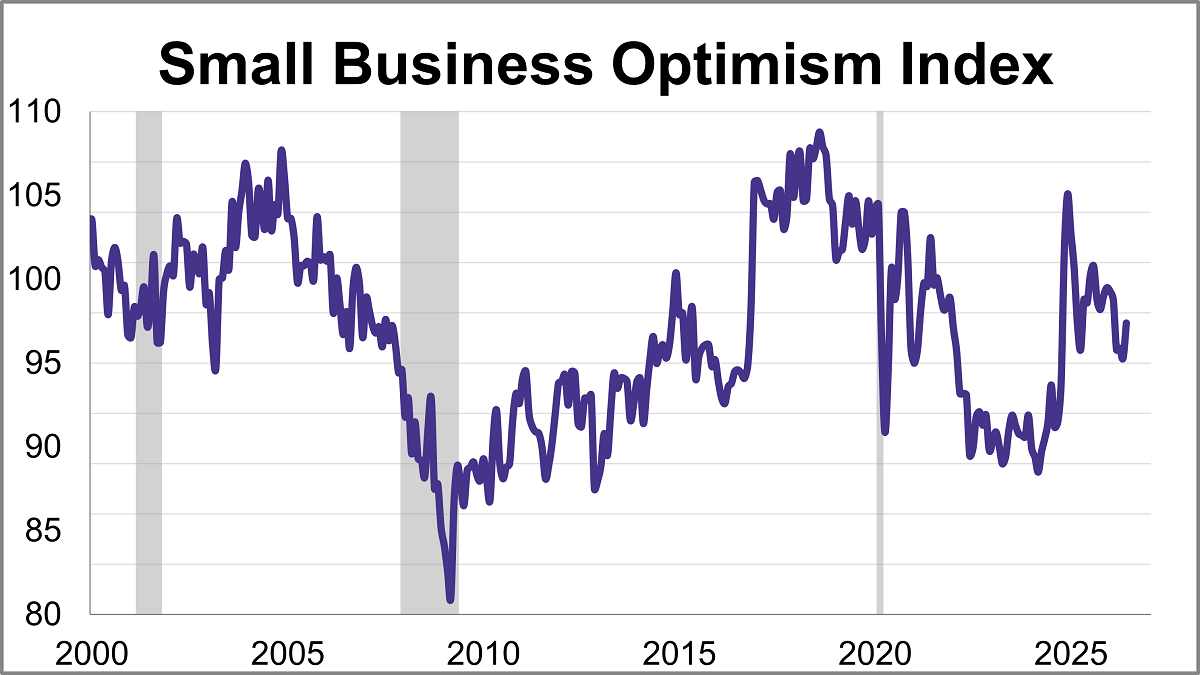
The NFIB Small Business Optimism Index rose 2.1 points to 97.4, reaching its highest level since February. However, the index remains below its historical average for a fourth straight month.
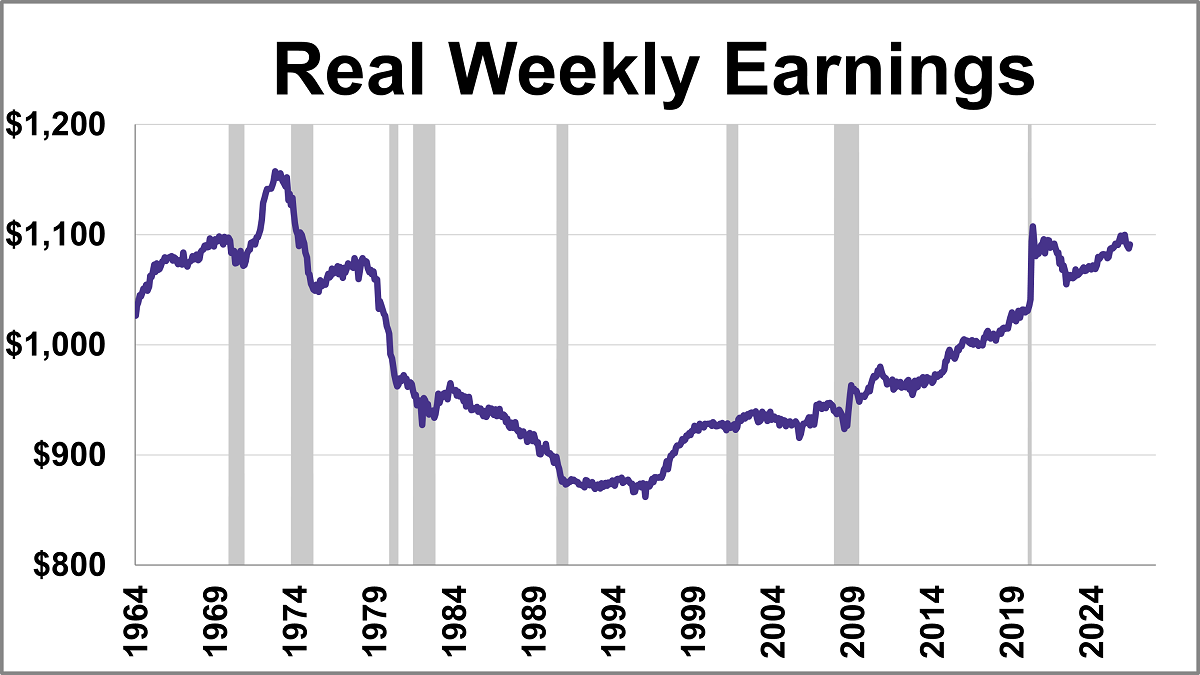
This series has been updated to include the June release of the consumer price index as the deflator and the monthly employment update. The latest hypothetical real (inflation-adjusted) annual earnings are at $54,560, down 5.7% from over 50 years ago.
To close the visibility gap, analysis must begin with the “borrower model,” not the fund. Once you know the types of businesses in a portfolio, their industry, revenue band, and geography, you can evaluate them against a statistically robust universe of similarly situated companies.
The US Bureau of Labor Statistics said Tuesday that the Consumer Price Index fell 0.4% in June, bringing the inflation rate over the past 12 months down to 3.5%. That’s good but not good enough. Inflation is still too high.
A client called me last week wanting to know how to claim a $7,500 tax refund he thought he’d missed. His question was based on an email sent in early July to Social Security recipients from Frank J. Bisignano, commissioner of the Social Security Administration.
What’s good for the US dollar isn’t always good for US bonds — but investors are finding ways to work around it.
Fixed income investors continue to grapple with an uncertain macro environment, dominated by higher-for-longer interest rates and a new-look U.S. Federal Reserve, in which rate hikes may be forthcoming. Rather than make a directional bet on interest rates to combat duration risk, consider floating-rate ETFs, a compelling option.
Over the past few weeks, data has continued to point to a U.S. labor market that is healing after showing signs of weakness starting in late 2024 and persisting for nearly the entirety of 2025—a condition that spurred the Fed to cut rates even as inflation remained stuck above its 2 percent target.
The first wave of upgrades came after the AI hyperscalers reported, by and large, strong earnings. But most of the improvement has stemmed from the rest of the non-financials index, with analysts quadrupling their one-year aggregate EBITDA (earnings before interest, taxes, depreciation, and amortization) growth expectations, from 5% at the end of January to more than 20% as of 30 June.
If you knew you were standing inside a stock market bubble, you wouldn’t be standing in it for long. You’d sell. So would I, and so would everyone reading this. And if spotting market bubbles was something everyone could do in real time, the bubble couldn’t form in the first place.
Given how crucial the fixed income sleeve can be to one’s portfolio, the recent concerns over inflation have caused many advisors and investors to rethink how they go about their exposure. This includes debating over active and passive funds, and reevaluating the type of bond duration that is most attractive at this moment.
Morningstar data shows most active strategies lag passive indexes, but selective active fixed income ETFs can generate alpha.
The continued growth of active ETFs reflects a broader shift in portfolio construction across the advisory industry. Advisors increasingly seek investment vehicles that combine flexibility, transparency, scalability, and tax-aware implementation. Dividend growth strategies may align particularly well with the ETF structure because both emphasize long-term investor outcomes and efficient portfolio implementation.
The Federal Reserve’s plans for interest rates in the second half of 2026 appear very much up in the air. That said, advisors and fixed income investors may want to renew their focus on short duration bonds and related ETFs.
Investors are flocking back to Apple Inc. as nervousness about artificial intelligence spending weighs on the stocks of chipmakers and cloud-computing giants.
The official data will be released tomorrow, but if past trends continue, the US inflation rate will come in higher than most Americans are used to, but still relatively low.
What makes this earnings setup truly unique is the behavior of Wall Street analysts over the last 90 days. Because corporate guidance tends to be conservative, analysts historically cut estimates ahead of time.
The AI capex risk profile has gotten sharper since then, and the argument needs tightening in a few places. The bull case and the tail risk are now the same buildout, but they are running in different directions.
Despite geopolitical headwinds, the broader macro backdrop remained constructive in the first half of the year. Economic growth proved resilient, consumers kept spending and the S&P 500 gained 10%. That favorable mix drove strong earnings growth, with S&P 500 earnings rising 27% year over year in 1Q26, led by the tech sector.
Markets enter the second half of 2026 facing a familiar wall of worry—geopolitical conflict, oil prices, inflation, Federal Reserve policy, and questions around the durability of an AI-led equity rally. Yet the economic backdrop still looks resilient: growth remains solid, inflation has moderated, unemployment is reasonable, and market leadership appears to be broadening.
Fixed income experts James Donahue, John Lloyd and Mike Talaga revisit the levels of supply related to the AI buildout and explain why they remain cautious towards investment grade tech issuance.
Traditionally speaking, folks that have looked to tap into innovation in the AI space have done so through tech exposure, particularly with mega-cap names. This is not a surprise, considering the interplay between these companies and AI innovation. However, healthcare also has many opportunities for innovation.
Discover the top 10 most-read charts from the first half of 2026, covering historic market valuations, record margin debt, recession indicators, and global index performance.
If there's one thing you should take away from it, it's this: these six measures rarely move together. When they have, twice in 250 years, the country entered a period of real upheaval. Right now, they're moving together again.
For investors who have been tracking this space, the signing is a continuation of a policy architecture that has been assembling with surprising speed.
The sharp correction in gold prices during the first half of 2026 has left many investors wondering whether the precious metal's bull market has come to an end. According to Money Metals' Mike Maharrey, however, the market's recent weakness is largely a matter of perspective.
Unpack the latest ICI flow data as long-term mutual funds bleed billions directly into low-cost, model-ready ETFs.
The Federal Aviation Administration is resurrecting the dream of passengers flying faster than the speed of sound after it recently proposed lifting a ban on supersonic flights over land, which has been in place for more than five decades.
The US equity market, with the S&P 500 hovering near all-time highs, is expensive. This isn’t controversial. Depending on which measure you use, US stocks have arguably been overpriced for several years.
Finance Minister Satsuki Katayama pulled a genuine surprise on Friday when she announced toward the end of a regularly scheduled press conference that the government would pursue policies to encourage its massive pension funds to invest more at home. Details were sparse, and the yen wasn’t mentioned directly.
The Great Moderation has given way to a more volatile era, where inflation shocks and market dispersion favor flexibility and diversification.
One of the bigger questions facing advisors and investors right now revolves around credit. Inflation, volatility, and Fed rate hikes all loom, potentially heightening credit risk for portfolios. Navigating that risk may be a crucial task in the second half of this year.
Assessing the year so far, much of the portfolios’ declines have been a compression of valuations, not a deterioration of earnings. For many of our holdings, the two have moved in opposite directions. Revenues, profitability, and cash flow have continued to build, even as the multiples placed against them have fallen.
Join the experts at GraniteShares to hear all about their autocallable ETF suite and find out how it could improve your income conversations with clients.
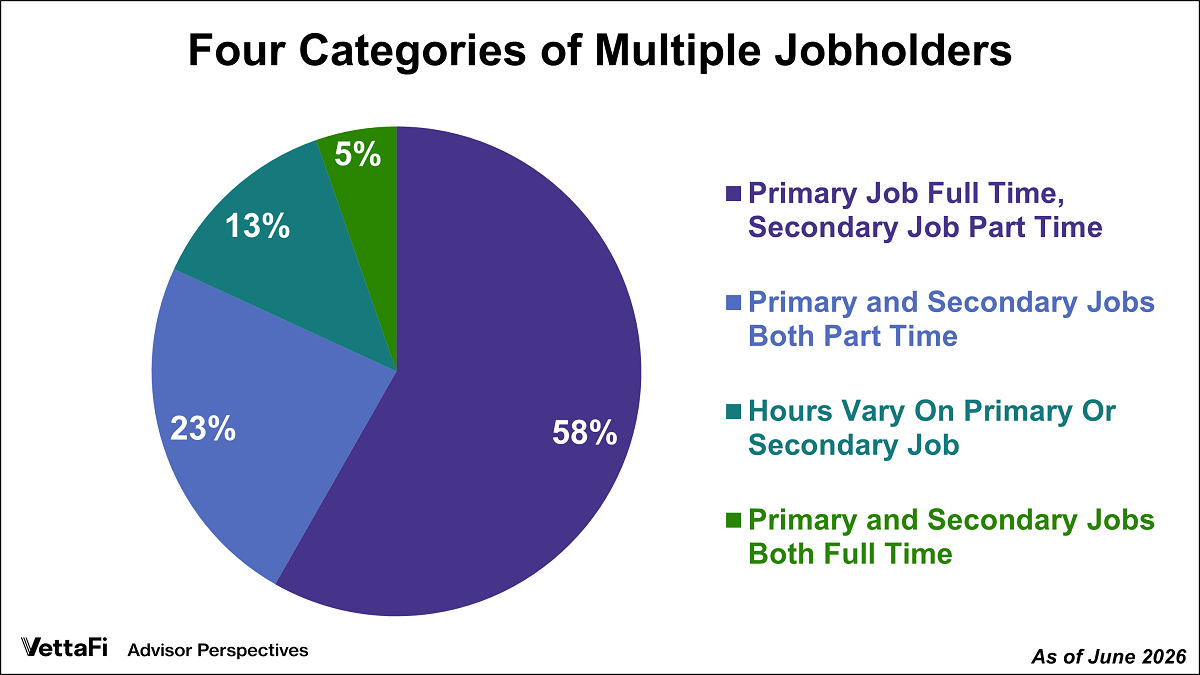
Multiple jobholders accounted for 5.2% of civilian employment in June.
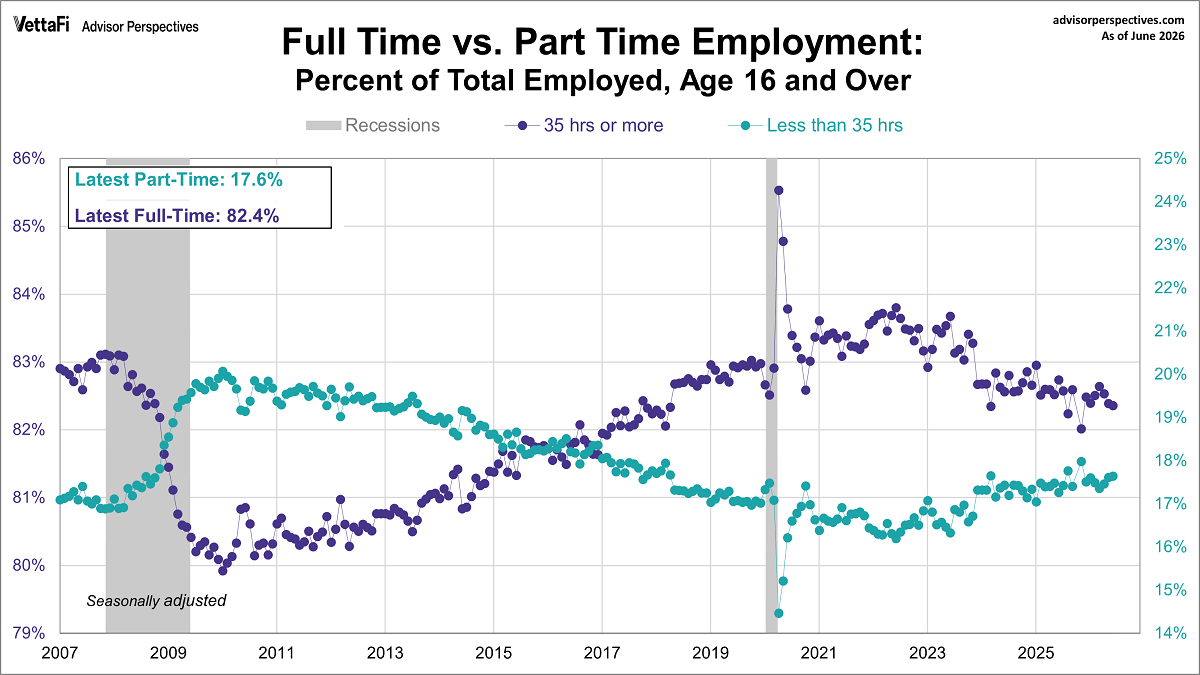
June's employment report showed that 17.6% of total employed workers were part time and 82.4% of total employed workers were full-time.
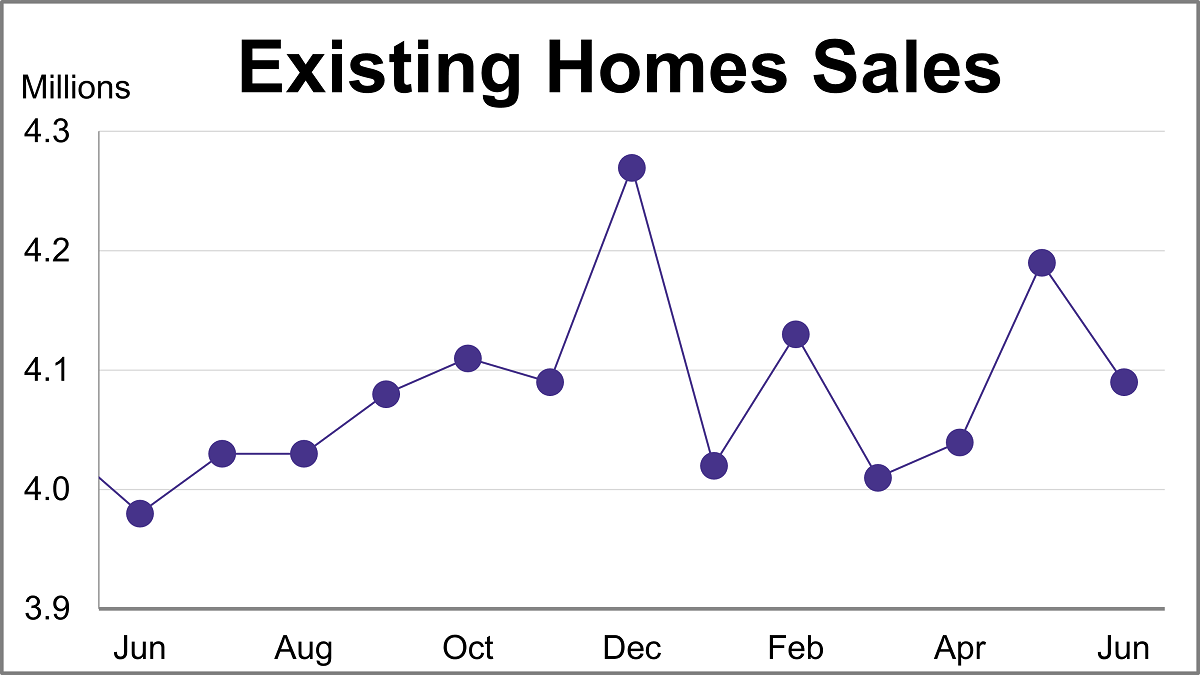
Existing home sales unexpectedly fell 2.4% in June as the median home price surged to a record high of $440,600.
It used to be a considered something of a tawdry question, although it could be flattering as well: “What’s your number?” Nowadays, your inquisitor is probably asking about retirement — as in, how much you think you need to retire. And, as it often was before, it’s the wrong question.
ClearBridge Investments: Although markets often pause to digest after large gains, history suggests these episodes usually prove fleeting, meaning major indexes could move higher in the second half of 2026.
For much of the last decade, investing felt relatively one dimensional. Falling inflation, near zero interest rates and abundant liquidity rewarded long duration growth assets, compressed dispersion and made passive exposure difficult to challenge.