Fixed income investors continue to grapple with an uncertain macro environment, dominated by higher-for-longer interest rates and a new-look U.S. Federal Reserve, in which rate hikes may be forthcoming. Rather than make a directional bet on interest rates to combat duration risk, consider floating-rate ETFs, a compelling option.
Key Takeaways:
- Floating-rate ETFs shield investors from interest rate and duration risk by utilizing senior secured loans that dynamically reset coupon payouts alongside benchmark rates.
- Senior loans sit at the top of the corporate capital stack, providing in-vestors with a structural layer of credit safety and higher recovery priority compared to traditional high-yield bonds.
- Floating-rate ETFs can passively track a liquid institutional loan index or offer actively managed options that dynamically pick credits and avoid default risks.
See More: Solve Duration Concerns With Floating-Rate Notes
Structural Advantages of Floating Rate ETFs
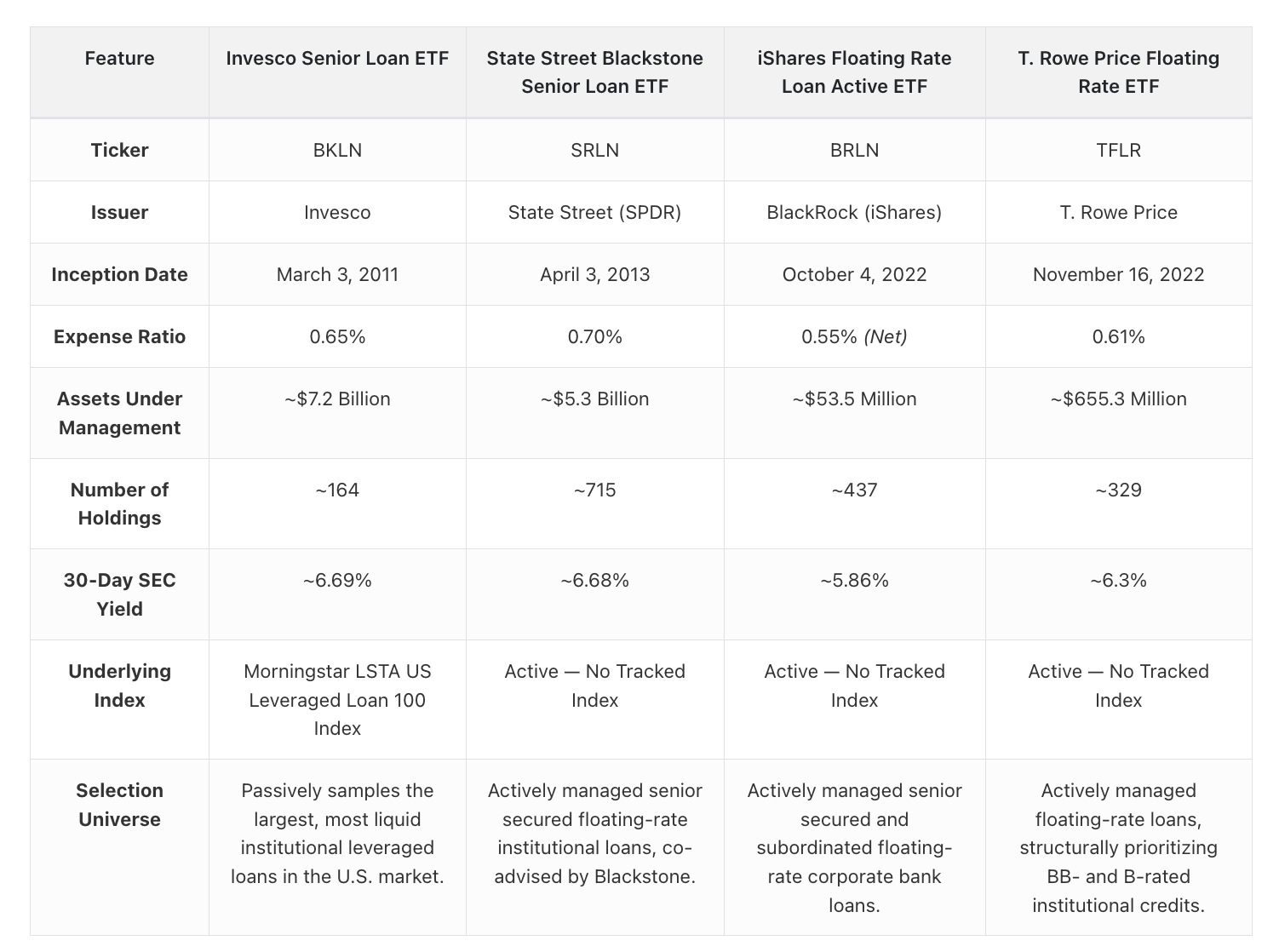
Funds to consider include the Invesco Senior Loan ETF (BKLN), State Street Blackstone Senior Loan ETF (SRLN), iShares Floating Rate Loan Active ETF (BRLN), and T. Rowe Price Floating Rate ETF (TFLR). The common denominator of these funds is that their portfolios include floating rate instruments, namely senior loans. As opposed to conventional fixed-coupon bonds, which lose value when market yields spike, these senior secured loans dynamically reset alongside benchmark interest rates.
The core advantage of floating-rate instruments within the funds’ portfolios is the elimination of duration risk. Because the underlying loans reset their coupon payouts, their price sensitivity to changing Federal Reserve policies drops to almost zero.
Additionally, these senior loans sit at the top of the corporate capital stack. In the event of a corporate restructuring or default, senior secured lenders are given top priority for a return of capital, which gives investors a layer of credit safety as opposed to traditional high-yield or junk bonds.
Tactical Differences Across Tickers
Deciding which ETF is ideal for portfolio exposure can lead advisors and investors down a path of analysis paralysis. With that, it’s important to note the primary differences among the quartet.
The biggest difference is that BKLN tracks the S&P/LSTA U.S. Leveraged Loan 100 Index. It focuses purely on the largest, most liquid institutional loans in the market, serving as a highly liquid benchmark tool.
On the other hand, SRLN, BRLN, and TFLR offer an actively managed trio. Portfolio managers have the autonomy to adjust the holdings as necessary to suit current market conditions, which can be beneficial during volatile times. These funds actively trade individual credit profiles, allowing them to dodge credit landmines and capitalize on mispriced corporate debt.
With corporate fundamentals showing resilience and senior loans offering compelling yield profiles, floating-rate ETFs have transitioned from simple tactical hedges into strategic anchors for fixed income portfolios. For those seeking yield without leaving themselves vulnerable to rate shocks, floating-rate ETFs offer a pure, rate-agnostic option for income.

Originally posted on ETF Trends
For more news, information, and strategy, visit the Fixed Income Content Hub.
A message from Advisor Perspectives and VettaFi: Discover something new! Click here to register for our upcoming webcasts.
Read more commentaries by VettaFi