The yield on the 30-year hit a multi-decade high this week, spiking amid continued fiscal and monetary concerns. The 30-year hitting 5.45%, its highest mark since 2004, comes amid an already busy year for bonds.
We know from recent history why this question feels so timely. Fixed income remains a foundational portfolio building block, offering low-correlated or uncorrelated diversification and downside risk mitigation. However, holding long-dated bonds in recent years has been notoriously painful.
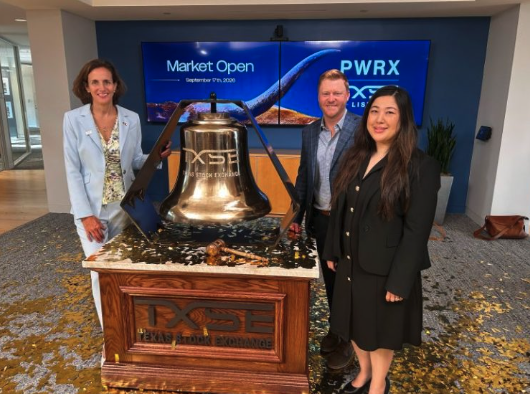
The Texas Stock Exchange (TXSE) is more than a regional milestone — it is a shift in competition among U.S. capital markets. After months of anticipation, the TXSE reached a major landmark last week as Texas Capital’s TXS and OILT ETFs became its first primary listings, followed a day later by PWRX as the first new ETF to launch on the exchange.
Markets have dealt with serious whiplash from the Federal Reserve’s dramatic policy pivot this year. In just six months, the Fed funds futures market went from pricing in two rate cuts totaling 50 basis points to now pricing in two rate hikes in 2026.
Share buybacks are when a company purchases its own shares, reducing the total number of shares on the market. Oftentimes, these buybacks occur on the open market, but companies may also look to buy shares from existing shareholders as well.
Goldman Sachs Asset Management launched two new ETFs Monday, expanding exposure to emerging and international equities. The ETF duo includes the Goldman Sachs Data Enhanced Emerging Markets Equity ETF (GEMQ) and the Goldman Sachs Data Enhanced International Equity ETF (GIEQ). That pair joins an ETF landscape in which those segments are seeing growing interest.
In August, a flurry of ETF-related deals were announced and expected to close by early 2027. Goldman Sachs is buying NEOS Investments. T. Rowe Price plans to add F/M Investments. Victory Capital is acquiring First Eagle.
Throughout this Indexing Redefined series, we explored how traditional market-capitalization indexing ties portfolio weights directly to stock prices, creating hidden concentration risks. Furthermore, we discussed how fundamental indexing offers a disciplined alternative by weighting companies according to their real-world economic footprint. In this final installment, we address the dilemma investors face in highly concentrated equity markets.
Throughout this Indexing Redefined series, we explored how traditional market-capitalization indexing ties portfolio weights directly to stock prices, creating hidden concentration risks.
In an environment marked by the Fed’s first rate hike in three years and ongoing market uncertainty, income-focused investors face a unique dilemma. While cash alternatives offer attractive yields in the short-term horizon, they leave portfolios vulnerable to reinvestment risk should the
As ETF strategies continue to expand into new asset classes and structures, the SEC has been taking a closer look at how some of these products fit within existing regulations.
ETFs are increasingly breaking down the wall between public and private markets. Asset managers are finding ways to “ETF-ize” private equity and pre-IPO holdings — giving retail investors liquid, fractional access to growth opportunities historically restricted to institutional and accredited buyers. As companies stay private longer, the most explosive growth phases of high-profile startups often occur off public exchanges.
Janus Henderson launched a new international equity ETF on Wednesday, according to a Janus Henderson press release. The Janus Henderson International Core Alpha ETF (JINT) seeks long-term growth of capital across developed markets outside the U.S.
Single-stock leveraged ETFs were unusual when they first arrived in the U.S. market just four years ago. Today, it might be hard to find a stock without one. Issuers are aggressively pushing beyond megacap tech into niche equities, pre-IPO registrations, and even experimenting with leverage levels and frequency.
Discover how autocallables provide steady income and downside risk protection in volatile markets, and how autocallable ETFs can help.
On September 2, TMX VettaFi Head of Research Todd Rosenbluth appeared on the Schwab Network to discuss ETF inflows nearing record highs in 2026 and the 50th anniversary of the first-ever index fund, the Vanguard 500 Index Fund. The fund’s ETF share class, which trades under the ticker VOO, is a bit newer, having launched in 2010.
Demand for fixed income ETFs hit a historic high-water mark in September. Investors and advisors turned to fixed income ETFs at a record-breaking pace, driving 2026 net inflows of $446 billion past all-time levels with months to spare. The massive tide of capital arrives at a critical juncture.
In Part III, the focus will center on practical applications of this discipline. In particular, how advisors can integrate the methodology into modern asset allocation, and why it offers an evolutionary leap for passive investing that’s available through exchange-traded funds (ETFs).
Many market participants have highlighted how value investing is back as the equity market rally broadened out beyond high-flying growth names. However, taking an index-based approach to the value style requires looking under the hood. Not all value ETFs are created equally.
Investors can’t get enough of ultrashort bonds. Driven by concerns over high equity valuations and rate volatility as the U.S. Federal Reserve mulls over the direction of interest rates, capital preservation strategies appear to be the elixir to help ease uncertainty. As such, ultrashort bonds have been seeing greater demand as traditional safe havens fall short on yield or carry unwanted duration risk.
Elevated interest rates have investors scrambling for yield, and munis have been ready to answer the call with tax-exempt income.
Brent crude oil rose above $100 a barrel for the first time since July, while the U.S. benchmark West Texas Intermediate (WTI) crossed $95, with varying impacts on energy ETFs. The price surge followed escalation in the Middle East conflict, including U.S. military strikes on five Iranian oil tankers and Houthi attacks on Saudi energy facilities.
From an earnings perspective, this summer proved to be a largely fruitful one for many companies within the S&P 500.
Bond markets around the world have trembled in the last week, as uncertainty continues to rise. A mix of geopolitical, trade, debt, and currency pressures have put immense pressure on yields. The Yen carry trade situation alone has soaked bond markets, but when combined with U.S. debt fears and Hormuz concerns, the picture has shifted.
Oil prices climbed further Tuesday, with Brent crude rising 1% to $97.95 a barrel and briefly touching $99.46, according to the Associated Press. The benchmark has climbed from around $72 over the past two months. Fighting tied to the war with Iran has clouded hopes for reopening the Strait of Hormuz to tankers.
The U.S. ETF market reached $16.4 trillion in AUM in August 2026, driven by record product launches and a defensive shift to Treasuries.
The SEC wants to rescind a 15-year-old rule curbing political donations by investment advisers, aiming to ease compliance burdens for RIAs.
I love ETF milestones and round numbers almost as much as I love watching football. There is something deeply satisfying about watching a fund hit a clean asset threshold. Crossing $500 million, $1 billion, or $2 billion in assets under management (AUM) is more than just a psychological victory. It signals real validation from financial advisors, provides greater liquidity, and lowers the risk of fund closure. Plus, as a fun bonus this week, our three featured funds all start with the letter B!
Global fixed income and equity ETF strategies posted gains and saw inflows surge in August, even amid ongoing macroeconomic turbulence and elevated long-term borrowing costs. International equities maintained their year-to-date lead over U.S. stocks throughout the month, led by notable strength in emerging markets.
The saying “May you live in interesting times” is becoming relevant in the bond market for all the wrong reasons. “Interesting” usually means “trouble.”
On Wednesday, September 2, State Street Investment Management announced the debut of the State Street SPDR UC Investments 90/10 Endowment Strategy Index ETF (UCBG). Notably, this fund was created through a collaboration between State Street and UC Investments, the investment arm of the University of California.
August 2026 was a blockbuster month for ETF acquisitions.
It’s back-to-school season, and the ETF market is closing out a summer that proved anything but slow. August brought $180 billion in fresh net ETF asset inflows and saw the number of new ETFs coming to market cross 1,000 for the year. August also saw a barbell strategy against macro risks become a popular approach with ETF investors.
Record fixed income ETF inflows in August pushed year-to-date ETF totals past $1.4 trillion, with short-term bonds leading the surge.
State Street’s top inflows for its SPDR ETFs during the year-to-date period and the past four weeks suggest that while investors have confidence in U.S. large caps, they’re still looking to hedge their bets by allocating to gold.
The autism care economy is expanding across healthcare, technology, education, and behavioral services. As a result, investors are beginning to look at the companies serving it through a broader investment lens.
In Part I of Indexing Redefined, the foundational strategies comprising Research Affiliates’ fundamental indexing methodology (RAFI) were introduced. With the baseline premise established, there is one myth to debunk: Some detractors may assume that RAFI is merely a niche value strategy.
As the month of August came to a close, the first index mutual fund got to celebrate a key milestone. The mutual fund in question is the Vanguard 500 Index Fund (VFINX), which originally launched on August 31, 1976.
Advisors did not slow down on exchange-traded funds in the second quarter. They added more of them, and pointed the money somewhere new, according to AdvizorPro’s Q2 2026 RIA ETF Trends report.
Investors are used to a swirling mass of scary headlines and geopolitical and monetary risk. Yen carry trade and yield concerns, however, may have some feeling of trepidation. Despite those risks, equities continue to appeal.
On Wednesday, August 26, 2026, Northern Trust Asset Management expanded its suite of distributing ladder ETFs with the launch of eight new funds. The newly launched ETFs offer additional target maturity options for Northern Trust’s existing strategies.
Victory Capital Holdings, Inc. (VCTR) announced an acquisition of First Eagle Investments Wednesday, a deal that will create a combined asset manager with $571 billion in client assets, the companies said.
European equities have long been written off as the ultimate value trap — a sleepy, slow-growth market living in the shadow of Wall Street’s tech-fueled mega-rally. But a massive shift in market dynamics is unfolding across the Atlantic.
It’s been a busy year in the game of ETF landgrab. And a colorful one, too. From exciting M&A deals to some splashy building-from-scratch newcomers, we are seeing a little bit of everything as asset managers look to build scale and capture the impressive growth momentum of the ETF market.
U.S.-listed ETFs pulled in a record $193.42 billion in July, pushing year-to-date net inflows to $1.23 trillion. That total is the strongest seven-month haul on record, according to ETFGI’s July 2026 U.S. ETF industry report.
When it comes to equities exposure, investors typically gravitate toward a passive, market-cap-weighted index as the default strategy. These strategies are often billed as an efficient, low-cost method to capture broad market returns. As such, cap-weighted funds that track the S&P 500 or MSCI World have taken in trillions of dollars in global capital. However, within these market-cap-weighted indexes, a structural flaw exists.
On the back of the White House’s cryptocurrency confab, which brought together policymakers and leaders of the digital asset community, Bitcoin notched a double-digit gain over August 19-20 — a rally that pumped new life into the largest digital currency.
For 11 of the 12 years following the 2008 financial crisis, U.S. stocks beat international markets. But that trend has flipped: Over the past four years, international equities have taken the lead.
Morningstar's study, Mind the Gap 2026 reveals a 1.2% return gap. Learn how financial advisors can use automation to protect client wealth.
Leading asset managers T. Rowe Price announced the acquisition of $19 billion F/m Investments in a press release Thursday afternoon. The deal brings F/m’s suite of leading fixed income strategies and ETFs into T. Rowe Price’s fund stable, reinforcing those areas in the latter’s list.