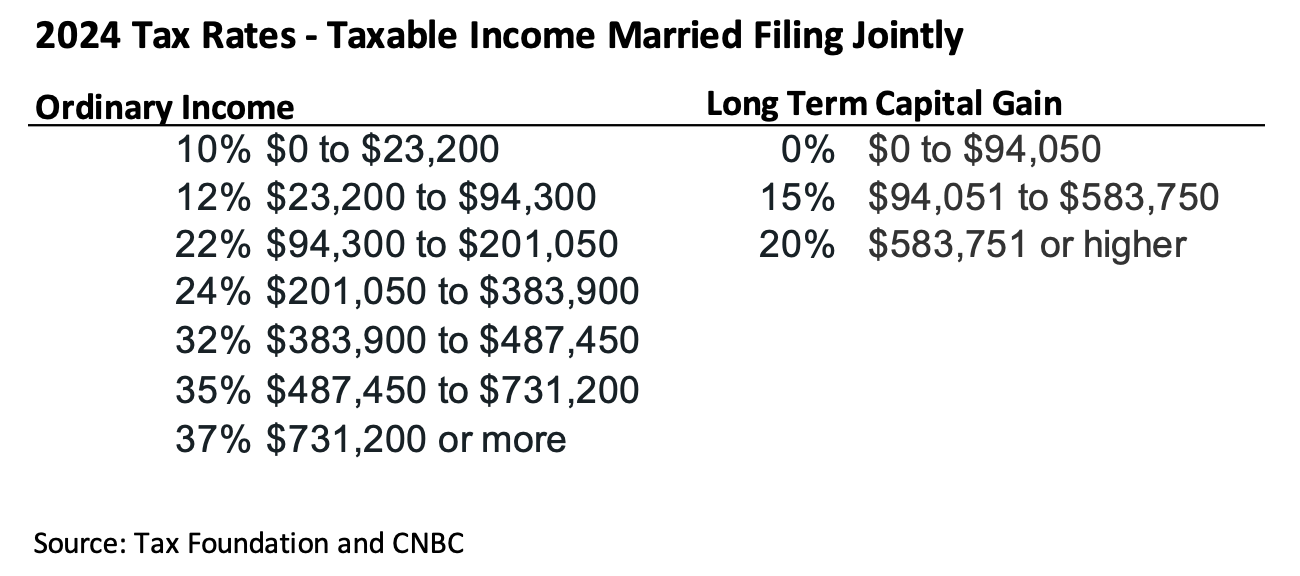
If you own bond funds in a taxable account, it is possible to turn some of the SEC yield into long-term capital gains taxed at lower rates, which could save a bundle. Here’s how.
In a recent special edition video, VettaFi’s CMO Jon Fee sat down with Senior Research Analyst Zeno Mercer to discuss all things artificial intelligence. The duo explores several topics within this technology realm to give investors and advisors a better understanding of AI’s 2023 performance overall.
With the S&P 500 hitting the lowest levels since last June, I thought it would be great to talk to Ranger Alternative about how advisors should be incorporating a hedge in clients' portfolios regardless of the market environment.
Ranger Alternative is sub-advisor to AdvisorShares' Ranger Equity Bear ETF (HDGE). The brains behind HDGE is my guest, David Tice (senior advisor), as well as John Del Vecchio (co-portfolio manager) and Brad Lamensdorf (co-portfolio manager).
HDGE is an actively managed ETF rooted in forensic accounting and technical analysis.
As we near the end of 2023, Head of Franklin Institute Stephen Dover reviews how his forecasts for the year panned out and shares the themes his team is watching out for in 2024.
The soft-landing scenario that investors see for next year points to further gains in US stocks. But it also dims the prospect of another stretch of wild outperformance for the technology giants that dominated in 2023.
This year’s hottest options trade is catching on with Wall Street’s nerd contingent.
Crypto hedge funds that survived a bruising 2022 are recovering, and many are thriving. Some are even expecting a banner 2024.
Great articles don’t always get the readership they deserve. We’ve posted the 10 most-widely read investment and planning articles for the past year here and the top practice management articles here. Below are another 10 that you might have missed, but I believe merit reading.
The growing gap between the rate on the Federal Reserve’s nascent funding facility and what the central bank pays institutions parking reserves suggests officials will let the program expire in March, according to Wrightson ICAP.
Something odd is happening to the world’s most valuable resource. Time is simultaneously speeding up and slowing down. We live in a world of instant communications and superfast internet. We also live in a world of infrastructure projects that crawl along for decades.
Advisors are being asked to provide their clients with a full suite of solutions, ranging from estate and tax planning to portfolio management, and everything in between. Clients are increasingly eager to gain access to fully customizable solutions that meet their individual needs. Advisors, meanwhile, are facing constraints while grappling with a volatile market, and their relationships with clients are being tested.
To address those market challenges, SS&C Rendezvous was launched in 2023, offering advisors a turnkey, front-end investment management platform embedded in the Black Diamond portfolio management system. Featuring an open architecture model marketplace and an integrated proposal-generation tool targeting clients and prospects, Rendezvous empowers advisors with the technological resources to streamline goals-based financial planning and proposal generation, offer investment solutions and asset allocation tools that achieve clients’ goals and reclaim time to focus on building relationships.
“I believe the overall market will be up 10% to 15% from today's level by the end of 2024,” said Jeremy Siegel in our annual interview.
First, let me wish you Merry Christmas, Happy Holidays or your favorite personal form of greetings for this time of year.
2023 was a year of surprises. These are five key sector themes illustrated in charts that dominated the ETF world this past year.
Equity markets are on track for a strong finish to the year, powered by mega-cap growth stocks — the equity MVPs of 2023.
A lot of different asset classes are currently being discussed as possible places to invest in 2024, but one that hasn’t garnered much attention is gold.
While 2022 was a brutal year for bonds, fixed income enjoyed many tailwinds this year, from high interest rates to lowered inflation to a less volatile economy. This made 2023 the year for fixed income. And in particular, it was a good year for Vanguard.
Broadly speaking, Chinese equities and the related exchange traded funds disappointed investors this year, but there’s a growing sense that 2024 could bring better things for this asset class.
CIO designate Sean Taylor discusses his investment outlook for the year ahead and how he sees 2024 unfolding for emerging markets, regionally, economically and thematically.
Avi Schiffmann is an entrepreneur with a crazy idea that might become our new reality. Recently, he went on a podcast and then wondered afterwards about how he’d presented himself.
The holiday season is often the busiest time of year for any profession, and for advisors it is no different. Business demands, family obligations, and heavy social calendars can make for an overwhelming time.
Markets had been living through an era of slow burn, low interest rate-boosted index funds for years until rapid rate hikes in 2022 and 2023.
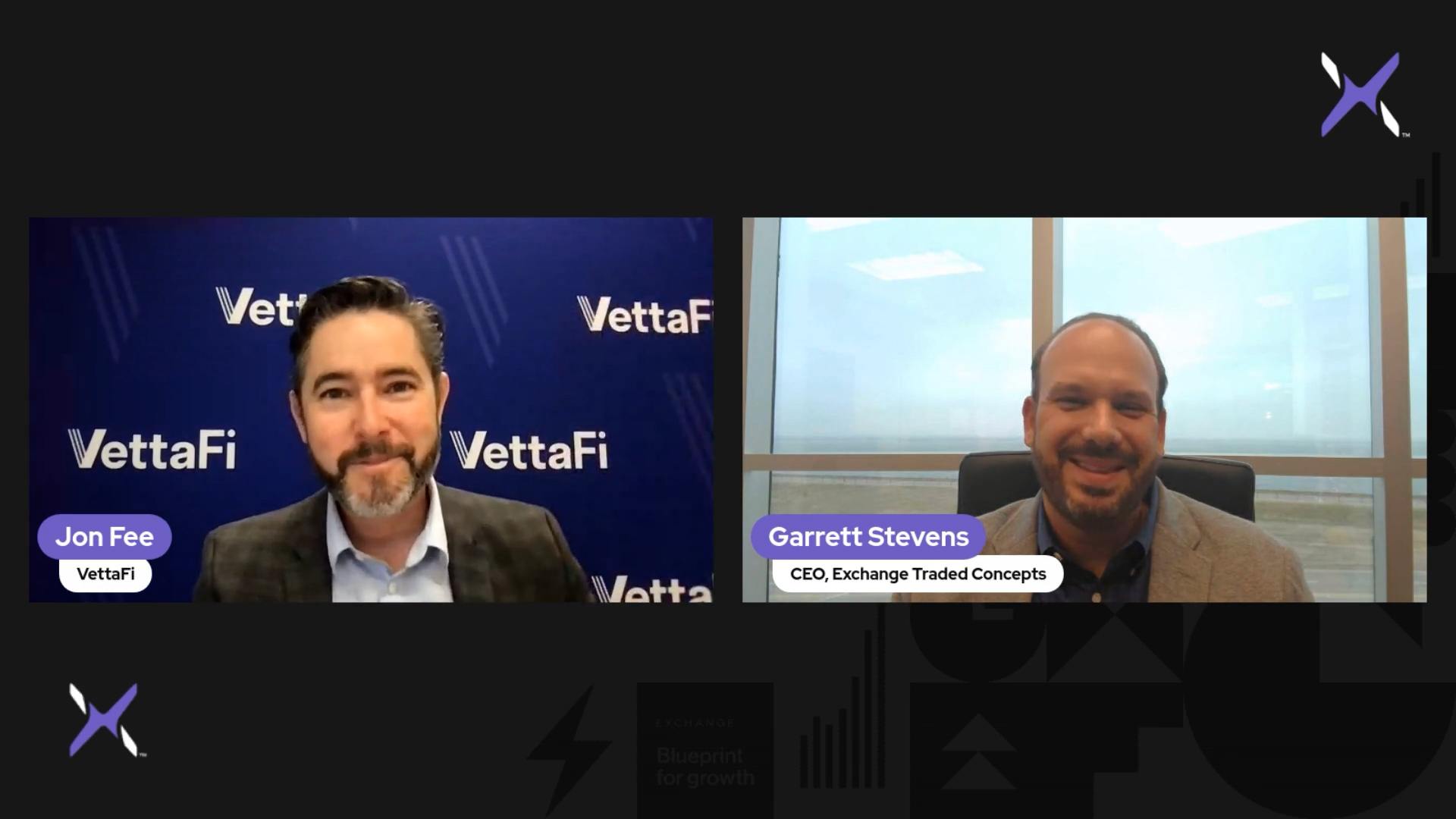
In preparation for the Exchange Conference, VettaFi CMO Jon Fee sat down with Garrett Stevens, CEO of Exchange Traded Concepts, to discuss many topics surrounding the pair’s expectations for the conference in Miami in February 2024.
The rally in US stocks is showing signs of fatigue, and investors should be ready to buy into any declines, according to Citigroup Inc. strategists.
Over the past month and the past 90 days, the Russell 2000 Index is higher by 12.07% and 8.49%, respectively. What’s notable about those periods is that they include increased chatter that the Federal Reserve could be positioning for multiple interest rate cuts in 2024.
Kathlyn Collins, Head of Responsible Investment and Stewardship, says a renewed purpose among regulators and pressure from investors is yielding breakthroughs in the governance and the capital efficiency of Japan’s-listed companies.
The Federal Reserve was supposed to leave center stage by the end of the year and let other factors play the leading role in determining asset prices in the advanced world and beyond. Instead, it has written itself an encore act that’s full of confusion.
Municipal bonds posted their best performance of the year, and we believe municipal credit conditions remain strong.
In this article, we will explore how gold has performed throughout 2023 and share more information on what experts expect from gold in 2024.
As is our custom, we conclude the year by reflecting on the 10 most-read practice management articles over the past 12 months. Tomorrow, we will highlight the 10 best articles you probably missed.
As 2023 is nearing its end, tax-loss harvesting season is in full swing. This is often top of mind for advisors and their clients. But Capital Group is seeing some advisors hesitate to harvest losses due to ongoing volatility in the equity and bond markets, and general uncertainty about 2024.
My guest, Courtney Wolf, joins me today to talk about why to deploy cash and use tax-loss harvesting via active fixed income ETFs. Courtney is a muni portfolio manager at Capital Group and the principal investment officer for the firm’s active muni ETF, CGMU. With nearly two decades of muni investing experience, Coutney will offer her forecast for munis more broadly in 2024 as well.
This year’s hottest derivatives trade, and perhaps also its most divisive, stole the limelight one final time for 2023 as market watchers cast zero-day options as the villains behind Wednesday’s rally-ending slump in US equities.
Treasuries rallied along with global bonds, sending benchmark yields to multi-month lows, as traders bet the world is entering a new, disinflationary period by wagering on more interest-rate cuts next year.
The economics teams looks back at the most significant stories we covered during 2023.
It’s exciting times in the ETF industry. For example, we might be headed for a photo finish in the ETF leader board. As of December 15, two ETFs stood above the rest.
The use of “factors,” or broad and persistent drivers of investment returns, has grown rapidly in equity markets, but with less adoption in fixed income.
The first actively managed exchange traded funds came to market in 2008. But 2023 may be remembered as the year when the asset class matured, paving the way for broader long-term adoption.
The conflicts of interest facing independent advisors are far fewer, less complex, more transparent and better understood by retirement investors. This is what opponents of the DOL rule won’t acknowledge.
“We all have our families and friends, we all value all of it, but in different ways and different things. So, it's just so crucial to really find out what people value and what's most important to them.” – Adam Freeland
Whether he’s building relationships with clients or establishing a value system with his firm, Adam Freeland of Harford Financial Group understands the importance of teamwork. Tune in as Adam shares his journey from the military to financial services and what his day-to-day responsibilities look like as the firm’s managing principal. Among many topics, he dives into his military experience and how it has contributed to the way he runs his business, and why he puts so much focus on learning and training. As someone who transitioned to financial services as a second career, Adam also shares the importance of mentoring the next-generation of financial professionals. Aligning with his growth mindset, Adam explains how he’s trained himself to remain detail-oriented while also looking at the big picture, playing dueling roles to appropriately meet his clients’ needs.
Investors were taught a lesson in 2022 when equities and fixed income delivered double-digit, negative returns. No longer could the major asset classes be counted on for diversification. That outcome has led to a surge of interest in alternative investments. My guest today will argue why alternatives are important for advisors to consider and how doing so in a cost-sensitive way is important. Hedge funds and private equity can provide significant alpha but are often unobtainable for retail, non-accredited investors. ETF structures offer advisors and their clients access to those types of investments in a liquid, transparent way.
The cornerstone of diversification is the allocation of investments to counterbalance losses and dampen volatility. But what happens when traditional assets, like stocks and bonds, move in lockstep as they are now?
AI applications are only one piece of the client engagement puzzle. And they shouldn’t be your first stop for building digital engagement.
An ETF startup is trying to launch a Bitcoin fund, but with what looks to be an environmentally friendly twist amid continued scrutiny the industry faces around its potentially harmful impacts.
Jonathan Hoffman, John Bonello and Jonathan Tipermas share more than just similar first names. They’re the driving force behind a gigantic wager on government debt that’s been giving regulators sleepless nights.
This year’s run-up in technology stocks, and particularly chipmakers, has left many with price tags so lofty it may seem like now is the time for firms to split their shares.
In the same way that a swimmer can make the biggest splash by jumping off of a higher diving board, so too fixed income asset returns can appear prospectively most attractive after a prolonged back up in rates.
High yield fixed income has always been considered a riskier investment relative to other bonds. But strong corporate fundamentals are making this asset class far less risky these days. And that makes so-called junk bonds currently a bit of a misnomer.
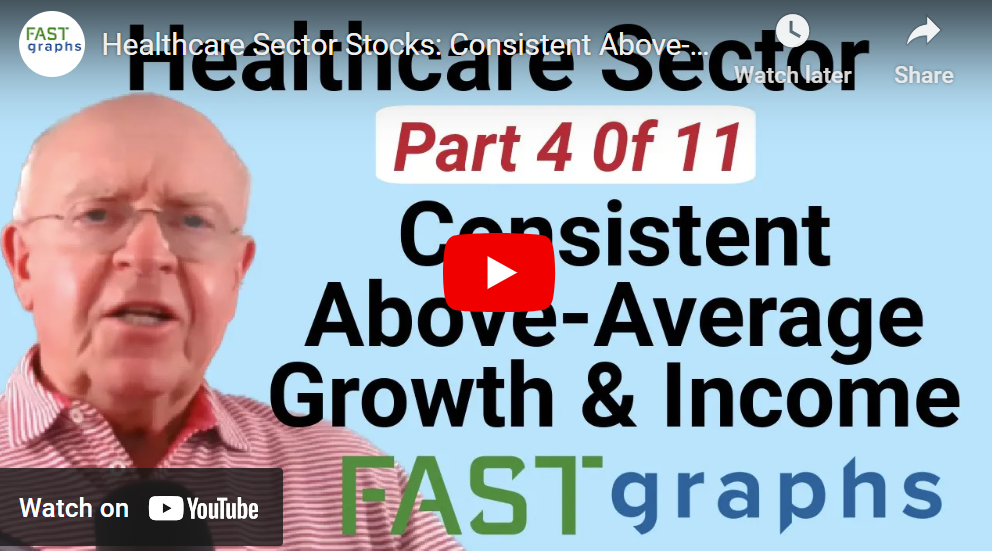
In this video, Chuck Carnevale, Co-Founder of FAST Graphs, a.k.a. Mr. Valuation will analyze the healthcare sector stocks and discuss the value of different companies within it.
What was the biggest story in ETFs in 2023 for you? What has the potential to have a lasting impact on the industry? Or is there something you think was a flash in the pan?
There are many risks for 2024 including those that are an ever-present part of investing and not unique to the outlook for any particular year. We've highlighted our top five.