Water utilities are selling bonds at a record pace to upgrade aging pipes and meet tougher regulations as they prepare for a potential pullback in federal funding.
Start with the disconnect itself. If you only looked at the Michigan headline, you’d assume the country was in a depression. However, when you look at what people are actually doing, the picture changes completely.
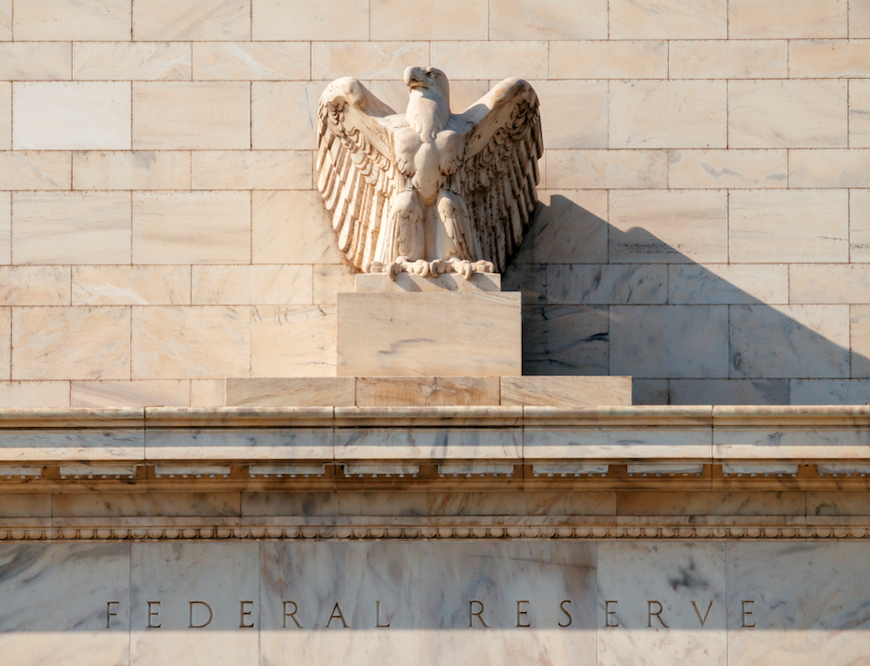
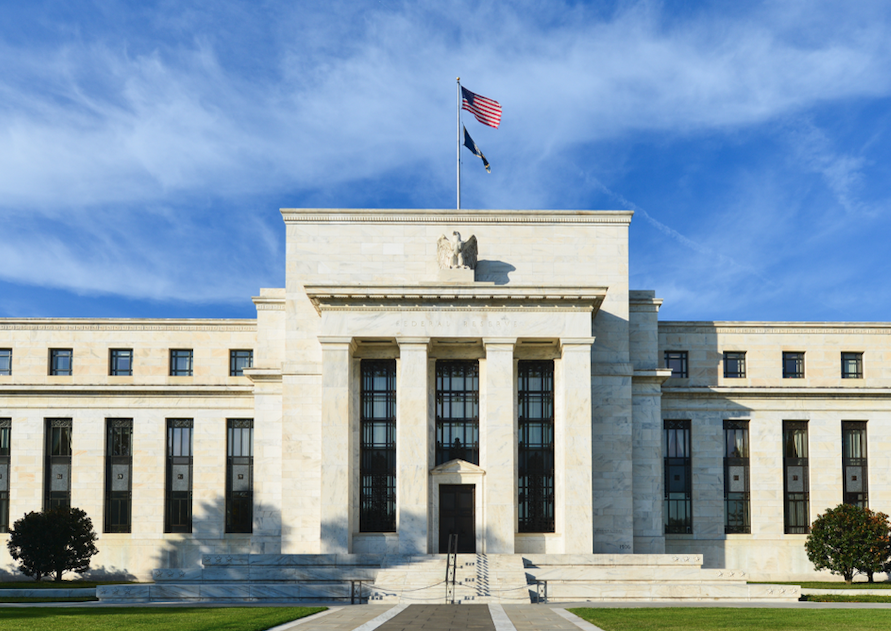
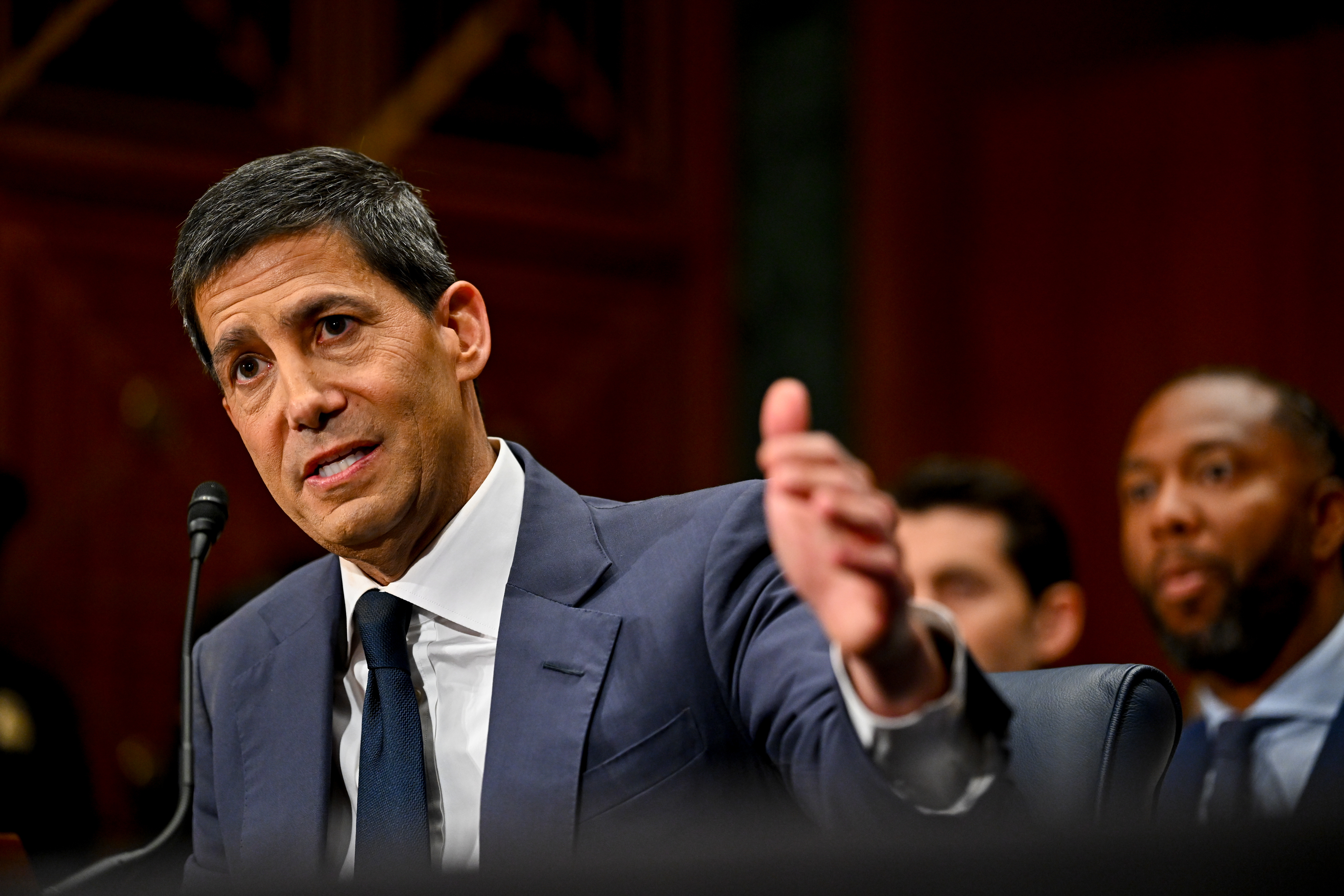
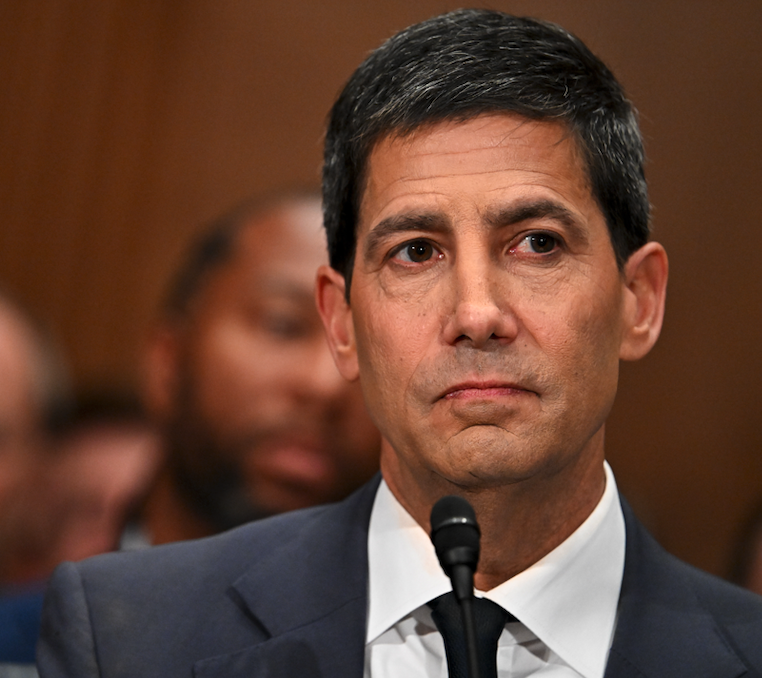
There is a great deal to unpack from this week’s press conference by the new chairman of the Federal Reserve, Kevin Warsh. Most striking is his markedly different approach to Fed communications. This was evident not only in the statement accompanying the federal funds rate decision, but also in the abandonment of forward guidance and his reluctance to provide insight into the committee’s internal deliberations.
Emerging market (EM) fixed income's risk-adjusted profile has meaningfully improved. Sharpe ratios across EM credit and local rates have rebounded, with EM credit delivering one of the strongest risk-adjusted performances in fixed income over the past two years.
We all know that Congress is never going to allow Social Security not to be paid. This begs a number of questions. Will the shortfall be addressed by tax increases, benefit reductions, increasing the retirement age, changing the inflation measures, means testing or some combination of these and other solutions?
As the summer economic landscape takes shape, investors are navigating shifting monetary policy, stubborn inflation pressures, and unexpected market momentum. This week’s snapshot breaks down the most critical updates and data releases from the past week to give you a clear view of where the economy is heading.
Kevin Warsh came out as a hawk during his first press conference as Federal Reserve (Fed) chair. Franklin Templeton Fixed Income CIO Sonal Desai believes that he may be the most hawkish chair since Paul Volcker. Warsh stressed that the Fed can and will bring inflation back to 2%, and signaled his preference for a smaller balance sheet and no forward guidance—a welcome return to more orthodox monetary policy.
Co-packaged optics, the technology of integrating lasers and optical components directly into network switches rather than using pluggable modules, is becoming the standard architecture for large-scale GPU clusters, and Nvidia needed to lock in supply for the buildout it is planning.
Reserve managers' decisions on EM debt go beyond investment potential—they must also weigh considerations such as governance, resources and liquidity.
In Kevin Warsh’s first meeting as Fed Chair, the FOMC held on rates but made significant changes to both their economic projections and the nature of today’s Fed statement. And today’s press conference shows there is a lot more change to come.
Kevin Warsh’s remarks after the Federal Reserve’s first policy decision under his chairmanship will probably spark more volatility at the shorter end of the Treasury curve while calming price swings at the long end, according to Kay Haigh at Goldman Sachs Asset Management.
The Federal Reserve held the policy rate steady at 3.50%–3.75% at its June meeting – an outcome that was never really in doubt. The more interesting signals came from the Summary of Economic Projections (SEP), the policy statement, and Chair Kevin Warsh’s first press conference, which may prove to be his most substantial.
It’s a busy finish to the first half on the corporate event calendar. The bulls have the lead, but the bears have had their moments of glory so far this year. A handful of key AGMs, conferences, and earnings events will keep investors on their toes amid a colorful macro backdrop.
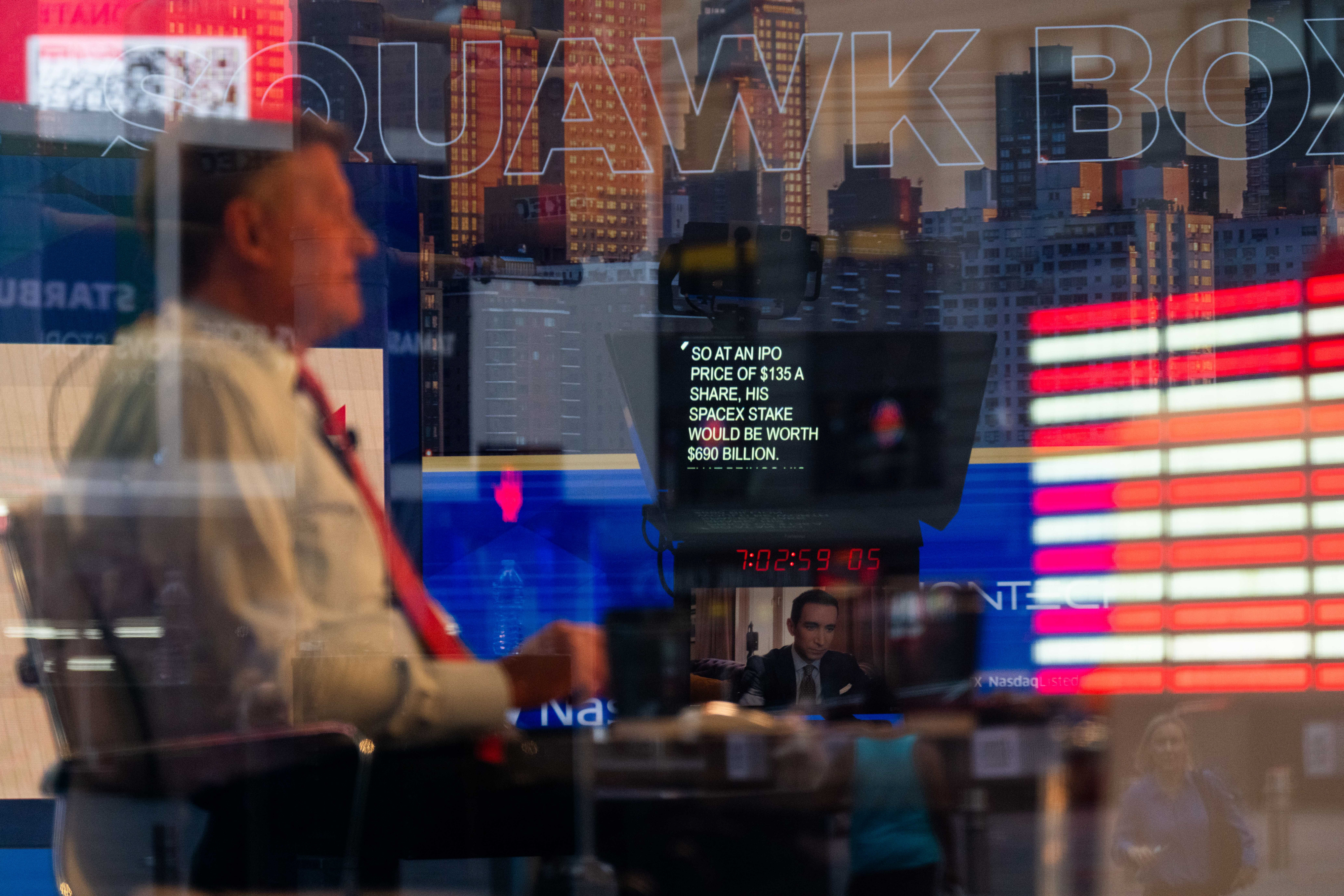
The questions in our inbox have gotten louder lately. Are we reliving 1999? Has the tech rally reached the dangerous ‘Euphoria’ bubble stage we first discussed in our 2026 Outlook? And is the recent surge in initial public offerings (IPOs)— led by SpaceX on Friday— diluting existing holders just as valuations were already drawing scrutiny?
In August 2025, the US President Donald Trump signed an executive order aimed at broadening the investments available in defined contribution plans (DC plans). On March 30, 2026, the US Department of Labor issued proposed guidance regarding a plan fiduciary’s selection of investments, including private market and other alternative investments, in 401(k) plans.
In this video, Chuck Carnevale explains why dividend growth investing may be one of the most predictable and dependable strategies for long-term investors, especially those seeking retirement income. While many investors view stocks as risky due to daily price volatility, Chuck argues that focusing solely on stock prices can be misleading. Instead, he emphasizes that the most reliable component of stock ownership is often the growing stream of dividends paid by high-quality companies.
Once again, the Federal Open Market Committee (FOMC) decided to remain ‘on hold’, keeping the fed funds trading range at 3.50%-3.75%. This result was largely expected by the markets. Of course, one of the more notable aspects to this gathering was that it represented Kevin Warsh’s first official policy meeting as Fed Chairman.
As new Federal Reserve Chairman Kevin Warsh leads his first policy meeting, falling oil prices are set to smooth the way for a rally in fixed income, according to MUFG’s chief of US macro strategy, George Goncalves.
Investors from Fidelity say new Federal Reserve Chairman Kevin Warsh stands to stoke bond-market volatility by offering his views on inflation.
JPMorgan Chase & Co.’s asset-management arm is urging investors to stick with stocks and other higher-risk assets in the second half of 2026, arguing that an AI investment boom and resilient consumers should keep the expansion intact despite persistent inflation and a Federal Reserve on hold.
The catalyst that turns a healthy pullback into something deeper won’t be a single oil-soaked CPI print. It’ll be the moment forward earnings expectations start to roll over while valuations sit at the high end of history. We aren’t there yet.
The Federal Open Market Committee (FOMC) meets this week in what will be Kevin Warsh’s first meeting as Chair of the Federal Reserve. President Trump has been vocal about wanting to see lower yields and general consensus is that Warsh was his pick due to Warsh’s general lean towards lower rates.
Markets returned to positive territory for the week, with the turning point occurring Thursday after the announcement of a potential deal with Iran that would extend the ceasefire while reopening the Strait of Hormuz for the first time since February 27.
The Iran conflict, inflation reports, and the largest initial public offering of all time each took its turn in the spotlight last week. The fragile ceasefire with Iran looked ready to collapse after Iran shot down a U.S. Apache helicopter, and the U.S. retaliated with strikes on Iran.
Financial markets generally displayed exuberance Monday after the US and Iran agreed to an interim peace deal to reopen the Strait of Hormuz. Oil prices fell to the lowest since early March and the S&P 500 Index surged, leaving it just a few points below its all-time high reached at the start of the month.
New Federal Reserve Chairman Kevin Warsh will preside over his first Federal Open Market Committee (FOMC) meeting on June 16-17, stepping in at a complex moment with inflation at a three-year high as oil prices remain elevated, labor market risks easing with job growth averaging ~140,000 year to date versus only 10,000 last year, and hawkish voices on the Fed gaining traction.
For many investors, retirement planning becomes most tangible at the start and end of the year. Goals are set in January, then revisited during year-end tax and financial planning discussions. But the middle of the year offers an equally valuable opportunity: a chance to evaluate progress, reassess assumptions, and make adjustments before small issues become larger challenges.
As expected, the European Central Bank (ECB) raised its three key interest rates by 25 basis points (bps) on June 11, responding to the energy shock from the Iran war. Inflation was revised higher for 2026 and 2027, and it is expected to fall to target in 2028. Although we expect one more hike, the timing is uncertain as the ECB is keeping all options open—including the possibility of not raising rates again.
This week the Fed has its first meeting under new Chair Kevin Warsh. For only the third time in US history, the former Chair, Jerome Powell, will still participate as a regular member of the Board of Governors.
Gold has always had a way of testing investors’ expectations. Just when the headlines appear most supportive—inflation is rising, geopolitical risk is escalating and confidence in fiat currency is being questioned—gold can suddenly move in the opposite direction.
This is the underlying question in several books and articles that have been published recently, most notably Kenneth Rogoff’s “Our Dollar, Your Problem,” and Barry Eichengreen’s “Money Beyond Borders: Global Currencies from Croesus to Crypto” — the latter of which is the subject of this review.
Treasuries advanced as investors dialed back expectations for Federal Reserve interest-rate hikes following news of a deal to halt the Iran war.
There are two processes that we cannot escape: aging and math. This applies not only to human beings but also to large government social-insurance programs.
Chris Galipeau discusses high-conviction insights that go beyond media headlines.
This week’s inflation data highlights a growing disconnect between how markets interpret inflation and how consumers experience it. The May Consumer Price Index (CPI) report delivered a nuanced message: While headline inflation accelerated, core inflation remained relatively contained, an outcome that provides some comfort to policymakers.
Given all the interest and hype over the SpaceX IPO, many advisors and investors have been increasingly gravitating towards thematic ETFs that focus on the space industry. Given that the SpaceX IPO is the largest IPO in history, this should not come as a surprise to anyone.
The K-shaped economy has become shorthand for a tidy story. The rich pull away while everyone else falls behind. It fits the mood, and it makes for a sharp headline. The problem is that it’s mostly wrong.
Recent economic data continues to point to a resilient U.S. economy. The unemployment rate held steady at 4.3% in May, while payrolls increased by 172,000 jobs. Hiring remained strongest in leisure and hospitality, though there were also encouraging signs from more cyclical areas of the economy.
During this time of year, we like to take stock of what happened in the first half of the year and compare it with the expectations we had at the beginning of the year when we published our full-year outlooks.
The U.S. economy faced intensifying headwinds in May as both consumer and wholesale inflation metrics surged to multi-year highs.
Despite everything we have seen in the economic data, which can be confusing, the US consumer has refused to crack. My friend Dr. Ed Yardeni, whom I have known since '98, has the most compelling explanation I have heard for why.
The current economic downturn is best described as hybrid and structurally driven. It leans heavily on demand constraints, though it is triggered and complicated by ongoing supply shocks.
What do you do if you have a standard that’s not being met? Move the goalposts! Of course, you could work harder to meet the goal. But that’s hard. So, why not just change the standard and make it easier to meet?
Goldman Sachs and Innovator panelists say buffer ETFs can help advisors move cash-shy clients into stocks with built-in downside limits.
US stocks opened with a small gain on Friday, supported by optimism about pending trading in SpaceX, which made history with the biggest-ever IPO, and the potential for an interim peace deal in the Iran conflict.
In this month’s Allocation Views, strong corporate fundamentals and resilient growth fuel our continued optimism toward equities into June, despite persistent inflation and more restrictive monetary policy.
Silver's chart also weakened substantially, although the metal remains near important longer-term support levels and has not yet confirmed the same degree of structural breakdown seen in gold.
Inflation and geopolitical uncertainty are pushing advisors and investors to rethink how they build diversified portfolios.
Things change fast in artificial intelligence. One minute corporate desk jockeys are competing to use AI coding and reasoning tools as much as possible, the next their bosses are complaining about budgets being pulverized and start rationing usage.
May saw 148 new ETF launches in May alone – although launch figures were partially driven by a 37-fund rollout from Corgi Insurance Services.