Let’s examine what the bond market is telling us about inflation and a solution that will pay you and your clients to insure for the possibility of continued high, long-term inflation.
Picking the “right” stock is akin to betting on a game; not only must one pick the right team (beta), but also by how much (alpha).
The deflationistas have been working themselves into a tizzy since Walmart Inc. Chief Executive Officer Doug McMillon warned of a period of declining prices at the big-box retailer in the months to come.
The Treasury market’s nascent rally is facing its next big test: a bond auction that will help gauge whether investors are confident 2023’s selloff is over once and for all.
Following the surge in inflation, the most aggressive Fed tightening cycle since the 1980s and multi-decade lows in business and consumer confidence, calls for a U.S. recession have been prevalent all year.
Is the Federal Reserve nearing the end of its rate-hiking cycle? The U.S. central bank is giving investors mixed messages. The Fed has recently paused its rate hikes and said it would keep interest rates between 5.25% and 5.5%.
Recent legislative changes will impact the student financial aid process and could create stress and confusion. Dr. Peter Mazareas, author, college financing expert and Co-Founder of Invite Education, shares some need-to-know information for parents, students, and financial advisors.
U.S. inflation cooled more than expected, and bond markets rallied, but the Fed is likely to remain in a long pause.
Individuals are increasingly looking for more tailored investment solutions, so it makes sense for plan fiduciaries to consider a more personalized approach, according to John Kutz, National Retirement Plan Strategist. He says personalization may be the ticket to better retirement outcomes.
Portfolios with large allocations to alternatives can have many benefits. However, alternative allocations can deviate meaningfully from policy, particularly during periods of equity-market turbulence.
The savage sell-off that hit Treasuries in prior months was driven by concerns a buyers’ strike had hit the $26 trillion bond market. It’s now confirmed: at least one set of investors headed for the exits back in September.
I find for many the same is true with ETFs and capital gains. However, the ETF pie continues to expand with newer investors each year. The persistent lack of a capital tax gain burden simply for holding onto an investment is worthy of celebration.
Though inflation continues to cool, there remains a potentially longer road ahead to get to the Fed’s desired 2%. In an environment of uncertainty and elevated inflation, the inclusion of managed futures in a portfolio made a significant difference in the last few years as modeled by DBi recently.
The federal government starts a new fiscal year every October 1. In a rational world, Congress would fulfill its responsibilities by passing bills before that date to authorize spending in the various agencies and programs.
The run-off election looks tight in Argentina, where I’m attending a Young Presidents’ Organization (YPO) event in Buenos Aires.
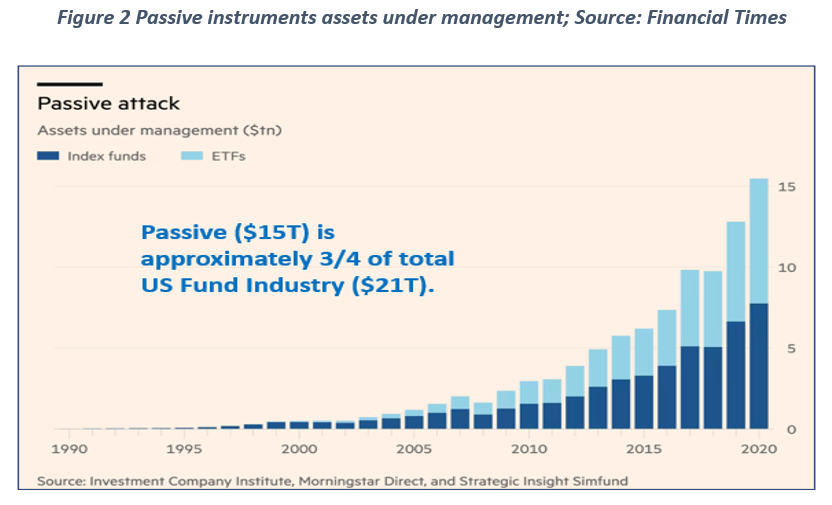
At first blush, a record $100 billion flood into actively managed exchange-traded funds this year raises a tantalizing prospect: A revival of stock picking even as only Big Tech names outperform the market. Yet, a look under the hood of popular ETFs shows the boom is almost entirely taking place in passive-looking trades.
Confounding market and economic signals persist as the year’s end draws near. In a year punctuated by heightened uncertainty as investors attempted to navigate a confluence of risk factors, stock and bond correlations proved a significant challenge to traditional portfolios.
In this video, the best time in decades to invest in REITS, Chuck Carnevale, Co-Founder of FAST Graphs, a.k.a. Mr. Valuation, will discuss the concept of FAST Graphs and analyze several REITs that he finds attractive.
Just a week after Brazil’s Nu Holdings Ltd announced a yield of 15% on its high-yield savings accounts in Mexico, Argentina’s Ualá is raising its own by three percentage points to 15%.
Bitcoin was in sight of $38,000, a level last seen in May 2022, amid an ongoing rally spurred by expectations of fresh demand for the token from exchange-traded funds.
We understand that many economists/analysts/market participants are already discounting inflation as a serious problem for the U.S. economy. Even if this seems correct on the surface, the problem is very different for those who suffer the most from higher prices – middle- and lower-income individuals.
In the context of fighting inflation, the “‘final mile”’ represents the successful and sustainable achievement of a central bank’s inflation target. Stephen Dover, Head of Franklin Templeton Institute, opines on the Fed’s ability to reach it.
Investors starved for yield since the great financial crisis can now have it merely by holding cash reserves. At least for now (as of November 8), the U.S. three-month Treasury Bill was yielding 5.4%, up from 0.50% at the end of 2021 and 4.4% at the end of last year.
The recent pause in interest rate hikes by the Federal Reserve could finally signal an end to monetary policy tightening. But fixed income investors can keep on reaching for high yield opportunities with a pair of active ETFs from American Century.
In the latest episode of the Alternative Allocations podcast series, Franklin Templeton’s Tony Davidow has an insightful conversation with the firm’s CEO, Jenny Johnson, regarding the burgeoning opportunities in alternative investments, especially in the current financial climate.
In our 2024 outlook, bonds emerge as a standout asset class, offering strong prospects, resilience, diversification, and attractive valuations compared with equities.
In a recent VettaFi Viewpoints video episode, Dave Nadig, a financial futurist at VettaFi, sat down with Pat Chiefalo, head of ETFs & Indexed Strategies at Invesco Canada, to talk all things cross-border investing to give investors a deeper understanding of what is going on in Canada.
Because each side has their own agenda, selling has devolved into a game where the truth is often held back, and trust is difficult to establish.
The Chicago Fed National Activity Index (CFNAI) is arguably one of the most important and overlooked economic indicators.
Can a single self-published paper really refute decades of work by three famous economists? If the paper is the modestly titled “Income Inequality in the United States: Using Tax Data to Measure Long-Term Trends,” then the answer — with qualifications — is yes.
Professional traders entered November wagering Jerome Powell’s campaign to tame inflation was a long way from being won. Now they’re being forced into risky bets that the battle is over.
Third-quarter earnings announcements have almost come and gone, with yesterday being the last big burst of companies. Some key firms have yet to announce, like Nvidia and Walmart, but everything I’m seeing says it surpassed expectations.
In this video, Chuck Carnevale, Co-Founder of FAST Graphs, a.k.a. Mr. Valuation will discuss different strategies for income investors in the current high-interest rate environment – bonds vs. stocks.
Like some advances earlier this year, the market's current surge hasn't been defined by strong breadth underneath the surface—which will be key for a sustained, durable advance.
We speak with ClearBridge Investments’ Jeff Schulze about a topic on many investors’ minds: the 10-year US Treasury yield and the path of monetary policy. He also shares his views on the latest US retail sales data and whether consumer resilience will last into 2024.
Fiduciary duties are either unneeded or harmful, according to the opponents of the DOL rule. In their view, the finance and insurance industries have already achieved perfection.
The price of gold just had its best October in nearly half a century, defying tough resistance from surging Treasury yields and a strong U.S. dollar. The yellow metal rallied an incredible 7.3% last month to close at $1,983 an ounce, its strongest October since 1978, when it jumped 11.7%.
Every year, millions of Americans send their hard-earned money to life insurance companies, in return for a promise that it will grow and provide them with regular income in old age.
Some of the largest US companies face billions of dollars in additional interest costs and hits to their profit if they refinance their 2024 maturities at current rates, with a third of them lacking the cash to repay upcoming debt.
Good news – the earnings recession is over! After three consecutive quarters of negative earnings growth, 3Q S&P 500 earnings are on pace to climb 5% YoY. If sustained, this would be the best quarter of earnings growth since 2Q22.
Treasury yields have dropped as weak economic data suggests the Federal Reserve may begin cutting the federal funds rate target earlier than previously expected.
With the end of the year rapidly approaching, it’s time again to consider tax-loss harvesting opportunities. So, it may be an opportune time for investors to consider where they can best capture potential tax benefits.
A China ‘Recovery’: How important is the loss of confidence within China itself?
With 10-year Treasury yields having retreated noticeably in recent weeks, there’s a sense that things could be turning for the better in the bond market. Should that sentiment prove accurate, it could invite renewed risk appetite in select corners of the fixed income space.
In an economic environment characterized by rising interest rates and a forecasted slowdown, the fixed income asset class has emerged as a beacon of opportunity.
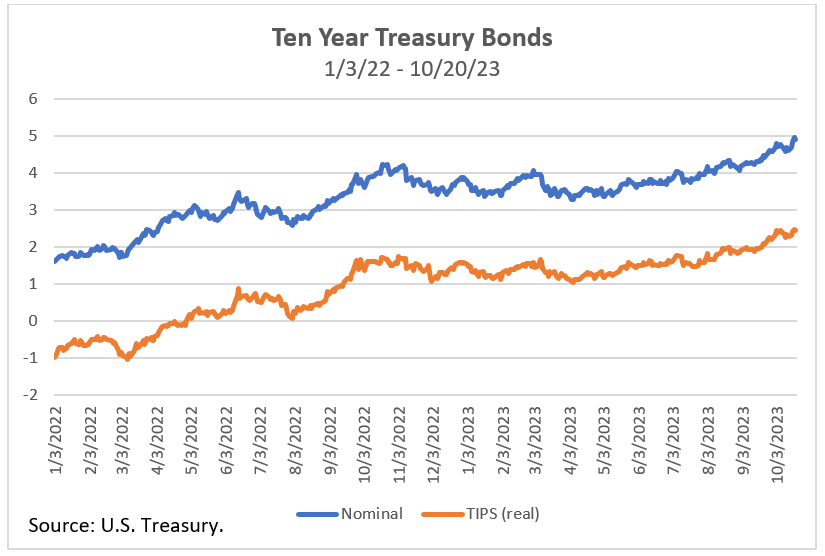
On October 24, 2022, precisely a year ago, we published an article by Allan Roth in Advisor Perspectives, The 4% Rule Just Became a Whole Lot Easier. The idea for that article came from a conversation that Allan and I had. I noted that real rates, as expressed by TIPS, were about 1.75%. I thought that it would be possible to lock in the proverbial 4% safe withdrawal rate. Allan did the analysis and found that, indeed, a 4.36% safe withdrawal rate was possible. That article received widespread attention throughout the financial media. Perhaps it even had a role in the introduction of BlackRock’s new suite of defined-maturity TIPS ETFs.
Investing for growth and investing for income shouldn’t be mutually exclusive. Learn how to build a personalized income strategy that balances immediate versus longer-term cash flow needs based on the investor’s unique situation.
Higher interest rates and inflation are likely to usher in a decade of policy restraint, limited liquidity and macro volatility, pressuring equities and motivating investors to reconsider tactical asset allocation and embrace real assets.
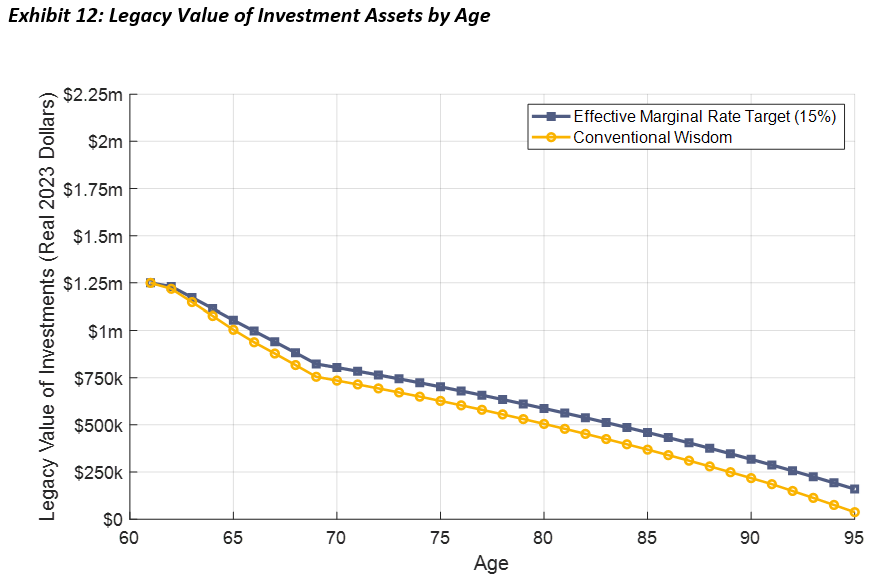
Research on tax-efficient retirement distribution strategies aims to sequence withdrawals from taxable, tax-deferred, and tax-exempt accounts to maximize after-tax spending. That can be either in terms of meeting an after-tax spending goal for as long as possible or preserving the most after-tax legacy after meeting spending needs over a specified timeframe.
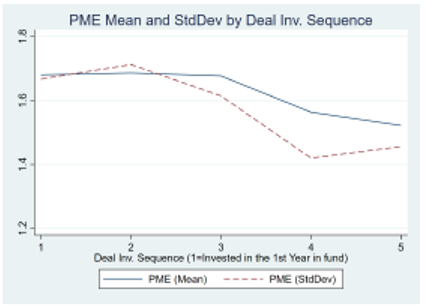
Private equity (PE) has become a staple of institutional portfolios, but its performance has often been disappointing. New research shows that the levels of specialization and portfolio diversification should be important considerations when selecting a manager to implement a PE strategy.