Our emerging market debt valuation metrics across all but the U.S. interest rate dimension remain unambiguously attractive. In our Quarterly Valuation Update, we provide our Q3 assessment.
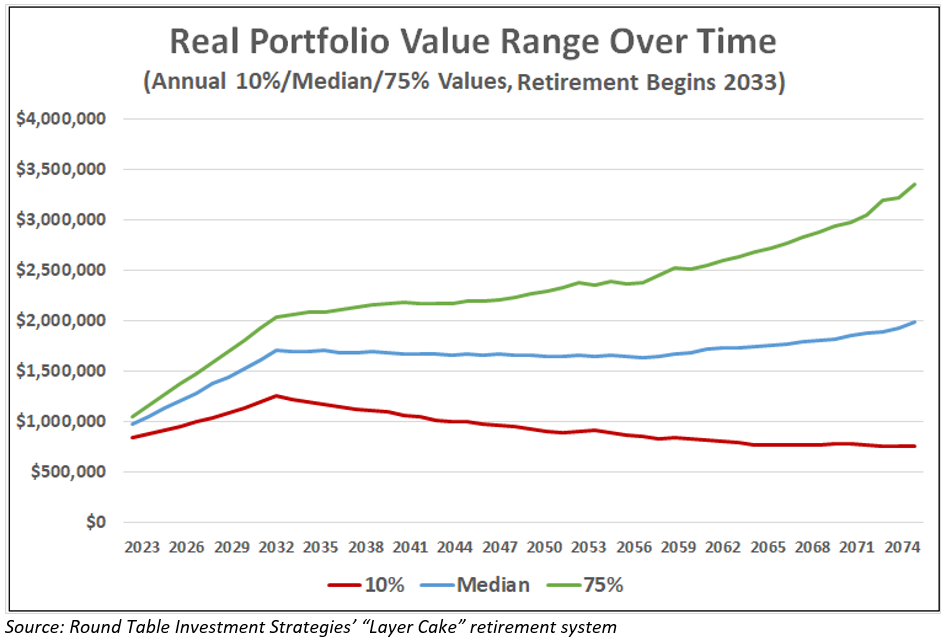
I previously discussed a method of applying long-run, risk-return insights to a goals-based approach to retirement investing. This article considers how to extend the process into the pre-retirement years.
Greater stability in US Treasuries is needed for the smooth functioning of other segments of the financial market, housing and the economy more broadly, both in America and beyond.
Restrictive monetary conditions, from higher yields and tighter lending conditions, are the Fed’s “Waterloo.”
It feels like Groundhog Day, with yet another challenging quarter for muni investors. The index was down about 4%, bringing year-to-date returns to –1.4% for the year. So what happened in August and September?
I was asked a pretty good question following an internal meeting late last week. The question started out by noting that we have been promoting going longer on the curve for a while now and then asking why we think longer-term rates will come down.
Term premiums have been on the rise, but should investors be concerned? Stephen Dover, Head of Franklin Templeton Institute, explains what term premiums are, and why they are worth paying attention to.
The latest inflation report raises the odds of further Federal Reserve action.
With next week’s 3Q GDP report shaping up to be a blockbuster number (the Atlanta Fed GDPNow is tracking a +5.4% growth rate), it is worthwhile to reiterate our thoughts on the economy and how we expect growth to unfold over the next year.
We have been looking at big historical/economic/political cycles for the past two months.
While surface-level economic data appear resilient, details below the surface are mixed.
Homeowners, drivers and other individuals in the marketplace for insurance, have a host of factors to consider to make sure they are appropriately covered in the event of a death, accident, or other untimely event, advisors shared in interviews with VettaFi.
As investors face continued macroeconomic and market uncertainty, evolving the 60/40 portfolio of stocks and bonds to include alternative investments may help build portfolio resiliency.
The long history of business cycles illustrates that rising inflation precedes recessions. Inflation accelerations don’t just happen, they are caused.
Selloffs in Treasuries are compounded by the real loss in the purchasing power of the dollars they are denominated in.
The Federal Reserve (the Fed) has made some relatively painless progress thus far in its inflation fight. Some other prominent economists have walked back their forecast for a near-term recession.
The U.S. economy’s remarkable resilience is complicating the lives of investors and the Federal Reserve. Despite war-disrupted commodity markets and one of the most aggressive monetary tightening phases in modern history, economic activity has remained strong.
The popular 60/40 portfolio isn’t dead, and in fact is a significantly more compelling investment than cash over the coming decade, according to JPMorgan Asset Management.
Are markets actually set for a recession? That was the narrative that dominated entering 2023, but with just several weeks left, it hasn’t materialized.
Some investors are considering making tactical tilts to their fixed income portfolios to take advantage of the current high-yield environment.
We hear and read daily analysis on how inflation is coming down and that the Federal Reserve (Fed) has beaten inflation. This is probably very close to the truth from an economics point of view.
Jeff and Ron Muhlenkamp give an update on the relevant economic indicators impacting investments. They also provide their thoughts on inflation, the possibility of a recession, and a list of things “broken” by the Fed due to it raising interest rates.
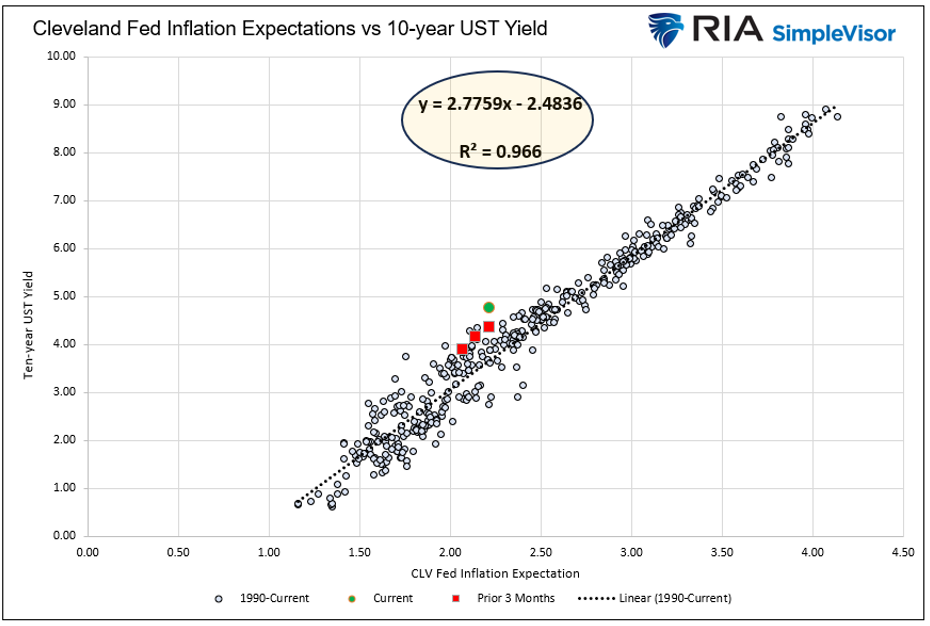
This article discusses one of my favorite bond fair-value models to show you the true bond-yield signal.
The US Federal Reserve’s efforts to quell inflation have sent long-term interest rates to their highest level in a generation, putting a lot of stress on banks, companies and anyone looking to finance a new home.
US retail sales exceeded all forecasts and industrial production strengthened last month, fresh evidence of a resilient American consumer whose spending is helping stabilize manufacturing.
The Federal Reserve faces potential policy pitfalls ahead as it wrestles with how to respond to investor angst about the US government’s $33.5 trillion mountain of debt.
Treasury-market liquidity has mostly righted itself since the dislocations caused by the several regional bank failures in March, according to a Federal Reserve Bank of New York economist.
With lots of chatter in the United States around the potential for a soft landing, Jeff Schulze, Head of Economic and Market Strategy at ClearBridge Investments, shares his thoughts on the matter and the overall state of the US economy in our latest “Talking Markets” podcast.
Interest expense is a large and growing issue for both the economy and stock market, which reinforces why investors should stay up in quality amid interest-rate-driven headwinds.
As the “soft landing” narrative grows, the risk of a “crisis” event in the economy increases. Will the Fed trigger another crisis event? While unknown, the risk seems likely as the Fed’s “higher for longer” narrative is compromised by lagging economic data.
Howard Marks, the legendary credit investor and Oaktree Capital Management co-founder, has historically taken a humble approach to investing: the macro future is essentially unknowable, so active investors should focus on the small-picture things where they can gain an informational advantage.
A robust earnings season could be all it takes to fuel a year-end rally on Wall Street, eclipsing recent jitters from geopolitical tensions.
As Woody Brock explains, the fact that structural changes do exist, and that historical data are often of limited relevance presents a major opportunity for investors seeking to outperform others.
Municipal bonds sold off considerably in September alongside vastly rising interest rates.
A run of shrinking quarterly profits may finally end soon, but it's probably not time to break out the champagne just yet.
In a year in which active strategies have done so well via allocator interest, as well as with their own returns, an active ETF could make a very good addition.
Value-conscious, historically-informed, full-cycle investors place a great deal of emphasis on the relationship between the price an investor pays today and the cash flows they can expect to receive in the future. The reason is simple.
The High Yield Bond category is up 5.9% through September, ranking it among the best performers in the fixed income space. Payden & Rygel’s Jordan Lopez and Nick Burns outline three factors contributing to the market’s strength.
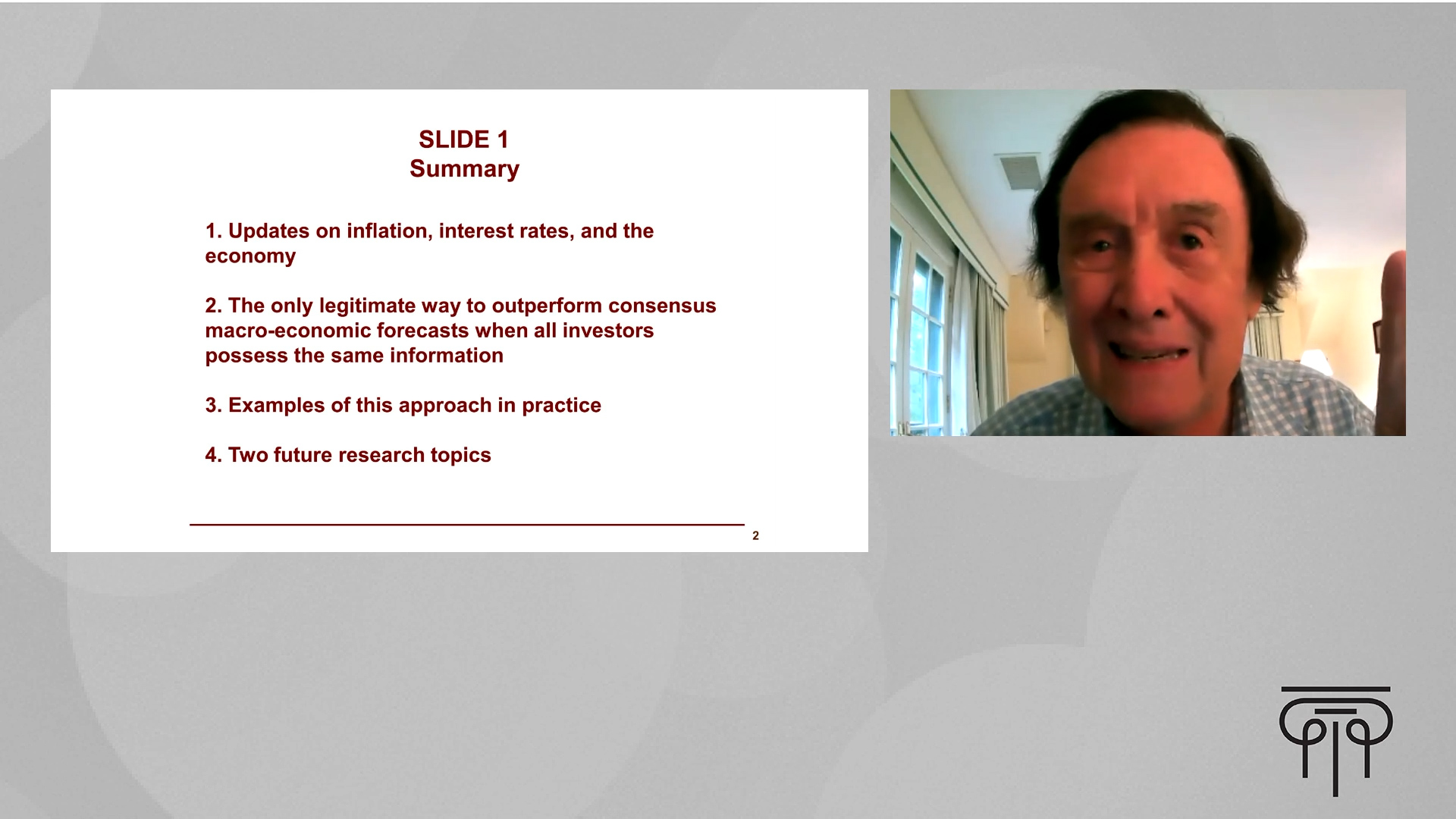
This is an interview by Robert Huebscher, founder of Advisor Perspectives, with Woody Brock. In it, they discuss four topics: (1) an update on inflation, interest rates, and the economy; (2) the only “legitimate” way to outperform consensus macro-economic forecasts when all investors possess the same information; (3) examples of this approach in practice; and (4) Woody’s two future research topics.
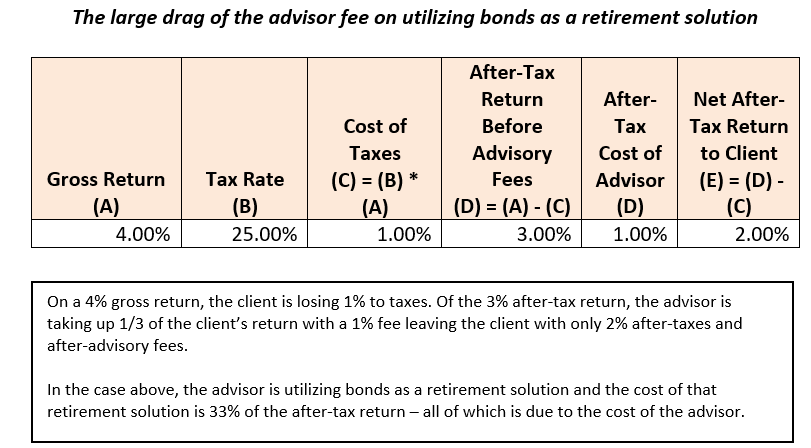
The choice to use an advisor in retirement is one that will cost clients and their beneficiaries millions of dollars in fees and opportunity costs as I show in this article.
While a goals-based approach divides a retiree’s liabilities (future spending goals/needs) and assets into separate pieces with separate mandates, it can be useful to see how they all stack together.
Psychology in markets is always fascinating. In February 2009, I wrote “8 Reasons For A Bull Market.” While in hindsight, it is easy to see that was the right call, overall, psychology was highly negative at the time.
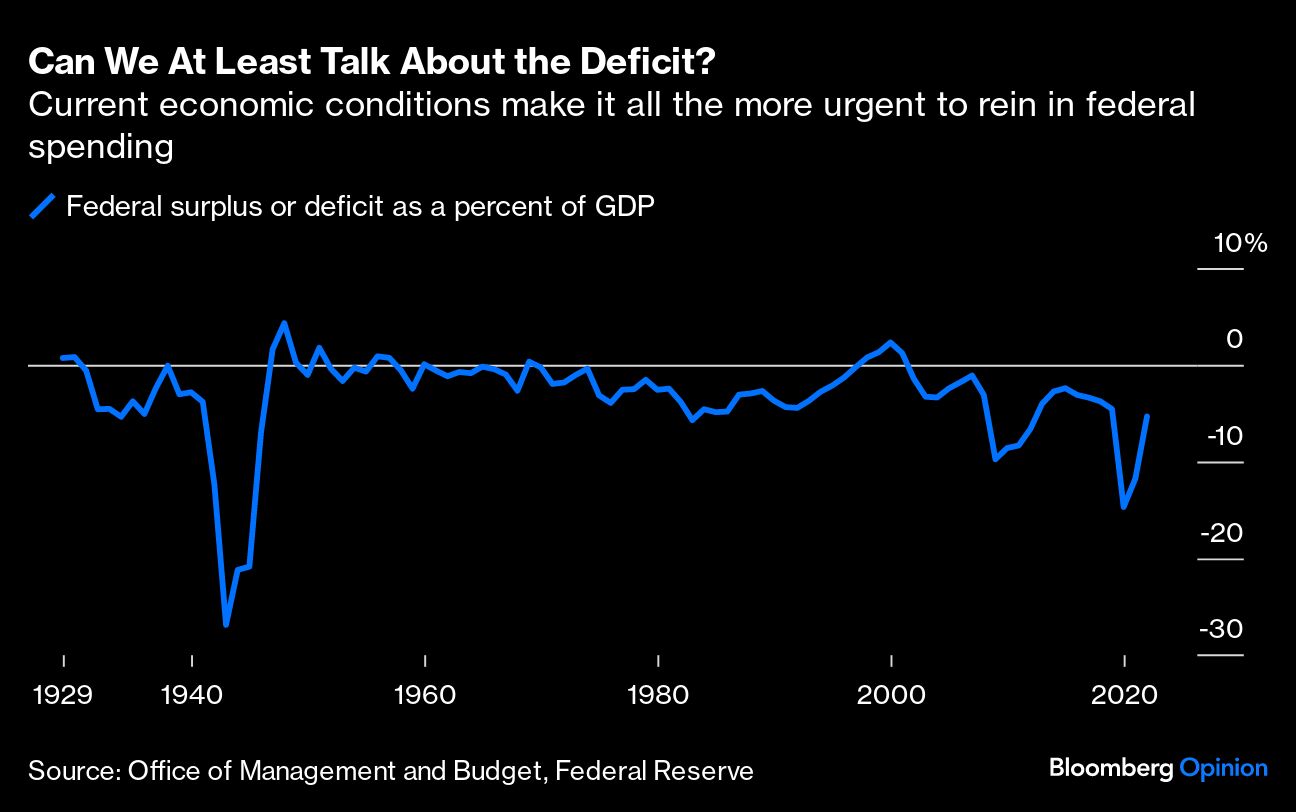
A decade ago, the US was deep into a misguided elite-driven freakout about the federal budget deficit. Back then, inflation was low, interest rates were low, and unemployment was high.
The outlook for earnings is weakening and could remain subdued, according to strategists from Morgan Stanley to JPMorgan Chase & Co.
Investors are growing more confident that a year-long slump in profits for Corporate America is about to end. Yet a fragile economic outlook, wary consumers and the highest interest rates in 16 years mean any relief for stocks could be short-lived.
Franklin Templeton Fixed Income Research Analysts Ashley Allen and Bryant Dieffenbacher discuss the food, water and energy sectors and what their convergence means for investors.
Our September Cyclical Forum was the first to be held in London, where the economic situation today reflects what’s happening around the world.
With oil prices trending higher, among other factors, market participants are bracing for a renewed round of elevated inflation. That could stoke renewed interest in traditional inflation-fighting asset classes, but investors may not want to overlook the ability of Bitcoin to act as inflation protection.
Even prior to this week’s spike in oil prices associated with renewed tensions in the Middle East, last week was ramping up to be a big week for electric vehicles (EVs) and their supply chain.
We see promising potential in countries with younger populations and forward-looking policies, such as India, Indonesia, and Mexico.