As private equity investment in health care has surged to almost $1 trillion over the past decade — funding new technologies, clinical trials and more — a lack of transparency has made it hard to assess whether the industry is also putting patients at risk.
There are many historical relationships within financial markets based on sound economic theory, which accordingly repeat cycle after cycle. High yield bonds and small cap stocks typically move in line with each other, but the two have diverged since 2022.
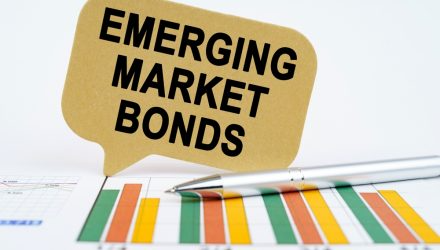
Despite the falling yield spreads, investors continue to bet on rising prices in emerging markets (EM) bonds.
Our outlook on the 11 S&P 500 equity sectors.
Survey after survey has been indicating that Americans feel worse off today compared to the recent past; so much so that many of them indicate the economy is currently in recession, that the rate of unemployment is the highest in several decades, that inflation is very high today, etc.
Portfolio Manager John Lloyd discusses two important considerations for investors who feel like they may have missed the market rally.
VettaFi’s Head of Research Todd Rosenbluth discussed the abrdn Bloomberg All Commodity Strategy K-1 Free ETF (BCI) on this week’s “ETF of the Week” podcast with Chuck Jaffe of “Money Life.” The pair talked about several topics regarding the fund to give investors a deeper understanding of the ETF overall.
As measured by the Russell 2000 Index, small-caps have offered barely any upside this year.
In this article, I provide a basic framework for understanding and developing a lifelong plan for a person with disabilities. I’ll introduce matters as they relate to establishing a well thought out and comprehensive plan that ties together life, public benefit, and resource planning as well as financial and legal planning.
Data is important but not everything. Perceptions matter, too. Today we’ll look at how people feel inflation and what it may mean in the years to come.
While the money and bond markets continue their Fed-watch saga, there is one constant that we have been emphasizing for the fixed income landscape: a new rate regime.
Few investments pay off as well as time spent pursuing financial history – to paraphrase George Santayana only slightly: study the past in order to prevent it from picking your pockets.
Discounted municipal bonds could expose you to unexpected taxes. Here's what to know before you buy.
David Dali, Head of Portfolio Strategy, provides his 12-month outlook for global equity markets.
For more than two decades, America has pursued a policy as costly as the New Deal of the 1930s or the Great Society of the 1960s, but with a much narrower aim: cut taxes.
As calls for diversification get louder, it’s a good time to look at healthcare, where long-term bullish trends meet near-term opportunities.
Andy Rothman says China’s moves to address key challenges in its housing sector mark a significant shift from its stance of downplaying problems and signal that further positive macro measures may be on the way.
Companies going bust, mounting credit card debt, higher mortgage bills.
Predicting Fed rate changes may be an inexact exercise, but understanding how the tools that do track it work can help investors weather uncertain markets.
Our actively managed equity funds that employ machine learning (ML)—and their shareholders—are starting to benefit, according to Cesar Orosco, CFA, and Scott Rodemer, CFA, of Vanguard’s Quantitative Equity Group (QEG). The group develops quantitative models that attempt to replicate what a good fundamental investor would do, but systematically and at scale.
Since the Global Financial Crisis of 2007-09, fixed income investors have suffered the worst of both worlds. For a dozen years they endured the stingiest of yields on their fixed income holdings.
Market factors are constantly changing and require monitoring, analysis, and flexibility by the investors when it comes to choosing appropriate investments.
Personalized messaging has a powerful impact. Our Kevin Murphy believes it is time for the financial services industry to deliver personalized solutions and advice.
The highlight of last week was a showdown between two of the major forces in the markets: AI earnings vs. economic data.
Last week, the SEC approved the initial regulatory filings for spot ethereum ETFs to trade on various U.S.-based exchanges.
Jamie Dimon said he expects problems to emerge in private credit and warned that “there could be hell to pay,” particularly as retail clients gain access to the booming asset class.
Treasuries pared this week’s sharp losses Thursday after inflation gauges in the US first-quarter economic growth data were unexpectedly revised lower.
The semiconductor industry is a strange field. Play your cards right, and you can turn $60 billion or so of annual revenue into a $2.62 trillion business. Do things differently, and roughly the same volume of sales might translate into $44 billion of market capitalization.
As we discussed recently, Wall Street economists increasingly believe the risk of recession has fallen sharply.
As we set our sights on the summer, here are five dynamics that could drive the financial markets between Memorial Day and Labor Day:
Ross Riskin's op-ed examines the potential drawbacks of using glide path portfolios in 529 college savings plans, particularly during high-interest rate environments. He suggests that money market options may offer better capital preservation for funds needed during college enrollment, emphasizing the shift from growth to stability in investment strategies.
Our recent 529 Month webinar focused on how 529 plans are used, the impact on federal financial aid, and expanded uses. Here are some of the leading topics discussed.
Disruptive theme of the week: A confluence of factors have combined to make defense technology a compelling ETF investment theme.
VettaFi’s Head of Research Todd Rosenbluth discussed the Vanguard Total International Bond ETF (BNDX) on this week’s “ETF of the Week” podcast with Chuck Jaffe of “Money Life.”
Risk of a recession is abating as the capital markets could see interest rate cuts this year with signs of cooling inflation.
With the market seeming to skate by the trap door of extreme valuations and unfavorable internals without consequence, the push to new highs in the past few weeks has created the impression of a runaway advance.
The housing market looks to be on the road to recovery, but not without significant scarring for a considerable portion of potential homeowners.
The Alternatives symposium happens on Thursday, May 30 at 11 a.m. ET. The free event will provide CE credits and more to attendees.
We are free trade enthusiasts, in economic terms, even at a time when free trade has been losing some of its aura within the U.S. political system.
You might think that having an ADA-compliant website is only about adhering to legal requirements, but it can actually help your firm grow.
VettaFi discusses changes in the MLP/midstream investment product landscape.
Target Corp.’s sales slump last quarter marked the latest example of supposed softening in US consumption, making some stock-market investors jittery that recession could still be in the cards.
Sometimes industries want to be regulated. It’s not that they favor all of the associated restrictions, but that regulation means legitimation. The mere act of passing laws circumscribes some activities as deserving of legal protection.
After an underwhelming start to the year for US electric-vehicle sales, it might seem easy to conclude that the boom times are over. Sales were flat in the first quarter, Ford dramatically scaled back expansion plans and Tesla laid off 10% of its global workforce.
During ripping bull markets, investors often start benchmarking. That is comparing their portfolio’s performance against a major index—most often, the S&P 500 index. While that activity is heavily encouraged by Wall Street and the media, funded by Wall Street, is benchmarking the right for you?
I’m fresh off the plane from Las Vegas—and no, I wasn’t hitting the slots, though the city’s Harry Reid International Airport sure hit the jackpot with a record-breaking 57.6 million passengers last year.
Rather than dive into a vast pool individual bond options, these three ETFs can provide a low-cost and convenient option.
Check out this recent insight from T. Rowe Price on the importance of credit quality research in fixed income.
There is no question that Fed policy remains the primary force driving the money and bond markets for the third year in a row.
Investors in emerging-market equities haven’t typically paid much attention to the Middle East. It’s time to take a closer look.