With the Federal Reserve poised to begin cutting interest rates this year, the dollar may drift generally downward. However, its performance against individual currencies may vary widely.
What’s the most important price in the global economy? The price of oil? The price of semiconductors? The price of a Big Mac? More important than any of these is the price of money. For more than three decades it was falling, but now it’s set to rise.
The January effect, named for the market anomaly where stock returns in January are typically higher than in other months, has been a subject of interest since it was first documented in 1942.
Last Friday’s jobs report showed nonfarm payrolls up 216,000 in December, beating the consensus expected 175,000. Many are arguing that this was a huge number proving that the economy is not going into recession.
Risk assets surged to end 2023 as the Federal Reserve blessed market hopes for rate cuts. That momentum could persist for some time as inflation cools.
Making New Year’s resolutions usually involves some level of reflection on how to be a better person and the possibilities ahead.
The Federal Reserve is likely to cut policy rates this year less than the market expects, and the latest inflation report shows why.
If 2023 was all about the Magnificent Seven on Wall Street, this year is poised to usher in a broader array of winners.
Bond traders shrugged off higher-than-anticipated inflation readings for December, pricing in a larger total amount of Federal Reserve interest-rate cuts this year beginning in May.
A lot was going on with rates in 2023, yet, at the end of the year how different were things? The 10-year Treasury yield's lowest closing was 3.30%, while its highest close was 4.98%.
In this article, Russ Koesterich discusses why equity performance in 2024 may be more muted and warrant more focused positioning across segments of the market.
As we look ahead to 2024, the macroeconomic backdrop remains volatile and challenging. Inflation is still above central bank targets, developed world GDP growth is slowing, recession risks are high, and geopolitical risk is on the rise. Volatility creates opportunity for investors, however.
Join Macquarie Asset Management’s investment experts for an interactive discussion, answering some of the biggest questions on investors’ minds as we kick off the new year.
On this episode of the “ETF of the Week” podcast, Tom Lydon discussed the PIMCO Enhanced Short Maturity Active ETF (MINT) with Chuck Jaffe of “Money Life.” The pair talked about several topics regarding the fund to give investors a deeper understanding of the ETF overall.
The Federal Reserve won’t want a repeat of 2023 where 10-year Treasury yields soared from a low of 3.3% in April to peak at 5% in October — only to plummet back to 3.8% by year-end.
Let’s assume the US economy has achieved a rare soft landing, as Treasury Secretary Janet Yellen recently declared. The pandemic-driven disruption is over, jobs recovered, inflation contained.
The hype around US spot Bitcoin ETFs has reached meme levels akin to pandemic-era laser eyes: Crypto prices are soaring, hackers are mobilizing and Redditors are pumping. But the promise of game-changing, gold-like adoption looks like a meme too far.
US inflation accelerated in December as Americans paid more for housing and driving, challenging investor bets that the Federal Reserve will cut interest rates soon.
2023 proved to be another year when the consensus views were not correct. A few of these views that turned out non-prescient were that inflation would remain elevated in mid-single digits or higher, higher interest rates would crush housing prices, consumer spending would collapse, and oil prices would continue to rise.
Roaring inflation and rapid rate hikes have brought a welcome return of the kind of big swings and dislocations beloved by investing’s smart set, but it hasn’t been a blessing for every breed of quant.
While headline payroll growth was relatively strong in December, weaker details under the surface continue to paint a mixed labor market picture.
Will 2024 see AI continue to drive markets forward as forcefully as it did in 2023? That’s one of the big questions facing equity investors in a market shadowed by inflation and the lagging impact of high rates.
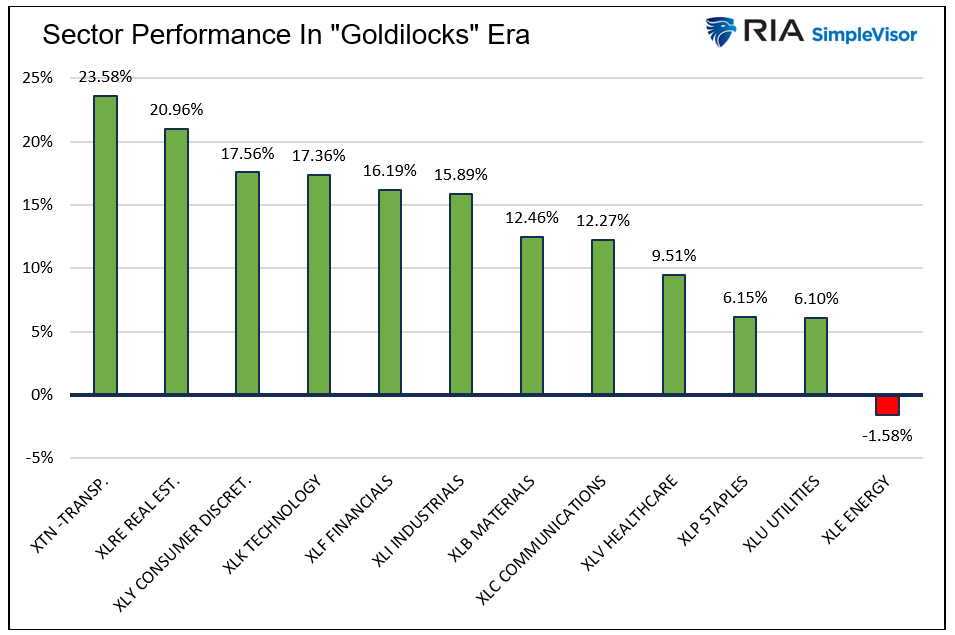
Today's popular narrative is a growing consensus for the Fed to engineer a soft landing and a “Goldilocks” economy.
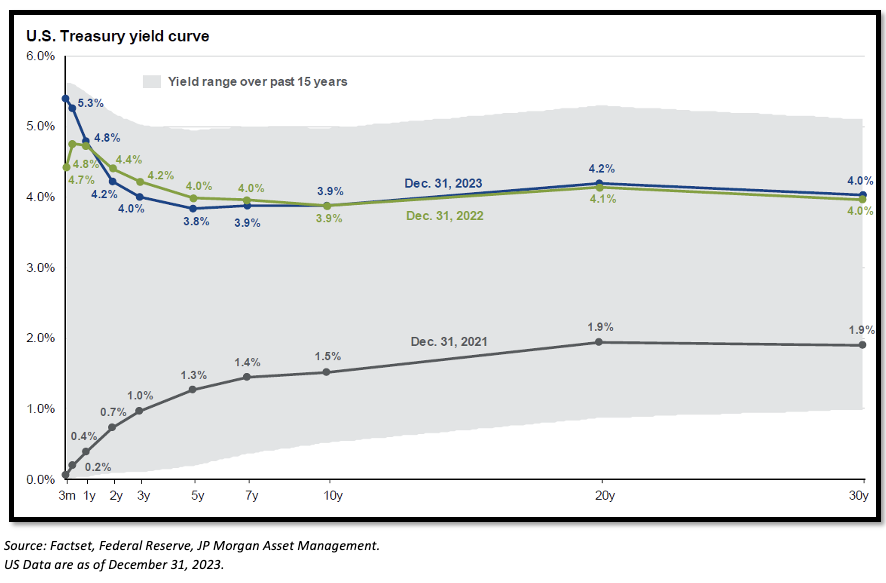
The turmoil in the bond market over the past three years has been dramatic. The yield on the benchmark 10-year Treasury has risen approximately 360 basis points since the beginning of 2021, and it nearly hit 5% in late October. That has caused investors to question the value and role of a fixed-income allocation within portfolios. But two nagging uncertainties – the Fed and inflation – should be less of a problem as we enter 2024. Despite the recent volatility and negative returns, there are clear and compelling opportunities for investors willing to take the long view and evaluate fixed income from a historical perspective.
In this piece we compare two ways to take advantage of the USD’s richness versus emerging market currencies: EM equities and EM local currency debt. We believe that for relative value, diversification, and potential alpha reasons, EM local currency debt deserves a prominent place in portfolios today.
Blackstone Inc.’s private equity fund for wealthy individuals is a harbinger of two trends that many expect will transform investment management in the next decade.
Advisor Perspectives has announced its Venerated Voices™ awards for commentaries published in 2023.
Geopolitical risk lashes the Magnificent Seven. The IPO machine roars back. Japan emerges as the world’s best developed market.
Rates are heading down, volatility will increase and there is a 75% chance of a recession in 2024, according to Jeffrey Gundlach.
Right around the start of November, two words suddenly disappeared from the chatter in the bond market: debt supply.
The 60/40 portfolio has long been the foundation of portfolio construction. But over the past two years, this portfolio strategy has broken down. The 60/40 portfolio faces several challenges. To understand what might lie ahead, investors need to assess both recent inflationary forces and historic trends.
The Federal Reserve (Fed) left the door so wide open after the end of the Federal Open Market Committee (FOMC) meeting in mid-December 2023, that markets have run ahead and have continued to push long-term rates lower since the decision was announced.
In December 2022, I published Sea Change, a memo that primarily discussed the 13-year period from the end of 2008, when the U.S. Federal Reserve cut the fed funds rate to zero to counter the effects of the Global Financial Crisis, to the end of 2021, when the Fed abandoned the idea that inflation was transitory and readied what turned out to be a rapid-fire succession of interest rate increases.
FIAs can provide a reliable "retirement paycheck" that can last as long as your clients are retired.
The monster run in equities and other risk assets that shaped the final stretch of 2023 has room to run well into the new year if inflation continues to ebb, according to strategists at BlackRock Inc.’s Investment Institute.
Stocks started 2024 with a limp. But that could change this week as earnings season kicks off and companies start announcing their plans for share repurchases, something investors hope will help the market keep last year’s rally running.
Heading into 2024, most economists and market analysts have adopted a baseline scenario in which most major economies avoid both a recession and renewed inflation – the much-desired "soft landing." But the current encouraging consensus could still be derailed by any number of factors, not least geopolitics.
The prevailing consensus in 2024 is that the Federal Reserve will cut interest rates. But predicting central bank moves is an inexact science. That said, fixed income investors could use the help of an active strategy to continue extracting higher yields.
2023 will likely go down in history as a year of extreme speculation. However, we believe there are once-in-a-generation investment opportunities for 2024 resulting from that overly speculative myopia.
It was a heck of a year for stocks. In 2023, tech led the way with a return of over 40%, leading to concerns about overvaluation in the sector. Nonetheless, past sector booms have been associated with volatile, but on average positive, future returns.
The conventional wisdom is that lower interest rates stimulate economic activity, and higher rates dampen it. But new research casts doubt on this hypothesis.
I wrote last week about how interest rate cuts in 2024 should boost cyclical areas of the economy that were already set to rebound, lifting economic growth.
Traders betting on a 2024 bond rally are unfazed by the recent pullback, seeing it as a chance to seize on elevated yields before the Federal Reserve starts driving down interest rates.
A stunning post from VisualCapitalist showed a poll of 8550 investors and 2700 advisors and the gap between the two of future portfolio return expectations. The poll was global; however, I will focus on this post’s domestic portfolio return expectations.
Markets rose last month, continuing November’s rally as interest rates pulled back even more on expectations of Fed rate cuts in 2024.
It’s forecast season again, the time when people like me tell people like you what will happen this year. Sadly, we are often wrong.
Bill Harnisch, whose $1.5 billion hedge fund delivered a market-beating 31% gain last year, is betting the recent bout of euphoric stock buying will peter out.
Private credit has in a little more than a decade evolved from a niche asset class to a key component of a diversified investment portfolio. We think it will be even more important in 2024 as banks’ reluctance to lend widens the opportunity set for investors.
In 2024, inflation, interest rates, and the presidential election will likely be on top of ETF investors’ minds. Here are four other lesser-known trends and insights — both positive and negative — to consider in 2024.
The long-awaited recession never materialized in 2023 as the sectors of the economy rotated from hot (i.e., travel and leisure) to cold (i.e., housing) over the last few years.
Bond yields are up—that’s good news for income investors, but secular forces still pose headwinds for inflation-adjusted returns. We think an efficient way to generate income is by carefully assembling mixes of interest-rate and credit building blocks—and incorporating private-market exposure for additional diversification and return potential.