The AI agent catalyst. Meta's September launch of Muse, a personal artificial intelligence (AI) agent designed to act on a user's behalf across digital workflows, crystallized the market's latest disruption narrative.
On July 24, China’s Ministry of Finance and State Taxation Administration announced that putting assets into an offshore trust, and earning income through one, are taxable events. The rate is 20%, and it applies not just when assets go in but also when they earn income and when the trust is wound down.
S&P 500 investors have doubled their bets on the top 10 stocks, so their performance is twice as dependent on those 10 stocks. Is that a good bet? Who knows, but it is a large bet. Time will tell.
Chips stocks and troubled artificial-intelligence bellwether CoreWeave Inc. are rising, helping stocks rebound after the worst week for the tech-heavy Nasdaq 100 Index since the tariff turmoil of April 2025.
There is a general framework to inflation, and it is older than any of us. Prices can rise because buyers are bidding for scarce goods with money they’ve actually earned. Or prices can rise because the cost of producing something has jumped for reasons unrelated to demand.
Corporate bond yields are high, but spreads are low. Low spreads are supported by strong corporate fundamentals, and high yields might help offset potential price declines.
Q3 was a period of transition in the bond market thanks to Federal Reserve changes, a surge of AI-driven debt issuance, and rising interest rates.
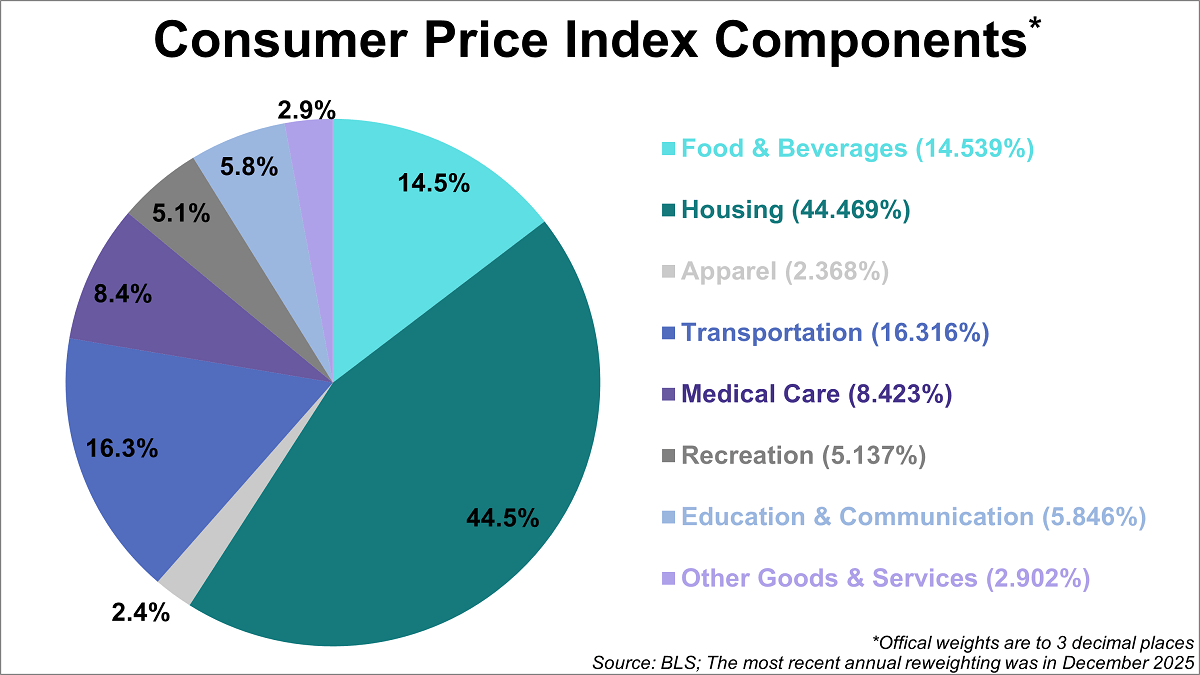
Inflation affects everything from grocery bills to rent, making the Consumer Price Index (CPI) one of the most closely watched economic indicators. The Bureau of Labor Statistics (BLS) tracks this by categorizing spending into eight categories, each weighted by its relative importance.
Global income strategies offer a compelling value proposition for investors: a steady stream of income generated from dividend-paying equities, government bonds and structured instruments like equity-linked notes (ELNs) from around the world.
The outlook for government policy, bond markets, and monetary policy appears less settled than it has been for much of the post-COVID period. The debate about public debt, the functioning of the Treasury market, inflation persistence, and the future path of interest rates has intensified. Global bond yields have been soaring.
Taylor Topousis and Christian Galipeau discuss high-conviction insights that go beyond media headlines.
Earlier last week, a supertanker loading crude in the Gulf of Oman was fixed at $1.01 million a day for a voyage to Asia, with another deal reportedly agreed at $1.16 million.
The market continues to hold near all-time highs despite pressure from higher bond yields. This week brought relatively little economic data, but the important takeaway is that the underlying economy still looks strong. High-frequency indicators, jobless claims and consumer spending data continue to point to solid growth, while this week’s CPI, PPI and retail sales reports will provide the next important test for both the economy and the Federal Reserve.
The Fed's recent rate increase may not develop into a hiking cycle as extensive as the one that began in 2022 because much of today's inflation pressure comes from supply constraints rather than broad economic overheating, where demand exceeds the economy's productive capacity.
ClearBridge Investments: With the economy still resilient, a gradual Federal Reserve hiking cycle could help broaden market leadership beyond the Magnificent Seven.
Stocks chopped this summer as high hopes for AI product and infrastructure development were offset by rising inflation and an increasingly hawkish Federal Reserve.
AI's labor-market impact remains limited but uneven, as productivity and profits outpace hiring and import-heavy investment dampens U.S. job growth.
As globalization recedes, governments and businesses have stronger incentives to invest in building more resilient societies and supply chains. That imperative has coincided with the emergence of artificial intelligence, creating a powerful interaction between technological innovation and economic security.
Market participants have been conditioned to expect clear Forward Guidance from Fed Chairs and Ben Bernanke, Janet Yellen, and Jay Powell provided it continuously, especially after the Financial Crisis. Chairman Warsh has made it clear that Forward Guidance will be less under his leadership, but he has offered a very important qualifier that many have yet to grasp.
We understand that you can’t forecast the sequence of returns, but we CAN build a plan that survives a bad one. As Howard Marks puts it, you can’t predict, but you can prepare. These are the rules of engagement once you’ve crossed from saving into spending.
If you only looked at the price of gold in September, you’d be forgiven for believing the bull market had run out of steam. The yellow metal fell 6.3% during the month, and some in the financial press were quick to say it had failed as a safe haven.
Markets await a possible Fed rate hike as Congress weighs Trump's dividend proposal, a limited fall session, and a Senate vote on crypto regulation.
Treasuries might look cheap against stocks, GDP and the global cycle, but on their own historical terms they have more to fall before they become oversold and ready for a durable bounce.
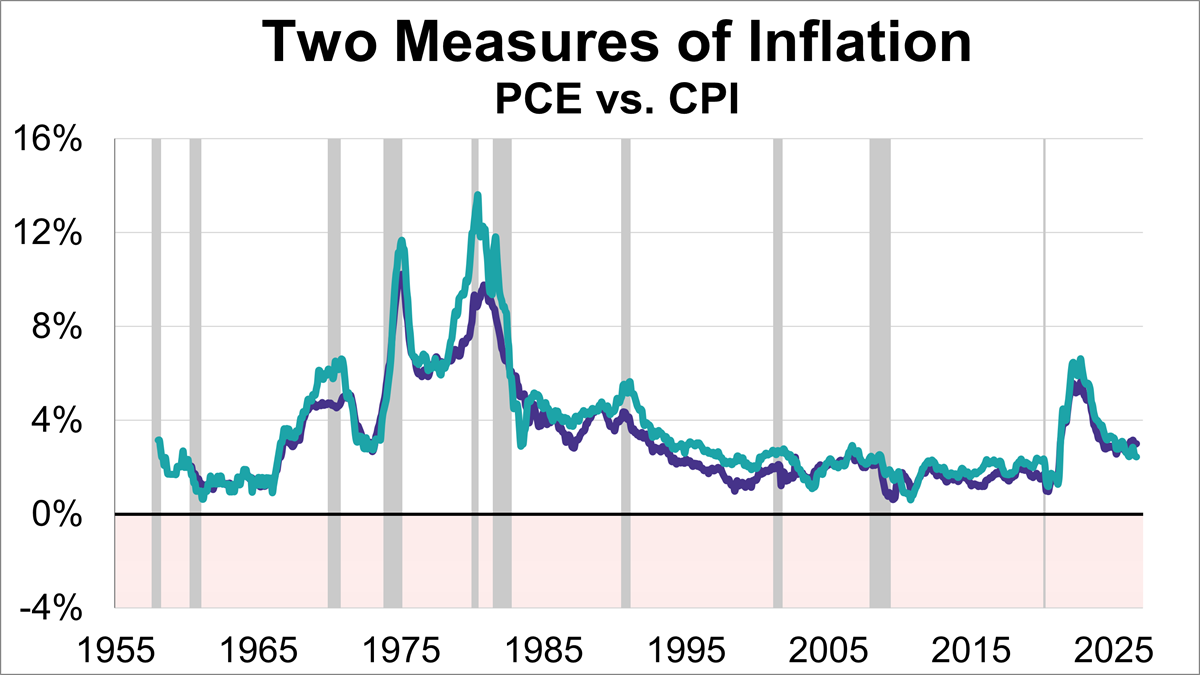
Inflation remains a hot topic, directly impacting everything from your grocery bill to interest rates. As of the latest data, two key inflation gauges — the Personal Consumption Expenditures (PCE) Price Index and the Consumer Price Index (CPI) — show that prices are still above the Federal Reserve's 2% target, with the core PCE at 3% and core CPI at 2.5%.
In the first quarter of this year, as the Strait of Hormuz closed and oil prices exploded, Berkshire Hathaway made a couple of moves that might have flown under people’s radars.It cut its stake in Chevron by roughly a third. Then it bought an airline.
The financial markets are navigating a storm. The Treasury yield sell-off intensified this week, pushing the 10-year Treasury yield up to an intraday high of 5.20%, its highest level since 2007.
The U.S. economy remains resilient despite headwinds including sticky inflation, trade instability and rising geopolitical tensions. State and local government tax revenues have followed suit and have posted solid growth, aided by robust equity market returns.
Doshi said gold holding $4,000 during the correction and later rallying to $4,700 before last week's Fed rate hike strengthened his conviction that the broader gold bull market remains intact despite continued headwinds from the Iran war oil shock.
LPL Research analyzes S&P 500 margin expansion, assessing how much is structural versus cyclical and what that means for future earnings forecasts.
Global growth remains resilient but uneven. In the United States, expansion is supported by private demand, a stable labor market and AI investment, while Europe and Japan continue to show surprising strength despite ongoing risks.
While the AI trade absorbs nearly all available investor attention, owning energy covers our absolute risk while creating the risk budget to cover the AI relative risk more effectively.
The Federal Reserve delivered the 25-basis-point increase the markets had largely anticipated, but the overall message was somewhat more hawkish than expected. The decision was unanimous, and the new dot plot points to another rate increase this year. Four participants apparently see the possibility of raising rates at each remaining meeting, so there is clearly a meaningful hawkish contingent on the FOMC.
Early this week, I was in Los Angeles at the All-In Summit along with about 4,000 others, including tech investors, money managers and entrepreneurs. The ticket wasn’t cheap, but it was well worth it.
Open any market commentary today and the conversation is dominated by giants. Mega-cap technology companies command outsized shares of major indexes, and the private markets tell a similar story, as we watch companies increasingly staying private well past the point where they once would have gone public.
With so much attention focused on what the Fed might do at its policy meeting this week, it’s a good time to look back at history to get a sense of how stocks might respond should policymakers hike rates as the market now expects. LPL Research had been characterizing the rate decision as a coin flip until Fed Chair Kevin Warsh’s hawkish comments at the Jackson Hole meeting and the strong August jobs report.
A week of rising oil prices and higher interest rates sent stocks lower across the board as investors increasingly priced in the likelihood that the Federal Reserve (Fed) will begin a rate-hiking cycle at its September 16 meeting. Following the August Consumer Price Index (CPI) report, futures markets implied an 88 percent probability that the Fed will, or at least should, raise rates at next week's meeting.
In our final chapter for this series, we will dig into that exact question. Unfortunately, there is good and bad news, and it can be summed up in a single sentence.
Last week, the refining margin on European gasoil, the benchmark that sets the price of diesel and heating oil across much of the world, closed at roughly $94 a barrel over Brent crude, according to Bloomberg data. That figure is normally somewhere between $12 and $18.
Market madness has never been hard to diagnose. It’s almost two centuries since Charles Mackay published Extraordinary Popular Delusions and the Madness of Crowds. Benjamin Graham pioneered value investing in the 1930s by inviting everyone to think of “Mr. Market” as a manic-depressive who makes mistakes that can be exploited.
While the name is new, Syzygy is not. Syzygy, formerly Research Affiliates, will extend our multi-decade sub-advisory relationships in asset allocation and long-only active equities and expand into other active diversification strategies in the coming quarters.
With so much attention focused on what the Federal Reserve (Fed) might do at its policy meeting next week, it’s a good time to look back at history to get a sense of how stocks might respond should the Fed hike rates as the market (barely) expects.
For much of the past decade and a half, investors saw little reason to favor bonds over equities. Yields were low and returns were muted, especially in passive strategies. Equities seemed to offer a much clearer path to long-term capital appreciation. For many investors, bonds were, at best, ballast: a dull but generally stable component of a broader portfolio. Then the experience of 2022 had investors questioning even that view, as areas of high quality fixed income generated equity-like losses that eroded much of the prior decade’s real return.
LPL Research analyzes rising U.S. debt, Treasury yields, and fiscal trends, highlighting implications for markets and investors.
Chapter 3 of this series ended with a simple question. If the math so plainly says avoid big losses, respect valuations, and mind your timing, why does so much of the industry preach the opposite?
The recent IPO of SpaceX and the anticipated IPOs of Anthropic and OpenAI are focusing attention on how to invest following a liquidity event. Here, we discuss several important decision points.
Should the recent value rotation be viewed as a regime shift-driven change in market preference, or a simple reversal trade? We think there is a compelling case to be made for the former. In a regime of higher interest rates and stubbornly above-target inflation, the market is increasingly focused on capex intensity, free cash flow conversion, and the cost of capital.
The first two articles in this series were about behavior. This one is about arithmetic. There are three numbers that decide most of your investing life. Let’s do the math Wall Street skips, one number at a time.
Equity markets stumbled this week despite an economic backdrop that continues to show signs of broadening. While concerns about consumer strain are mounting, those worries have so far been offset by ongoing strength in business investment, particularly spending tied to artificial intelligence (AI).
Something strange has been happening in America lately. The Wall Street Journal says this is the summer when the U.S. became “a nation of Luddites.” The Economist calls it “the Summer of Ludd.”
U.S. debt may not be at an immediate breaking point, but persistent deficits, higher rates, and rising interest costs are narrowing fiscal space and market tolerance.