New home construction in the US slumped in May to the slowest pace in four years, as higher-for-longer interest rates sap the housing industry’s momentum from earlier this year.
Portfolio Managers Guy Barnard and Greg Kuhl highlight how the shelter component of CPI is exerting downward pressure on inflation, paving the way for rate cuts – a tailwind for listed real estate.
The S&P 500 surpassed its 27th record high for the year this week—and still notching more (up to 29 already!)—driven by rising earnings, cooling inflation, and an economy that remains on solid ground.
A top risk for investors, elections may see a shift from centrist to more populist policy that could slow exports, raise inflation, and increase volatility in the global markets.
In the second half of the year, investors will likely be navigating a potential divergence in monetary policy among the major economy central banks, a more normalized U.S. interest rate regime, and an equity market that may favor quality.
The real estate sector has been hamstrung this year as the Federal Reserve has yet to deliver widely hoped for interest rate reductions.
You can’t sell the negative. Clients will vent negatives, but won’t buy them. You need to turn negatives into positives. Redirect Moving Away comments into Moving Toward Goals.
US retail sales barely rose in May and prior months were revised lower, pointing to greater financial strain among consumers.
The longer interest rates stay higher, the stronger the case grows for … a carbon tax.
Bitcoin touched a one-month low as outflows from digital-asset investment products and the prospect of higher-for-longer US borrowing costs sapped the cryptocurrency market.
Last week’s inflation data was very encouraging, with key indices like the Consumer Price Index and the Producer Price Index coming in below expectations. Stay up to date with the latest commentary from Professor Siegel.
For those of you who are not math geeks, ‘rise over run’ is the formula for the slope of a line. What does this have to do with the latest Federal Reserve (Fed) decision, you may ask?
On the latest edition of Market Week in Review, Investment Strategist BeiChen Lin and Product Operations Analyst McKenna Painter discussed the latest U.S. inflation data and how it could impact Fed policy. They also assessed when the BofE could begin lowering borrowing costs and concluded with an update on economic growth in China.
Economic indicators provide insight into the overall health and performance of an economy. They are essential tools.
Introducing a new asset class to RIAs is an intensive process, but one I believe is paramount to provide them with the solutions needed to address client goals. Private equity real estate is an increasingly important addition to any portfolio that can now be easily accessed and readily understood.
Wall Street strategists are rushing to raise their targets for the S&P 500 Index, but hedge funds are growing increasingly cautious about equities due to the Federal Reserve’s reluctance to cut interest rates, softer economic data and narrow stock market breadth.
A technical trading strategy with a perfect trading record this year is signaling that it’s time to sell long-maturity Treasuries after a rally last week.
The Federal Reserve will begin a review of its monetary policy framework later this year, including a potential reconsideration of the ways it communicates with the public. Of great interest is the fate of the dot plot, an anonymous collection of policymakers’ interest rate projections that generates considerable attention each quarter on Wall Street.
There’s a lot of bubble talk around US stocks. The market has been on fire in recent years. The S&P 500 Index has more than doubled in value since bottoming in March 2020 on Covid fears. It’s also up 14% a year since 2010, including dividends, nearly 5 percentage points a year better than its long-term annual return.
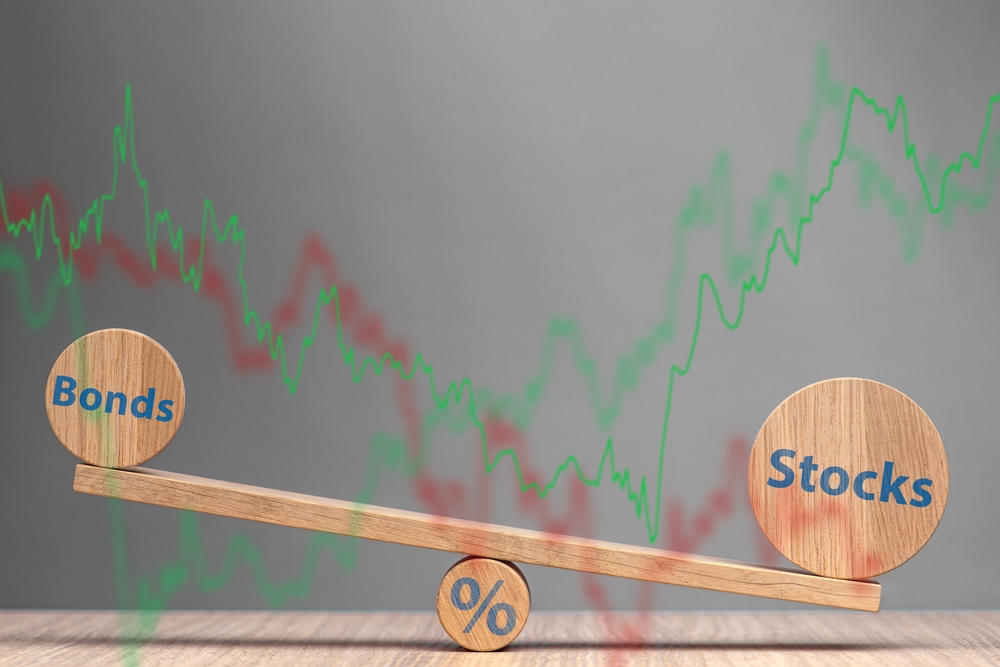
In periods of positive stock/bond correlations, the case for diversified sources of return is much clearer. With stocks and bonds now showing their strongest positive correlation in almost 30 years, the natural diversification and risk protection that a traditional 60/40 portfolio offers is open to question.
You know I’m highly concerned about government debt in the developed world, particularly the US. I’ve said for years a crisis is coming. We’ve blown right past all our chances to avoid it. Now all we can do is imagine what the crisis will look like… and how much it will hurt.
The Northern Trust Economics team shares its outlook for U.S. growth, employment, interest rates and inflation.
The shift in consumer behavior toward buying more discretionary items is attributed to the deceleration of inflation, according to Costco management.
Good news on U.S. inflation in May did not sway the Federal Reserve to signal interest rate cuts could come sooner.
It’s certainly a challenging time to be an investor. It's probably why a call for caution and diversification seems to be getting louder.
Despite a seemingly Hawkish stance, a closer look suggests the Fed’s conservative inflation estimates could lead to more rate cuts than anticipated.
Today, the Fed made it clear there’d be fewer rate cuts in 2024, most likely one or two, with a start more likely after the election than before. Meanwhile, the Fed made a mess out of explaining its logic for their new path forward.
Confidence is up, but inflation and other worries offer ways to work toward better outcomes.
The Federal Reserve’s move to signal fewer interest-rate cuts this year deepens its divergence from peers who have already begun to ease.
The further acceleration and broadening of corporate profit growth supports RBA’s bullish near-term outlook for many regions and sectors of the stock market. However, when constructing portfolios, it has paid to separate the equity asset allocation decision from the equity selection decision.
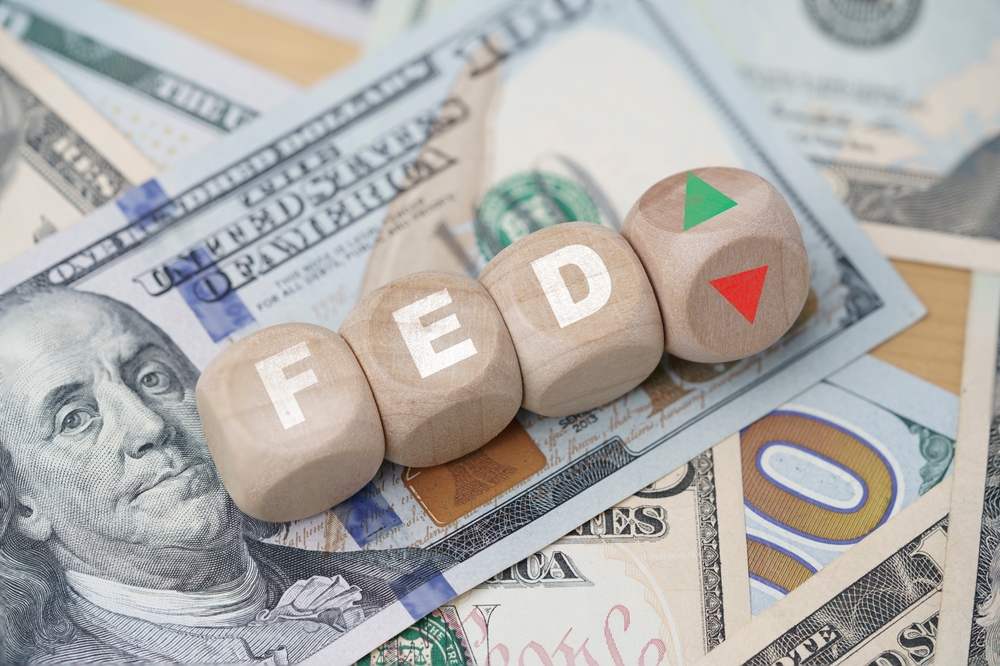
As expected, the Federal Reserve kept its policy rate unchanged at the June meeting, but left the door open to rate cuts later this year if inflation declines.
Inflation is not fun. And—for the past 30 years—it has largely been a non-issue for consumers. That dynamic has changed. The relevant question is whether this is something persistent and meaningful or simply a fleeting feeling.
Many investors and advisors take rebalancing for granted because it’s often done behind the scenes
The utilities sector has outperformed most of the other sectors in 2024, and there are some very specific reasons why.
The updated projection shows the likelihood of one rate cut by the end of 2024.
Bond traders loaded back up on interest-rate-cut bets — and even the pushback coming out of the Federal Reserve did little to shake their conviction.
When the Hunt brothers cornered the silver market in 1980 by amassing a huge cache of the precious metal, jeweler Tiffany & Co. ran an advertisement in the New York Times denouncing the move: “We think it is unconscionable for anyone to hoard several billion, yes billion, dollars worth of silver and thus drive the price up.”
The last 15 years have been a magical time for the stock market — but don’t count on it lasting. While US stocks may indeed have the bright future markets currently predict, the cost of growth will be more volatility.
VettaFi discusses spot ether ETFs, spot bitcoin ETFs, and the crypto ETF universe.
Once again, the Fed kept rates unchanged at the June FOMC meeting. As a result, the Fed Funds trading range remains in the 5.25%–5.50% band that was introduced in July last year, and still resides at a more than 20-year high-water mark.
Certain segments of the economy and stock market have experienced much stronger recoveries this year, underscoring a severe bifurcation between the "haves" and "have nots."
India’s equity markets have experienced strong growth and momentum, with rising incomes and political stability contributing to the country’s potential for accelerated growth.
Mexico has momentum to meet demands from reshoring.
The investment landscape has proved remarkably resilient thus far in 2024 given several headwinds including inflation, interest rates, and the unsettled geopolitical situation. Fortunately, employment remains solid, and companies continue to deliver improved profit growth.
We are moving our first federal funds rate cut to September of this year compared to our current July call although we are going to get more information from Federal Reserve officials after the release of the Summary of Economic Projections and the new ‘dot plot’ on June 12.
Let's do some analysis of the Consumer Price Index, the best-known measure of inflation. What does inflation mean at the micro level — specifically to your household?
It is always interesting when commodity prices rise. The market produces various narratives to suggest why prices will keep growing indefinitely. Such applies to all commodities, from oil to orange juice or cocoa beans. For example, Michael Hartnett of BofA recently noted.
Wednesday is shaping up to be a doozy in the US bond market. Following the release of the consumer price index at 8:30 a.m. in Washington, investors will turn to the Federal Reserve’s policy rate decision at 2 p.m., which includes an update to policymakers’ carefully scrutinized economic projections.
A key measure of underlying US inflation stepped down for a second month in May, a pleasant surprise for Federal Reserve officials looking for signs that they can start to lower interest rates.
If there’s one corner of the equity market that’s trying investors’ patience, it’s small-caps.