Given the dominance of inflation in today's capital markets discussion, it should be no surprise to anyone watching this video that one of the most common questions I get is, “How do I inflation-protect my portfolio?” And that's what we're going to focus on today: what to think about when you're thinking about inflation protection.
Will he, or won’t he? That’s the question many people have been asking of Russian president Vladimir Putin with regard to a possible invasion of Ukraine.
Most analysts expected some action on interest rates from the U.S. Federal Reserve in 2022 — but maybe not the five rate hikes they’re now pricing in. Inflation was clearly driving upwards, but we’re seeing much higher, more consistent price increases.
Stephen Dover shares insights on investing in fixed income in a rising-rate environment with Walter Kilcullen, Head of US High Yield for Western Asset Management, and Reema Agarwal, Head of Floating Rate Debt for Franklin Templeton Fixed Income.
No, we did not run out of titles.
A crash to Earth for growth stocks and cryptocurrencies is one thing, but a sharp decline in mainstream bond mutual funds could spell enormous trouble. Signs are emerging of the beginnings of a potential downward spiral in these funds, which could ultimately lead to redemption halts and subsequent panic by retail investors.
Rather than attempt to follow every twist and turn of the geopolitical drama, or all the excitement in Washington, it might be best to focus on the most vital commodity market — liquidity.
John Vail, Chief Global Strategist at Nikko Asset Management, discusses the waves of unease in our current markets due to inflation and talks of interest rate hikes and quantitative tightening, as well as how investors can best position their portfolios to ride out the waves.
The Northern Trust Economics team shares its outlook for inflation and how the Federal Reserve will react.
With inflation running at multi-decade highs, major central banks get ready to tighten monetary policy.
Crypto proponents have argued for years that regulators shouldn’t apply decades-old rules to the burgeoning asset class. But in a move with sweeping implications for the industry, at least one prominent company is now planning to register its offerings with the Securities and Exchange Commission.
The financial markets have been on tenterhooks lately for two main reasons: Russia and rate hikes.
The recent guidance provided by the U.S. Treasury Department on transaction reporting by crypto companies is shining some light on staking -- one of the least understood but hottest corners of the digital-asset world.
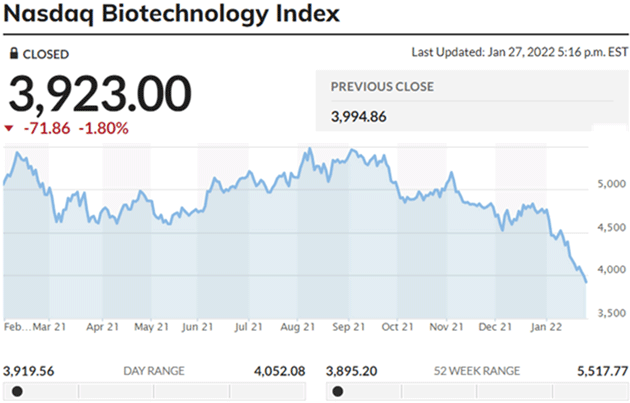
In recent weeks, it has felt like the U.S. stock market slips a gear every so often, dropping sharply as investors search for traction in uncertain terrain.
Why is it so hard to accept that speculative bubbles can burst?
The Federal Reserve signaling a shift in monetary policy is causing a shift in the markets that have run hot on many years of stimulus and low rates.
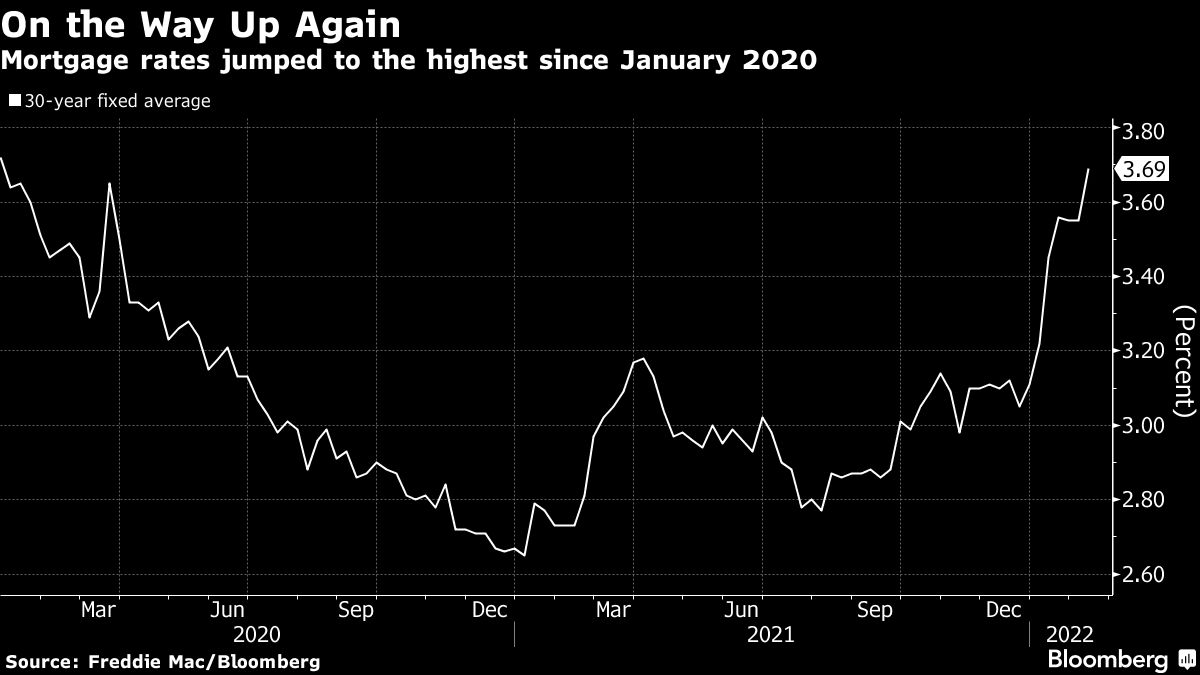
Mortgage rates in the U.S. jumped to the highest level since January 2020, before the pandemic rocked financial markets.
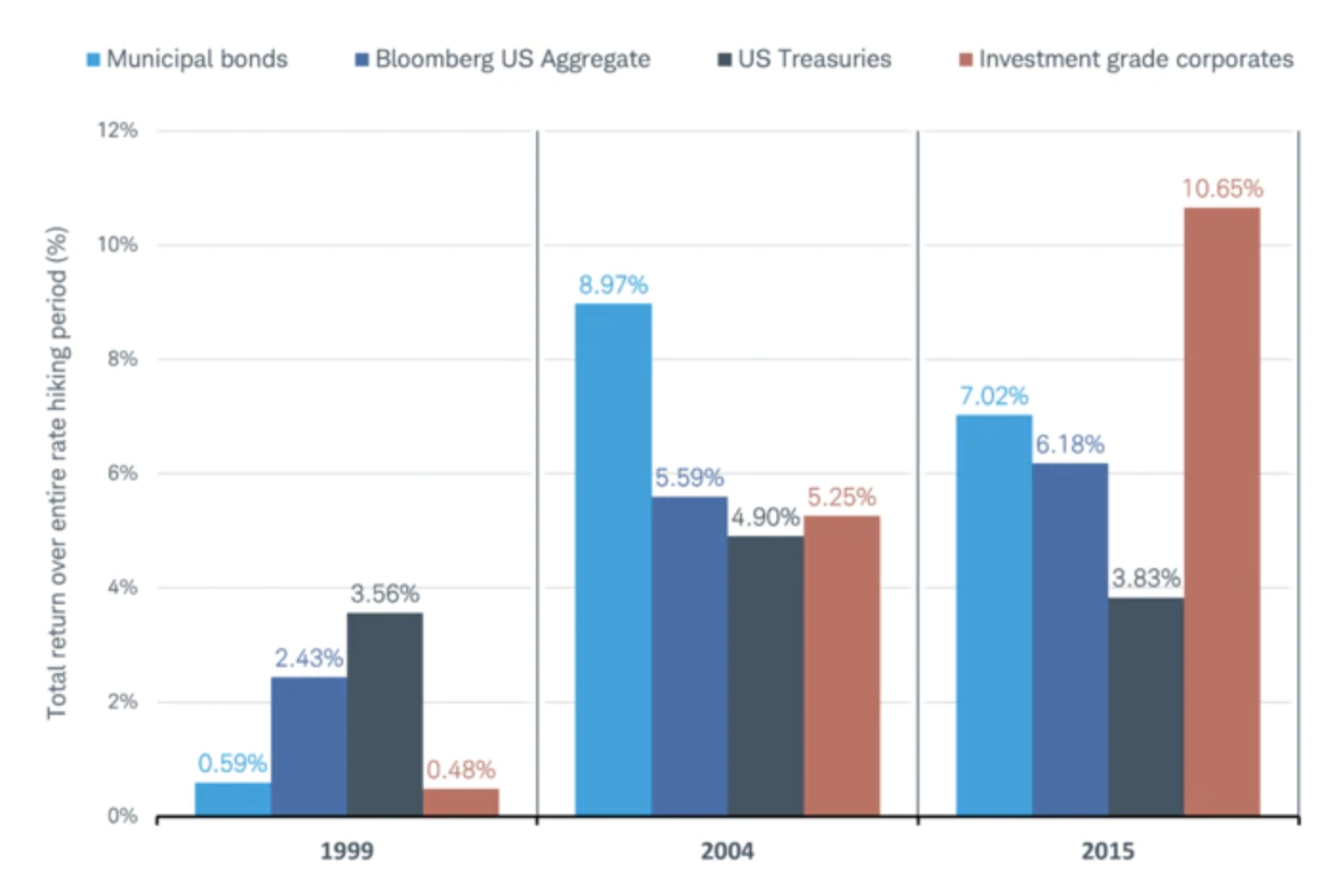
As we examine the municipal bond “board” at the start this new year, it looks to us to be a more challenging one than a year ago. More like chess than checkers. Winning will likely require a more complex, multi-faceted strategy than in 2021.
U.S. consumer prices surged in January by more than expected, sending the annual inflation rate to a fresh four-decade high and adding more urgency to the Federal Reserve’s plans to start raising interest rates.
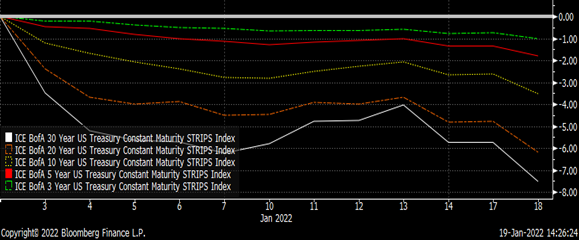
We may not be in a bond bear market, but we are in a bearish market for bonds. A dangerous one, even.
The spreading global bond rout is spurring a Wall Street debate on whether investors will demand to be paid for lending to the American government like they used to.
With demand waning and supplies increasing, the housing market is in for a lot of pain. Low interest rates have been a boon to housing, making mortgages more affordable and allowing consumers to refinance existing loans, with many of them tapping the equity in their homes for extra cash.
Market volatility is a given, but that doesn’t make its inevitable appearance any less stressful.
As investors brace for an increasingly aggressive Federal Reserve, money is flooding into cash-like ETFs -- which are seen as relatively less vulnerable to interest-rate risk. Traders have been piling into exchange-traded funds mostly focused on ultra-short instruments like Treasury bills, while offloading ETFs tracking longer-dated debt -- even those that are considered short-term bonds maturing in five years or less.
For a year and a half, Chinese authorities have been trying to reduce property prices, leverage, and the economy’s dependence on the real estate industry. As defaults and distress spread, from China Evergrande Group to Kaisa Group Holdings Ltd. and others, the first signs of a shift toward policy easing emerged last year.
The prospect of rising interest rates has clouded the outlook for global bond investors in 2022, but it’s not all bad news.
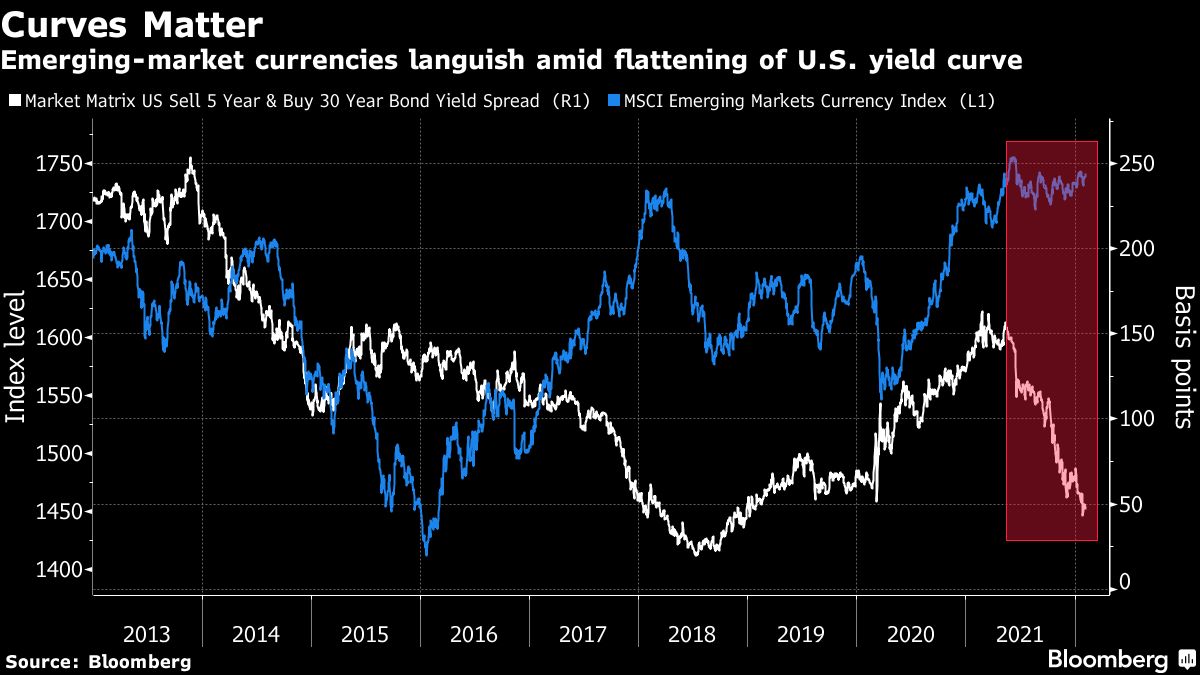
Concerns that the Federal Reserve may overshoot with faster interest-rate hikes that could slow the economy have led to a flattening of the U.S. yield curve -- with shorter-dated yields rising at a faster pace.
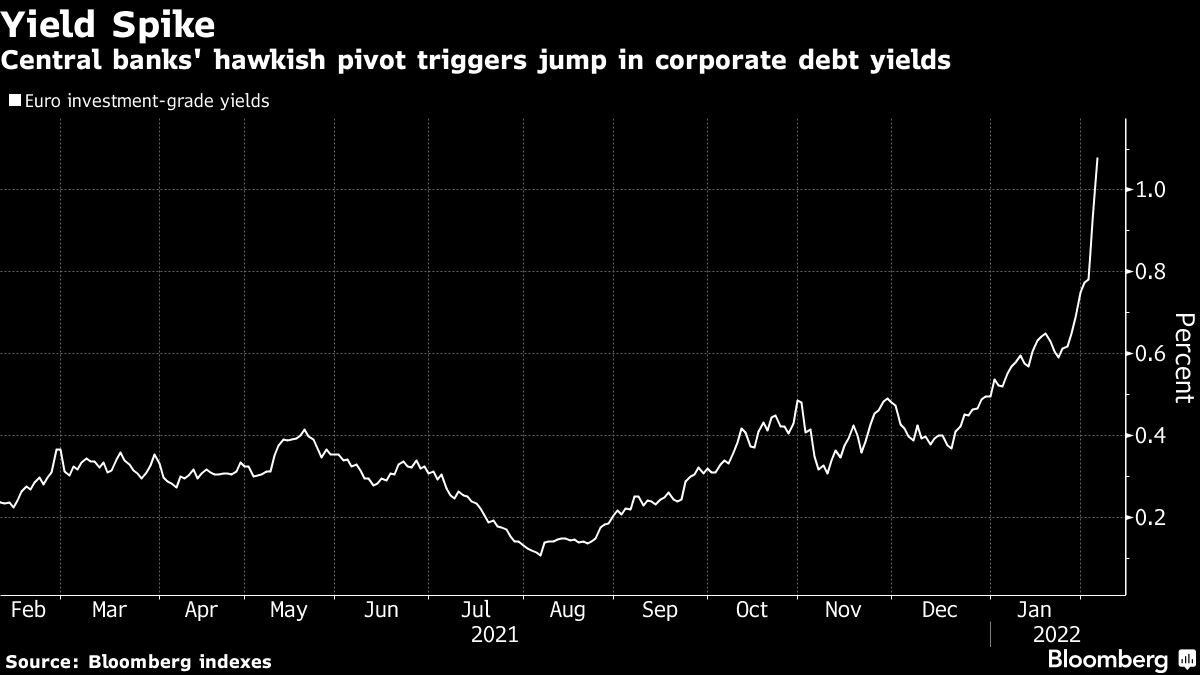
Borrowing costs are soaring across global credit markets as investors prepare for the end of an era of loose monetary policy.
U.S. and global stocks fell sharply Thursday as global interest rates rose and certain sectors posted weak earnings.
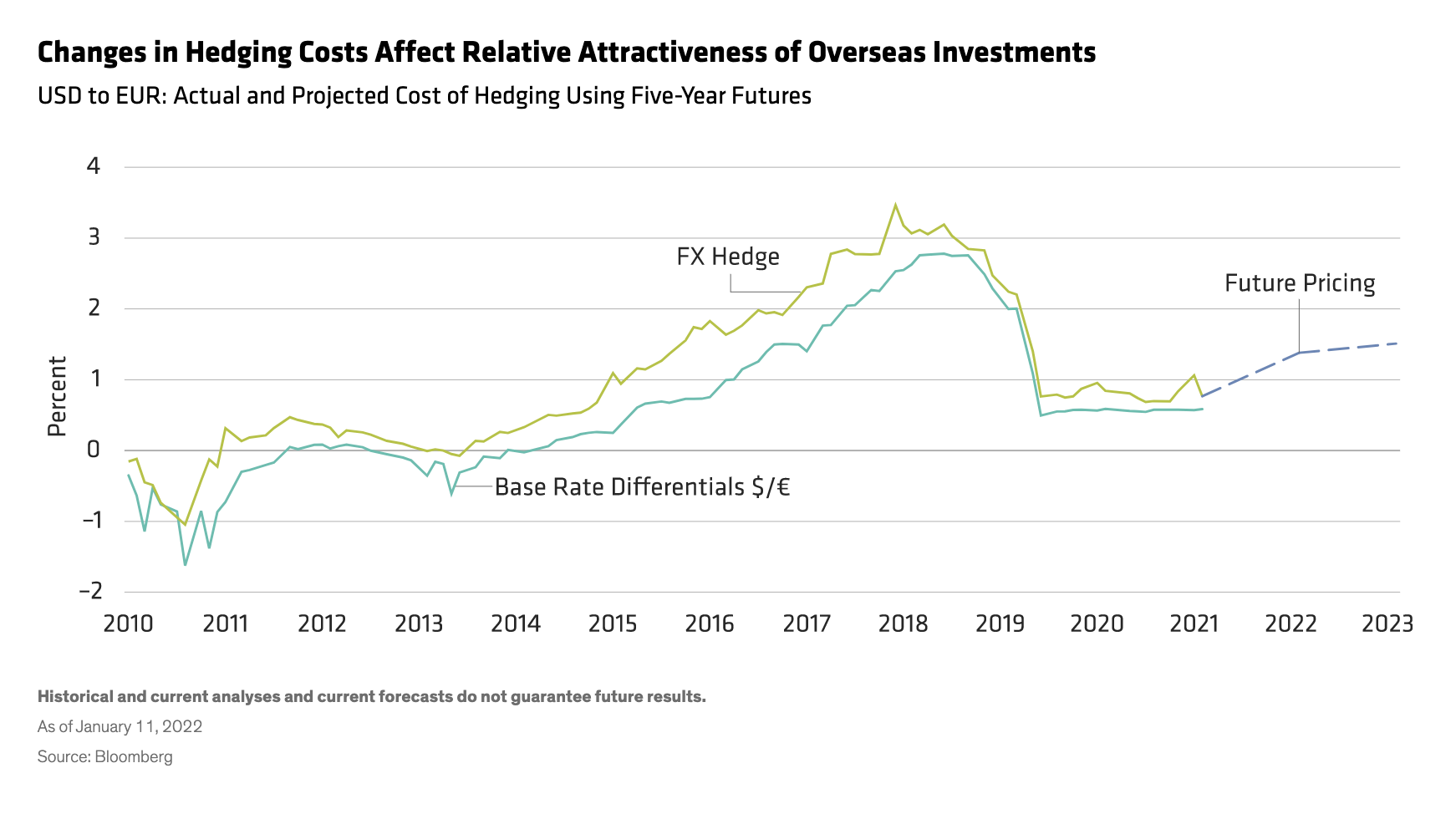
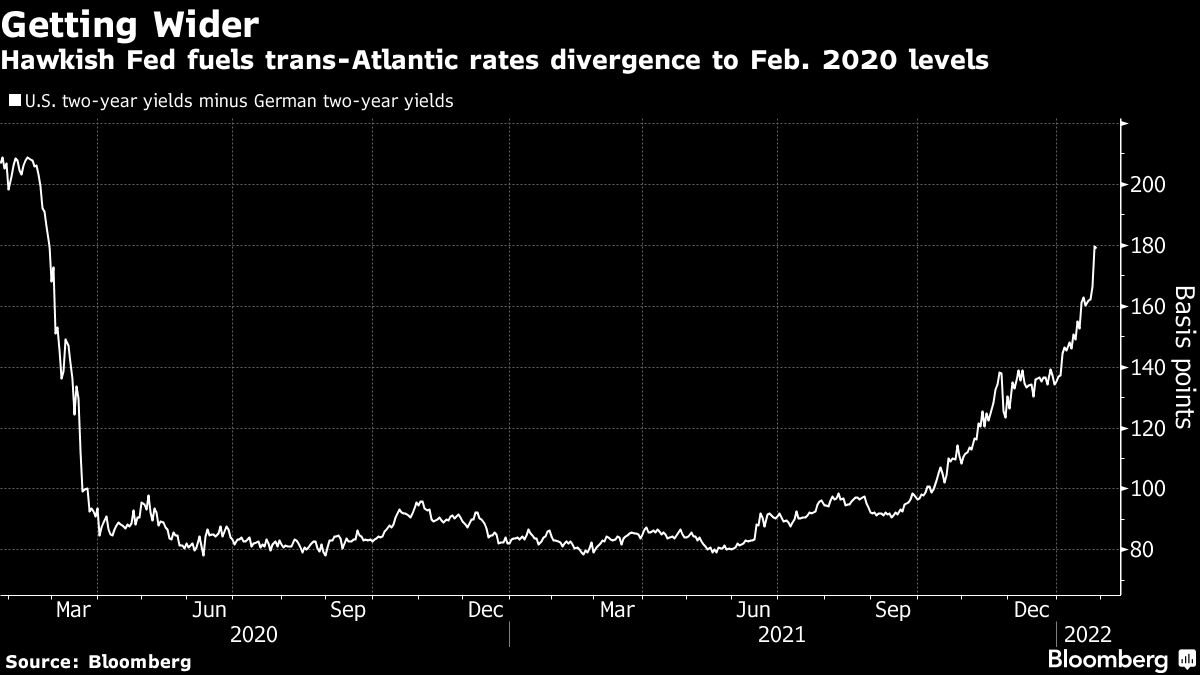
Recently, euro-based investors have been able to access higher-yielding US dollar bond markets while hedging their currency risk at low cost.
The strike price on the Fed put has moved significantly. The Fed may sit idly by if markets voice displeasure with abrupt changes in monetary policy.
This article can be forwarded to clients to help them understand inflation, its causes, and how various investment strategies protect against it.
We have never seen anything like this. Governments and their central banks injected approximately $30 trillion of fiscal and monetary stimulus into the global economy from February 2020 to the end of 2021.
We don’t think this is complicated. Do you want to pay to own expensive stocks or get paid to own cheap ones?
The world’s biggest exchange-traded fund posted its worst monthly outflow in its near three-decade history with investors selling the Monday stock rebound en masse.
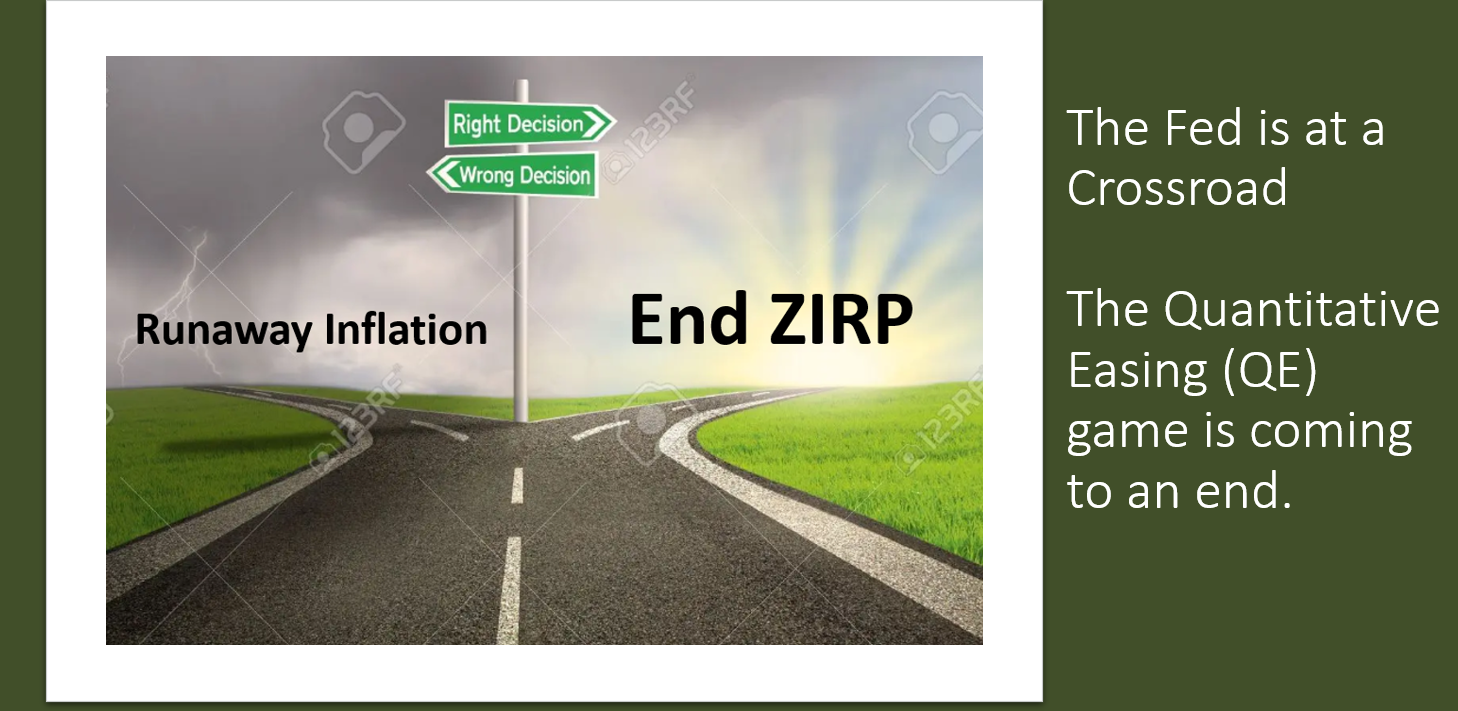
The Federal Reserve has indicated it plans to start raising short-term interest rates soon.
Nearly four years ago, we wrote a market commentary titled “A New Waze of Investing” in which we highlighted the incredible technological innovations that were changing our everyday lives and our perspectives on long-term investing.
Investors have been spoiled by the trend in falling long-term interest rates over the past 40 years, but the economic backdrop is changing. Read our new report where we explain the concept of equity duration and analyze how interest rates, earnings, and the relationship between the two can impact equities.
The US Federal Reserve is walking a tightrope—if it acts too quickly it risks hampering growth and market volatility, but if it acts too slowly it risks spiraling price increases.
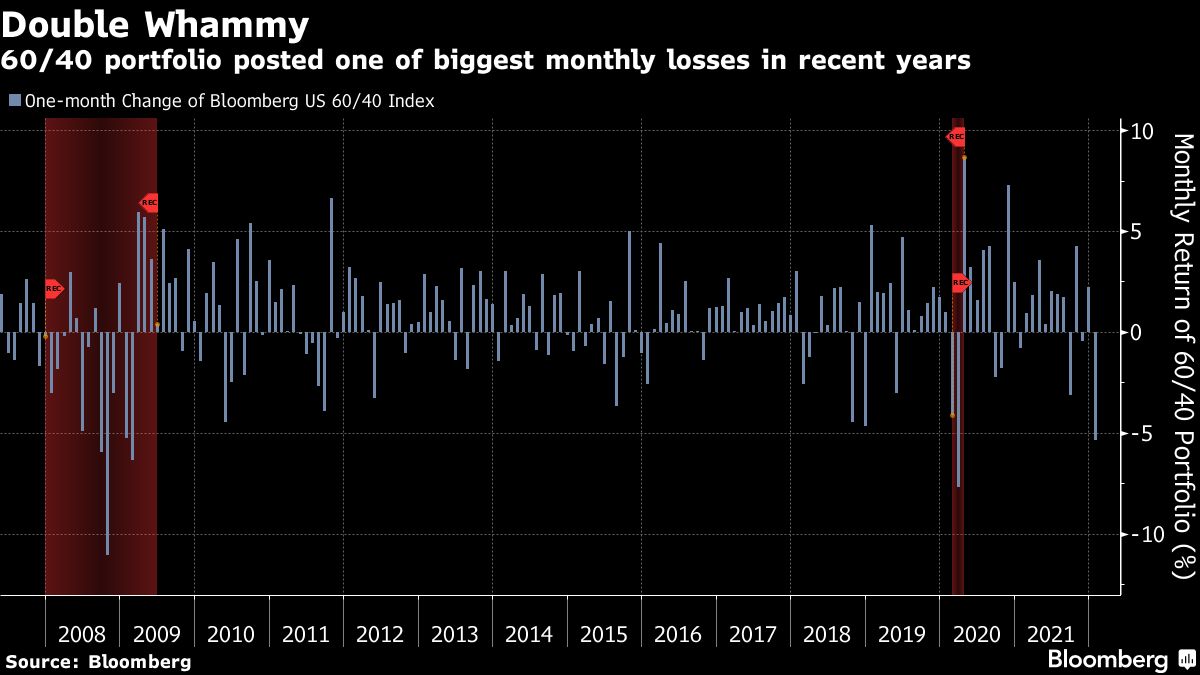
A bedrock of long-term investing, a portfolio split 60/40 between equities and high-quality bonds, is set for its worst monthly slide since the market meltdown in the early days of the pandemic.
Interest rate manipulation has been achieved through massive money printing that is causing inflation. To control inflation, bond manipulation must stop. When the manipulation ends, bond prices will plummet, and stock prices will follow.
We’ll review what may be the most compelling bear case I’ve seen in a long time, along with some other unpleasant data. Then we’ll look at some equally compelling reasons those views may be wrong.
Evergrande’s default and the delisting of Didi Chuxing should be viewed as being part and parcel of the challenges of investing in China.
The longstanding negative correlation between stock and bond prices is an artifact of the low-inflation environment of the past 30 years.
Bonds tumbled across the world on Thursday after Federal Reserve Chairman Jerome Powell’s latest hawkish pivot, with yields from Wellington to London breaching multi-year highs.
Strategists are mapping out their best trade ideas after Federal Reserve Chair Jerome Powell set the stage for raising interest rates to combat the highest inflation since 1982.
Since May 2020, the Chinese Yuan has defied the path of other emerging market currencies, strengthening by almost 12%.
In our latest outlook we examine the long-term implications of the pandemic, particularly changes to the labor market and the supply chain, and we discuss why we will be focusing on companies with pricing power in 2022.
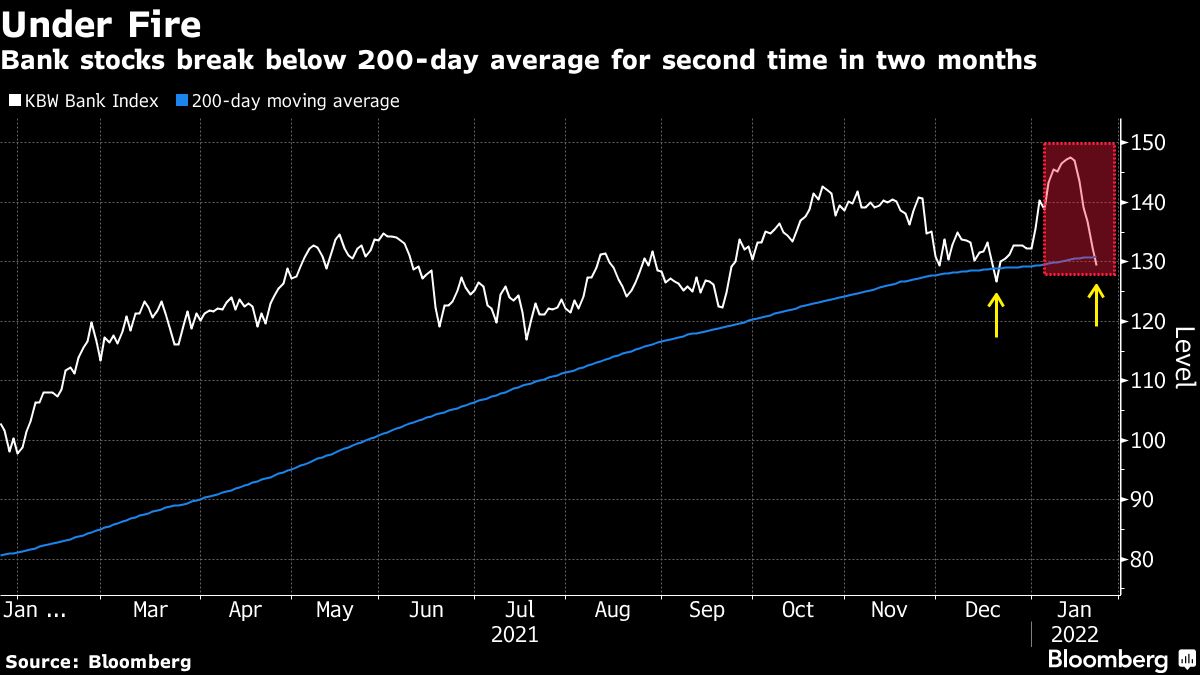
U.S. bank stocks are headed for their worst losing streak in a year, burning investors who bought shares on expectations that the Federal Reserve raising rates for the first time since 2018 would boost the sector.
Rate hikes will be far fewer than the markets currently expect.