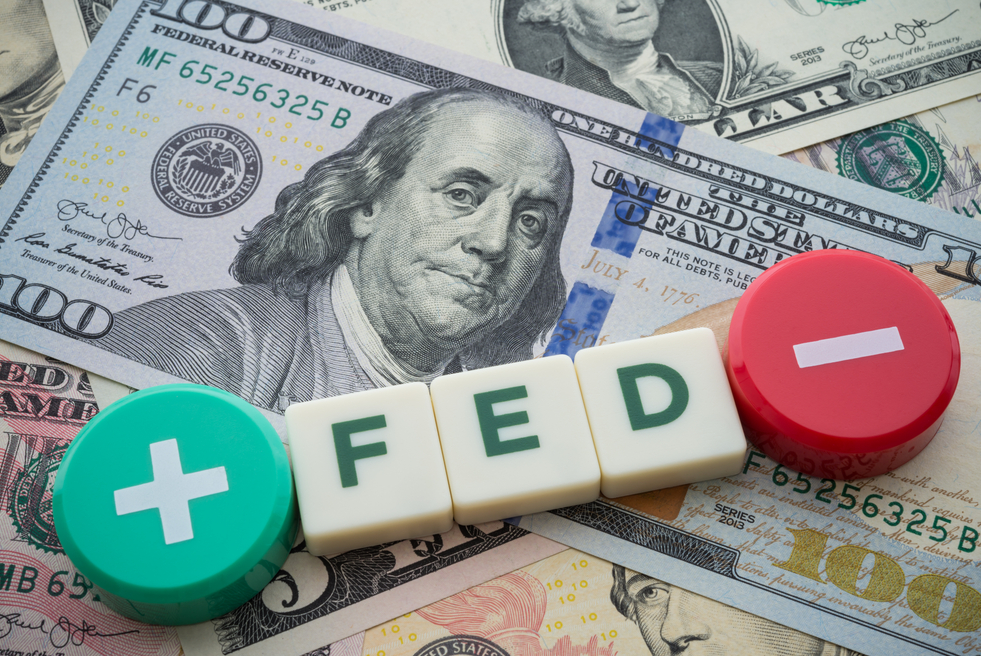
Federal Reserve Chair Jerome Powell on Friday removed all doubt that interest rate cuts are just around the corner. “The time has come for policy to adjust,” he said at his much-hyped annual speech in Jackson Hole, Wyoming, setting off a knee-jerk rally in stocks and bonds.
I have listened to people bellyache about the Federal Reserve my entire adult life: Alan Greenspan lowered interest rates too much after the dot-com crash in 2000. Ben Bernanke printed too much money to bail out banks during the 2008 financial crisis.
The dollar plunged after Federal Reserve Chair Jerome Powell affirmed expectations that the central bank will cut interest rates next month, sparking a rally in the currencies of major global peers.
There’s no shortage of market-moving events on the docket to keep Wall Street busy right now.
Since early last year, the cars rolling off Tesla Inc.’s California assembly lines have been selling for steadily lower prices. This has had a happy knock-on effect on a car lot just across the freeway from the company’s San Francisco Bay area factory.
Governments in the US and other developed countries, thanks to their central banks, may be deluded over how much debt they can pile up without significantly raising their costs to borrow.
Although we think it's too early to declare the economy is in a recession, risk is elevated. For investors who are concerned about a recession, municipal bonds may help buffer a portfolio.
Treasuries rallied after Federal Reserve Chair Jerome Powell’s speech at Jackson Hole cemented expectations that the central bank will cut interest rates next month.
Chair Jerome Powell said the time has come for the Federal Reserve to cut its key policy rate, affirming expectations that officials will begin lowering borrowing costs next month and making clear his intention to prevent further cooling in the labor market.
A labor market softening more so than previously thought should spur faster and steeper interest-rate cuts by the Federal Reserve, according to the latest Bloomberg monthly survey of economists.
Recent economic data points have been mixed. On the more positive side of the ledger, there’s evidence that inflation is cooling and consumer spending remains sturdy. Conversely, the jobs market is cooling.
Are we going to have a recession? Are we already in a recession?
With recent cooling in economic growth, an uptick in unemployment, inflation moderating back to the Federal Reserve’s (Fed) 2% target, and expectations for rate cuts, we believe the winds are shifting in the U.S. fixed income market.
After market expectations spiked to nearly five interest rate cuts in 2024 based on disappointing labor market report early in the month, reassuring data in the form of Retail Sales and Unemployment Claims have quelled market Markets have eased expectations for interest rate cuts, pricing closer to four cuts as of the end of last week.
If interest rates decrease over the next 12 months, as the market expects, long duration bonds could potentially provide equity-like returns for investors.
Robust U.S. stock momentum hit a slowdown in the third quarter, even as strong company earnings results rolled in. Fundamental Equities’ U.S. and Developed Markets CIO Carrie King weighs in on the incongruence with three reflections from Q2 earnings season.
One of the most widely followed gauges of the stock market, for decades a reliable indicator of future returns, has led investors astray in recent years. Its misdirection comes down to the freakish earnings growth of big technology companies such as Apple Inc. and Alphabet Inc.
Emerging-market stocks are trading at the steepest discount to US equities since the Covid-19 panic in March 2020 as skittish investors look elsewhere for growth opportunities.
Since our last update of the Three Tactical Rules on June 25, 2024, equity markets have retraced most of the rally from the spring. The change in market sentiment came abruptly, due to the labor market showing signs of weakness as the number of jobs available per unemployed worker fell to 1.2 and the unemployment rate rose to 4.3%. The recent market volatility has had a dramatic impact on our tactical rules.
Amid expectations of rate cuts from major central banks, managers are increasing their exposure to more cyclical and value-oriented names, including autos, transportation, and short-cycle industrials.
With its current course leading only to economic stagnation, the EU must establish a vision for a more dynamic, productive future. Above all, Europeans must answer a simple but critical question: What should the EU look like – in terms of innovation, the economy, security, and resilience – in a decade?
Since the end of the financial crisis, economists, analysts, and the Federal Reserve have continued to predict a return to higher levels of economic growth. The hope remains that the Trillions of dollars spent during the pandemic-driven economic shutdown will turn into lasting organic economic growth.
Economic indicators provide insight into the overall health and performance of an economy. They are essential tools for policymakers, advisors, investors, and businesses because they allow them to make informed decisions regarding business strategies and financial markets. In the week ending on August 15th, the SPDR S&P 500 ETF Trust (SPY) rose 0.14% while the Invesco S&P 500® Equal Weight ETF (RSP) was up 2.45%.
Chair Jerome Powell will usher in the next chapter in the Federal Reserve’s inflation battle on Friday, when he’s expected to set the table for an interest-rate cut while reassuring investors that policymakers can stave off a sharp economic slowdown.
The US Treasury’s debt-issuance polices have become a powerful form of policy easing. By shortening its issuance profile to reduce long-term interest rates, the Treasury has delivered economic stimulus equivalent to a one-point cut to the Fed’s policy rate, impeding the central bank’s efforts to control inflation.
US job growth in the year through March was likely far less robust than initially estimated, which risks fueling concerns that the Federal Reserve is falling further behind the curve to lower interest rates.
This week marks the ‘unofficial’ end to 2Q24 earnings season – and aside from a few wobbles, it has been reasonably good. S&P 500 earnings growth came in at a solid 11.2% YoY pace – its best quarterly performance since 4Q21.
Are the “Mega-Cap” stocks dead? Maybe. But there are four reasons why they could be staged for a comeback. The recent market correction from the July peak certainly got investors’ attention and rattled the more extreme complacency.
I have received a lot of blowback from my recommendation that the Federal Reserve (Fed) drop the Fed Runds Rate by 150 basis points (bps) over the next several weeks. Certainly, the data has come in stronger than I (and many others) have anticipated. Particularly surprising was the drop in jobless claims, now nearer to the midpoint of my 200k to 240k range after breaching the upper limit.
Looking back at the 14 Fed rate cycles since 1929, certain patterns emerge. Still, investors instead need to examine what factors are driving the Fed now.
A recent article co-authored by Stephen Miran and Dr. Nouriel Roubini, aka Dr. Doom, accuses the U.S. Treasury Department of using its debt-issuance powers to manipulate financial conditions.
While high rates can make borrowing costlier and slow down housing markets, they also open favorable opportunities in financial products like annuities. In other words, annuities are back and stronger than ever before!
Head fake is a trading term, too. Some bit of information convinces investors a market is going to move a certain way. They reposition their portfolios accordingly… just in time to find out the information was wrong. Oof.
Investors including JPMorgan Asset Management, M&G Investments and Aviva Investors say they seized on the retreat in riskier assets at the start of the month to bolster their holdings of emerging-market bonds.
This year’s presentation by Chair Jerome Powell is eagerly awaited due to the economic fluidity and financial volatility that the US has been experiencing, and its spillovers to the rest of the world.
Just as bond traders grow more assured that inflation is finally under control, a camp of investors is quietly building up protection against the risk of a future spike in prices.
U.S. consumer-price gains eased to 2.9% in July—the lowest increase since 2021
Unfortunately, when it comes to the government, what’s old is sometimes new again.
Powell will hint at normalizing monetary policy, but at a measured pace.
The current economic landscape is fraught with uncertainty, and the potential for higher inflation continues to pose a real threat to market stability.
June’s rate of inflation showed, for the first time in several years, an important slowdown in shelter costs, something that economists, us included, have been expecting for a very long time but had not materialized.
Markets were recently rattled by concerns the U.S. may slip into recession, but it's not clear that those fears are justified.
Emerging-market stocks rallied on Friday, driven by tech companies in Asia, following US data which boosted investor optimism that the world’s biggest economy will avoid a recession.
Portfolio Manager Jeremy Sutch, CFA, and Chief Investment Officer Sean Taylor assess the issues besetting the region’s key markets—from domestic challenges to geopolitical headwinds—as well as their structural strengths, and whether prospects may brighten with the onset of a U.S. rate-cutting cycle.
Value has been in a protracted slump versus growth for years, but it’s been undergoing something of a makeover during that time.
A popular yen-centered carry trade that blew up spectacularly two weeks ago is staging a comeback.
With US equities on the rebound, this summer’s selloff is looking more like a pause in the bull market than the beginning of its end.
When US Federal Reserve Chair Jerome Powell speaks at next week’s annual economic conference in Jackson Hole, Wyoming, people will be listening intently for any hint about what the central bank will do with interest rates at its September policy making meeting.
If rising layoffs and weakening consumption are going to snowball into a US recession at some point, my interpretation is that the mass of macroeconomic ice crystals is still only about the size of a marble.
Because there is unprecedented use of the word “unprecedented,” we thought it appropriate to expand our annual Charts for the Beach from 5 charts to 10 charts and tables this year. So, probably best to stay under the beach umbrella as you read our unprecedented extended edition.