As the advisory landscape continues to evolve, one theme is increasingly clear: advisors need more flexibility to meet the diverse and growing expectations of their clients.
Chuck Carnevale provides an update on Medical Properties Trust (MPW), a hospital real estate investment trust (REIT) he has held for several years.
Until that US government debt-crisis moment arrives, which we will get through, things will muddle along.
Index futures inched upward premarket as the headline May PCE data landed in line with expectations, though the core data and annual figures were up slightly.
Today’s investment landscape, shaped by persistently above-target inflation, structurally higher debt and deficits, and reduced global dollar recycling into US financial markets, has contributed to elevated market volatility alongside historically high policy uncertainty.
The newest generation of college graduates will switch jobs more than a dozen times over the course of their careers. They will juggle side gigs, launch businesses, and step in and out of traditional roles.
Money doesn’t buy happiness. But financial security means you can devote your time and energy to things you actually want to be doing.
As tax policy discussions continue on Capitol Hill, the Senate Finance Committee recently released its version of the tax bill that would avoid the expiration of the Tax Cuts and Jobs Act (TCJA).
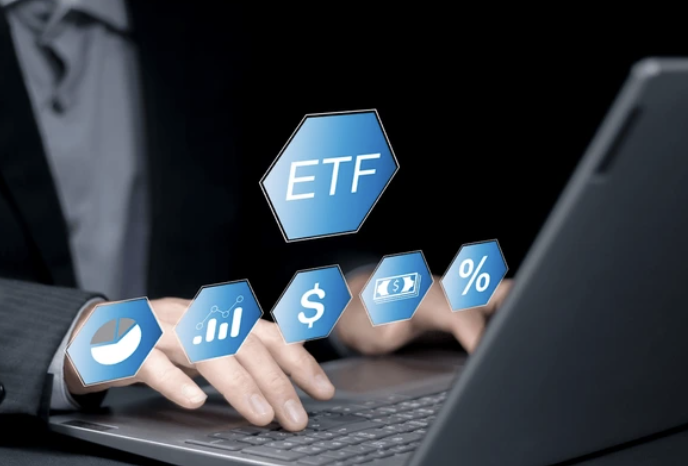
ETFs have surged in popularity thanks to their transparency, low costs and tax efficiency. But behind the scenes, a unique dual-market system powers their liquidity and accessibility.
The dollar fell and US Treasuries rallied after a report that President Donald Trump is considering naming Federal Reserve Chair Jerome Powell’s successor well before the incumbent’s term is scheduled to end next May.
It wasn’t too long ago that you could confidently proclaim that most of the Street was ebullient, maybe even wildly so, with respect to the greenback’s prospects.
Target-date fund glide paths can be important tools for retirement planning. Advisors should focus on assumptions, transparency, and outcomes to ensure they align with participants' needs.
It's not often that UK stocks are singled out as a "favorite geopolitical hedge," as Citigroup Inc. strategists boldly stated last week. So perhaps the elegant stance would be to simply take the rare praise when it's so kindly offered.
OBBBA sets a path for more borrowing ahead.
It’s said nothing in life is certain save death and taxes. There is also certainly an increase in investors’ appetites for nontraditional instruments like hedge funds as their wealth grows.
The Federal Funds Rate (FFR) is the interest rate banks charge each other to borrow money overnight. It's set by the FOMC and is one of the Federal Reserve's primary tools to implement monetary policy and is a key driver of economic activity. This video examines the Federal Funds Rate and reviews the Fed's latest interest rate meeting.
TMX VettaFi has gathered industry experts and thought leaders for the Midyear Market Outlook Symposium happening June 26 at 11 a.m. ET.
While both valuation and technical factors suggest to us that the dollar may continue to weaken in the near-term, we would caution investors against reading too much concerning the US’ long-term economic stability into further dollar weakness.
Just when the International Monetary Fund sees slower growth around the globe, the economy the World Bank ranks 112 out of 196 based on gross domestic product is leading everyone – with the opposite outlook.
Froth in the red-hot private credit marketplace is creating opportunities in the world of public high-yield debt, according to George Gatch, JPMorgan Asset Management’s chief executive officer.
How do direct indexing ideas fit into a fixed income portfolio? These two powerful strategies make one compelling combination with potential tax and risk management opportunities.
Inflation's trend has been favorable this year, but a growing conflict in Iran—combined with already-imposed tariffs—might put upward pressure in prices later this year.
Newsflow and misperceptions can obscure the drivers of profit growth—especially during a volatile year like 2025.
Doug Drabik discusses fixed income market conditions and offers insight for bond investors.
Foreign demand for U.S. Treasuries remains intact.
We have seen a lack of conviction from the Federal Reserve (Fed) in previous opportunities. Last year, during the first quarter, Fed members were spooked, as inflation numbers moved higher, changing their view on the path forward regarding interest rates.
VettaFi’s Todd Rosenbluth joins host Nate Geraci to break down the top ETF stories shaping the first half of 2025. Astoria’s Bruce Lavine dives into one of the industry’s hottest topics: 351 Exchanges – what they are and why they matter.
CEFs stand out due to their fixed capital structure, allowing portfolio managers to focus on long-term investment strategies without the need to manage daily inflows and outflows.
Investors have been waiting years for the chance to buy a stake in hedge fund Millennium Management.
For the fourth meeting in a row, the Federal Open Market Committee (FOMC) decided to keep rates unchanged, leaving the Fed Funds trading range at 4.25%–4.50%.
Portfolio Managers John Kerschner and John Lloyd and Client Portfolio Manager Steve Preikschat investigate the case for multisector bond funds as a core fixed income allocation.
When investors approach the financial markets, there’s a tendency to imagine that conditions can be judged as favorable or unfavorable based on one single measure or another. The fact is that market conditions at any moment in time are a composite of interdependent forces.
While the bond market is in general pretty efficient in its pricing, there may be times when it can be significantly out of line with investor expectations. At such moments, investors should be well-rewarded for making the effort to decode what the bond market is saying.
The rush of cash into the US money-market funds is showing few signs of slowing as it secured a record $7.4 trillion in assets.
This week the news is about the Israel-Iran conflict. It’s terrifyingly real for those in the crossfire, while we who are safe naturally wonder what it means for us. As investors, we think about the economic and market effects. But are we seeing signal or noise?
Mid-2025 is approaching, and exchange traded fund demand continues its robust growth. Last year was a landmark year for the ETF industry, with industry net inflows for the first time surpassing $1 trillion and one ETF exceeding $100 billion in net inflows.
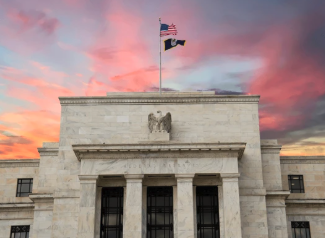
The Fed held the federal funds rate steady but noted that the risks of inflation and potentially higher unemployment remained high.
529 plans are a popular choice among families looking to save for college due to their flexibility and tax benefits. However, each family’s educational journey and associated costs can vary significantly. This means you may require a tailored savings strategy to best meet your future student’s needs.
With the House passing of The Big Beautiful Bill, the challenges facing chief financial officers and treasurers across health-care systems are likely to grow. The proposed cuts to reimbursements will have varying impacts across organizations depending on their payer mix.
While stocks experienced a roller-coaster ride powered by policy uncertainty, fixed income generally held up well despite the broader market turbulence. Will it be the same story in the second half? Let’s take a closer look.
Fixed-income investors concerned about tariffs and US exceptionalism may find opportunities in hedged global bonds.
On Monday, Tortoise Capital expanded its fund library with the launch of the Tortoise Energy Fund (TNGY). Formerly a mutual fund, the Tortoise Energy Fund is now an ETF available on the New York Stock Exchange.
A 529 plan is a popular tool for saving for college expenses. When it comes to who maintains control over the 529 plan’s assets, in most cases, it’s the account owner. This is often a parent or grandparent. The owner also has the ability to make investment choices and manage withdrawals.
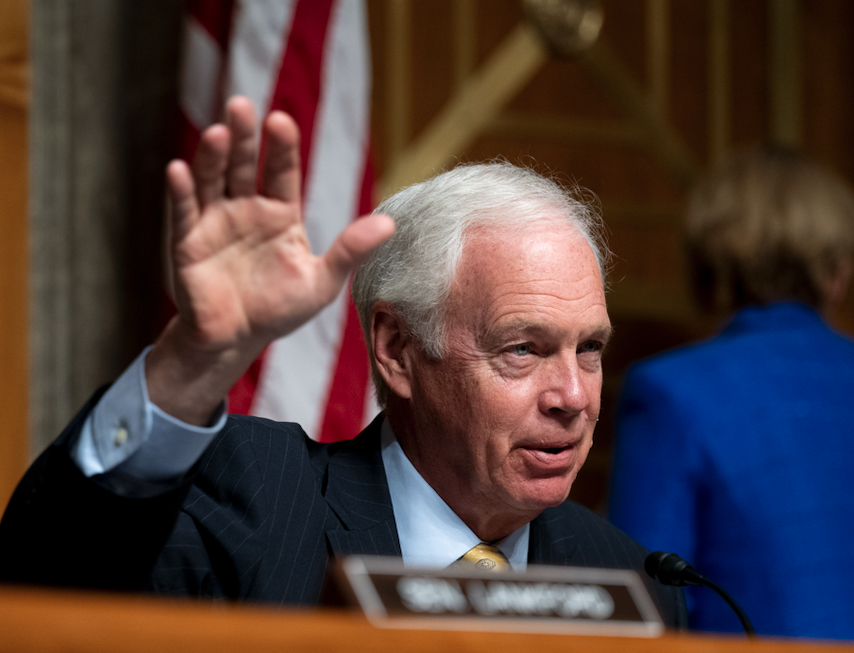
Given that the bill’s failure to reduce the deficit is due in part to its extension and expansion of the special tax treatment for non-corporate businesses that Johnson insisted on in 2017, which will cost an estimated $820 billion over the next decade, the senator does not make for the most credible of deficit hawks.
This is the first in a three-part series outlining why I believe bonds are set to outperform. Here, I focus on the Federal Reserve’s dual mandate, the June 2025 meeting, and why the Fed’s approach is positive for bond investors. Parts 2 and 3 will address valuation, politics, recession risk, and the secular horizon.
How big data, AI and the human element can combine to better pursue consistent alpha.
CEO Ali Dibadj provides an update on the three macro drivers we believe will shape markets in the second half of 2025 and how Janus Henderson is helping clients position for a brighter investment future.
New strategies, shifting flows, and innovative technologies are driving a more dynamic and diversified marketplace in fixed income ETFs.
The overall U.S. equity market has fully recovered from its April lows, landing in an essentially flat position as of 5/31/2025. However, it’s been a wild ride for many investors.
Drew O’Neil discusses fixed income market conditions and offers insight for bond investors.