We are in a period of market greed right now, even if you haven’t noticed it.
The Treasury market rallied after an auction of 10-year notes drew strong demand, easing concerns that investors will balk at financing swelling US deficits.
Liberation Day seems like a lifetime ago. But the 90-day pause is almost over, and—thus far—there are few deals that have been consummated.
In this month’s issue, Franklin Templeton Emerging Markets Equity explains how markets in many regions are weathering US policy uncertainty and offers an upbeat assessment of Vietnam after a recent research visit.
In the weeks leading up to last month’s Israeli and U.S. strikes on Iran, oil prices climbed – not due to actual supply disruptions, but in response to a geopolitical risk premium.
Our strategy work and quantitative insights suggest the conditions behind more than a decade of U.S. equity outperformance are starting to shift.
ClearBridge Investments believes positive forces from One Big Beautiful Bill Act passage and future interest rate cuts should soon outweigh negative forces of tariff actions.
Wall Street’s latest tax dodge doesn’t hide in the Cayman Islands or rely on complex derivatives.
Wall Street’s latest tax dodge doesn’t hide in the Cayman Islands or rely on complex derivatives. It’s engineered to turn a publicly traded fund into a tax-minimizing machine that hums quietly on autopilot.
Markets rebounded sharply in 2Q 2025 following April’s tariff-driven selloff. Our mid-year market outlook breaks down the recovery, Fed policy, and where to invest next.
Elevated interest rates and market uncertainty make for an interesting tandem regarding getting core bond exposure. When considering yield, reinforcing a portfolio to absorb market shocks, or both, consider this active option from Vanguard: the Vanguard Core-Plus Bond ETF (VPLS).
In the latest Alternative Allocations, with guest Brian Ullsperger from Andersen, Tony Davidow examines the traditional 60/40 portfolio and how it can be expanded to include alternatives to meet clients’ needs.
Joel Schneider, Deputy Head of Portfolio Management at Dimensional, discusses the firm’s milestone as the first issuer to surpass $200 billion in actively managed ETF assets. He also delves into the hidden costs of traditional index funds and Dimensional’s pursuit of the multi-share class structure. VettaFi’s Cinthia Murphy breaks down the latest filings and launches in the buffer and synthetic income ETF space, spotlighting new offerings from ARK Invest, ProShares, Innovator, and others.
We upgrade equities to neutral from underweight as falling interest rates and improving economic conditions in emerging markets offset uncertainty over US tariff policies.
They have been called “the four most costly words in the annals of investing,” and surely that’s true: This time is different. Still — hear me out! — there are reasons to entertain the possibility that, well, this time really is different.
The earnings bar is fairly low for the second quarter, setting companies up for a potential easy jump—but there will likely be more focus on forward guidance.
This year, so far, the world has been riddled with geopolitical news, resonating in widespread unrest, yet seemingly yielding less impact on financial markets.
On this episode of the “ETF of the Week” podcast, VettaFi’s Head of Research Todd Rosenbluth discussed the ALPS Sector Dividend Dogs ETF (SDOG) with Chuck Jaffe of Money Life. The pair discussed several topics related to the fund to give investors a deeper understanding of the ETF overall.
Traders are swarming to equity-focused, exchange-traded funds listed in Taiwan, with demand from retail investors and a strong local currency driving up flows.
Investors looking for cash flow from commercial real estate may want to check out the debt side.
This quarter might best be described as the “Big Beautiful Bounce”. Or the BBB. History has proven time and time again that markets do come back – but this was a historically quick market turnaround.
As the global economy navigates a complex landscape, investors are left wondering: are they right to be optimistic or are they being complacent? This article from Franklin Templeton Institute explores the signs of resilience as well as numerous risks.
Though some urge rate cuts, doing that won't necessarily reduce borrowing costs if the market doesn't agree with the timing. It could raise inflation fears, hurting Treasuries.
The Senate has approved its own version of the "One Big Beautiful Bill" tax-and-spending plan. Here's how it differs from the version the House passed in May, and what's next.
Some say private credit hasn’t been tested. We disagree…and stress can sharpen the senses.
Proposed regulatory changes involving the Supplementary Leverage Ratio may have benefits for both large banks and the Treasury market.
Equity markets continued to march higher in June, seemingly unfazed by heightened Middle East tensions (which were short-lived) and the looming July 8 deadline for the administration’s pause on reciprocal tariffs.
We began the year optimistic that an environment of slowing growth, disinflation and easier monetary policy would be favorable for fixed income markets. Now at midyear, we maintain that view, while acknowledging that policy uncertainty and geopolitical risks may likely result in continued volatility.
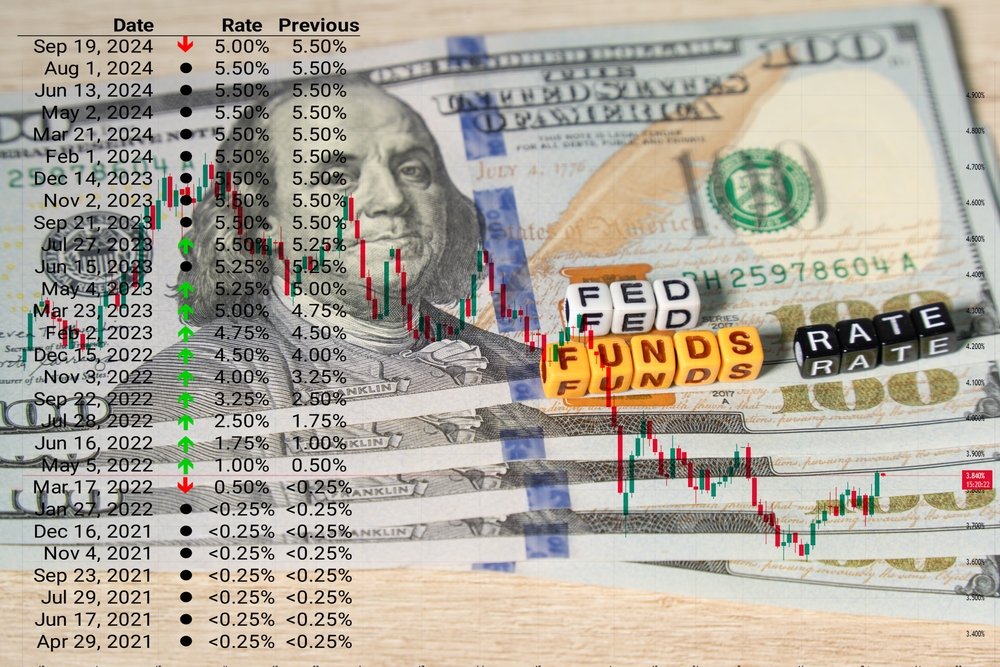
It has been over six months since the FOMC has made a change to the Fed Funds rate. While the debate continues as to when the next cut will be, market consensus (per Bloomberg calculations) is currently for a 25 basis point cut in September.
An economy cannot subsist on services alone.
On the latest edition of Market Week in Review, Global Chief Investment Strategist Paul Eitelman explored key drivers behind the strong performance in markets. He also provided an update on a proposed U.S. tax measure.
The US economy is important, but it’s not the only one in a global approach.
With the first half of 2025 in the books, it’s been a very interesting six months — emphasis on “V” because the S&P 500 saw a nice V-shaped formation following the April sell-off. As markets always reveal, interesting times call for interesting ETF trends to follow.
In recent months, markets have whipsawed amid changes in trade policy, geopolitical shocks, concerns about fiscal sustainability, challenges to central bank independence, technological advancements, and earnings surprises in both directions. Despite this, stocks and bonds in much of the world are close to where they began the year.
The marathon Senate budget vote took center stage early and stocks slipped from yesterday's all-time highs. Job openings, Powell, and manufacturing data are top of mind.
Goldman Sachs entered the ETF market nearly 10 years ago, yet two of its most popular products in 2025 are relatively new, both with less than a two-year track record.
Markets notched fresh all-time highs on Friday with a positive tone and geopolitical outlook. Swift retreat in oil back to pre-strike levels, combined with friendlier NATO negotiations and de-escalated fighting in Iran restored risk appetite.
For sophisticated investors, this technical shift marks a subtle but powerful pivot in monetary mechanics. It could create demand for Treasuries, improve market liquidity, and push yields lower at a time when the economy is slowing.
In a speculative market chasing AI and high beta, this report makes the case for the steady power of compounding dividends reminding investors that, especially late in the cycle, a bird in the hand may truly be worth two in the bush.
A potential conflict with Iran has consistently appeared in our monthly Market Risk Monitor for over two years. Now that risk has materialized. Our equity portfolio managers assess the implications for global markets.
With the market roughly at the midpoint for 2025, investors and advisors are still assessing how changing macroeconomic conditions could affect their fixed income portfolio.
Easing trade tensions and hopes the Senate could pass a budget gave stocks an early lift after Friday's record highs. The week is packed with jobs news and Powell talks tomorrow.
Margin loan recommendations are often presented by brokers as tax-savvy strategies that allow clients to access “tax-free” cash while keeping their portfolios intact. In many cases, however, the math benefits the advisor more than the investor.
In a recent newsletter, we explored the explosive growth of ETFs and the implications for portfolio construction. In this follow-up blog post, Lauren and I wanted to take that conversation a step further—diving deeper into how advisors can navigate the ever-expanding ETF universe while staying true to their investment philosophy.
Chief Economist Eugenio J. Alemán discusses current economic conditions.
Market uncertainty needs a tailor-made approach to fixed income for advisors to construct the ideal portfolio for their clients. There’s an easier solution that encompasses an active management approach, various income sources, and low cost. It’s the Vanguard Multi-Sector Income Bond ETF (VGMS).
The Fed’s credibility rests not on never being wrong, but on being adaptive and forward-looking. Inflation has cooled, wage growth has moderated, and economic momentum is slowing. Now is the time for the Fed to focus not on headline fears, but on real-time data.
We continue to suggest an "up in quality" fixed income bias for the short run, but investors can still consider some of the riskier parts of the fixed income market in moderation.
Until recently, commercial real estate appeared poised for a long-awaited rebound. However, 2025 has revealed a new reality: Uncertainty has become structural.
It’s often said there are only two certainties in life: death and taxes. However, the tax landscape may become somewhat murkier, as the recently passed U.S. House budget bill may potentially lead to some non-U.S. investors paying more taxes than previously anticipated.