Search Results
Results 3,151–3,200
of 4,371 found.
Chinese Railway Stays On Track
The Chinese railway system has changed dramatically since I last visited the Asian nation. I can remember taking the high-speed train from Shanghai to Beijing during a visit in 2011; at the time it was a fresh, dedicated line covering 819 miles in a little less than five hours.
Middle East/Africa: Economy Trends Update -- October 2015
by Team of Thomas White International,
The three months from July to October turned out to be a reasonably good period for the five economies we cover in the Middle East and Africa region. Although the largest among these economies, South Africa, remained beleaguered by a range of external and domestic problems, there were signs that the country coped well with its difficulties. Israel recorded robust growth after staying depressed for much of the first half of this year while Egypt took further steps to reform its economy.
The Fed Awakens: A New Hike
On Wednesday, Chair Yellen announced that, for the first time in seven years, easy money will become slightly less easy. The target rate will be set at between 0.25 and 0.50 percent, which doesn’t sound like much, but it’s important that the Fed ease into this cycle cautiously and gradually. Plus, this comes at a time when fellow industrialized nations and economic areas around the globe are considering further monetary easing measures.
Global Economic Overview: November 2015
by Team of Thomas White International,
The upward revision in third quarter U.S. economic growth and buoyant consumer sentiment supports a more stable global economic outlook for the next few quarters. Consumer optimism also remains healthy in Europe, though the Euro-zone economy expanded less than expected during the third quarter. The Japanese economy declined during the July-September period, according to initial estimates, but the data could be revised higher as capital investments for the period were greater than initially calculated.
Why the Fed Liftoff Matters
by Teresa Kong of Matthews Asia,
When the U.S. Federal Reserve finally lifted the key rate by a quarter point on December
16, it was arguably the most widely anticipated rate hike in U.S. monetary history. This
Fed liftoff matters precisely because no other major central bank in the world has the
ability to do it. This marks the end of ZIRP (zero interest rates policy) for the U.S. But
every other central bank is in ZIRP or is heading in that direction.
The 2016 Geopolitical Outlook
As is our custom, we close out the current year with our outlook for the next one. This report is less a series of predictions as it is a list of potential geopolitical issues that we believe will dominate the international landscape in the upcoming year. It is not designed to be exhaustive; instead, it focuses on the “big picture” conditions that we believe will affect policy and markets going forward. They are listed in order of importance: the Election Transition, Western Populism, Small-Scale Islamic Terrorism, the Weakening of the European Union, and Trouble in the South China Sea.
It's Beginning to Look a Lot Like Christmas . . . Not
by Jeffrey Saut of Raymond James,
Many of you know that around this time of year I journey to New York City for the Christmas tree lighting and the Friends of Fermentation (FOF) Christmas party; this year was no exception. However, it sure did not feel much like Christmas in Manhattan. The temperatures were in the 50s and 60s, so the top coat I brought was never used. Such warm climes brought about thoughts of the much discussed topic, “global warming.”
George Friedman’s World of Geopolitics
by John Mauldin of Mauldin Economics,
In today’s letter, I have transcribed a conversation George Friedman and I had a few days ago. In it, we talk about how our new joint effort came about and why George has left Stratfor to create his new firm, Geopolitical Futures.
China Takes a Big Step Forward
by John Browne of Euro Pacific Capital,
On November 30th the International Monetary Fund (IMF) announced that it would admit China’s Renminbi currency, commonly known as the Yuan, to the select basket of reserve currencies that make up its Special Drawing Rights (SDR’s). Having been stalled by U.S. influence for many years, the long-awaited IMF decision acknowledges the massive transfer of financial power from the old West to the new East. The move heralds an era of potentially great change with global implications for politics, economics and investments.
Sweden Declares War on Cash, Punishes Savers with Negative Interest Ratesy Market Summary
Among the endangered species in Sweden are the gray wolf, European otter—and cash. Back in June, I shared with you the story of how, in 1661, the Scandinavian monarchy became the first country in the world to issue paper money. (It was an unmitigated disaster, by the way.) Now it might be the first to ban it altogether.
From Brutish to a Brouhaha: Shifting Winds and the Demographic Payback
by Michael Aked of Research Affiliates,
Continued pension reform inaction combined with a falling worker-to-retiree support ratio is leading to an inevitable economic and social clash between employees, employers, and their governments.
US Bond Market Week in Review: Diverging Oil Price Predictions and Rising Junk Yields, Edition
by Hale Stewart,
One of the central debates occurring within the Fed regards the causation of current inflation weakness. Some, like Fed President Bullard and Chairman Yellen argue low oil prices are solely responsible for the weakness. Ohers like President Brainard and Chicago Fed President Evans see a more nuanced picture involving declining international trade negatively impacting a wide swath of commodity prices. Regardless, this week various organizations published stories to support and counter each argument. As for oil prices, Goldman Sachs sees oil prices at $20 in the next 12 months.
What Is the Credit Cycle Telling Us About 2016?
by Tony Wong of Invesco Blog,
As investors anticipate the beginning of a new year, we at Invesco Fixed Income are anticipating a new phase in the credit cycle for several bond asset classes. In this post, I will highlight a few areas where we’re seeing substantial changes in asset classes’ fundamentals or operating environment. We believe these areas could influence the broader market in 2016.
Consumption in China: From Commodities to Karaoke
China isn’t only a consumer of raw commodities—its growing middle class has been exerting formidable purchasing power and spawning new domestic industries that are of keen interest to us as investors, including cosmetics, entertainment (cinemas, music) and more.
Why Argentina's New Leader Is Good for Latin America and Global Investors
This week, Argentina said no, gracias to further leftist rule when it elected conservative businessman and two-term Buenos Aires mayor Mauricio Macri to succeed Cristina Fernández de Kirchner as president. It was an upset victory for the people of Argentina, who have seen their once-prosperous nation deteriorate under decades of Marxist policies. It was also a strong win for investors around the globe. Not since Narendra Modi's election last year has a leader's entry on the world stage inspired such bullishness.
Thanksgiving amid the Threats
by John Mauldin of Mauldin Economics,
For today, in this week’s letter, I’m going to let other people do most of the talking. I gave you my own thoughts on the Paris attacks and Europe’s future last week in “The Economic Impact of Evil.” Today I’ll share some of the most interesting post-Paris analysis that has crossed my path over the last two weeks.

What We’re Paying Attention to Following the Paris Attacks
A week ago today, 129 lives were brutally cut short when assailants affiliated with the terrorist group ISIS, also known as the Islamic State, stormed Paris in a series of coordinated attacks. Along with the rest of the world, we were shocked and saddened as the tragic news unfolded, worsening as the night progressed. Our thoughts are with the victims’ families and friends.
Lessons from Australia and New Zealand on Debt, Immigration, and Food
by Carl Tannenbaum of Northern Trust,
The arc traced by Australian and New Zealand home prices is a source of broad concern. Property values in Sydney, in particular, have risen by 50% over the past 5 years. Observers from near and far fret that the line between fair value and market excess was crossed some time ago.
South Korea 2.0
by Michael Oh of Matthews Asia,
Some key differences between Korea’s older companies and its newer “2.0 firms.” include their target demographics, regional reach and branding tied to rising interests in Korean pop culture, or K-pop. Whereas the products of Korea’s more traditional and longer-standing exporters were geared toward developed economies, its newer cultural exports are a hit with more developing countries. This month Asia Insight explores such cultural exports, including those from industries as travel & leisure and entertainment, which are growing even faster than Korea’s overall export growth.
Global Economic Perspective: November
While China’s manufacturing sector—which drove China’s rise to its place as the world’s second-largest economy—has been losing steam, it is being supplanted by a domestic, consumer-led economy propelled by a rising middle class with growing income. Other Asian countries are on a similar trajectory.
Political Turmoil in Portugal
Portugal held parliamentary elections in which the incumbent center-right Social Democratic Party received the most votes but fell short of an outright majority. The president tasked the party with forming a government. However, the center-left opposition party and some far-left parties have formed a coalition, together garnering a majority of votes and currently awaiting presidential approval to form a government and take control from the center-right party. This week, we look at Portugal’s current political environment, election results, change in coalition powers and path going forward.
Why Reforms Are Sparking Growth in These Two Regions
In the U.S., we see other countries’ economic developments play out in news snapshots or opinion pieces—often focusing on short-term data or what’s perceived to be wrong. But here’s what the headlines may not be telling you: Non-U.S. regions from Asia to Europe are home to economic comebacks and companies that are growing their earnings. Let’s take a closer look at developments in Japan and Italy and then contrast the risk/reward dynamic with the current market environment in the U.S.
Gasoline and Coffee Fuel Our Daily Lives. Can Commodities Also Fuel Our Investment Portfolios?
Commodities are a tangible part of our daily lives. They are the food we eat, the energy that powers our cars and heats our homes, the metals that go into our electrical wiring and our jewelry. Yet investing in commodities can seem elusive.
Volatility Takes Center Stage in 2015
by Clas Olsson of Invesco Blog,
Looking back over the last three to four years, global market performance has been driven mainly by quantitative easing, with little to no profit growth internationally. This, in turn, has led to significant multiple expansion. Market leadership has been driven by defensive stocks, such as consumer staples, as pricing power and emerging market demand for products and services helped them sustain growth.
Gasoline and Coffee Fuel Our Daily Lives. Can Commodities Also Fuel Our Investment Portfolios?
Commodities are a tangible part of our daily lives. They are the food we eat, the energy that powers our cars and heats our homes, the metals that go into our electrical wiring and our jewelry. Yet investing in commodities can seem elusive.
The Bullish Case for Aussie Gold
There’s a gold bear market here in North America, where the yellow metal has plunged to a six-year low of $1,083 per ounce on the strong U.S. dollar. But when priced in the weaker Aussie dollar, the precious metal is sitting at $1,520. As recently as last month, it touched $1,642.
Crime in the Jobs Report
by John Mauldin of Mauldin Economics,
In today’s letter, we are going to look briefly at the latest employment numbers. Then we’ll explore some of the deeper, less understood facets of the employment data. For some of you this may be a lot of detail, but for those of us who think about employment (and you should, as it is THE ultimate driver for your business and investments), understanding how the numbers work and what they mean is important.
A Step in China's Economic Journey
by Robert Horrocks of Matthews Asia,
We emerge from the recent Chinese Communist Party Plenum with sketches of a new “five-year-plan.” Hurrah! There is always much fanfare around these events—not least in the investment community. We will no doubt hear the sentiment that China is a policy-driven stock market and so all the short-term traders are keen to see which sectors and industries are in favor. Then begins the game of who might get a subsidy, a contract or beneficial regulation.
Chuck Royce on the Current State of the Small-Cap Market
by The Royce Funds,
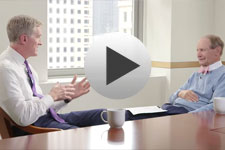
The small-cap market finished 3Q15 with a double-digit decline, in many ways similar to the correction investors saw around this same time last year. CEO Chuck Royce sits down with Co-CIO Francis Gannon to discuss why he believes corrections are a sign of healthy market behavior, the importance of risk management in the small-cap space, and why he thinks a new market cycle will favor companies with earnings.
Have Commodities Reached an Inflection Point?
This week the Federal Reserve announced that it would delay the interest rate liftoff yet again, but while everyone seems concerned about nominal rates—the federal funds rate, in this case—real rates have already risen about 5 percent since August 2011. This “invisible” rate hike is much more impactful to commodity prices and emerging markets than a nominal rate hike, which is simply the “tip of the iceberg.”
Currency Risk, still an Afterthought?
by Anton An of Matthews Asia,
Foreign exchange concerns were once an afterthought for equity investors. But the recent slowdown in emerging markets, and the potential for the U.S. Federal Reserve to raise interest rates, makes it even more critical for investors to examine currency exposure throughout corporate financial statements.
Emerging Markets Equity Commentary: September 2015
by Team of Thomas White International,
Emerging market equity prices declined further in September, as fears about slower global economic growth persisted. External trade data from China was weaker than expected and accentuated investor concerns that the world’s second largest economy could miss current growth targets. Nevertheless, retail sales in China continued to expand at a healthy pace in August as the central bank’s interest rate cuts and other policy measures lifted domestic consumer sentiment.
It's Darkest Before the Dawn – but Is the Time Now 1am or 5am?
It has been a pretty brutal summer for the energy markets. Brent oil fell from $65 in May to below $40, and the MSCI World Energy Index was down around 25% over the same period, leaving energy as the worst performing sector year-to-date and the most out-of-favour among all the portfolio manager surveys that we see. Long-dated Brent oil has also fallen; having started the year at $78 and traded in a fairly tight $75-$80 range until the end of June, it fell to a low point of just over $60, over 40% off its highs last year.
4Q 2015 Outlook: Key Issues Have Not Changed Much This Year
As the final quarter of 2015 begins, we are reminded of several topics of focus from the start of the year: concerns that global central bankers are stuck with their current monetary policies because the global economy now depends on them; market acceptance that higher U.S. interest rates are inevitable, even if they rise only slightly; and favorable prospects for U.S. consumers, who benefit from a stronger labor market and lower energy prices. If the topics sound familiar now, it is because little has changed in these areas while global risks have increased for several reasons.
The Obama Doctrine: Moneyball America
Over the past three years, we have witnessed what appears to be a steady erosion of American power. In this report, we will examine President Obama’s foreign policy, using the construct of Ian Bremmer’s recent book, Superpower. After discussing President Obama’s foreign policy and the potential effects, we will examine how the next president may shift from the current policy. As always, we will conclude with potential market ramifications.
Why Inflation Is Lower Than You Think
by Robert Huebscher,
Financial pundits routinely claim that inflation is much higher than the reported statistics. We hear, for example, that food prices have risen much faster than the roughly 1.5% increase in the CPI over the past several years. Viewed over the longer term, however, inflation is far lower than reflected in the published data.
Digital India
by Sudarshan Murthy of Matthews Asia,
During Indian Prime Minister Narendra Modi’s recent visit to Silicon Valley, he promoted his “Digital India” project, which aspires to provide easy access to a digital infrastructure for all of India. This is no small feat considering about 40% of the population still lacks access to proper sanitation. How feasible are these goals?
Dan Fuss: Rates Will Rise (and so will taxes)
by Robert Huebscher,
If there truly were a “bond king,” it would not be Bill Gross or Jeffrey Gundlach. It would be Dan Fuss, whose tenure in the fixed-income markets has spanned more than half a century. In a talk last week, Fuss warned investors to expect higher interest rates along with higher taxes.
Results 3,151–3,200
of 4,371 found.









