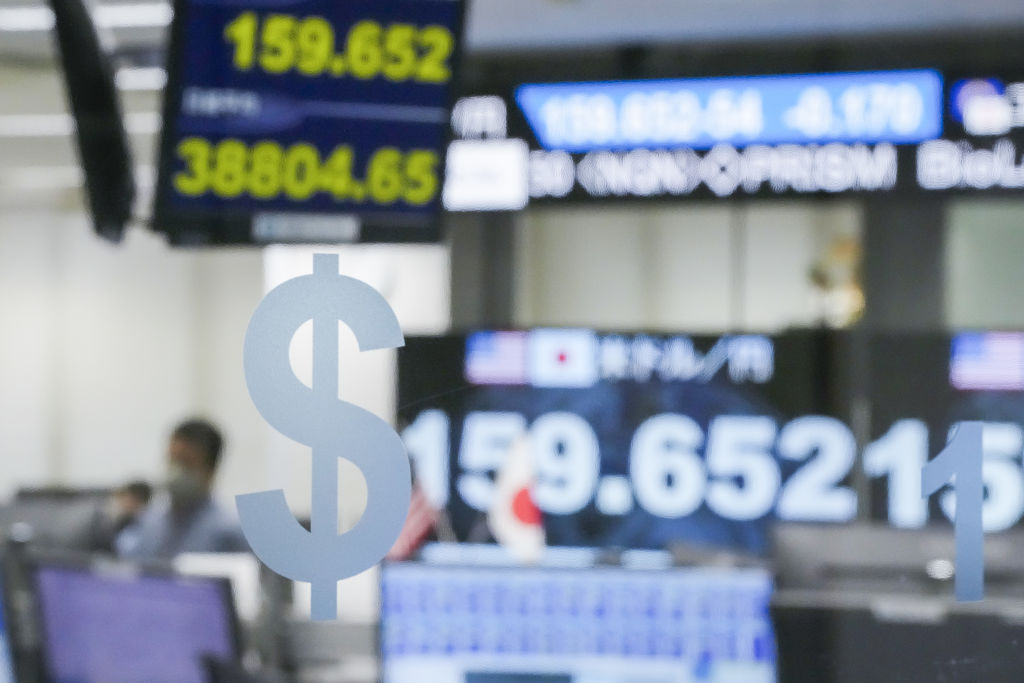
The U.S. Dollar Index, when measured against a basket of other major currencies, has declined by approximately 10% this year through mid-June and is currently trading at its lowest level in three years.
Like all appetites, the consumer typically reaches some point of appeasement. That could be the case for central bank gold purchases, which have started to show signs of receding. But market experts do not see it faltering anytime soon.
Looking back on it, the first quarter of the year was a complete anomaly. Real GDP declined at a 0.2% annual rate, and the left side of the political spectrum said this proved current policies were a disaster.
Portfolio Managers John Kerschner and John Lloyd and Client Portfolio Manager Steve Preikschat investigate the case for multisector bond funds as a core fixed income allocation.
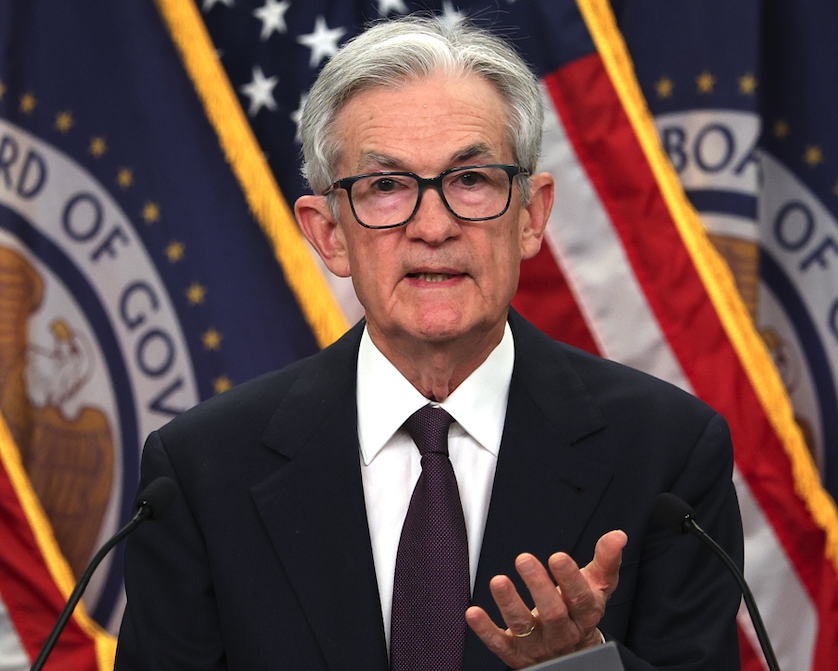
Federal Reserve Vice Chair for Supervision Michelle Bowman warned the current approach to leverage ratio requirements has led to unintended consequences in the market while adding she could support lowering interest rates as soon as July.
When investors approach the financial markets, there’s a tendency to imagine that conditions can be judged as favorable or unfavorable based on one single measure or another. The fact is that market conditions at any moment in time are a composite of interdependent forces.
The yield curve for U.S. government bonds is currently very unusual — it’s U-shaped. In addition to the changes in shape, also note the level of interest rates.
While the bond market is in general pretty efficient in its pricing, there may be times when it can be significantly out of line with investor expectations. At such moments, investors should be well-rewarded for making the effort to decode what the bond market is saying.
Wall Street has a new favorite investor. They’re young, they’re affluent and they’re skeptical that traditional markets can deliver wealth over the long haul. Shaped by financial crises and fueled by tech optimism, this well-heeled class of Millennials and Gen Z are moving their money into the buzzy world of alternative assets.
It may seem as if Treasuries are the better bet these days with the US stock market back near record highs and government securities offering respectable yields again. But stocks are still likely to pay more.
The rush of cash into the US money-market funds is showing few signs of slowing as it secured a record $7.4 trillion in assets.
The dollar rose to the highest level in nearly a month as US strikes on Iran spurred demand for the haven currency while underscoring the risks posed by climbing oil prices.
This week the news is about the Israel-Iran conflict. It’s terrifyingly real for those in the crossfire, while we who are safe naturally wonder what it means for us. As investors, we think about the economic and market effects. But are we seeing signal or noise?
Last week's economic data painted a picture of broad cooling across several sectors, with consumers pulling back significantly on spending.
The Fed held the federal funds rate steady but noted that the risks of inflation and potentially higher unemployment remained high.
529 plans are a popular choice among families looking to save for college due to their flexibility and tax benefits. However, each family’s educational journey and associated costs can vary significantly. This means you may require a tailored savings strategy to best meet your future student’s needs.
Powell & Company at the Federal Reserve sees an elevated stagflation threat. In response, they decided to do nothing.
While stocks experienced a roller-coaster ride powered by policy uncertainty, fixed income generally held up well despite the broader market turbulence. Will it be the same story in the second half? Let’s take a closer look.
The U.S. Federal Reserve left interest rates unchanged in June, as widely expected, but revisions to its economic projections indicate a more uncertain outlook.
Fixed-income investors concerned about tariffs and US exceptionalism may find opportunities in hedged global bonds.
The Federal Reserve held rates steady today, while also projecting slow economic growth, higher unemployment, and higher inflation. And while the Fed signaled that two further rate cuts are still their base-case for the remainder of 2025, the timing of those cuts remains up in the air.
After running a surplus in April thanks to tax day, the federal government was back to business as usual in May, spending massive amounts of money and charting another big budget deficit.
US stocks rose on Friday as investors returned from the Juneteenth holiday break to evaluate recent comments from a top Federal Reserve official as well as the latest developments in the conflict between Israel and Iran.
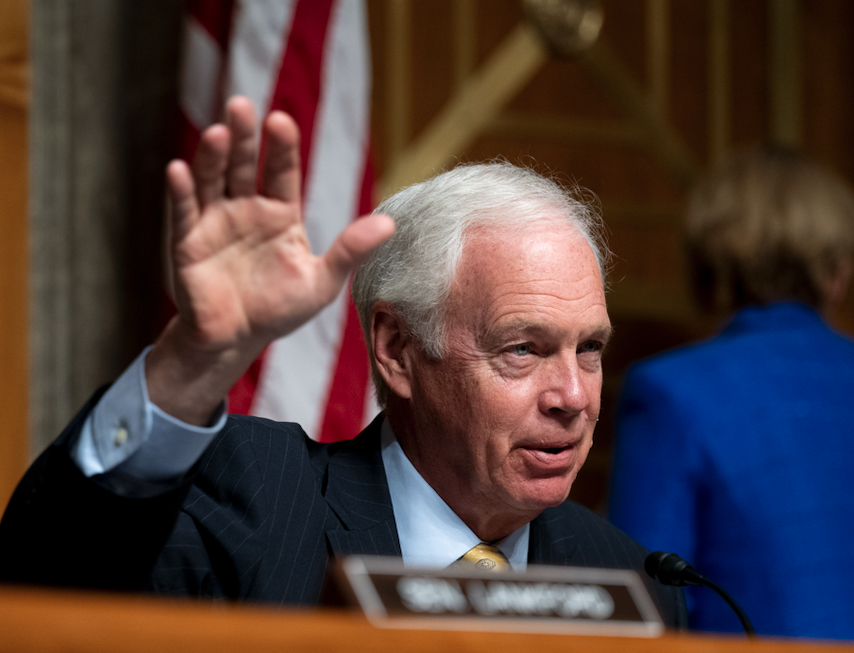
Given that the bill’s failure to reduce the deficit is due in part to its extension and expansion of the special tax treatment for non-corporate businesses that Johnson insisted on in 2017, which will cost an estimated $820 billion over the next decade, the senator does not make for the most credible of deficit hawks.
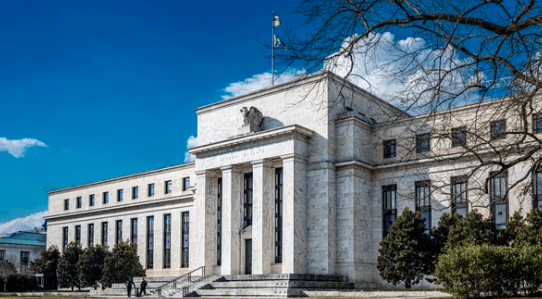
The most powerful institution in global finance is as completely and utterly confused as the rest of us.
This is the first in a three-part series outlining why I believe bonds are set to outperform. Here, I focus on the Federal Reserve’s dual mandate, the June 2025 meeting, and why the Fed’s approach is positive for bond investors. Parts 2 and 3 will address valuation, politics, recession risk, and the secular horizon.
How big data, AI and the human element can combine to better pursue consistent alpha.
CEO Ali Dibadj provides an update on the three macro drivers we believe will shape markets in the second half of 2025 and how Janus Henderson is helping clients position for a brighter investment future.
The overall U.S. equity market has fully recovered from its April lows, landing in an essentially flat position as of 5/31/2025. However, it’s been a wild ride for many investors.
After a long dry spell, there are signs of life in the initial public offerings space. An increase in offerings can sometimes suggest an improvement in overall market sentiment.
Despite consumer fears of 1970s-style inflation, actual CPI has cooled to just 2.4%. Jeff Weniger makes the case that we may be living in a Goldilocks scenario, where price trends align with a stable and balanced economic environment.
The U.S. economy is growing accustomed to elevated uncertainty.
Not much seems to faze the stock market these days even as risks abound, from war in the Middle East, to trade tensions, to slowing growth. But Wall Street’s biggest fear arrives today when the Federal Reserve meeting ends and Chair Jerome Powell explains the central bank’s outlook.
US stocks gained on Wednesday with investors looking ahead to the Federal Reserve’s monetary policy decision.
We remain bullish about many of the corporate changes taking place in Japan. Toyota Group recently announced it was taking Toyota Industries private (its auto parts and forklift business) to simplify the group’s structure.
If there is something the Federal Reserve (Fed) does not want to see today, as it approaches next week’s Federal Open Market Committee (FOMC) meeting, it is a shock to oil prices.
What happens in global supply chains can provide insight into how tariffs and the trade war may affect economies around the world.
The first half of the year has left investors with many questions about the path ahead for the economy and markets. Unfortunately, there haven’t been many concrete answers. Tariff announcements and trade negotiations have commanded the room.
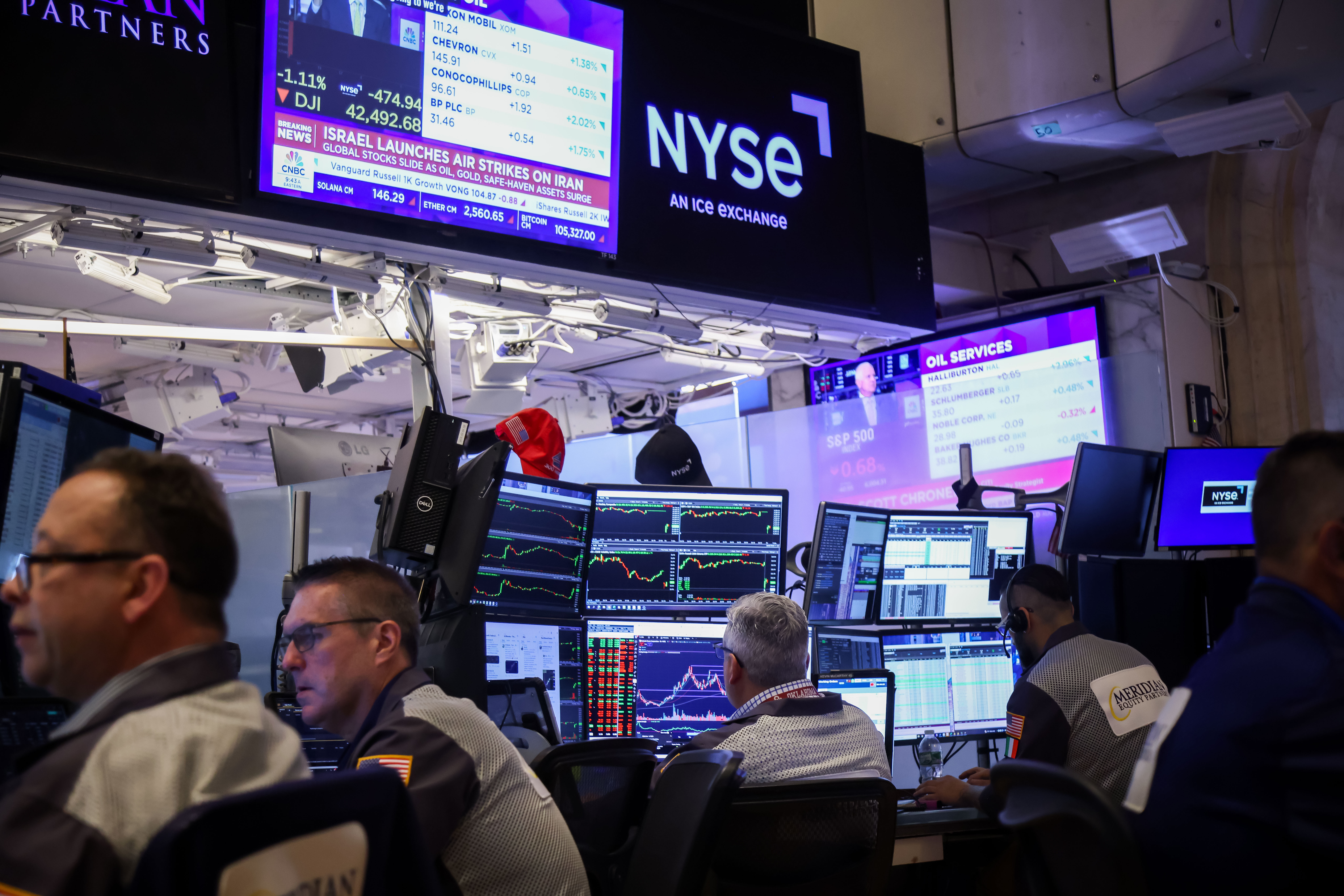
The Iran-Israel conflict and equity markets are now in sharp focus. As direct strikes escalated in June 2025, global financial markets responded immediately. Israel’s airstrikes on Iranian nuclear and energy infrastructure triggered retaliatory missile and drone attacks from Iran.
Treasury yields declined Tuesday as US economic data left intact expectations that the Federal Reserve will cut interest rates at least once more in 2025.
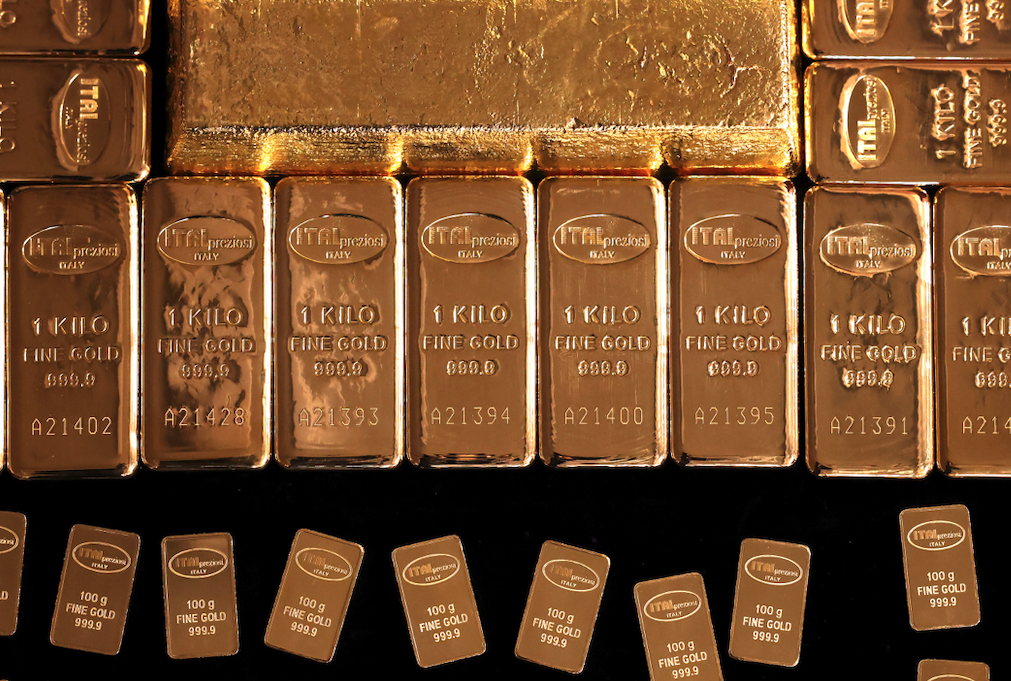
A record share of the world’s central banks plans to accumulate more gold over the next 12 months, drawn by bullion’s performance during times of crisis and protection against inflation.
Describes how what is happening to the economy is bigger than tariffs, it is the business cycle. It includes a comment on the FOMC meeting tomorrow, uses economic data up through this morning (retail sales), and includes a nice cartoon which can be used as a thumbnail (below).
Bonds hit a headwind in May as rates rose, but year to date, they have helped offset some of the volatility seen in stocks. See Table 2 for bond index returns for May 2025, Q1 2025, and YTD.
The calm before the storm is here – and the Fed knows it won’t last. This week’s Fed meeting is expected to be relatively straightforward.
Michael Browne, Chief Investment Officer at Martin Currie discusses inflation, energy and the art of the possible.
President Donald Trump’s announcement on Wednesday of a new trade agreement with China is the kind of headline that gives markets a sense of relief. As I overheard this week at Wealth Management’s EDGE conference, which I attended in Boca Raton, Florida, we may have dodged a recession.
This week’s market resilience in the face of rising geopolitical tensions underscores an important structural shift. The Israeli strikes and broader Middle East dynamics, while concerning, sparked only a modest reaction—a far cry from the volatility such events triggered in past decades.
How do we give clients what they’re truly looking for — income certainty, simplicity, peace of mind —without triggering resistance that shuts the conversation down?
The ever-louder brouhaha surrounding BBD is much ado about nothing. It is expensive, dangerous, and likely to benefit only bankers and brokerage firms.
Investors are betting the months-long rally in emerging markets has further to run even as tariff threats and escalating geopolitical tensions signal a rocky path ahead.